About
About
Chukwuemeka Eze and Revive Kit: The Nigerian Engineer Reimagining Transport
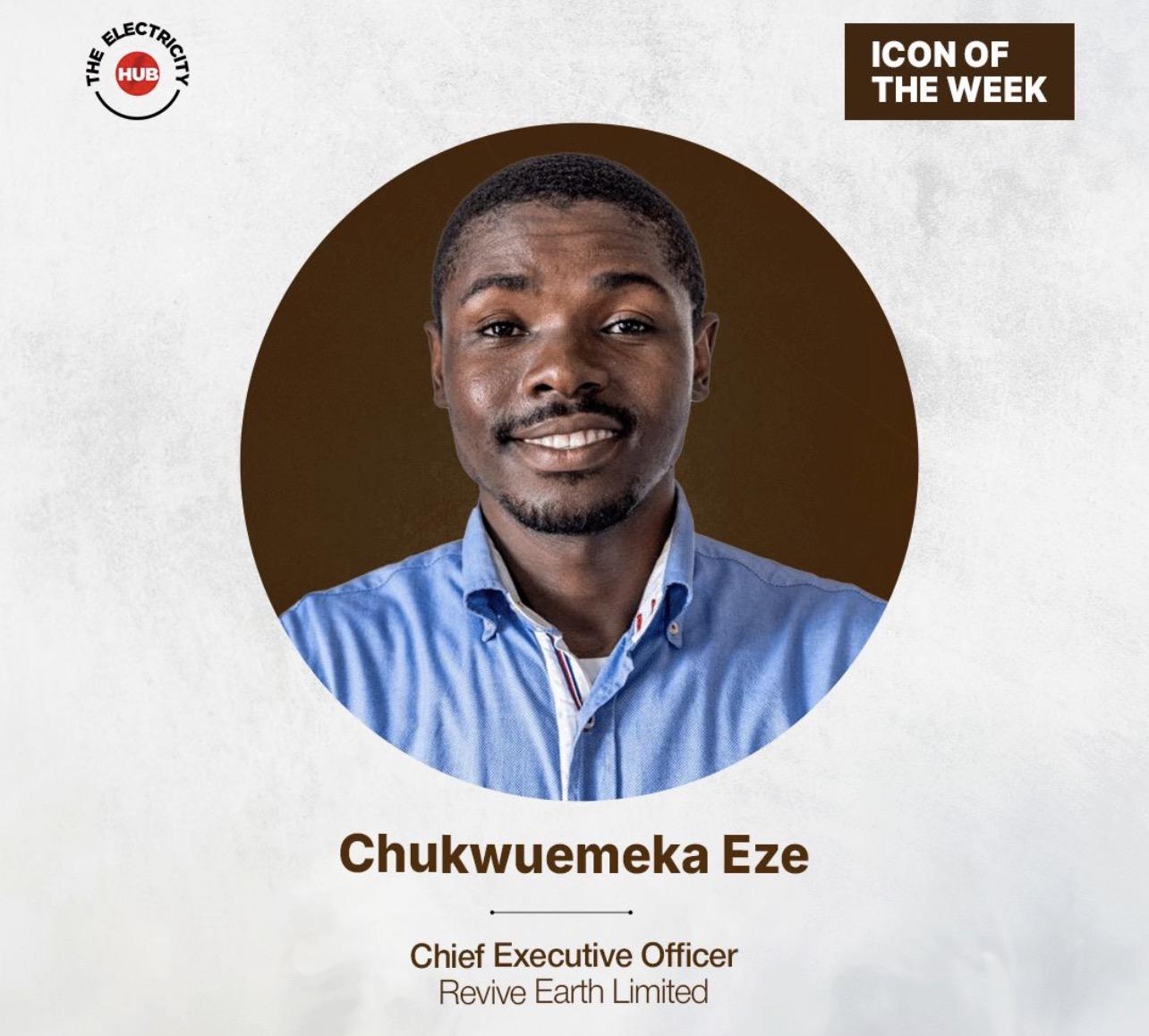
Chukwuemeka Eze
Chukwuemeka Eze’s story is the kind that begins with curiosity long before it meets recognition. It starts with a boy who wanted to know how things worked, a boy so interested in electrical devices that taking apart his father’s radio cassette player became one of his earliest practical lessons. That act led to punishment, but it also led to direction. Instead of only scolding him, his father placed him under a radio cassette repairer after primary school, and that early exposure gave him hands on experience with wiring, lighting systems, cooling systems, and the practical side of electricity. In many stories of invention, people imagine a laboratory first. In Eze’s case, it was fascination first, then persistence, then the workshop.
He would later study Electrical Engineering at the University of Nigeria, Nsukka, but the road there was not smooth. One of the more striking details publicly shared about his life is that he failed mathematics in WAEC twice before turning the subject from a weakness into a strength. By his own account, he began studying mathematics intensely, discovered it was less impossible than he had feared, and eventually came to love it. That part of his journey matters because it reveals something deeper than academic recovery. It shows a mindset that later shaped his work as an engineer: identify the obstacle, study it closely, strip away the fear around it, and build a solution.
At the university, Eze’s interests moved beyond conventional classroom engineering. He reportedly used free internet access to teach himself through online tutorials, deepening his skills in embedded systems design and computer programming. That wider self training helped push him toward electric mobility. He became interested in how batteries, motors, and intelligent control systems could work together, and he began to see electric vehicles not as distant ideas for wealthier countries, but as technology that could respond to African problems if designed locally and practically.
A major turning point came in 2019 when he was part of the team that built the Lion Ozumba 551, widely described in the reporting as Nigeria’s first locally made electric vehicle. The project emerged from the University of Nigeria, Nsukka, under the influence of Professor Ozoemena Ani and involved a period of intense research and development. For Eze, the experience appears to have been formative. It gave him exposure to a much broader level of engineering practice than he had seen before and sharpened his conviction that electric vehicles had a real future in Nigeria. Rather than treating the Lion Ozumba as a one time achievement, he seems to have taken it as proof that local innovation in mobility was possible.
That conviction led to the founding of Revive Earth in 2021. Through this company, Eze focused on a problem that millions of Nigerians understand immediately: transport costs. Across many towns and cities, three wheeled tricycles known popularly as keke serve as one of the most important forms of short distance transport. They are common, commercially vital, and easier to adapt than larger vehicles. Eze chose them deliberately. According to an interview, he saw tricycles as simpler, lighter, cheaper to manufacture and install for, and quicker to penetrate the market than some other transport categories. In other words, he was not just building technology. He was choosing an entry point where engineering could meet everyday economic reality.
The invention most closely associated with him is the Revive Kit, also described by the Africa Prize as an Electric Mobility retrofit kit. The core idea is both clever and practical. Instead of waiting for African markets to be flooded with brand new electric vehicles, Eze and his team designed a system that can convert existing petrol powered three wheel motorbikes into battery powered electric vehicles. That matters because retrofitting is often cheaper and faster than replacing an entire vehicle fleet. It also respects local realities. Drivers already own or understand these tricycles. Workshops already service them. Cities already depend on them. The Revive Kit works within that existing ecosystem rather than pretending it does not exist.
According to the Royal Academy of Engineering’s Africa Prize profile, the kit includes lithium ion batteries, an AC induction motor, a retrofit shaft, and an electronic controller that acts as the inverter. Eze and his team study the engines of different motorbike models, adjust the gears, replace parts of the original engine with an electric motor, remove redundant petrol related components, mount the battery to the vehicle chassis, and then connect the new system so that the motor responds to the hand throttle through sensors and control electronics. The setup also uses a differential gear reduction transmission and a DC converter to power auxiliary systems. This is not a superficial redesign. It is a deep mechanical and electrical conversion that turns the vehicle into a working electric transport machine.
What makes the invention more interesting is that it is not only about motion. It also includes monitoring and intelligence. The Africa Prize profile says the system uses sensors to track things such as the battery’s state of charge, voltage, GPS data, engine performance, motor temperature, and maintenance requirements through an Internet of Things interface, with information displayed on the dashboard. That means the Revive Kit is not just a battery swap concept. It is a connected mobility system. It brings together mechanical retrofitting, power electronics, battery management, sensing, and data visibility. In a market where vehicle abuse, poor maintenance, and uncertain operating conditions are common, visibility into system health can be just as valuable as propulsion itself.
Its practical value is also tied to cost. One reason the Revive Kit drew wide attention was the claim that drivers could save substantially on operating expenses. The Africa Prize page states that drivers using the converted electric tricycles can save up to 60 percent on gas or petrol costs. Other reports add that maintenance costs can fall by as much as 90 percent. Technext reported that one of Revive Earth’s retrofitted tricycles used a 5.12kWh battery, cost about N215 to fully charge at the electricity rate cited in that report, took around one hour and thirty minutes to charge, and could cover a minimum of 60 kilometres per full charge. In a period when petrol subsidy removal worsened pressure on Nigerian transport operators and commuters, those numbers gave the invention economic urgency, not just environmental appeal.
That context is essential to understanding why Eze’s work resonated. Nigeria’s transport economy is highly sensitive to fuel prices. When petrol costs rise, drivers struggle first, but passengers soon feel the pain through higher fares. An electric tricycle that can be charged from an ordinary 13A or 15A wall socket, reduce daily fuel dependence, run more quietly, and require less maintenance is more than a technical novelty. It becomes a small economic intervention. It offers a way to lower pressure on drivers’ earnings while hinting at cleaner streets and less noise. The vehicle can also, according to the Africa Prize profile, be used for vehicle to home integration, functioning as a mobile electric generator to charge devices in off grid homes or during power outages. That gives the invention an extra layer of usefulness in a country where unreliable electricity remains a major challenge.
Like many meaningful inventions, Revive Kit grew from a direct reading of local needs. Eze’s public statements suggest that he sees electric mobility in Africa not as imitation but as adaptation. He has said his goal is to create a supply chain of sustainable transport systems for Africa using technologies associated with the fourth industrial revolution, including AI and IoT, to solve local problems. He has also argued that the same reasons many people think electric vehicles will not work in Nigeria are exactly why they should. His view, as reported by Technext, is that electric mobility can create commercial demand for electricity and help unlock broader changes in the energy sector, especially if EV systems can tap into renewable power and fit African usage patterns.
Recognition followed. Eze was named a 2023 finalist for the Africa Prize for Engineering Innovation, one of the continent’s best known engineering innovation prizes run by the Royal Academy of Engineering. The prize profile presented Revive Kit as a Nigerian innovation addressing transport affordability and sustainability through the conversion of gas powered three wheel motorbikes to battery powered vehicles. Separate reporting from Premium Times, Vanguard, Punch, and others echoed that description and highlighted the significance of having a Nigerian electrical engineer among the finalists. Even when innovation ecosystems in Africa are often discussed in broad, abstract ways, this was a concrete example of a homegrown engineering idea gaining continental visibility.
What is especially compelling about Eze’s work is that it sits at the intersection of invention, manufacturing, and systems thinking. The Africa Prize profile states that the controller, DC converter, battery pack, and electric motor are manufactured by Eze and his team. If accurate, that means Revive Kit is not simply assembled from imported finished parts. It reflects a level of local engineering contribution in component integration and production. Technext also reported that battery cells were sourced from China and assembled into packs in the Enugu workshop to suit the specifications of the vehicles being retrofitted. This is how industrial ecosystems often begin: not with total independence from global supply chains, but with increasing local mastery over adaptation, assembly, optimisation, and product design.
There is also a social dimension to the story. Some reports note that Eze’s company trains technicians in the use of the kit. That is important because a transport transition cannot happen through one inventor alone. It needs hands, workshops, diagnostics, repair culture, and operational confidence. Training technicians expands the life of the invention beyond a single founder. It helps create a support network around the technology. In countries where vehicle maintenance is already a large informal and semi formal industry, such skill transfer can become as important as the initial product itself.
By 2023, Technext reported that Revive Earth had converted five tricycles and two bikes and was close to rolling out its first minibus model. The company was also described later in the Africa Prize 2024 interactive showcase as making Revive kits to convert existing petrol powered vehicles into commercially viable battery powered electric vehicles, offering significant savings in operational and maintenance costs. This suggests an ambition broader than tricycles alone. The tricycle may have been the strategic starting point, but the larger vision appears to involve a wider electrification pathway for commercial transport.
Still, like many founders in emerging technology spaces, Eze’s story is not one of unlimited resources. The reports available publicly show both promise and constraint. Charging infrastructure is not yet widespread. Better and faster chargers require investment. Scaling retrofitting operations to reach millions requires capital, manufacturing capacity, partnerships, and policy support. Technext reported that Eze was looking to raise funding to expand the retrofit factory, equip it more fully, and market the product more aggressively. These details remind us that invention does not automatically become transformation. Between prototype and widespread adoption stands the difficult terrain of financing, infrastructure, standards, customer trust, and institutional support.
Yet perhaps that is exactly why his story carries weight. It is not a fantasy of instant disruption. It is a grounded African innovation story built around a familiar vehicle, a painful economic problem, and an engineer who chose adaptation over complaint. He did not wait for perfect roads, perfect policy, or a perfect energy grid. He looked at what was already moving people around Nigerian streets and asked how it could move differently. He looked at a transport system tied tightly to petrol and imagined it being loosened from that dependence. He looked at a country where blackouts are common and built a mobility system with potential secondary power value. He looked at technology often framed as foreign and made it local. Those choices explain why Revive Kit matters.
In another sense, Chukwuemeka Eze’s journey is about revival in more than one form. The name Revive Kit fits the machine, because it gives existing vehicles a second life. But it also fits the larger idea behind his work. It revives confidence in local engineering. It revives the belief that African transport problems can attract African technical solutions. It revives the idea that invention does not always have to begin from scratch. Sometimes invention is about seeing hidden potential in what already exists.
There is something deeply Nigerian about that. The country is full of adaptation, repair, improvisation, and practical intelligence. People stretch machines beyond their original design life. They fix what others discard. They work around breakdowns. Eze’s innovation takes that everyday culture of repair and raises it into a higher engineering form. Instead of informal patchwork, he offers systematised retrofitting. Instead of survival improvisation, he offers a scalable product vision. Instead of simply enduring fuel shocks, he offers a route away from them.
That is why the full story of Chukwuemeka Eze is not only about one engineer from Nigeria who invented a retrofit kit. It is about how a childhood habit of taking things apart grew into the skill of rebuilding machines for a new era. It is about how academic setbacks did not end an engineering dream but hardened it. It is about how university exposure, self learning, and real research converged in a national first with the Lion Ozumba and later matured into a company called Revive Earth. It is about how a tricycle, often treated as an ordinary city workhorse, became the centre of an idea with environmental, economic, and technological meaning. And it is about how one invention, born in Enugu and recognised on a continental stage, points toward a future where African mobility is not merely imported, but invented, adapted, and owned closer to home.

Categorii
Citeste mai mult
Anabs Sara-Igbe, National Coordinator of the South-South Elders Forum, has criticised the imposition of emergency rule in Rivers State, calling it unnecessary and damaging to the state’s progress. Speaking on Channels Television’s Politics Today on Friday, Sara-Igbe questioned the justification behind appointing retired Admiral Ibok-Ete Ibas as sole administrator of the state....

Tawa Ajisefinni Tawa Ajisefinni is a Nigerian actress, filmmaker, and producer known for her roles in Yoruba Nollywood films. She is admired for her elegance, strong acting skills, and consistency in the Nigerian movie industry. Early Life and Background Tawa Ajisefinni was born on March 7, 1989, in Lagos State, Nigeria. She hails from Osun State in southwestern Nigeria. She grew up...

Episode Twenty-Four: No Time to Waste After Mr Layi left, his voice didn’t. It stayed with me. Every morning, even before anyone called my name, my body already knew what to do. I woke up early sometimes before the first shout echoed through the house. Ablution. Prayer. Silence. Focus. Mr Layi had taught us without lectures. He taught us by example. We went to school daily, even when...
Feeling Entitled Episode 2: The Fall Begins in Small Steps The new gear bicycle did not just arrive in Unguwan Doka. It announced itself. Its shiny frame reflected the afternoon sun like a trophy. Its tires were thick and powerful. The clicking sound of its imported gears sliced through the dusty street like music. Children gathered around it in awe. Balarabe rode it slowly at first,...

Allan Boesak Early Life Allan Boesak was born on February 23, 1946, in Kakamas, a small town in South Africa. He grew up during a time when apartheid controlled every part of life. As a young boy, he saw how people were treated differently because of their race. These early experiences shaped his thinking. He began to ask questions about justice, equality, and the role of faith...