About
About
Anatoli Kirigwajjo and YUNGA: The Ugandan Innovator Turning Community Trust Into a Shield Against Crime
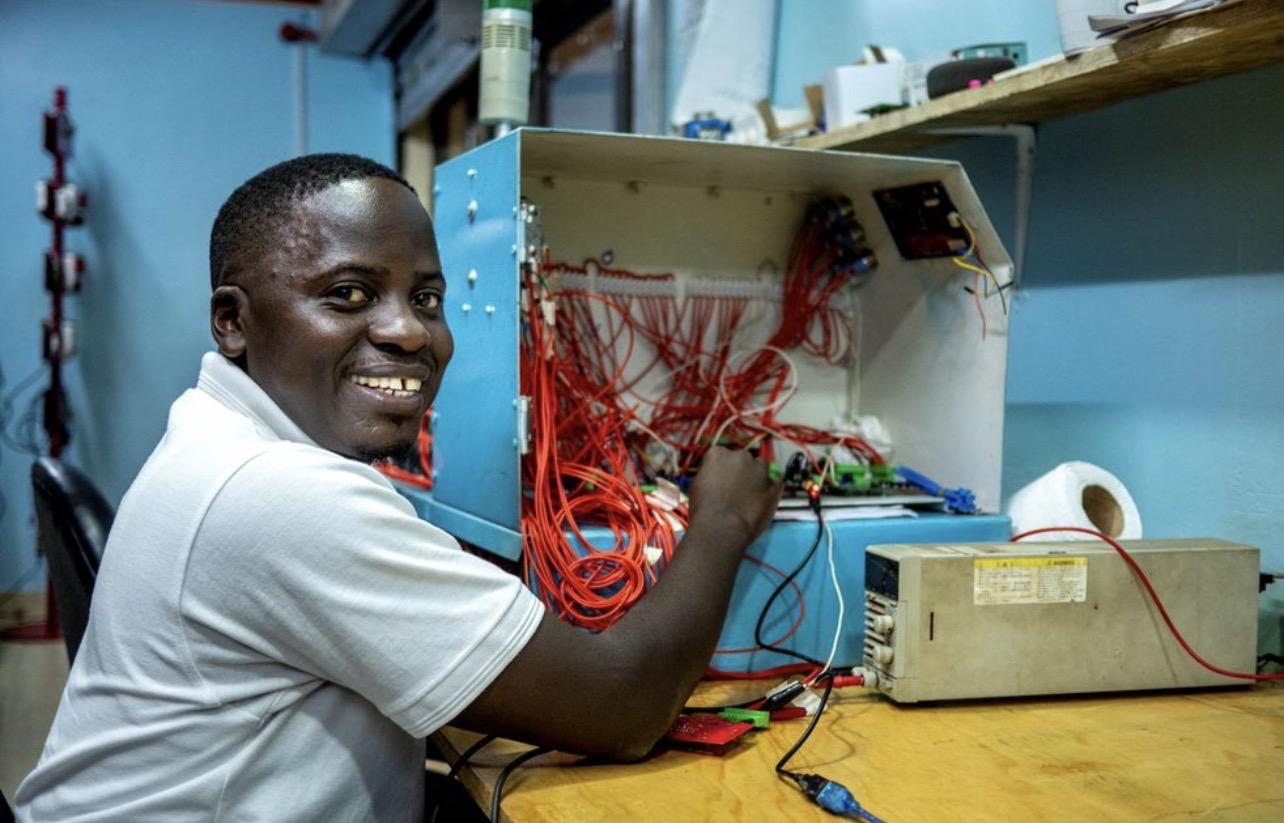
Anatoli Kirigwajjo
Anatoli Kirigwajjo’s story is not simply the story of a man who built a device. It is the story of a Ugandan engineer who looked at fear, loss, and the everyday insecurity facing many homes in African communities and chose not to accept them as normal. Instead of treating crime as a private problem that every household must solve alone, he asked a deeper question. What if safety could become a shared system again? What if technology could restore the old spirit of neighbours protecting one another, but do it in a form that fits modern life?
That question became YUNGA, one of the most talked about security innovations to emerge from Uganda in recent years. YUNGA is a local digital rescue and security network designed to connect neighbours to one another and to the police during emergencies. It works through a physical device, a mobile application, and even SMS, making it accessible in communities with internet access and in those without it. The system uses a long range local network that can reach about 20 kilometres, allowing alerts to spread quickly when danger appears. Its purpose is simple but powerful: reduce response time, strengthen community action, and make it much harder for criminals to act unnoticed.
What makes Anatoli’s work stand out is that YUNGA did not come from an abstract classroom exercise or a fashionable tech trend. It came from a wound. By his own account, he developed YUNGA after losing around 1,300 US dollars worth of assets in a break in, with little chance that the thieves would ever be caught. That personal loss became the spark for invention. Many people experience crime and move on with pain, anger, or resignation. Anatoli did something different. He transformed his frustration into a practical engineering response and then expanded that response beyond himself, so that what began as one person’s problem could become a solution for thousands of households.
Publicly available reporting describes him as a Ugandan software engineer, computer scientist, entrepreneur, and co founder of Yunga Technologies, the company behind the YUNGA system. Founded in 2018, Yunga Technologies focuses on community security tools for households, combining digital technology, local communication systems, and practical emergency response thinking. Sources also note that before YUNGA gained prominence, Anatoli had been involved in another technology project called E liiso, an eye screening application that used image analysis to help detect conditions such as colour blindness, myopia, hyperopia, and cataracts. In that earlier project he served as chief technology officer, showing that even before YUNGA, his interest was already leaning toward technology that solves urgent real world problems.
Still, it is YUNGA that has given Anatoli Kirigwajjo a defining place in conversations about African engineering innovation. To understand why, it helps to first understand the environment from which the idea grew. In many parts of Uganda and across Africa, security is uneven. Police stations may be far away. Formal alarm systems can be too expensive for ordinary households. Internet access is not always reliable. Even where private security exists, it often protects an isolated building rather than strengthening the safety of a whole neighbourhood. In rural and peri urban areas, response time can be the difference between a close call and a tragedy. Anatoli saw that existing systems often focused on an individual house, but not on the wider community around it. That gap became his opportunity.
The idea behind YUNGA is rooted in something much older than modern electronics. The Royal Academy of Engineering’s materials on the innovation explain that it draws inspiration from a traditional ten household model used in countries such as Uganda, Kenya, Nigeria, and Tanzania, where communities historically used drums or other shared signals to alert others to danger. In other words, YUNGA is not merely imported technology placed on African soil. It is a modern expression of an African social instinct: when one home is in danger, the whole cluster should know. That cultural foundation matters because it explains why the solution resonates. Anatoli was not trying to force a foreign pattern of security into local life. He was translating a familiar communal logic into an engineering system fit for the present day.
The structure of YUNGA reflects that philosophy. Communities are grouped into networks of roughly ten to thirty households. Each household receives a YUNGA device connected to a local network, and a device is also placed with the police. In the event of an attack or emergency, a person can press a button and send a message through the network. The alert carries details about the victim and the address, prompting neighbours and security responders to act quickly. The system can also work through the YUNGA mobile app. This means that YUNGA is not just a burglar alarm. It is a neighbourhood communication and response system. It turns scattered homes into a connected safety circle.
One of the most important parts of the invention is that it was built for African realities rather than ideal laboratory conditions. YUNGA does not depend only on smartphones and fast internet. It also works in areas with no internet through a long range wide area network, and it can connect to basic phones by SMS using ordinary GSM signals. That design choice reveals a lot about Anatoli’s approach as an inventor. He is not designing for the small minority who already have the best devices and the best infrastructure. He is designing for the communities that are often ignored by premium technology products. That practical inclusiveness is one reason YUNGA has drawn so much respect. It meets people where they are.
There is another reason the system matters. In Uganda, reporting cited by the Royal Academy notes that a large share of burglaries happen when people are not at home. To respond to that reality, the YUNGA package includes motion sensors that trigger alerts when activated. This allows the system to function not only as a panic response tool during an attack, but also as an early warning system when a house is empty and intruders enter. In that sense, YUNGA is both reactive and preventive. It can call for help in the middle of danger, but it can also detect suspicious activity before the full damage is done.
Anatoli and his team have not stopped at the first version. Public descriptions of the project say they are incorporating artificial intelligence into YUNGA so the system can detect behavioural patterns. The goal is for the device to learn when people are usually away and activate itself if they forget to set their alarm. There are also plans to integrate it with GPS based functionality so the system can detect when people leave home without turning on security. Whether every part of that long term vision is achieved exactly as planned or not, the direction is clear. Anatoli is not simply building a gadget. He is building an adaptive community security platform.
The growth of YUNGA shows that the idea is moving beyond theory. At one point, the Royal Academy reported that Yunga Technologies had sold about 2,000 units over a two year period and was seeing month to month growth. Another academy source stated that about 2,500 people from 450 households in 18 communities across central Uganda were already on the YUNGA network. The company also reported preventing hundreds of crime cases and laid out ambitions to connect tens of thousands of households and eventually reach one million devices by 2030 across major markets in Sub Saharan Africa. Those figures may evolve over time, but they show that YUNGA has already crossed an important line. It is no longer just an idea with promise. It is a deployed solution with measurable reach and evidence of traction.
Recognition soon followed. In 2023, Anatoli Kirigwajjo and YUNGA won a share of the Africa Prize for Engineering Innovation, one of the continent’s most respected honours for engineering entrepreneurs. Reports note that this was the first time the prize had been shared by two winners. YUNGA’s win brought major visibility not only to Anatoli himself but also to Uganda’s growing engineering and startup ecosystem. According to coverage of the competition, he impressed judges and audiences with the strength of his pitch, the personal authenticity behind the problem, and the traction the business had

Categorieën
Read More
Daniel Day-Lewis Daniel Day-Lewis is a British Irish actor widely regarded as one of the greatest actors in film history. He is known for his intense method acting approach and his ability to completely transform into his characters. Daniel Michael Blake Day-Lewis was born on April 29, 1957, in London, England. Early Life and Background Daniel Day-Lewis was born into a highly creative...
Agena Robert Ande, human rights advocate and Chairman of the African Action Congress (AAC) in the Federal Capital Territory, has strongly condemned what he described as a violent and disproportionate response to peaceful protests in Makurdi, Benue State. According to Ande, demonstrators gathered to demand an end to the ongoing killings in the state but were met with “state-sponsored...

Ycee Ycee, whose real name is Oludemilade Martin Alejo, is a Nigerian rapper, singer, and songwriter known for his smooth rap delivery and hit songs in the Nigerian music industry. He gained widespread fame with his breakout single “Jagaban”, which established him as one of the leading voices in Nigerian hip hop. Early Life and Background Ycee was born on January...

Artificial intelligence is rapidly transforming the financial services sector. From streamlining customer service to optimizing back-office operations, banks worldwide are increasingly turning to AI-driven systems and chatbots to boost efficiency, cut costs, and stay competitive. But while shareholders and executives may cheer the potential savings, for thousands of banking professionals the...

Nigerian music star Mayorkun has finally addressed rumors about his relationship with Davido, confirming that his former label boss played a crucial role in helping him land a record deal with Sony Music Africa. In an exclusive interview with 3Music TV, Mayorkun—who rose to fame under Davido Music Worldwide (DMW) from 2016 to 2021—set the record straight: “Aside from having...