About
About
Turning Waste Into Wealth The Inspiring Journey of Tunde Adeyemi and the Kitchen Box Bio Tank Innovation
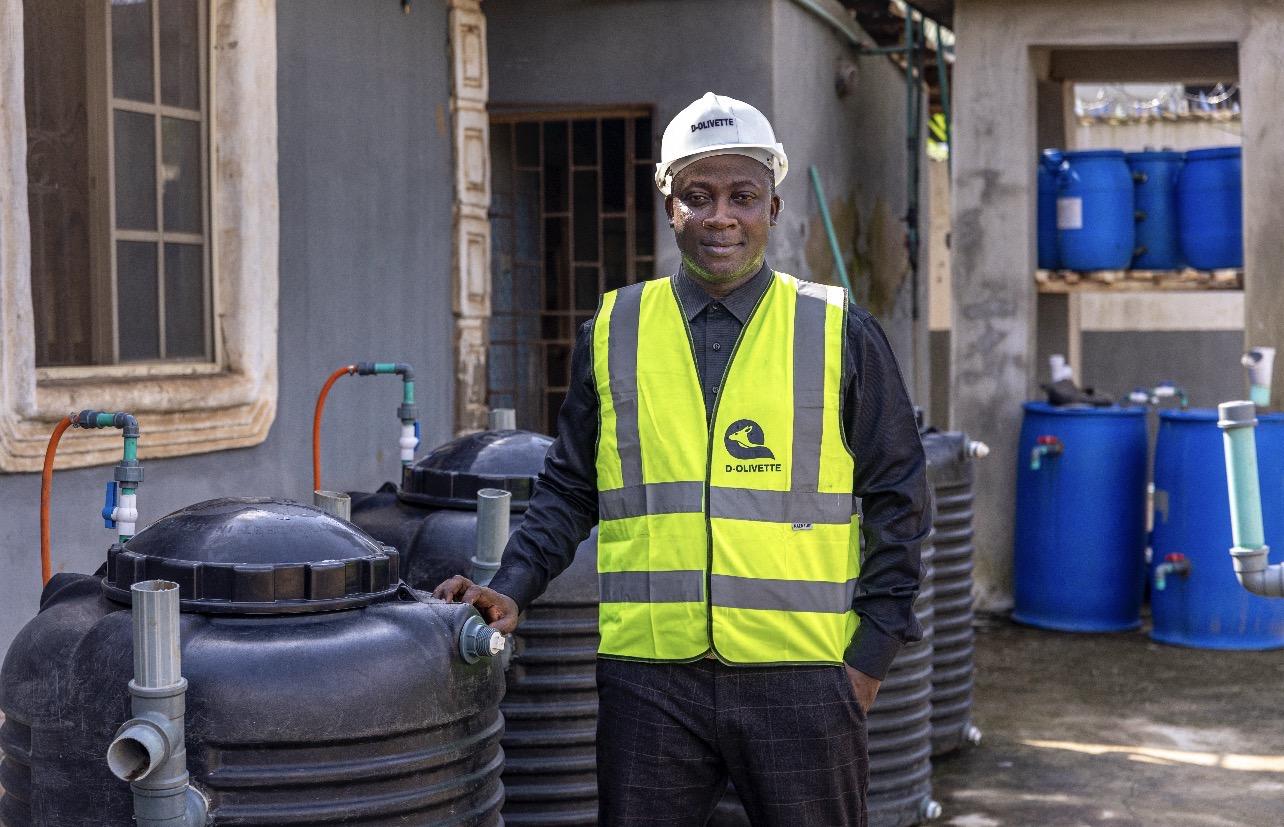
Tunde Adeyemi
Nigeria has produced many brilliant minds who have quietly worked behind the scenes to solve some of the country’s toughest problems. Among these innovators stands Tunde Adeyemi, a Nigerian engineer and environmental entrepreneur whose work in waste management and renewable energy has drawn attention from across Africa and beyond.
His most notable invention, the Kitchen Box Bio Tank, represents a bold step toward solving one of the most persistent problems in urban Africa waste disposal and energy scarcity. Adeyemi’s story is not just about invention. It is a story of vision, persistence, environmental consciousness, and the determination to turn everyday problems into powerful solutions.
Early Life and Background
Tunde Adeyemi was born and raised in Nigeria during a time when many cities were experiencing rapid growth. With growth came challenges. Urban centers expanded quickly but infrastructure struggled to keep up. Waste management became one of the most visible problems. Streets were often lined with refuse. Open dumps and overflowing waste bins became a common sight.
As a young boy growing up in this environment, Adeyemi observed how waste accumulated in neighborhoods and markets. He noticed how people struggled with poor sanitation and how communities suffered from pollution and environmental degradation. These observations would later shape his thinking and career path.
Even at a young age, Adeyemi showed curiosity about how things worked. He enjoyed dismantling simple machines, examining mechanical devices, and experimenting with different materials. Family members often noticed that he preferred solving practical problems rather than just memorizing theories.
His early interest in science and engineering led him toward technical education. He developed a strong passion for innovation and problem solving, particularly solutions that could help everyday people.
Education and Engineering Curiosity
Adeyemi pursued engineering studies in Nigeria, focusing on technical disciplines that could allow him to build practical systems. During his education he became particularly interested in energy systems, environmental engineering, and waste management technologies.
While studying, he began exploring how organic waste could be converted into useful products. Across many developing countries, food waste and organic waste make up a large portion of household refuse. Yet much of this waste ends up in landfills where it produces methane gas and contributes to environmental pollution.
Adeyemi believed this waste could be transformed into something useful instead of becoming an environmental burden.
His academic training helped him understand the science behind anaerobic digestion. This is a biological process in which microorganisms break down organic material in the absence of oxygen. During this process biogas is produced which can be used as fuel for cooking or electricity generation.
This discovery sparked a powerful idea in Adeyemi’s mind. What if households could convert their kitchen waste directly into cooking gas?
The Birth of an Idea
For many years millions of households in Nigeria relied heavily on firewood, charcoal, or expensive cooking gas. In rural areas people walked long distances to gather wood. In cities families struggled with rising prices of cooking gas cylinders.
At the same time large quantities of food waste from kitchens were being discarded daily.
Adeyemi saw an opportunity to connect these two problems and turn them into a single solution.
The idea was simple but powerful. Instead of throwing kitchen waste into trash bins households could feed the waste into a compact biodigester system that converts the organic material into biogas.
The gas produced could then be used for cooking.
This idea eventually evolved into what became known as the Kitchen Box Bio Tank.
The Concept of the Kitchen Box Bio Tank
The Kitchen Box Bio Tank is a compact household waste to energy system designed to convert organic kitchen waste into biogas.
The system works by collecting food waste from the kitchen and feeding it into a biodigester tank. Inside the tank microorganisms break down the waste in a controlled environment. As the waste decomposes it releases biogas which can be captured and used as fuel.
The remaining material from the digestion process becomes nutrient rich organic fertilizer that can be used for farming or gardening.
This technology essentially transforms kitchen waste into two valuable products cooking gas and organic fertilizer.
The brilliance of Adeyemi’s design lies in its simplicity and practicality. Instead of large industrial plants the Kitchen Box Bio Tank is designed to be small enough for homes, restaurants, schools, and small communities.
It addresses several problems at once including waste disposal, energy shortages, environmental pollution, and agricultural productivity.
Challenges During Development
Turning an idea into a functioning system was not easy. Like many innovators in developing countries Adeyemi faced several obstacles.
Funding was one of the earliest challenges. Building prototypes and testing designs required materials, equipment, and time. Without large financial backing he had to rely on creativity and persistence.
Another challenge was skepticism. New technologies often face resistance because people are unfamiliar with them. Some people questioned whether waste could truly produce usable cooking gas in a safe and efficient way.
Adeyemi had to demonstrate the system repeatedly to prove its reliability.
He spent years refining the design to ensure it was affordable, safe, and easy to use. His goal was to make sure ordinary households could operate the system without complex technical knowledge.
Eventually the design matured into a practical product that could be deployed in real world settings.
Environmental Impact of the Innovation
The Kitchen Box Bio Tank addresses several environmental challenges that affect Nigeria and many African countries.
One major issue is landfill waste. Large volumes of organic waste are dumped in landfills where they decompose and release methane gas into the atmosphere. Methane is a powerful greenhouse gas that contributes to climate change.
By converting waste into controlled biogas production, Adeyemi’s system reduces methane emissions and improves environmental sustainability.
Another benefit is the reduction of deforestation. In many rural communities trees are cut down for firewood used in cooking. By providing an alternative cooking fuel, biodigesters can reduce dependence on firewood and charcoal.
The system also helps improve sanitation. Instead of leaving food waste to rot in open spaces, households can process the waste hygienically.
Economic Benefits
The economic potential of the Kitchen Box Bio Tank is significant.
Families who use the system can reduce their spending on cooking gas or charcoal. Restaurants and food vendors who produce large amounts of organic waste can turn that waste into energy rather than paying for disposal.
Farmers can also benefit from the organic fertilizer produced by the system. This fertilizer improves soil quality and reduces reliance on expensive chemical fertilizers.
In essence the technology turns waste into wealth.
This concept has become a central theme in Adeyemi’s work. Instead of seeing waste as a problem he views it as a valuable resource waiting to be transformed.
Recognition and Influence
Innovations like the Kitchen Box Bio Tank have attracted attention from environmental organizations, technology forums, and sustainability advocates.
Adeyemi’s work has been highlighted as an example of African ingenuity addressing local problems with locally designed solutions.
Across the continent there is increasing interest in renewable energy technologies that are affordable and adaptable to community needs.
The success of innovations like Adeyemi’s demonstrates that homegrown solutions can play a major role in addressing environmental challenges.
Encouraging a Culture of Innovation
One of the broader impacts of Adeyemi’s work is the inspiration it provides to young inventors and engineers.
Many young Nigerians are interested in technology but often believe that innovation must come from abroad. Adeyemi’s story proves that powerful ideas can emerge from local experiences and observations.
His journey encourages students to look around their communities and identify problems that need solutions.
Innovation often begins with curiosity and determination.
Future Possibilities
The concept behind the Kitchen Box Bio Tank opens the door for many future possibilities.
If adopted widely across cities and communities the technology could significantly reduce the volume of waste sent to landfills.
Large scale versions of biodigesters could be installed in markets, universities, food processing plants, and agricultural facilities.
Such systems could generate substantial amounts of renewable energy while improving waste management systems.
As cities continue to grow these solutions may become increasingly important for sustainable urban development.
The Legacy of Practical Innovation
Tunde Adeyemi represents a new generation of African innovators who are redefining how technology can serve communities.
His work reminds us that innovation is not only about complex digital systems or expensive laboratories. Sometimes the most powerful inventions come from simple ideas applied with determination.
By transforming kitchen waste into energy he has shown that everyday problems can become opportunities for progress.
The Kitchen Box Bio Tank stands as a symbol of sustainable thinking and practical engineering.
It reflects the belief that the future of Africa will be shaped not only by policies and governments but also by inventors who dare to imagine better ways of living.
Conclusion
The story of Tunde Adeyemi is ultimately a story about vision and responsibility. Growing up in an environment where waste and energy challenges were visible every day, he chose not to ignore the problem.
Instead he transformed it into an opportunity.
Through persistence, engineering knowledge, and a commitment to environmental sustainability he developed the Kitchen Box Bio Tank system that converts waste into clean cooking energy and organic fertilizer.
His work demonstrates that innovation can emerge from simple observations and that solutions built for local communities can have global relevance.
As the world continues searching for sustainable energy and waste management solutions, innovators like Tunde Adeyemi remind us that the answers may already be in our kitchens waiting to be transformed into something powerful.


Categorie
Leggi tutto
A former Nigerian Army officer, Michael Jojor, has accused Major General A.A. Adekeye, former Commandant of the Nigerian Army Armour School (NAAS), of orchestrating his unlawful demotion, detention, and eventual resignation from the military. Jojor, who joined the Army in June 2016 as part of the 75RRI, claims he was officially posted to 6 Division Garrison, Port Harcourt, but was later...

Dozie Mmobuosi Dozie Mmobuosi once appeared to be the bold new face of African technology. Young, ambitious, and globally visible, he told a story that captured headlines. A story of innovation, billion dollar valuations, global listings, and even an attempt to buy an English football club. But his journey became one of the most controversial chapters in modern African business....

After the business failed, my life changed not on the outside, but inside my head. I woke up every day with the same thought: If Olanshile had helped me, my life would be different. I replayed our conversation again and again. The calm way he refused me. The way he looked at me like my dream was too small to matter. Slowly, my pain turned into suspicion. “He doesn’t want me to...

Frederick Leonard Frederick Leonard is a Nigerian actor, producer, and director known for his calm delivery, romantic roles, and polished screen presence in Nollywood. Over the years, he has built a strong reputation as one of the leading men in Nigerian romantic dramas. Early Life and Background Frederick Leonard was born on May 1, 1976, in Anambra State, Nigeria. He...

Ebenezer Obey Ebenezer Obey, born Ebenezer Remilekun Aremu Olasupo Obey-Fabiyi, is one of Nigeria’s most legendary musicians and a pioneer of modern Juju music. For over five decades, he has shaped the sound of Yoruba highlife and Juju, blending traditional rhythms with philosophical lyrics, social commentary, and later gospel messages. His music has influenced generations and...