


Leandre Berwa and the Power of Second Life Batteries: How a Rwandan Innovator Turned Old Batteries into a Clean Energy Revolution

Leandre Berwa
In many parts of the world, technological innovation often begins in large laboratories or billion dollar companies. But sometimes the most meaningful ideas come from people who understand everyday problems in their communities. One of those innovators is Leandre Berwa, a Rwandan entrepreneur whose work in battery technology and energy systems is helping shape the future of clean transportation and renewable energy in Africa.
Leandre Berwa became known for his work with second life batteries and battery as a service systems, ideas that help extend the usefulness of lithium batteries while making electric mobility more accessible and affordable. His contributions form part of a broader movement that is changing how Africa approaches transportation, energy storage, and environmental sustainability.
This is the story of a young African innovator who looked at a growing problem and turned it into an opportunity to build a cleaner future.
Early Life and Background
Leandre Berwa was born in Rwanda, a country that has rapidly transformed itself into one of Africa’s most technology driven nations. Rwanda is widely known for its focus on innovation, sustainability, and smart urban development. Growing up in this environment exposed Berwa to a generation that believed Africa could create its own technological solutions rather than depending entirely on imported ideas.
From a young age, Berwa showed interest in engineering, energy systems, and environmental sustainability. Rwanda, like many African countries, faces energy challenges such as limited grid coverage in rural areas, high fuel costs, and dependence on imported petroleum.
These realities shaped Berwa’s thinking early in life. Instead of viewing these problems as obstacles, he began to see them as opportunities for innovation.
Education played an important role in shaping his technical abilities. During his academic journey, he focused on engineering and technology related to energy systems. His studies introduced him to topics such as renewable energy, battery storage technology, and sustainable infrastructure.
But what truly inspired him was a simple observation.
Africa was becoming a massive market for motorcycles and transportation, yet almost all of them depended on petrol and diesel.
This meant pollution, expensive fuel, and growing carbon emissions.
Berwa began wondering if there was another way.
The Transportation Problem in Africa
Motorcycles are one of the most common forms of transportation in many African cities. In Rwanda they are widely used as motorcycle taxis, often called moto taxis. These bikes help thousands of people commute daily and provide employment to many riders.
However the system comes with several challenges.
Fuel prices fluctuate and often become expensive for drivers. Gas powered motorcycles also produce pollution and noise in densely populated cities. Over time they contribute to climate change and urban air quality problems.
Electric motorcycles seemed like a logical solution.
But there was a major obstacle.
Electric motorcycles require batteries, and batteries are expensive.
Charging them also takes time.
For a motorcycle taxi driver who relies on continuous work, waiting hours to charge a battery could mean losing income.
This was the moment when Berwa began thinking about a new concept that would later become central to his work.
Battery as a service.
Understanding Battery as a Service
Battery as a service is an innovative model where users do not need to buy the battery that powers their electric vehicle. Instead they subscribe to a battery network and swap batteries whenever needed.
Instead of charging a battery for hours, a rider simply visits a battery swap station and exchanges an empty battery for a fully charged one.
The process takes only a few minutes.
This idea solves several problems at once.
First it reduces the cost of electric motorcycles because riders do not need to purchase expensive batteries.
Second it eliminates long charging times.
Third it allows companies to maintain and manage batteries more efficiently.
But Berwa and his collaborators took the concept even further by exploring the potential of second life batteries.
The Concept of Second Life Batteries
Lithium batteries are used in many technologies including smartphones, laptops, and electric vehicles.
Over time these batteries lose some of their capacity. When they can no longer perform well inside vehicles they are often discarded.
However these batteries are not actually useless.
Even after they lose part of their capacity they still hold a significant amount of energy.
Second life battery technology involves taking these partially used batteries and repurposing them for other energy storage applications.
For example a battery that no longer performs well in a high performance electric vehicle might still work perfectly in a stationary energy storage system.
These systems can store solar energy, power buildings, or support electric vehicle infrastructure.
Berwa recognized that this idea could be extremely valuable in Africa where energy storage is often limited.
Instead of throwing away batteries, they could be reused to support renewable energy systems.
Work with Electric Mobility in Rwanda
Leandre Berwa became closely associated with the emerging electric mobility ecosystem in Rwanda. The country has actively encouraged the development of electric motorcycles, electric buses, and clean transportation technology.
Companies and innovators began building networks of battery swapping stations that could power electric motorcycles used by taxi drivers.
In these systems riders can exchange batteries within minutes and continue working without interruption.
The batteries are charged at centralized stations that use optimized charging systems and sometimes renewable energy sources.
Berwa’s work helped highlight the role of battery lifecycle management and second life battery reuse within this ecosystem.
Instead of treating batteries as disposable products, they can become long term energy assets that move through multiple stages of use.
First stage electric vehicles.
Second stage stationary storage systems.
Third stage recycling for valuable materials.
This circular approach reduces waste and improves sustainability.
Building a Circular Energy Economy
One of the most important ideas associated with Berwa’s work is the circular energy economy.
Traditional technology systems often follow a linear model.
Extract materials
Build products
Use products
Discard products
This approach leads to waste and environmental damage.
A circular model is different.
Materials remain in use for as long as possible. Products are reused, repurposed, repaired, and recycled.
Second life battery systems are a perfect example of this philosophy.
Instead of sending batteries directly to landfills after vehicle use, they can be transformed into energy storage units that power homes, solar systems, and electric charging networks.
In Africa where energy demand is rapidly growing, this approach can make renewable energy much more reliable.
Solar energy, for example, produces electricity only when the sun is shining.
Energy storage systems built from second life batteries can store excess solar power during the day and release it at night.
This helps stabilize power supply and makes renewable energy more practical.
Environmental Impact
The environmental benefits of Berwa’s work are significant.
Electric mobility reduces reliance on fossil fuels.
Battery reuse reduces electronic waste.
Energy storage supports renewable energy.
Together these innovations help lower carbon emissions and promote sustainable development.
In rapidly growing cities across Africa, transportation emissions are becoming a serious issue.
Electric motorcycles powered by battery swapping networks can dramatically reduce urban pollution.
They are quieter, cleaner, and more energy efficient than petrol powered motorcycles.
When combined with renewable electricity sources such as solar or hydropower, their environmental impact becomes even lower.
Second life battery systems also reduce the need to mine new materials such as lithium, cobalt, and nickel.
These materials are valuable but their extraction can have environmental and social impacts.
Extending the life of existing batteries helps reduce demand for new raw materials.
Economic Opportunities
Another major advantage of the battery as a service model is economic opportunity.
Electric mobility networks require infrastructure.
Battery swap stations
Charging facilities
Maintenance centers
Battery management systems
Data monitoring platforms
All of these systems create jobs.
Technicians are needed to maintain batteries and motorcycles.
Engineers develop software to track battery health and optimize charging.
Entrepreneurs can build new services around electric mobility networks.
Berwa’s work highlights how clean energy innovation can drive economic growth rather than slow it.
For motorcycle riders, the model can also increase income.
Because they do not need to purchase expensive batteries, the initial cost of electric motorcycles becomes lower.
Operating costs can also be cheaper than petrol powered bikes because electricity is often less expensive than fuel.
This creates a win win situation.
Riders save money.
Cities reduce pollution.
Energy systems become more sustainable.
Rwanda as a Hub for Innovation
Rwanda has positioned itself as one of Africa’s leading centers for technological innovation.
The government actively supports initiatives related to renewable energy, smart cities, and electric mobility.
This supportive environment has allowed entrepreneurs like Berwa to explore new ideas and test innovative technologies.
Electric motorcycle pilot programs have already been launched in Kigali, the capital city.
Battery swapping networks continue to expand as companies refine their systems.
These efforts are not only about transportation.
They are about building a future energy system where clean electricity powers mobility, businesses, and homes.
Challenges and Lessons
Despite the promise of second life batteries and battery as a service systems, the journey has not been without challenges.
Battery technology is complex.
Managing large networks of batteries requires advanced monitoring systems to ensure safety and efficiency.
There are also regulatory and infrastructure challenges.
Charging networks must be carefully designed.
Battery safety standards must be maintained.
Investment is required to scale the systems across cities and regions.
However innovators like Berwa have demonstrated that these challenges can be overcome through collaboration between engineers, entrepreneurs, governments, and investors.
Another important lesson is that technology solutions must be adapted to local conditions.
What works in Europe or North America may not work the same way in Africa.
Battery swapping systems for motorcycle taxis are an example of a technology specifically designed for African transportation patterns.
Global Importance of Second Life Batteries
The idea of second life batteries is gaining attention worldwide.
As electric vehicles become more common, millions of batteries will eventually reach the point where they can no longer be used in cars.
Instead of becoming waste, these batteries can form the backbone of global energy storage networks.
They can power renewable energy systems.
Support electric vehicle charging stations.
Provide backup power for buildings.
Store electricity for rural communities.
Berwa’s work in this area places African innovation at the center of a global technological transition.
Africa is not just adopting clean technology.
It is helping invent it.
Inspiring the Next Generation
Stories like that of Leandre Berwa are important because they show young Africans that innovation does not have to come from Silicon Valley or major technology hubs.
Ideas can start anywhere.
They can begin with a simple observation about a problem that needs solving.
Berwa looked at transportation in his country and asked a simple question.
What if motorcycles did not need petrol?
From that question emerged a chain of ideas involving electric mobility, battery swapping, and second life energy storage.
Today those ideas are influencing how engineers and entrepreneurs think about sustainable transportation across Africa.
The Future of Battery Innovation in Africa
Looking ahead, battery technology will continue to evolve.
New battery chemistries may become more efficient and affordable.
Recycling technologies will improve the recovery of valuable materials.
Energy storage systems will become more advanced and interconnected.
In this future, second life battery systems will likely play an even bigger role.
They will help balance renewable energy grids.
Support electric transportation networks.
Provide affordable energy storage for developing regions.
Innovators like Leandre Berwa represent the kind of leadership needed to guide this transformation.
They combine technical knowledge with an understanding of local needs.
They see problems not as barriers but as opportunities for creativity.
Conclusion
Leandre Berwa’s journey illustrates the power of innovation driven by real world challenges.
By exploring the potential of second life batteries and battery as a service systems, he has helped highlight new ways to make electric mobility accessible, sustainable, and economically viable.
His work demonstrates that the future of clean energy will not be built by a single country or company.
It will be built by innovators across the world working together to rethink how technology interacts with society and the environment.
From the busy streets of Kigali to the global conversation about renewable energy, the ideas behind second life batteries are gaining momentum.
And at the center of that momentum stands a generation of African innovators determined to power the future differently.

Categories
Read More
Abdul Samad Rabiu is one of Nigeria’s leading industrialists and one of the richest men in Africa. As the founder and chairman of BUA Group, he has built a diversified conglomerate with major investments in cement, sugar, flour, and infrastructure. His business strategy has focused on large scale manufacturing and import substitution, helping to strengthen Nigeria’s industrial base....
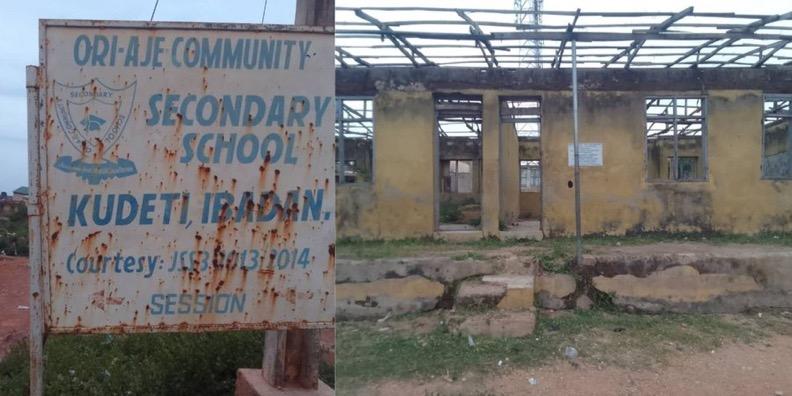
In a concerning development, students in Oyo State are attending classes in roofless classrooms, highlighting a significant gap between allocated education funds and on-ground infrastructure. Despite billions of naira being earmarked for education, many schools in the state continue to operate under dilapidated conditions. Reports indicate that some classrooms lack basic facilities, with pupils...
In a quiet village, Tunde sold akara at dawn. His golden balls smelled heavenly, but villagers avoided them after sunset. Rumors spread that those who ate Tunde’s akara at night saw things they were not meant to see.One evening, a curious young man, Kemi, bought one. As he bit into it, shadows shifted unnaturally, and whispers filled the air. He could see hidden paths in the forest, but...

Students of the Federal University Oye-Ekiti (FUOYE) are raising serious concerns over the integrity of the recent Student Union Government (SUG) elections, accusing the university management of manipulating the process to install their preferred candidate. According to widespread reports on social media, students allege that the election results were tampered with, claiming irregularities in...
The Nigerian Communications Commission (NCC), once lauded as a premier regulatory body in Africa, is now embroiled in a deepening internal crisis. Allegations of corruption, nepotism, and targeted retaliation against whistleblowers are shaking the agency’s foundation and eroding public trust. At the center of the controversy is Executive Vice Chairman (EVC), Dr. Aminu Maida, whose...

