About
About
The Kingdom Cast in Metal: The Powerful History Behind the Benin Bronzes and the Royal Palace Art of the Edo Kingdom
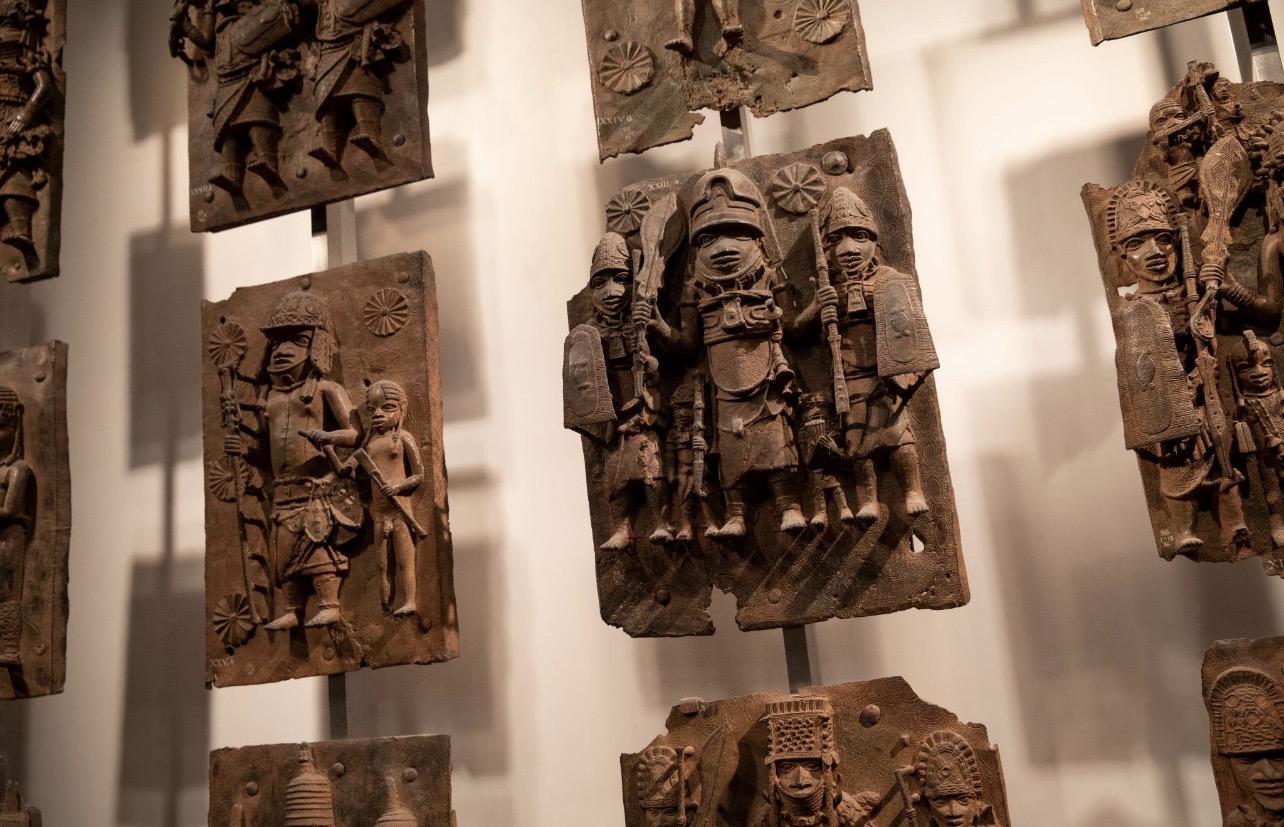
The Kingdom Cast in Metal
Long before modern Nigeria was created and long before colonial rule reached West Africa, there stood a powerful and sophisticated kingdom known as the Kingdom of Benin. Located in what is today Edo State in southern Nigeria, this kingdom became famous for its organization, powerful rulers, and an artistic tradition so advanced that it shocked the outside world when it was first discovered.
At the heart of this artistic tradition were the famous Benin Bronzes and the magnificent artworks that decorated the royal palace of the Oba of Benin. These works were not just decorations. They were historical records, spiritual objects, symbols of power, and messages from the past carved into metal, ivory, and wood.
Today the Benin Bronzes are considered among the greatest artistic achievements in African history. Their story is not just about art. It is a story of power, culture, invasion, survival, and the fight to reclaim stolen heritage.
The Origins of the Kingdom of Benin
The story begins many centuries ago when the Edo people established a settlement that would grow into one of the most organized kingdoms in Africa.
According to oral history, the early rulers of the region were known as the Ogiso, meaning kings of the sky. These rulers governed the people before the arrival of the Oba dynasty that would later define the kingdom.
In the thirteenth century a prince named Eweka became the first Oba of Benin. His rise marked the beginning of a powerful monarchy that would last for centuries.
The Oba was not just a king. He was considered a sacred ruler, a symbol of unity, and a connection between the physical world and the spiritual world.
As the kingdom grew stronger, so did its culture and artistic traditions.
The Rise of Royal Art in Benin
The royal palace of the Oba became the center of artistic production.
Special guilds of craftsmen were created to produce artworks exclusively for the palace. These guilds included bronze casters, ivory carvers, wood sculptors, bead workers, and metalworkers.
Among them, the bronze casters became the most famous.
The art produced in Benin was not random decoration. Every object had meaning.
Plaques recorded historical events.
Sculptures honored past kings.
Ivory carvings represented royal power.
Beaded regalia symbolized divine authority.
These artworks served as the visual memory of the kingdom.
Since much of African history was preserved through oral traditions, the artworks of Benin acted like historical documents carved in metal.
The Mastery of Bronze Casting
One of the most remarkable achievements of the Edo craftsmen was their mastery of bronze casting.
The artists used a method known as lost wax casting. This technique involved creating a model out of wax, covering it with clay, heating it until the wax melted away, and then pouring molten brass or bronze into the mold.
When the clay mold was broken open, a detailed metal sculpture appeared.
This method required extraordinary skill.
Each sculpture was unique because the mold had to be destroyed after casting.
The craftsmen of Benin were able to produce extremely detailed artworks showing facial expressions, clothing patterns, jewelry, weapons, and ceremonial objects.
European visitors who later saw these works could hardly believe they were made in Africa.
Some scholars initially assumed they must have been created by Europeans or outsiders because the level of craftsmanship was so advanced.
But history later confirmed that these masterpieces were entirely the work of Edo artists.
The Royal Palace of Benin
The palace of the Oba of Benin was one of the most impressive royal complexes in Africa.
Historical accounts describe a vast network of courtyards, halls, and buildings decorated with thousands of bronze plaques and sculptures.
The walls of the palace were lined with bronze plaques that told stories of royal ceremonies, battles, diplomatic meetings, and everyday palace life.
These plaques were not only beautiful but also served as historical records.
They showed warriors in armor, chiefs wearing coral beads, European traders arriving with goods, and the Oba sitting in royal authority.
Each plaque was like a page from a metal history book.
Ivory masks and carved tusks also decorated the palace.
One of the most famous objects is the ivory mask believed to represent Queen Idia, the mother of Oba Esigie.
Queen Idia was a powerful figure in Benin history and played an important role during the reign of her son.
The mask became a symbol of royal authority and cultural identity.
The Golden Age of Benin Art
Between the fifteenth and seventeenth centuries the Kingdom of Benin reached its golden age.
During this time the kingdom controlled important trade routes and maintained diplomatic relations with foreign traders, including the Portuguese.
Trade brought wealth to the kingdom.
Pepper, ivory, palm products, and other goods were exchanged with European merchants.
With increased wealth the Oba expanded the palace and commissioned more artworks.
Bronze plaques multiplied.
Ivory carvings became more elaborate.
The artistic guilds grew stronger.
The artworks continued to record important historical events such as royal coronations, military victories, and visits by foreign traders.
These artworks became the visual archives of the kingdom.
The Arrival of Europeans
Portuguese explorers were among the first Europeans to establish contact with Benin in the fifteenth century.
They were impressed by the organization of the kingdom and the beauty of its palace.
Some accounts described wide streets, disciplined soldiers, and impressive architecture.
European traders began exchanging goods with the kingdom.
However the relationship between Benin and Europeans would change dramatically centuries later.
The British Invasion of 1897
One of the most tragic moments in the history of the Benin Bronzes occurred in 1897.
At that time the British Empire was expanding its control over West Africa.
Tensions between the British and the Kingdom of Benin had been rising for years.
In early 1897 a British delegation attempted to enter Benin City despite warnings not to come during a sacred festival.
The delegation was attacked and several members were killed.
The British government used this incident as justification to launch what became known as the Benin Punitive Expedition.
British forces invaded Benin City with advanced weapons.
The city was attacked, burned, and destroyed.
The royal palace was looted.
Thousands of artworks including bronze plaques, sculptures, ivory carvings, and royal objects were taken.
These objects were shipped to Europe.
Many were sold to museums and private collectors across Britain, Germany, France, and other countries.
This looting marked the beginning of a long global debate about stolen cultural heritage.
The Benin Bronzes Around the World
After the invasion thousands of Benin artworks appeared in museums around the world.
Institutions such as the British Museum, museums in Germany, and others displayed them as examples of African art.
For many people outside Africa this was their first exposure to the sophistication of African civilization.
Ironically the same artworks that were stolen became evidence of Africa’s rich cultural heritage.
Scholars began studying the bronzes and realized their importance as historical records.
They showed that the Kingdom of Benin had a highly organized political system and a strong artistic tradition.
The Fight for Repatriation
For more than a century Nigeria and the Edo people have demanded the return of the Benin Bronzes.
They argue that these artworks were stolen during a violent invasion and should be returned to their rightful home.
In recent years the movement for repatriation has gained momentum.
Some European museums have begun returning certain objects to Nigeria.
Germany has agreed to return many Benin Bronzes.
Other institutions are also discussing restitution.
Nigeria is also building new museums to house the returned artworks.
One of the most important projects is the Edo Museum of West African Art which aims to display the bronzes and celebrate the artistic heritage of the region.
Why the Benin Bronzes Are Historically Important
The Benin Bronzes are important for several reasons.
First they represent one of the greatest artistic traditions in African history.
The craftsmanship demonstrates advanced technical knowledge and creative skill.
Second they provide historical documentation of the Kingdom of Benin.
Through these artworks historians can understand political structures, royal ceremonies, warfare, clothing, and cultural traditions.
Third they symbolize the impact of colonialism and the struggle for cultural justice.
The story of the bronzes reminds the world of the damage caused by colonial looting.
Finally they represent cultural identity and pride for the Edo people and for Nigeria as a whole.
The Legacy of the Edo Artists
The bronze casters of Benin were not just craftsmen.
They were historians, storytellers, and guardians of royal memory.
Their artworks preserved centuries of history without written books.
Every sculpture carries a message from the past.
Every plaque tells a story.
Even today the descendants of these craftsmen continue the tradition of bronze casting in Benin City.
Their work keeps the legacy alive.
The ancient art of the Edo kingdom still breathes through their hands.
Conclusion
The story of the Benin Bronzes and the royal palace art of Benin is one of the most powerful chapters in African history.
It is a story of creativity, cultural pride, destruction, and resilience.
These artworks remind us that African civilizations produced extraordinary achievements long before colonial rule.
They also remind us that history cannot be erased even when treasures are taken away.
The metal sculptures and ivory carvings created centuries ago continue to speak to the world.
They tell the story of a kingdom that once stood strong, a people whose creativity shaped history, and a legacy that refuses to disappear.


Categories
Read More
Gibson Kawago Gibson Kawago’s story begins with darkness, not the poetic kind, but the real daily darkness that settles over many rural communities when electricity is absent. He grew up in Iringa, Tanzania, in a village where life after sunset depended heavily on kerosene lamps. Those lamps were common, but they came with smoke, risk, cost, and limitation. They lit rooms poorly,...

Charly Boy Charles Oputa, widely known as Charly Boy (also stylized as Charlie Boy or Area Fada), is a Nigerian singer, television presenter, actor, and outspoken social activist. He is celebrated not only for his contributions to Nigeria’s entertainment industry but also for his fearless activism, countercultural image, and advocacy for social justice and good governance....
Fresh revelations suggest the Kaduna State Government initially denied the mass abduction of Christian worshippers in Kajuru Local Government Area to manage international perception and avoid scrutiny from the United States. The denial followed a deadly bandit attack on multiple churches in Kurmin Wali during Sunday services, where over 100 worshippers were reportedly kidnapped. While the...
The Economic and Financial Crimes Commission (EFCC) has formally arraigned two Chinese nationals, Zhang Hong Lin and Gao Pei Hai, before the Federal High Court in Lagos on charges related to illegal mining activities and unauthorized possession of mineral resources. According to @nigeriastories, the arraignment marks a significant move in the agency’s ongoing crackdown on foreign...

Episoe Two (18+) She got to her lecture hall, turned around and gave them a stern look as she made her way to her lecture hall….. The three musketeers, turned back and made their way back to their hostel……. They kept following her where she went on campus. She was barely seen in company of anyone or group of people, she was always alone. The most isolated place on...