About
About
Aminu Kano The Voice of the Talakawa and the Man Who Challenged Northern Nigeria’s Power Structure
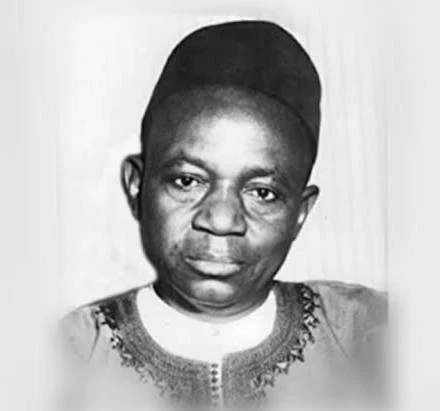
Aminu Kano
Aminu Kano remains one of the most powerful political voices Nigeria has ever produced. His story is not just about politics. It is about courage, social justice, and the determination of a man who refused to accept oppression as a normal way of life. At a time when Northern Nigeria was controlled by powerful elites and traditional aristocrats, Aminu Kano stood up for the ordinary people, the poor farmers, the laborers, and the forgotten masses who were known in Hausa as the talakawa.
His life became a symbol of resistance against inequality and a powerful movement for social change. Even decades after his death, his ideas continue to inspire discussions about justice, democracy, and fairness in Nigeria.
Early Life and Background
Aminu Kano was born on August 9, 1920, in Kano city in Northern Nigeria. Kano at the time was one of the most important commercial and cultural centers in West Africa. The city had centuries of history as a center of trade, Islamic scholarship, and political power.
Aminu Kano was born into a respected family with Islamic scholarly roots. His father, Mallam Yusif, was an Islamic scholar and a respected figure in the community. Growing up in such an environment meant that Aminu Kano was surrounded by education, religious teachings, and intellectual discussions from an early age.
But even as a young boy, he began noticing something that troubled him deeply. Society in Northern Nigeria was highly hierarchical. The ruling class and traditional aristocrats held enormous power while the ordinary people struggled with poverty and little opportunity.
This imbalance planted early questions in the mind of the young Aminu Kano.
Education and Intellectual Development
Aminu Kano began his early education in traditional Islamic schools where he studied the Quran and Islamic teachings. These schools were an important part of Northern Nigeria’s educational structure before the expansion of Western education.
Later he attended Kano Middle School and then proceeded to Katsina College, one of the most prestigious schools in Northern Nigeria at the time. Katsina College later became Barewa College, which produced many of Northern Nigeria’s political leaders.
While many of his classmates would go on to become administrators within the colonial system, Aminu Kano developed a very different mindset.
He was deeply influenced by ideas about social equality and justice. He read widely and developed an interest in political philosophy and reform movements happening around the world.
After completing his studies, Aminu Kano became a teacher. Teaching allowed him to interact with young people and shape minds, but it also gave him time to reflect on the political conditions of Northern Nigeria.
The Birth of a Political Activist
During the 1940s, Nigeria was still under British colonial rule. Political movements were beginning to form across the country as Nigerians started demanding independence.
In Northern Nigeria however, political power was tightly controlled by traditional rulers and the aristocratic elite.
Aminu Kano believed this system was deeply unfair.
He saw that most political discussions were dominated by the privileged class while the poor majority had no voice in governance.
In 1950, Aminu Kano made one of the most important moves of his life. He formed a political movement called the Northern Elements Progressive Union.
The party would soon become known simply as NEPU.
NEPU became the platform through which Aminu Kano would challenge the political structure of Northern Nigeria.
The Movement for the Talakawa
Aminu Kano’s political philosophy was simple but revolutionary.
He believed that the poor people of Northern Nigeria deserved dignity, opportunity, and representation.
He used the Hausa word talakawa to describe the ordinary masses. This word became central to his political movement.
Aminu Kano traveled across villages, towns, and cities speaking directly to the people. His speeches were powerful, direct, and filled with passion.
He told farmers that they deserved fair treatment.
He told laborers that their voices mattered.
He told the poor that they were not born to serve the elite forever.
These ideas were radical in Northern Nigeria at the time.
Many traditional rulers and aristocrats saw Aminu Kano as a dangerous agitator.
But to the masses, he became a hero.
NEPU quickly gained popularity among ordinary people who had long felt excluded from political power.
Opposition from the Establishment
Aminu Kano’s growing influence did not come without consequences.
The political elite of Northern Nigeria strongly opposed his movement. They believed his ideas threatened the established order.
He faced constant criticism and political resistance.
There were attempts to silence him, isolate him, and weaken his political influence.
But Aminu Kano was known for his stubborn courage.
He refused to abandon his beliefs.
Instead he continued organizing political campaigns, writing pamphlets, and speaking publicly about inequality.
His ability to communicate in simple language helped him connect with ordinary people in a way many politicians could not.
Nigeria Moves Toward Independence
By the late 1950s, Nigeria was preparing for independence from Britain.
Political negotiations and elections were shaping the future of the country.
While other major political parties focused on regional power and elite interests, Aminu Kano continued advocating for the masses.
Although NEPU was not the dominant party in Northern Nigeria, it remained one of the most important opposition voices.
Aminu Kano’s speeches during this time often emphasized fairness, education, and the need to reduce poverty.
His vision of Nigeria was a country where political power served the people rather than the powerful.
Life After Independence
Nigeria gained independence in 1960.
For many Nigerians, independence symbolized hope and a new beginning.
But Aminu Kano believed independence alone would not solve the problems of inequality and injustice.
He continued his political activism and remained a strong advocate for the rights of ordinary citizens.
Over the years he served in various political roles including being elected to parliament.
He remained a consistent critic of corruption and abuse of power.
Unlike many politicians who became wealthy through politics, Aminu Kano was widely known for his simple lifestyle.
He lived modestly and maintained close relationships with ordinary people.
His humility strengthened his reputation as a leader who truly believed in the cause he represented.
The Second Republic and Presidential Ambition
In the late 1970s Nigeria transitioned back to civilian rule after years of military government.
During this period Aminu Kano became the presidential candidate of the People’s Redemption Party.
The PRP carried forward the same philosophy he had championed for decades.
The party focused on social justice, education for the poor, and economic reforms that would benefit ordinary citizens.
During the 1979 presidential election, Aminu Kano ran as a candidate for the presidency of Nigeria.
Although he did not win the election, his campaign energized many Nigerians who believed in his vision of equality.
In Kano State, his influence was particularly strong. The People’s Redemption Party won significant support in the region.
A Leader of Integrity
One of the most remarkable aspects of Aminu Kano’s life was his personal integrity.
Many Nigerian politicians became known for wealth accumulation and corruption.
Aminu Kano however maintained a reputation for honesty and simplicity.
Stories were often told about how he lived modestly and refused to exploit political office for personal gain.
For many supporters, this made him different from most politicians.
He was seen as a man who truly believed in the principles he preached.
Final Years and Death
Aminu Kano remained active in politics until the final years of his life.
On April 17, 1983, he passed away.
His death marked the end of a remarkable chapter in Nigerian political history.
Across Northern Nigeria thousands of people mourned the loss of a man they considered their champion.
Many saw him as the voice of the poor who had challenged powerful systems without fear.
Legacy and Historical Impact
Today Aminu Kano is remembered as one of Nigeria’s most important political thinkers and reformers.
His ideas about social justice and equality remain relevant in modern Nigerian politics.
Several institutions and landmarks have been named in his honor including Aminu Kano International Airport in Kano State.
For historians, Aminu Kano represents a rare type of political leader.
He was a man who challenged the dominant power structures of his time not for personal ambition but for the dignity of the masses.
His legacy continues to inspire activists, scholars, and politicians who believe that leadership should serve the people.
The Story That Still Lives
The story of Aminu Kano is ultimately a story about courage.
It is the story of a man who refused to accept inequality as destiny.
It is the story of a teacher who became a revolutionary voice for justice.
It is the story of a leader who believed that even the poorest citizen deserved respect, opportunity, and representation.
In the history of Nigeria, few figures have spoken so passionately for the talakawa.
And even today, whenever discussions about justice and fairness arise in Northern Nigeria, the name Aminu Kano is never far from the conversation.
His voice may have gone silent in 1983, but the ideas he fought for continue to echo through the political landscape of Nigeria.


Categories
Read More
Aisha Abimbola Aisha Abimbola was a Nigerian actress, producer, and entrepreneur who was widely known for her roles in Yoruba Nollywood movies. Early Life and Background Aisha Abimbola was born on December 19, 1970, in Lagos State, Nigeria. She grew up in a Yoruba family where culture and storytelling were an important part of daily life. From an early age, she showed strong...

Israel's ongoing military campaign against Iran's nuclear infrastructure has sparked discussions about whether the United States might deploy its most powerful bunker-busting weapons to target heavily fortified Iranian facilities, particularly as President Donald Trump weighs intervention options. Israeli officials maintain that Iran approaches nuclear weapons capability, with enriched uranium...
Michael Collins Ajereh Don Jazzy is one of the most influential music producers and label executives in Africa. Best known as the founder of Mavin Records, he helped shape modern Nigerian pop and Afrobeats through hit-making production, artist development, and a business vision that turned local talent into global stars. Early Life and Background Don Jazzy was born Michael Collins...

Gbenga Adeboye Gbenga Adeboye was a Nigerian comedian, actor, musician, and radio presenter. He was widely regarded as one of the pioneers of Yoruba comedy and comedy music in Nigeria. Early Life and Background Gbenga Adeboye whose full name was Gbenga Adeboye was born on July 3, 1959, in Abeokuta, Ogun State, Nigeria. He grew up in a Yoruba cultural environment where storytelling,...
Efe Irele Efe Irele is a Nigerian actress, producer, and entrepreneur known for her roles in contemporary Nollywood films. With her elegance, confidence, and expressive acting style, she has become one of the notable faces in modern Nigerian cinema. Early Life and Background Efe Irele was born on September 4, in Lagos State, Nigeria. She hails from Delta State in southern...