Environ
MARYAM BABANGIDA: Nigerian Former First Lady
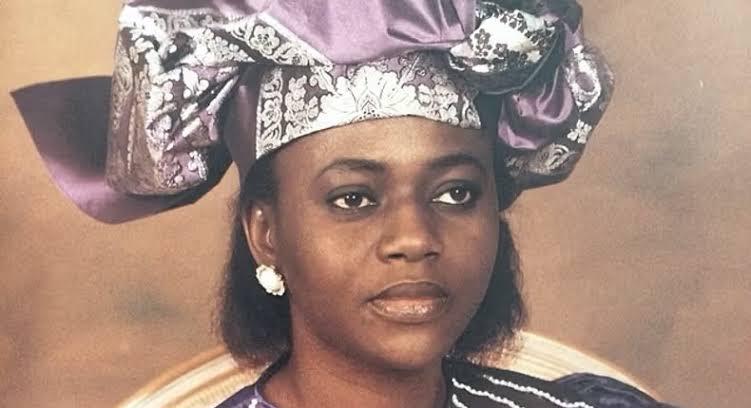
Maryam Babangida
Maryam Babangida was one of the most influential First Ladies in Nigeria’s history. She was the wife of former Nigerian military president Ibrahim Babangida and is widely remembered for transforming the role of the First Lady into an active platform for social development and women empowerment.
During the late 1980s and early 1990s, Maryam Babangida became a symbol of elegance, leadership, and advocacy for rural women across Nigeria.
Early Life and Background
Maryam Babangida was born Maryam King on November 1, 1948, in Asaba.
She grew up in northern Nigeria and spent much of her early life in Kaduna, where she received her early education.
Maryam was known as a disciplined and intelligent young woman. Her upbringing combined both southern Nigerian roots and northern cultural influence, which later helped her connect with people across different parts of the country.
Education
Maryam Babangida began her formal education in Kaduna.
She attended Queen Amina College, one of the most prestigious girls’ schools in northern Nigeria.
After completing her secondary education, she later attended Ahmadu Bello University, where she pursued further studies.
Her education helped prepare her for the leadership role she later assumed as Nigeria’s First Lady.
Marriage to Ibrahim Babangida
Maryam married Ibrahim Babangida in 1969.
At the time, Babangida was a young officer in the Nigerian Army. Their marriage would later place her at the center of Nigerian political life.
The couple had four children, and Maryam Babangida was known for maintaining a strong family life even during the intense political atmosphere of military rule.
Becoming Nigeria’s First Lady
Maryam Babangida became First Lady of Nigeria in 1985 after her husband came to power following a military coup that removed Muhammadu Buhari.
Her tenure as First Lady lasted until 1993, when Ibrahim Babangida stepped down from power.
During this period, she changed the perception of the First Lady’s role in Nigeria by turning it into a platform for national development and humanitarian work.
The Better Life Programme for Rural Women
Maryam Babangida’s most famous legacy was the Better Life Programme for Rural Women, launched in 1987.
The program aimed to improve the lives of women living in rural areas across Nigeria.
Through this initiative, the government supported women in:
• Agriculture and farming
• Small scale businesses
• Education and literacy
• Health awareness
• Cooperative societies
Thousands of rural women gained access to financial support, training, and opportunities through the program.
The Better Life Programme became one of the most significant women empowerment initiatives in Nigeria at the time.
Influence on Nigerian First Ladies
Before Maryam Babangida, the role of Nigeria’s First Lady was mostly ceremonial.
She changed this by introducing organized social programs and development projects under the office of the First Lady.
Her approach influenced many First Ladies who came after her, including Patience Jonathan and Oluremi Tinubu, who also championed social initiatives.
Because of her impact, Maryam Babangida is often regarded as the woman who redefined the role of the Nigerian First Lady.
Personality and Public Image
Maryam Babangida was admired for:
• Her elegance and fashion sense
• Strong communication skills
• Commitment to women’s development
• Leadership and organization
She became one of the most respected women in Nigeria during the late 1980s.
Her fashion style also influenced Nigerian women at the time and helped popularize certain traditional outfits.
Later Life and Death
Maryam Babangida spent much of her later years away from the public spotlight.
Sadly, she passed away on December 27, 2009, at the age of 61 after a brief illness.
Her death was widely mourned across Nigeria, and many leaders praised her contributions to women empowerment and national development.
Legacy
Maryam Babangida remains one of the most iconic First Ladies Nigeria has ever had.
Her Better Life Programme helped improve the lives of thousands of rural women and inspired similar programs in later administrations.
Even decades after leaving office, she is still remembered as a woman who used her position to create real social change.
Her legacy continues to influence conversations about women’s empowerment and leadership in Nigeria.


Catégories
Lire la suite
Mercy Kenneth Mercy Kenneth is a Nigerian actress, singer, and content creator known for her roles as a child actress in Nollywood. She gained popularity for her emotional performances and expressive acting style, quickly becoming one of the most recognizable young talents in the Nigerian film industry. Early Life and Background Mercy Kenneth was born on April 9, 2009, in Lagos...

William Onyeabor In the humid air of southeastern Nigeria, long before streaming platforms and global playlists, a young man sat in a room filled with wires, keyboards, and possibility. He was not chasing fame in the traditional sense. He was chasing sound. Strange, futuristic sound. That young man would later become one of Africa’s most mysterious musical figures. His name was...

Arochukwu Long Juju Shrine In Arochukwu, Abia State, there is a place whose name still makes people lower their voices. Outsiders often call it the Arochukwu Long Juju Shrine, but its older name is Ibini Ukpabi (also written Ibin Ukpabi). Long before Nigeria became a modern nation, this cave temple was more than a spiritual site. It was a court, a warning, and a power that...

Oba Aladetoyinbo Ogunlade Aladelusi In the ancient town of Akure, where rolling hills meet deep Yoruba heritage and palace drums still echo through time, the throne of the Deji stands as a symbol of identity and continuity. Upon that throne sits Aladetoyinbo Ogunlade Aladelusi, a monarch whose journey began not in palace corridors, but in the structured world of banking and finance....
History often remembers generals, presidents, and men with guns. But sometimes, the real revolution begins with a mother who is tired of burying children. The story of Leymah Gbowee is not just about politics or protest. It is about a woman who refused to let war define her country. It is about courage born from pain. It is about how ordinary women, dressed in white and armed only with...