О нас
О нас
Leymah Gbowee: The Woman Who Turned Tears Into a Revolution
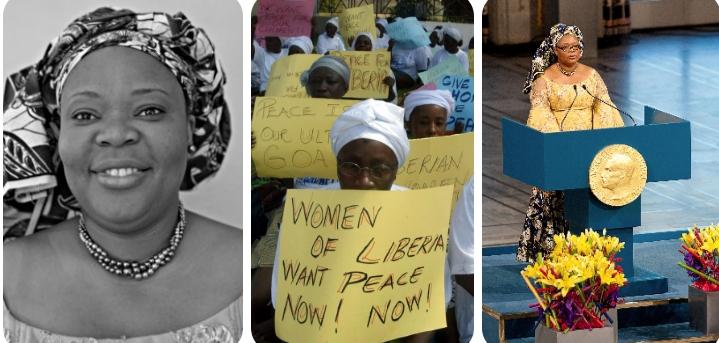
History often remembers generals, presidents, and men with guns. But sometimes, the real revolution begins with a mother who is tired of burying children. The story of Leymah Gbowee is not just about politics or protest. It is about a woman who refused to let war define her country. It is about courage born from pain. It is about how ordinary women, dressed in white and armed only with faith and determination, helped end a brutal civil war in Liberia.
A Childhood Before the Storm
Leymah Roberta Gbowee was born on February 1, 1972, in central Liberia. She grew up in a country that, at the time, was relatively peaceful. Liberia had been founded by freed American slaves in the 19th century and carried a unique identity in Africa. Though political tensions simmered beneath the surface, daily life for young Leymah was filled with school, friends, and dreams.
She was bright and ambitious. As a teenager, she hoped to study medicine. She wanted to become a doctor. Education was her path forward, her escape from poverty, and her hope for something bigger.
But history had other plans.
In 1989, when Leymah was just seventeen years old, Liberia descended into chaos. The First Liberian Civil War erupted when rebel forces led by Charles Taylor launched an uprising against President Samuel Doe. What followed was unimaginable brutality. Neighbors turned against neighbors. Child soldiers roamed the streets. Entire communities were destroyed.
The safe world Leymah knew vanished almost overnight.
War Breaks Everything
When the war reached Monrovia, Liberia’s capital, fear became a daily companion. Leymah’s dreams of becoming a doctor were shattered. Schools closed. Families were displaced. Gunfire replaced laughter.
Like many others, Leymah fled for safety. She experienced firsthand what it meant to be trapped in a war zone. Hunger, uncertainty, and trauma became normal. She saw young boys, barely teenagers, carrying weapons bigger than their bodies. She saw women assaulted and families torn apart.
The war did not just destroy buildings. It destroyed hope.
During these chaotic years, Leymah entered into a relationship that became abusive. She endured domestic violence while trying to survive the wider violence around her. She became a mother at a young age, eventually raising six children. The weight of responsibility rested heavily on her shoulders.
There were moments when she felt broken. She later spoke openly about battling depression, fear, and exhaustion. But even in those darkest moments, something inside her refused to die.
Finding Purpose in Pain
In the mid 1990s, as Liberia struggled through cycles of war and fragile peace, Leymah found an unexpected calling. She trained as a trauma counselor through a program supported by the Lutheran Church. Her job was to work with former child soldiers.
This work changed her life.
Sitting face to face with boys who had committed atrocities, Leymah saw something deeper. She saw victims who had been forced into violence. She saw children robbed of innocence. She realized that healing Liberia would require more than politics. It would require emotional and spiritual restoration.
Through counseling, she began to understand the true cost of war. She also began to understand her own strength.
The Spark of a Movement
In 2003, Liberia was still engulfed in its second civil war. President Charles Taylor remained in power, and rebel groups continued fighting. The suffering seemed endless.
One night, Leymah had what she later described as a divine revelation. She dreamed of women gathering together to pray for peace. When she woke up, she knew what she had to do.
She began organizing women through the Women in Peacebuilding Network. Christian and Muslim women joined hands. In a country divided by violence, these women refused to be divided by religion.
They dressed in white to symbolize peace. They gathered in markets, churches, mosques, and public fields. They prayed. They sang. They protested.
This movement became known as the Women of Liberia Mass Action for Peace.
Power in Unity
What made the movement powerful was its simplicity. These were not armed fighters. They were mothers, market women, teachers, and grandmothers. They demanded one thing: peace.
Leymah Gbowee stood at the center of it all, not as a politician but as a unifier. She convinced women that their voices mattered. She reminded them that they were the backbone of their communities.
The protests grew larger. Thousands of women sat in the sun for weeks, refusing to leave until their leaders negotiated an end to the war.
When peace talks began in Ghana, Leymah led a group of women there. Frustrated by slow progress, the women staged a dramatic sit in outside the negotiation hall. They locked arms and blocked the doors, refusing to let the warlords leave without reaching an agreement.
It was a bold act of civil disobedience. Security forces threatened arrest. But the women did not move.
Eventually, the pressure worked.
In August 2003, a peace agreement was signed. Charles Taylor resigned and went into exile. Liberia’s long nightmare began to end.
A New Chapter for Liberia
After the war, Liberia faced the enormous task of rebuilding. In 2005, the country elected Africa’s first female president, Ellen Johnson Sirleaf. The victory was historic, and many saw it as connected to the groundwork laid by women like Leymah Gbowee.
Though not a politician herself, Leymah continued advocating for women’s leadership, justice, and healing. She founded the Gbowee Peace Foundation Africa to support education and empowerment for girls.
Her work gained global recognition.
The Nobel Prize
In 2011, Leymah Gbowee was awarded the Nobel Peace Prize alongside Ellen Johnson Sirleaf and Yemeni activist Tawakkol Karman. The Nobel Committee honored them for their nonviolent struggle for women’s safety and for women’s rights to full participation in peace building work.
When Leymah stood on that global stage, she carried with her the memory of war torn Liberia and the image of women dressed in white under the hot African sun.
Her journey from a frightened teenager in a war zone to a Nobel laureate was nothing short of extraordinary.
Struggles After Victory
Life after victory was not without challenges. Leymah sometimes spoke critically about corruption and the slow pace of reform in Liberia. She remained independent, guided by conscience rather than political loyalty.
She also shared openly about her personal struggles. In her memoir Mighty Be Our Powers, she described her abusive relationship and her moments of despair. By telling her story honestly, she gave others permission to speak their own truths.
Legacy of a Reluctant Hero
Leymah Gbowee never set out to become famous. She set out to survive. Yet survival turned into leadership. Leadership turned into revolution.
Her legacy is not just that she helped end a war. It is that she redefined power. She proved that nonviolence can confront brutality. She showed that women, often dismissed in political spaces, can shift the course of history.
Today, she continues to speak around the world about peace, gender equality, and justice. Her voice carries authority because it was forged in suffering.
The Meaning of Her Story
Leymah Gbowee’s story reminds us that leadership does not always begin in palaces or parliaments. Sometimes it begins in kitchens and refugee camps. Sometimes it begins with tears.
She once said that when women come together with a collective voice, they can make a difference.
And she did.
From a teenage girl whose dreams were interrupted by war to a global symbol of peace, Leymah Gbowee transformed her pain into purpose. Her life teaches that even in the darkest times, ordinary people can rise and demand something better.
Her story is not just Liberia’s story. It is the story of resilience. It is the story of faith. It is the story of a woman who believed that peace was possible and refused to stop until it arrived.

Категории
Больше
Ycee In the heart of Lagos, where traffic never truly sleeps and ambition hums louder than generators, a young boy once scribbled rhymes in the corners of his notebooks. He was not yet the confident rapper commanding stages across Africa. He was simply Oludemilade Martin Alejo, a boy with sharp wit, restless curiosity, and a deep love for words. The world would later know him as Ycee. But...

Apples are among the most popular and nutritious fruits in the world. They have been cultivated for thousands of years and are widely known for their health benefits, refreshing taste, and versatility. The saying “an apple a day keeps the doctor away” became popular because apples contain many nutrients that support overall health. Below is a clear explanation of the...

In a significant operation, the National Agency for Food and Drug Administration and Control (NAFDAC) has uncovered a warehouse in Kaduna State harboring expired non-alcoholic beverages valued at approximately ₦35 million. The discovery follows a tip-off from a concerned citizen, leading to the interception of two buses and a golf wagon car loaded with expired drinks en route to Kwanar...

Adesua Etomi Adesua Etomi-Wellington is an award-winning Nigerian actress known for her elegance, emotional depth, and strong screen presence. She rose to prominence through major Nollywood films and later became one of the most admired public figures in Nigeria following her high-profile marriage to singer and politician Banky W. Early Life and Background Adesua Etomi was born...

Akinwunmi Ambode Akinwunmi Ambode is a Nigerian politician, accountant, and public administrator. He is best known for serving as the Governor of Lagos State from 2015 to 2019. Early Life and Background Akinwunmi Ambode whose full name is Akinwunmi Ambode was born on June 14, 1963, in Epe, Lagos State, Nigeria. He grew up in Lagos where he developed a strong interest in leadership,...