Σχετικά
The Pyramids of Giza: The Eternal Monuments That Defied Time
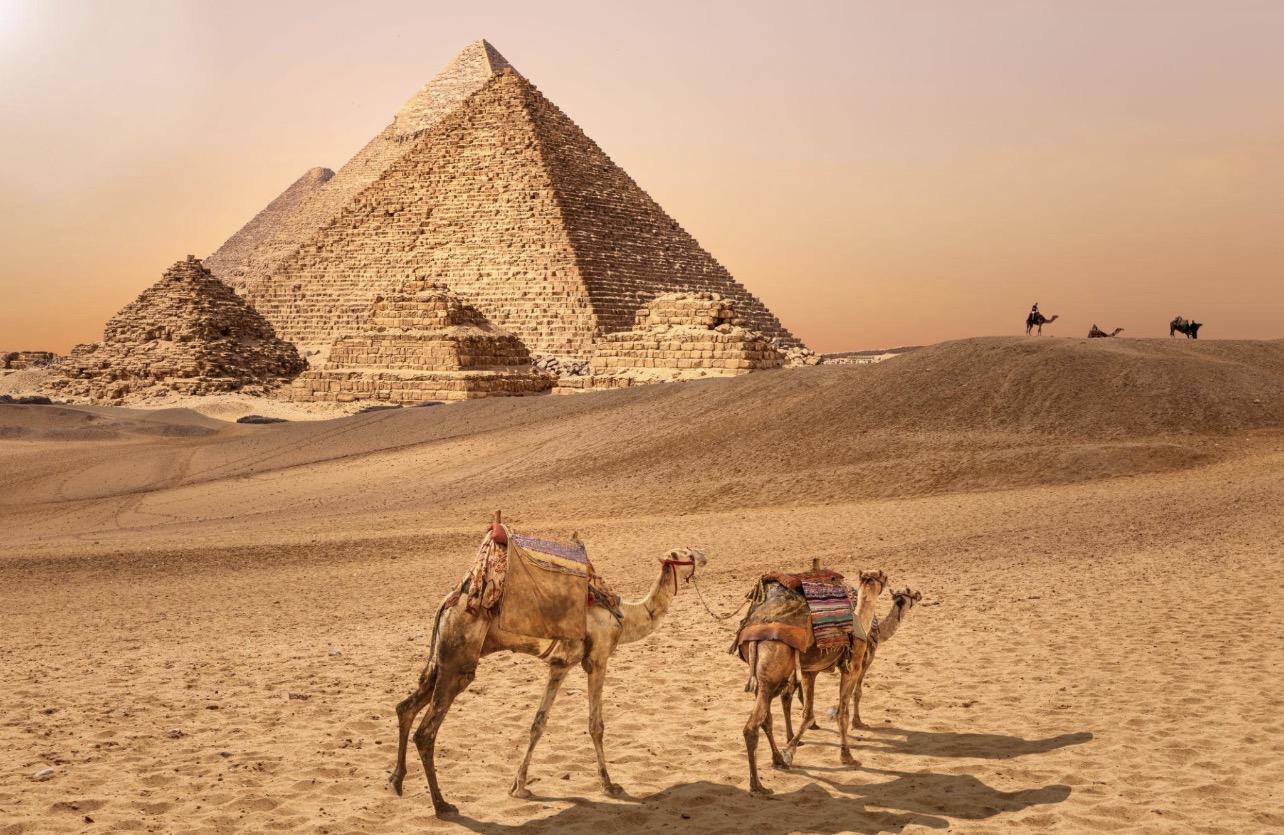
The Pyramids of Giza
Long before modern cities rose with steel and glass, long before machines carved roads across continents, a civilization along the banks of the Nile built structures so extraordinary that they would puzzle the world for thousands of years.
These structures are the Pyramids of Giza, the most famous monuments of ancient Egypt and among the most iconic creations of humanity. Rising from the golden sands near modern-day Giza, the pyramids have stood for more than 4,500 years, silently watching empires rise and fall.
They are not just massive stones arranged into triangular shapes. They are symbols of power, belief, engineering genius, and human ambition. Every block tells a story about a time when kings were believed to be gods and when the afterlife mattered more than life itself.
Their history is filled with mystery, incredible achievements, and fascinating stories that still captivate historians, archaeologists, and travelers today.
A Civilization Built Around Eternity
To understand the pyramids, one must first understand ancient Egypt itself.
Ancient Egyptians believed life on Earth was only a temporary stage. The true journey began after death. According to their religion, the soul would continue living in another world, but only if the body remained preserved and the spirit could recognize it.
This belief gave birth to the art of mummification and the construction of elaborate tombs.
The kings of Egypt, known as pharaohs, believed they were divine rulers chosen by the gods. When a pharaoh died, he was expected to join the gods in the afterlife. Therefore, his burial place had to be grand enough for eternity.
Early Egyptian rulers were buried in simple structures called mastabas, flat rectangular tombs made of mud bricks. But over time, these tombs evolved into something far more impressive.
By the time of the Fourth Dynasty around 2600 BC, Egyptian builders had perfected the idea of the pyramid.
And that is when the most ambitious construction project in ancient history began.
The Birth of the Giza Plateau
The pyramids stand on the Giza Plateau, a rocky desert area west of the Nile River. This location was chosen carefully.
The ground was solid limestone bedrock, perfect for supporting enormous structures. The plateau also faced the rising and setting sun, which held spiritual importance in Egyptian belief.
Three great pyramids dominate the site:
1. The Great Pyramid of Khufu
2. The Pyramid of Khafre
3. The Pyramid of Menkaure
Together they form the famous Pyramid Complex of Giza.
Each pyramid belonged to a different pharaoh of Egypt’s Fourth Dynasty.
But one of them would become the most famous monument ever built.
The Great Pyramid of Khufu: The Wonder of the Ancient World
The largest and most famous pyramid is the Great Pyramid, built for the pharaoh Khufu.
Construction began around 2580 BC and lasted about twenty years.
When it was completed, the pyramid stood about 146 meters (481 feet) tall. For nearly 4,000 years, it remained the tallest man made structure in the world.
It contained approximately 2.3 million stone blocks, each weighing between 2 and 15 tons.
Imagine thousands of workers cutting limestone blocks, transporting them across the desert, and lifting them into position without cranes or modern machines.
The precision of the construction still amazes engineers today.
The base of the pyramid is almost perfectly square, with each side aligned closely with the cardinal directions north, south, east, and west.
Historians believe thousands of skilled laborers worked in rotating teams, supported by farmers during the Nile flood season when agricultural work paused.
Contrary to old myths, the pyramids were not built by slaves, but by organized laborers who were fed, housed, and respected for their work.
Inside the Great Pyramid are narrow passages, hidden chambers, and mysterious shafts.
One of the most famous rooms is the King’s Chamber, where Khufu’s granite sarcophagus still rests.
Even today, archaeologists continue discovering new hidden spaces inside the pyramid using advanced scanning technology.
The Pyramid of Khafre and the Guardian of Stone
The second pyramid was built for the pharaoh Khafre, the son of Khufu.
Although slightly smaller than his father’s pyramid, it appears taller because it was built on higher ground.
At the top of Khafre’s pyramid, some of the original smooth white limestone casing stones are still visible.
When the pyramids were first completed, they were covered in polished white limestone that reflected sunlight brilliantly. From miles away they would have shined like giant mirrors in the desert.
Near Khafre’s pyramid stands one of the most mysterious sculptures in the world.
The legendary Great Sphinx of Giza.
The Sphinx has the body of a lion and the head of a human, believed to represent Pharaoh Khafre himself.
Carved directly from limestone bedrock, the statue stretches about 73 meters long and 20 meters high.
For centuries, the Sphinx was buried up to its neck in sand. Explorers and archaeologists gradually uncovered it in the nineteenth and twentieth centuries.
Its missing nose remains one of the many mysteries surrounding the monument.
The Pyramid of Menkaure: The Smallest but Still Mighty
The third pyramid belongs to the pharaoh Menkaure.
It is the smallest of the three major pyramids, standing about 65 meters tall.
Despite its smaller size, Menkaure’s pyramid once had an elegant casing made partly of red granite, giving it a distinctive appearance.
Around it stand three smaller pyramids believed to be tombs for royal queens.
Although not as large as the other two, Menkaure’s pyramid represents the final phase of pyramid building at Giza.
After this era, pyramid construction gradually declined as tomb styles evolved.
How Were the Pyramids Built?
For centuries, people wondered how ancient Egyptians could build such enormous structures without modern technology.
Many theories have been proposed.
Some suggested massive ramps made of mud bricks were used to drag stones upward. Others believe spiral ramps wrapped around the pyramid as construction rose.
Workers likely used wooden sledges to move stones across wet sand, reducing friction.
Archaeologists have also discovered remains of worker villages near Giza, proving that thousands of laborers lived nearby during construction.
These workers included engineers, masons, transporters, and craftsmen.
The pyramids were not just tombs. They were massive national projects that required organization, planning, and resources on a scale rarely seen in ancient times.
A Monument to Power and Faith
The pyramids were built not only as tombs but also as statements of power.
They showed the authority of the pharaoh and the unity of the Egyptian state.
The structures symbolized a stairway to the heavens, helping the king ascend to join the gods.
Their triangular shape may have represented rays of sunlight descending from the sky, linking the pharaoh to the sun god Ra.
Everything about the pyramids was designed with cosmic meaning.
Their alignment with stars and cardinal directions suggests Egyptians had impressive astronomical knowledge.
The Pyramids Through the Ages
For thousands of years, the pyramids have fascinated travelers, historians, and conquerors.
Ancient Greek historian Herodotus visited Egypt around 450 BC and wrote some of the earliest descriptions of the pyramids.
Later Roman and Arab explorers also studied them.
During medieval times, many of the smooth limestone casing stones were removed and used to build buildings in nearby Cairo.
This is why the pyramids today appear rough compared to their original shining surfaces.
Despite centuries of weather, looting, and erosion, the pyramids still stand strong.
Why the Pyramids Became One of the Seven Wonders
The Great Pyramid of Khufu holds a unique place in history.
It is the only surviving structure of the Seven Wonders of the Ancient World.
While the Hanging Gardens of Babylon and the Colossus of Rhodes vanished long ago, the Great Pyramid remains almost intact.
Its survival is a testament to the extraordinary engineering skills of the ancient Egyptians.
Even modern engineers admire the precision of its design.
The Pyramids Today
Today, the pyramids attract millions of visitors every year.
Tourists from across the globe travel to Egypt to see these ancient monuments rising from the desert sands.
They have become symbols of Egyptian identity and one of the most recognizable landmarks on Earth.
Archaeologists continue exploring the site, uncovering hidden chambers, worker tombs, and artifacts that deepen our understanding of ancient Egypt.
The pyramids are not just relics of the past.
They are living pieces of human history that still inspire wonder.
Why the Pyramids Are Truly Historic
What makes the Pyramids of Giza historic is not just their age.
It is the combination of engineering brilliance, cultural meaning, religious belief, and human ambition.
They represent the peak of ancient Egyptian civilization.
They prove that thousands of years ago, humans were capable of organizing massive projects and creating monuments that could survive for millennia.
The pyramids remind us that history is not only written in books.
Sometimes it is carved in stone and left standing for eternity.
More than four thousand years later, the pyramids still whisper the same message to the world.
Human beings are capable of building things that outlive time itself.


Κατηγορίες
Διαβάζω περισσότερα
Majek Fashek There are musicians who entertain and there are musicians who become a movement. The life of Majek Fashek was a journey of brilliance, struggle, faith, controversy, and redemption. He was called The Rainmaker because of one song, but his story was far deeper than a single hit. It was the story of a boy from Benin City who picked up a guitar and ended up carrying the spirit...

Kilwa Kisiwani Along the warm blue waters of the Indian Ocean, where waves gently touch the eastern shores of Africa, there once stood a chain of powerful and beautiful cities known as the Swahili stone towns. Among them, one city rose above the rest in wealth, influence, and legend. That city was Kilwa Kisiwani. Today Kilwa Kisiwani is a quiet island off the southern coast of...

Wole Ojo Wole Ojo is a Nigerian actor best known for his breakout role in the movie Maami. With his calm screen presence and emotional delivery, Wole Ojo became widely recognized as one of Nollywood’s promising actors after his performance in the Film Wole Ojo was born on June 6, 1984, in Lagos State, Nigeria. As of 2026, he is 41 years old Early Life and Background Wole...

Displaced women in Sokoto State, Nigeria, are enduring unbearable conditions in informal IDP (Internally Displaced Persons) camps, where extreme heat, overcrowding, and lack of basic amenities make daily life a struggle for survival. Fatima Abdullahi, a 36-year-old nursing mother, described the heat as “feeling like dying,” recalling fainting episodes caused by prolonged exposure to...
Petroleum products marketers have reduced the price of Premium Motor Spirit in Nigeria. The president of the Independent Petroleum Marketers Association of Nigeria, Abubakar Maigandi, disclosed this in an interview with DAILY POST on Wednesday. He said its members in Northern Nigeria, including Abuja, have slashed PMS prices from Wednesday to between N930 and N940 per litre from N945 and...