О нас
О нас
Babatunde Fashola: The Relentless Reformer Who Redefined Urban Governance in Nigeria
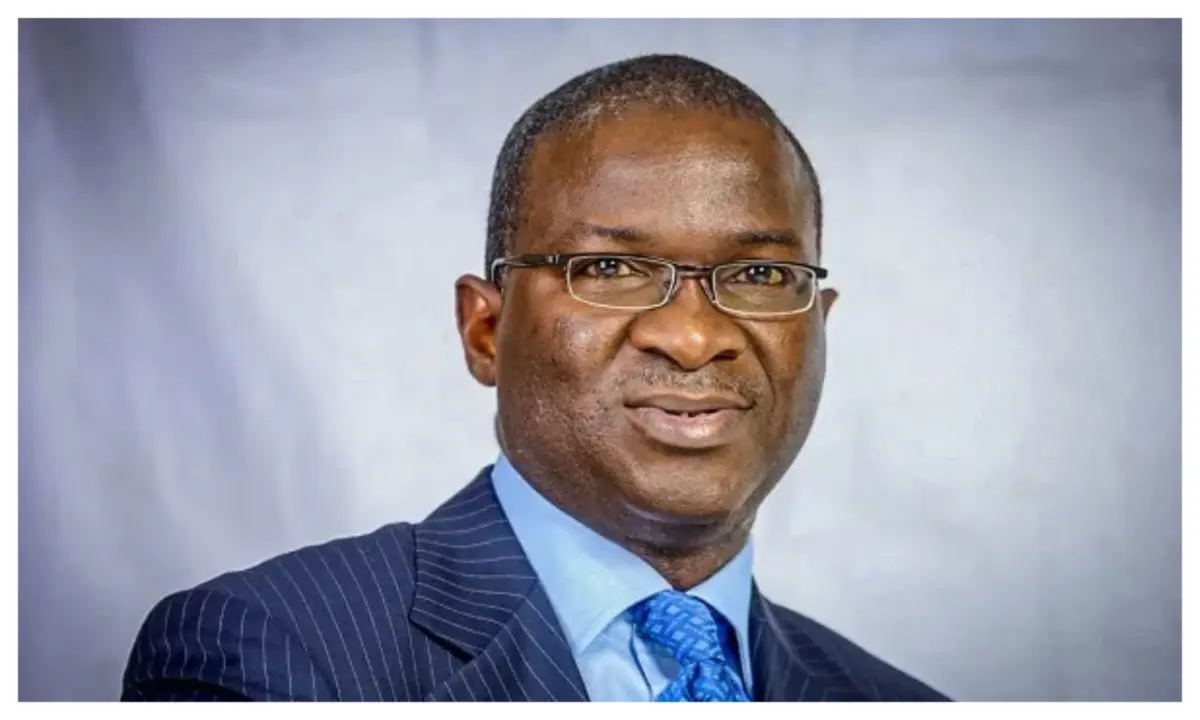
Babatunde Fashola
In the restless heartbeat of Lagos, where traffic never truly sleeps and ambition rises with the Atlantic breeze, a young lawyer once imagined a city that worked. A city where roads were smooth, refuse disappeared on time, and governance felt structured rather than chaotic. That young man would grow into one of Nigeria’s most recognized public administrators. His name is Babatunde Fashola.
His story is not merely about politics. It is about law, discipline, reform, controversy, and the difficult art of governing one of Africa’s most complex cities.
Early Life and Education
Babatunde Raji Fashola was born on June 28, 1963, in Lagos State, Nigeria. He grew up in a city already bursting with commercial energy and urban pressure. Lagos was not just a city. It was an experience. The crowded streets, vibrant markets, and endless movement shaped his early understanding of public order and disorder.
He attended Birch Freeman High School in Surulere before proceeding to the University of Benin, where he studied Law. Graduating with a Bachelor of Laws degree, he later attended the Nigerian Law School and was called to the Bar in 1988.
Law gave Fashola structure. It trained him to argue with precision and to think within systems. Those who encountered him in his early career often described him as meticulous and disciplined.
Rise in the Legal Profession
After being called to the Bar, Fashola joined the law firm of K.O. Tinubu and Company. Through dedication and steady growth, he rose to become a partner. His years in private legal practice sharpened his negotiation skills and deepened his understanding of corporate and constitutional matters.
His career path would later intersect with politics in a significant way when he became involved with Bola Ahmed Tinubu, who was then the Governor of Lagos State.
Entry into Politics
Fashola’s political career began quietly. He served as Chief of Staff to Governor Bola Ahmed Tinubu from 2002 to 2007. In that role, he worked behind the scenes, observing the machinery of governance at close range.
Many Lagosians did not know him at the time. He was not a loud political figure. But within government circles, he was known for organization and discipline. His appointment as the gubernatorial candidate of the Action Congress in 2007 surprised some observers. He was not seen as the typical grassroots politician. He was technocratic, composed, and reserved.
When he won the 2007 governorship election, expectations were mixed. Some doubted whether a lawyer with limited public political exposure could manage Lagos, a state with over twenty million residents and enormous infrastructural challenges.
Governing Lagos State
From 2007 to 2015, Fashola served two terms as Governor of Lagos State. His administration focused heavily on infrastructure, environmental reform, and public order.
One of his notable achievements was expanding the Bus Rapid Transit system, which helped improve urban transportation. Roads were reconstructed, and traffic management initiatives were strengthened. The Lekki Ikoyi Link Bridge, completed during his tenure, became both a functional roadway and a symbolic landmark of modern Lagos.
Environmental sanitation campaigns intensified. Street trading restrictions were enforced in certain areas. Drainage systems were rehabilitated to combat flooding.
Supporters praised his attention to detail and visible urban transformation. They credited him with helping reposition Lagos as a more structured megacity.
However, governance in Lagos was not without controversy. Enforcement of environmental laws sometimes drew criticism for being harsh. Demolition of illegal structures displaced some residents. As with many reform driven administrations, his policies generated both admiration and resentment.
Yet, by the end of his tenure in 2015, Fashola had established a reputation as one of Nigeria’s most effective state governors.
Transition to National Leadership
In 2015, after the victory of the All Progressives Congress at the federal level, Fashola was appointed Minister of Power, Works and Housing under President Muhammadu Buhari. It was an enormous portfolio, combining three critical sectors.
Nigeria’s power sector had long struggled with insufficient generation and distribution challenges. Roads across the country required rehabilitation. Housing deficits remained high.
Fashola approached the role with his characteristic methodical style. Major road projects were revived, including federal highways that had been abandoned for years. Efforts were made to improve electricity supply, though the sector’s structural problems proved deeply complex.
Supporters argued that he brought discipline and transparency to federal infrastructure management. Critics contended that progress in the power sector remained slower than expected.
In 2019, the ministries were separated, and he continued as Minister of Works and Housing until 2023. During this period, several highway reconstruction projects gained visibility, including the Lagos Ibadan Expressway and the Second Niger Bridge’s final stages, though the latter involved multiple administrations.
Leadership Style
Babatunde Fashola is known for articulate public speeches and structured presentations. He frequently references policy frameworks and legal provisions in discussions. Unlike flamboyant politicians, he projects calm authority.
His style emphasizes institutional reform rather than populist gestures. This technocratic approach has won him admiration among professionals and urban middle class communities.
However, critics argue that technocracy must be balanced with grassroots political engagement. Fashola’s public persona has often appeared more administrative than populist.
Personal Life and Character
Fashola is married to Abimbola Fashola, and they have children together. Throughout his career, he has maintained a relatively composed family life, avoiding excessive public drama.
He is known for his polished dress sense and composed demeanor. Even under political pressure, he rarely engages in emotional outbursts.
Challenges and Criticisms
No public figure escapes scrutiny. During his tenure as governor, questions were raised about certain expenditures and contracts. As minister, he faced criticism over electricity tariffs and housing affordability.
Nigeria’s power sector, deeply affected by generation gaps, transmission limitations, and distribution inefficiencies, proved difficult to reform swiftly. Many Nigerians expected rapid transformation, but structural constraints slowed progress.
Despite criticism, Fashola remained consistent in defending policy choices with data and legal reasoning.
Legacy and Impact
Babatunde Fashola’s political journey reflects the complexities of governance in a developing democracy. He governed Nigeria’s most economically significant state during a period of rapid urban expansion. He later managed federal infrastructure portfolios at a time of economic strain and declining oil revenues.
His legacy in Lagos remains particularly strong. Many credit him with accelerating urban modernization. The visible transformation of road networks, public transportation systems, and environmental order reshaped perceptions of what state level governance could achieve.
At the federal level, his record remains debated. Yet, few deny his work ethic and administrative discipline.
From the crowded streets of Lagos Island to the executive chambers of Abuja, Fashola’s journey has been marked by preparation, precision, and persistence.
He entered politics not as a street campaigner but as a lawyer shaped by order. He governed Lagos with calculated reform. He stepped into federal leadership during challenging times. And through it all, he maintained a composed presence in Nigeria’s often turbulent political landscape.
Whether remembered primarily as a reformist governor or as a national infrastructure manager, Babatunde Fashola’s name remains firmly written in Nigeria’s governance history.


Категории
Больше
Nonso Diobi Nonso Diobi is a Nigerian actor, director, and film producer who became one of Nollywood’s most popular romantic and action stars in the early 2000s. Known for his youthful looks and energetic performances, he was a leading face during Nollywood’s golden era. Early Life and Background Nonso Diobi was born on July 17, 1976, in Enugu State, Nigeria. He...

Akpororo Akpororo is a Nigerian comedian, singer, and entertainer. He is widely known for his energetic stand up comedy performances and for combining comedy with gospel style music. Early Life and Background Akpororo whose real name is Bowoto Jephthah Oluwatiseyifumi Tanimola was born on October 14, 1989, in Warri, Delta State, Nigeria. He grew up in a humble background and...
Governor Nasir Idris of Kebbi State has signed a strategic partnership with Chinese security firm G-Safety to bolster the fight against banditry and escalating violence by the Lakurawa terrorist group across the state. The governor’s office described the deal as a “strategic collaboration on intelligence and technology,” aimed at enhancing local capacity to respond to...
The recent stealth bomber strike on Iran’s nuclear sites has once again highlighted how far modern military technology has evolved. The aircraft used in the attack is considered one of the most advanced flying machines ever built — nearly undetectable, fast, and devastatingly precise. For many nations, this serves as a stark reminder of the critical role that science and technology...
Odunlade Adekola Odunlade Adekola is a celebrated Nigerian actor, filmmaker, producer, and director who has become one of the most recognizable faces in the Yoruba segment of Nollywood. Known for his versatility, comic timing, emotional depth, and energetic screen presence, he has built a remarkable career that spans over two decades. His journey from a humble background to...