Σχετικά
Oba Aladetoyinbo Ogunlade Aladelusi The Banker Prince Who Became the Deji of Akure
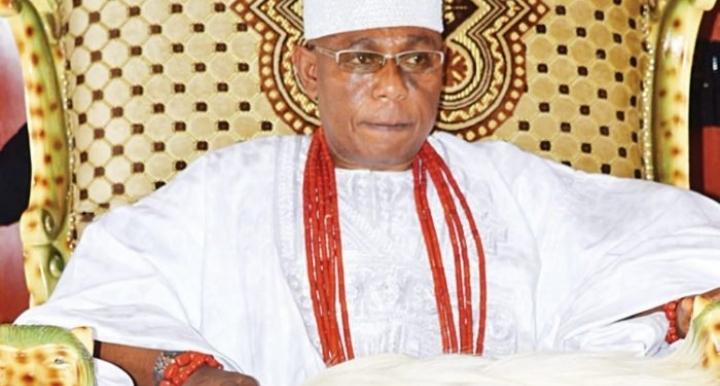
Oba Aladetoyinbo Ogunlade Aladelusi
In the ancient town of Akure, where rolling hills meet deep Yoruba heritage and palace drums still echo through time, the throne of the Deji stands as a symbol of identity and continuity. Upon that throne sits Aladetoyinbo Ogunlade Aladelusi, a monarch whose journey began not in palace corridors, but in the structured world of banking and finance.
His story is one of preparation, patience, controversy, resilience, and restoration.
Royal Blood and Early Years
Oba Aladetoyinbo Ogunlade Aladelusi was born on February 9, 1956, into the Osupa Ruling House of Akure. The Deji of Akure is the paramount ruler of the Akure Kingdom, an ancient Yoruba settlement with roots stretching back centuries.
Growing up in Akure, young Aladetoyinbo was conscious of his royal lineage, yet his upbringing emphasized education and discipline rather than entitlement. The palace was a place of reverence, but he was encouraged to carve his own path before destiny might call him home.
Education and Banking Career
He attended Aquinas College in Akure before proceeding to Yaba College of Technology, where he studied accountancy. His academic foundation laid the groundwork for a career in finance.
Aladelusi went on to work in Nigeria’s banking sector, building a reputation as a disciplined and competent professional. He rose through various financial institutions, gaining experience in administration, strategic planning, and corporate governance.
For decades, he lived as a banker, navigating boardrooms and financial systems rather than palace courtyards.
Yet the thread of ancestry remained unbroken.
The Throne of the Deji
The Deji of Akure is not merely a ceremonial figure. The throne represents the spiritual and political headship of the Akure Kingdom. The selection of a Deji follows a deeply rooted traditional process involving kingmakers and ruling houses.
In 2010, following the removal of the previous Deji, the throne became vacant. The process of selecting a new monarch unfolded within traditional structures.
In 2015, Aladetoyinbo Ogunlade Aladelusi was chosen and installed as the 48th Deji of Akure.
The banker became a king.
His coronation ceremony was steeped in Yoruba ritual. Chiefs in traditional attire gathered within the palace grounds. Sacred rites affirmed his authority. He ascended the throne as Oba Aladetoyinbo Ogunlade Aladelusi, Odundun II.
A Modern Monarch with Corporate Experience
Oba Aladelusi’s reign reflects the influence of his professional background. He approached palace administration with organizational discipline.
He emphasized development, youth empowerment, and collaboration with Ondo State authorities. He advocated for modernization within Akure while preserving cultural identity.
Under his leadership, the Akure Kingdom maintained its traditional festivals and rites, reinforcing community cohesion.
Challenges and Suspension
However, his reign has not been without turbulence.
In 2020, Oba Aladelusi faced controversy following a public altercation involving his former wife. The incident sparked public debate and drew attention from the Ondo State government.
Subsequently, he was suspended from office by the state government.
The suspension was a dramatic moment in his reign. Traditional rulers rarely face such public disciplinary action.
For months, the throne stood under a cloud of uncertainty.
Yet tradition and legal processes continued to unfold.
Restoration to the Throne
After investigations and appeals, Oba Aladelusi was eventually reinstated.
His return to the throne signaled both resilience and the complexity of modern traditional leadership, where royal authority intersects with constitutional governance.
The episode underscored that even ancient institutions operate within contemporary legal frameworks.
Upon restoration, the Deji resumed his responsibilities with renewed focus on stability and unity within Akure.
Custodian of Akure Heritage
Akure is one of the oldest Yoruba settlements, believed to have been founded by descendants of Oduduwa. The Deji serves as spiritual father and cultural custodian of the people.
Oba Aladelusi presides over traditional festivals such as the Ulefunta Festival, which celebrates Akure’s origins and ancestral ties.
Through these ceremonies, he reinforces identity in a rapidly modernizing environment.
Balancing Authority and Modern Governance
The Deji of Akure operates within a complex system where traditional authority must coexist with state government structures.
Oba Aladelusi has worked to maintain respectful relationships with successive governors of Ondo State while safeguarding the dignity of his throne.
His leadership style blends royal protocol with corporate pragmatism.
Personal Life
Oba Aladelusi is married and has children. His family life, like that of many Yoruba monarchs, reflects both tradition and modern influence.
His public image combines royal regalia during cultural ceremonies with the calm demeanor of a former banker accustomed to structured environments.
A Kingdom in Transition
Akure has grown significantly over the decades, evolving into a state capital with expanding infrastructure, universities, and commercial activity.
As Deji, Oba Aladelusi oversees a kingdom navigating urban growth and cultural preservation simultaneously.
He has advocated unity among chiefs and community leaders, emphasizing development initiatives that benefit the broader population.
Legacy in Motion
Oba Aladetoyinbo Ogunlade Aladelusi’s reign is still unfolding. His story reflects both the dignity and vulnerability of traditional leadership in modern Nigeria.
He represents a generation of monarchs who came from professional careers into ancestral authority.
His journey from banking halls to palace halls mirrors the evolving face of Yoruba kingship.
In the palace courtyard of Akure, where drums announce royal presence and chiefs bow in deference, the Deji continues to sit as guardian of heritage.
His life story is one of rise, trial, restoration, and continuity.
He is not merely a symbol of tradition.
He is a reminder that even ancient thrones are occupied by human beings shaped by education, career, controversy, and conviction.
And in Akure, where hills guard the town and history whispers through festivals, Oba Aladetoyinbo Ogunlade Aladelusi reigns as both modern administrator and ancestral king.

Κατηγορίες
Διαβάζω περισσότερα
In a bid to address the worsening food insecurity across Nigeria, the Federal Government has entered discussions with the Japan International Cooperation Agency (JICA) to secure a ¥15 billion (approx. $110 million) emergency loan. The development was disclosed in an official statement issued by the Federal Ministry of Finance, highlighting the urgency to boost food production, stabilize...

Selecting a China Valve Manufacturer involves more than comparing specifications and reviewing catalog data. Industrial valves operate within demanding pipeline systems where pressure variation, temperature fluctuation, and chemical exposure create continuous operational challenges. Once equipment is installed, consistent technical communication and responsive assistance become essential to...

They knew Kọlá was different the day he spoke to someone no one could see. At seven, he would pause mid-play, tilt his head, and answer the air. He warned people not to walk certain paths. He cried before deaths. He laughed at empty corners of the night. In a village where silence was respect, Kọlá’s listening felt like danger. “They follow him,” the elders...

Ibadan: From War Camp to Warrior Empire The Full Untold Story of Its Rise Ibadan is not just a city. It is a story of war, survival, ambition, betrayal, strategy, and power. It is a city born from fire and raised by warriors. Unlike many Yoruba towns that trace their origin to royal migration from Ile Ife, Ibadan emerged from the chaos of war. It was not founded by a single crowned king...

Christianity has played a powerful role in shaping Nigeria’s culture, education, and national identity. But do you know how it all began? The story of Christianity in Nigeria stretches back over five centuries — from early Portuguese missionaries to today’s thriving churches that influence millions across the world. 📜 Early Beginnings (15th Century) Christianity first...