


 Σχετικά
Alfred Diete-Spiff The Naval Officer Who Ruled Rivers and Returned as a King
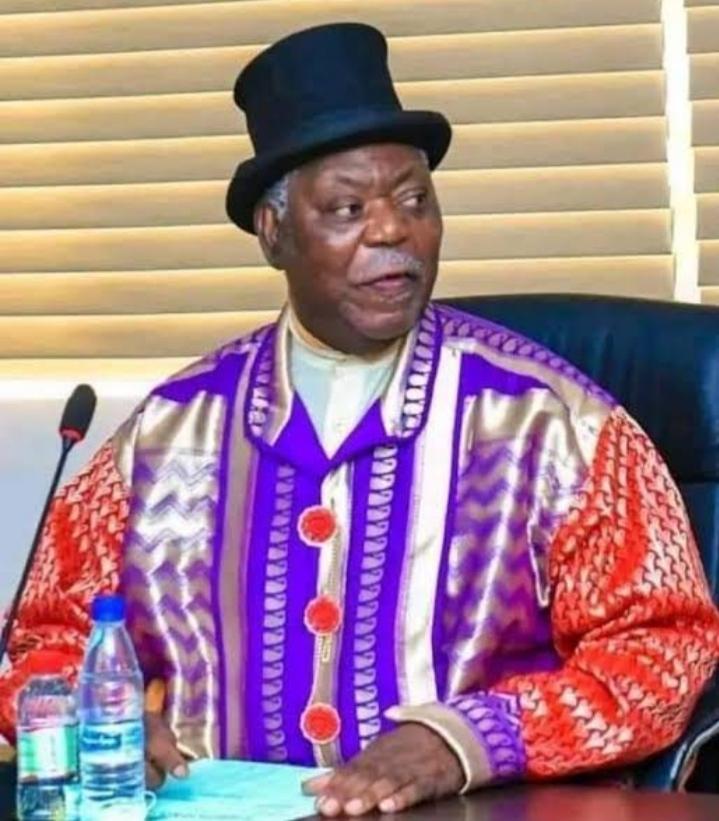
Alfred Diete-Spiff
In the oil rich creeks of the Niger Delta, where rivers twist through mangroves and history moves with the tide, a young boy was born into a royal Kalabari family who would one day shape the destiny of a newly created Nigerian state. His name was Alfred Papapreye Diete-Spiff.
His life would carry him from naval decks to government house, and eventually back to the throne of his ancestors.
Early Life in the Delta
Alfred Diete-Spiff was born on August 30, 1942, in Abonnema in present day Rivers State. He hails from the Kalabari kingdom, a historic Ijaw speaking community known for its trading legacy and proud monarchical traditions.
Growing up in the riverine environment of the Niger Delta, young Alfred witnessed both the beauty and hardship of coastal life. Fishing boats lined the waterfront. Chiefs deliberated in traditional councils. Oil exploration was beginning to reshape the region.
His upbringing blended discipline and tradition. His family background carried royal connections, but his path would first lead him into national service.
Education and Naval Calling
Diete-Spiff attended Government College, Umuahia, one of Nigeria’s elite secondary schools that produced many future leaders. The discipline and intellectual environment of the college shaped his early worldview.
Drawn to structure and service, he joined the Nigerian Navy in the early 1960s. Nigeria had just gained independence and was building its armed forces.
As a naval officer, Diete-Spiff trained both locally and abroad. He was among the early generation of Nigerian officers who would shape the nation’s military institutions.
The Civil War Years
Nigeria descended into civil war in 1967 following political instability and regional tensions. The Niger Delta region was strategic because of its oil resources and waterways.
During the conflict, Diete-Spiff served in the Nigerian Navy. His role during this period placed him at the intersection of military strategy and national unity.
The war would reshape Nigeria politically and administratively. It would also open the door to an unexpected chapter in his life.
The Birth of Rivers State
On May 27, 1967, the federal military government under General Yakubu Gowon created twelve states out of the former regions. Rivers State emerged from the old Eastern Region.
At just twenty five years old, Alfred Diete-Spiff was appointed as the first Military Governor of Rivers State.
It was an extraordinary appointment. He became the youngest governor in Nigeria at the time.
The task before him was enormous. Rivers State was newly formed, politically sensitive, and strategically vital because of oil production.
A Young Governor in Turbulent Times
As Military Governor from 1967 to 1975, Diete-Spiff governed during one of Nigeria’s most volatile periods.
The state had to be built from scratch. Administrative systems had to be established. Infrastructure had to be developed. Unity had to be maintained among diverse ethnic communities.
He worked on establishing Port Harcourt as a strong administrative and economic center. Roads, government institutions, and public services were expanded under his leadership.
The oil boom of the early 1970s increased federal revenue, but it also intensified expectations from oil producing communities.
Diete-Spiff navigated these complexities with a firm but measured style. His naval training influenced his structured governance approach.
Relationship with the Federal Government
As a military governor, Diete-Spiff reported directly to the federal military government. He served under General Yakubu Gowon until 1975 when Gowon was overthrown in a military coup.
After the change in leadership, Diete-Spiff left office as governor.
His tenure remains historically significant because he laid the foundational structures of Rivers State.
International Role
After leaving office, Diete-Spiff continued to serve Nigeria in various capacities.
He later chaired the Commonwealth Heads of Government Meeting in 1995, reflecting his international recognition. He also served in diplomatic and advisory roles.
His experience as one of Nigeria’s earliest state governors positioned him as an elder statesman in later years.
Return to Royal Roots
Beyond politics and military service, Alfred Diete-Spiff carried royal lineage within the Kalabari kingdom.
In 2010, he was crowned as King Amachree XI, the Amanyanabo of the Kalabari Kingdom in Rivers State.
The naval officer and former governor returned to his ancestral throne.
The coronation symbolized continuity between modern governance and traditional authority.
As Amanyanabo, he became custodian of Kalabari culture, traditions, and spiritual heritage.
Balancing Tradition and Modernity
As king, Diete-Spiff emphasized peace and development within the Niger Delta. The region has faced decades of tension related to oil exploration, environmental degradation, and resource control.
Drawing from his political and military experience, he advocated dialogue rather than violence.
He called for equitable development and responsible leadership among both community members and political actors.
His voice carried weight because he had governed the state and understood federal power structures.
The Elder Statesman
Over the decades, Alfred Diete-Spiff became regarded as one of the most influential figures in Rivers State history.
He witnessed Nigeria’s civil war
He governed during military rule
He participated in international diplomacy
He ascended a traditional throne
Few individuals have occupied all these roles within one lifetime.
He often speaks about unity, discipline, and the importance of leadership accountability.
Challenges of the Niger Delta
The Niger Delta remains one of Nigeria’s most complex regions due to oil wealth and environmental challenges.
As a traditional ruler and elder statesman, Diete-Spiff has consistently urged peaceful engagement between oil companies, the federal government, and host communities.
He has called for development that benefits local populations and protects the environment.
His position as both former governor and king gives him a unique authority in these conversations.
Personal Life
Alfred Diete-Spiff is married and has children. Throughout his life, he has maintained a dignified public image.
Those who have interacted with him describe him as calm, articulate, and reflective.
His demeanor reflects the discipline of naval service and the poise of royalty.
Legacy of a Founding Governor
When historians discuss the origins of Rivers State, Alfred Diete-Spiff’s name stands at the beginning.
He governed at a time when the state’s identity was being shaped.
Port Harcourt’s expansion as a capital city owes part of its administrative structure to decisions made during his tenure.
His legacy is not without debate, as governance during military rule often attracts scrutiny. Yet his historical significance remains undeniable.
A Life Across Three Worlds
Alfred Diete-Spiff’s life bridges three powerful institutions:
The Nigerian military
The Nigerian state
The Kalabari monarchy
From commanding naval duties to managing a newly created state, and later presiding over traditional ceremonies, his journey reflects adaptability and endurance.
The River and the Throne
In the creeks of Abonnema, where the tide moves with quiet force, King Amachree XI sits as guardian of Kalabari heritage.
His story mirrors the Niger Delta itself. Complex. Resourceful. Resilient.
From a young naval officer at twenty five governing a fragile state, to a monarch wearing ancestral regalia, Alfred Diete-Spiff’s life is a testament to service across generations.
He did not remain confined to one identity.
He was a soldier
A governor
An international representative
A king
And through each role, he remained tied to the riverine homeland that shaped him.

Κατηγορίες
Διαβάζω περισσότερα
Yomi Fash Lanso Yomi Fash Lanso is a veteran Nigerian Nollywood actor, director, producer, and master of ceremonies widely known for his roles in Yoruba language films. For decades he has been one of the most respected and recognizable faces in the Yoruba movie industry. His powerful voice, expressive acting, and ability to interpret complex characters have made him a favorite among...

Jumoke Odetola Jumoke Odetola is a Nigerian actress and producer known for her emotional performances in Yoruba-language films and Nollywood productions. With her calm personality and natural acting style, she has become one of the respected actresses in contemporary Nigerian cinema. Early Life and Background Jumoke Odetola was born on October 16, 1983, in Lagos State,...

Long before glass buildings, air conditioners, and escalators, shopping in Nigeria meant one thing — the market square. The market was not just a place to buy food or clothes. It was the heartbeat of the community. The Old Nigerian Markets In the old days, markets were open spaces under the sun or shade of big trees. Traders spread their goods on mats, wooden tables, or small...

After the first slap, nothing truly went back to normal, no matter how hard I pretended. Kunle apologized again and again, and I accepted every apology like a duty. In my mind, forgiveness was part of being a good wife. I told myself that strong women endure, that marriage was never meant to be easy. But something had shifted. Our arguments no longer ended with silence; they ended...

Dunsin Oyekan Dunsin Oyekan is a Nigerian gospel singer, songwriter, producer, instrumentalist, and worship revivalist known for his deep, spiritually intense worship songs. Often referred to as “The Eagle,” Dunsin Oyekan has become one of the leading voices in contemporary Nigerian gospel music. Early Life and Background Dunsin Oyekan was born Dunsin Akin Oyekan on...

