О нас
О нас
Oba Rilwan Akiolu The Police Officer Who Became the Lion of Lagos
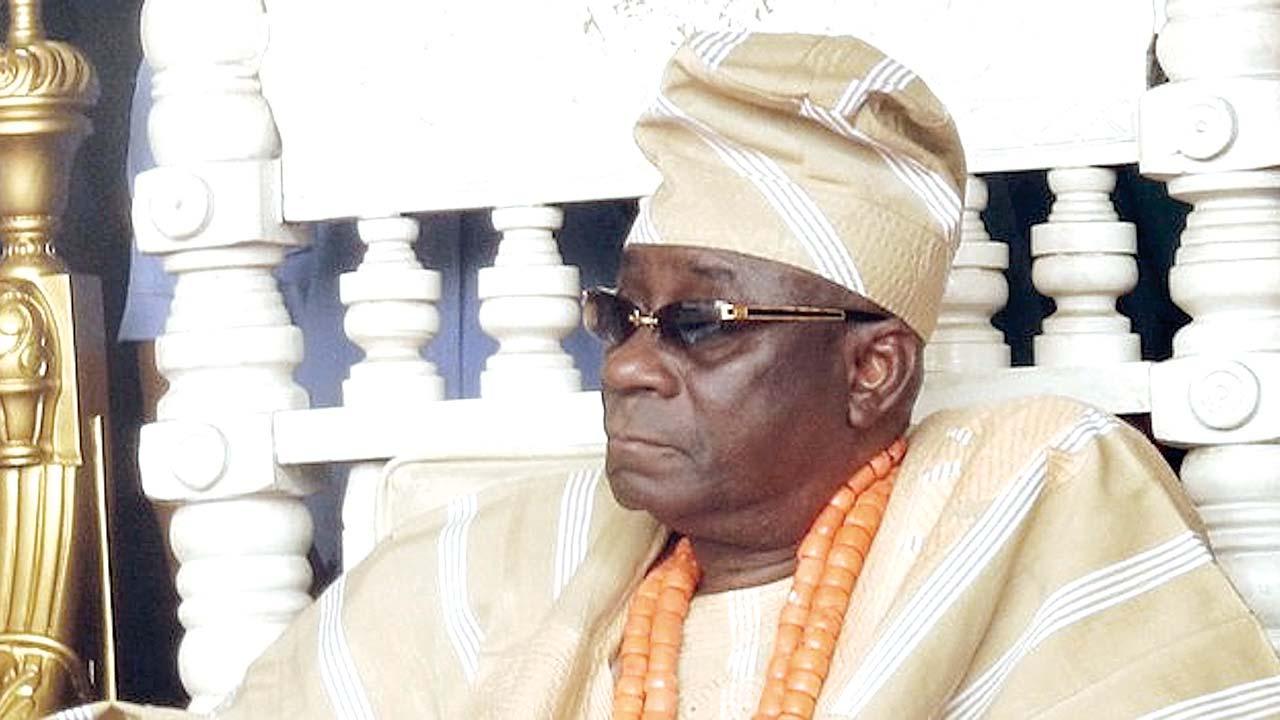
Oba Rilwan Akiolu
In the heart of Nigeria’s most vibrant city, where the Atlantic breeze meets the restless rhythm of commerce, stands a palace that has witnessed centuries of power, trade, conflict, and transformation. Inside that palace, known as Iga Idunganran, sits a monarch whose life bridges two worlds: modern law enforcement and ancient royalty. That monarch is Rilwan Akiolu, the Oba of Lagos.
His story is not simply about wearing a crown. It is about authority earned in uniform, legacy inherited through lineage, and influence exercised in one of Africa’s most powerful cities.
The Beginning in Lagos Island
Rilwan Babatunde Osuolale Aremu Akiolu was born on October 29, 1943, into the royal family of Lagos. His roots trace directly to Oba Dosunmu, one of the significant traditional rulers of Lagos in the nineteenth century. This lineage placed him within the royal bloodline of the Lagos monarchy long before destiny would call him to the throne.
Growing up in Lagos Island, he was surrounded by history. The streets were filled with stories of colonial encounters, the booming trade era, and the transformation of Lagos from a coastal kingdom into Nigeria’s commercial nerve center. Yet his childhood was grounded in discipline rather than indulgence.
Education and Early Discipline
Akiolu attended Ansar-Ud-Deen Primary School in Lagos and later moved to the prestigious Ansar-Ud-Deen College in Isolo. Education was important, but what shaped him most was his decision to pursue a career in law enforcement.
In 1970, he joined the Nigeria Police Force. This was not a ceremonial role. Nigeria was a young nation, emerging from civil war and navigating complex political terrain. Law enforcement required courage and integrity.
Through dedication and professionalism, Akiolu rose steadily through the ranks. Over the decades, he held various command positions across Nigeria. His colleagues described him as firm, strategic, and deeply disciplined.
Eventually, he attained the rank of Assistant Inspector General of Police. It was a remarkable achievement, placing him among the most senior officers in the country.
Few could have predicted that the disciplined officer would one day become a king.
The Throne of Lagos
The throne of Lagos carries weight far beyond traditional symbolism. The Oba of Lagos is custodian of culture, land, and historical authority in a city that drives Nigeria’s economy.
When Oba Adeyinka Oyekan passed away in 2003, the throne became vacant. The selection process among the royal houses of Lagos is deeply traditional, involving kingmakers and historical criteria.
On May 24, 2003, Rilwan Akiolu was crowned the Oba of Lagos.
The police uniform was replaced by royal regalia. The disciplined officer became His Royal Majesty, Oba Rilwan Babatunde Osuolale Aremu Akiolu I.
A City Unlike Any Other
To rule Lagos is to sit at the center of power and commerce. Lagos is not just another Nigerian state. It is Africa’s largest city, a melting pot of ethnicities, industries, and ambitions.
Although Nigeria operates as a constitutional democracy, the Oba of Lagos holds enormous traditional influence, particularly over land matters and cultural heritage within Lagos Island and its environs.
Oba Akiolu quickly established himself as a monarch who understood authority. His decades in the police force shaped his approach to leadership. He valued order, respect, and loyalty.
Influence in Politics and Governance
Over the years, Oba Akiolu has been known as a powerful figure in Lagos politics. While traditional rulers are not elected officials, their endorsement carries weight.
He has maintained close relationships with political leaders in Lagos State and at the federal level. His palace has hosted presidents, governors, and international dignitaries.
However, his outspoken nature has occasionally drawn controversy. He has made strong statements during election periods, reflecting his firm opinions on governance and loyalty to Lagos traditions.
Supporters describe him as protective of Lagos interests. Critics sometimes view his statements as too direct. Yet he remains unwavering in his stance that Lagos must be safeguarded culturally and politically.
Custodian of Culture
Beyond politics, Oba Akiolu plays a crucial role in preserving Lagos culture.
Lagos was once a kingdom with its own traditions, chieftaincy titles, and royal customs. As Oba, he oversees traditional festivals, cultural rites, and the installation of chiefs.
The Iga Idunganran palace remains a symbol of continuity. Within its walls are artifacts, ancestral shrines, and the living memory of Lagos history.
Oba Akiolu often emphasizes that modern development must not erase cultural identity. In a city filled with skyscrapers and highways, he insists that heritage must endure.
Relationship with the Federal Government
The Oba of Lagos has interacted with multiple Nigerian presidents during his reign. His palace serves as a meeting point for discussions concerning Lagos development, security, and national unity.
His background in policing gives him a unique perspective on security matters. He frequently speaks about the importance of maintaining peace in Lagos, especially given its dense population and economic importance.
During periods of unrest, his voice has often been part of calls for calm.
Challenges and Controversies
Leadership in Lagos is rarely without tension. As a monarch in a highly political environment, Oba Akiolu has faced moments of public criticism.
Some of his political remarks have sparked debate. Yet he has consistently maintained that his loyalty is to the protection and stability of Lagos.
In 2020, during the EndSARS protests that swept across Nigeria, the Oba’s palace in Lagos Island was invaded and looted. Sacred artifacts and historical objects were reportedly taken.
The incident shocked many Nigerians. It underscored how even centuries old institutions are not immune to modern unrest.
Despite this, Oba Akiolu continued his reign, reinforcing calls for peace and order.
The Man Behind the Crown
Those who know Oba Akiolu personally describe him as firm but deeply traditional. His police background instilled punctuality and discipline. His royal heritage instilled dignity and authority.
He is married with children and maintains a family life aligned with traditional expectations.
Unlike monarchs who pursue constant media visibility, Akiolu often allows his office to speak for itself. His power lies not in spectacle but in presence.
A Reign of Two Decades
Since 2003, Oba Rilwan Akiolu has reigned over Lagos through periods of massive transformation.
He has witnessed Lagos expand into a megacity, with new bridges, rail projects, and global investments. Through it all, the palace has remained a cultural anchor.
He represents continuity in a city that changes daily.
From Police Command to Royal Command
Few monarchs in Nigeria have transitioned from such a high level of public service into kingship.
His journey from Assistant Inspector General of Police to Oba of Lagos reflects a life defined by authority and structure.
Where the police uniform symbolized state power, the crown symbolizes ancestral legitimacy.
In both roles, he has projected firmness.
Legacy in Motion
Oba Rilwan Akiolu’s story is still unfolding. As Lagos continues to evolve into one of the world’s fastest growing cities, his role as traditional custodian remains significant.
He embodies a rare blend of modern state experience and ancient monarchy.
In the bustling streets of Lagos Island, where traders shout prices and ferries cross the lagoon, the palace still stands.
And within it sits a man who once commanded police officers and now commands centuries of tradition.
Oba Rilwan Akiolu is not merely a king of ceremony. He is a figure of influence in a city that never sleeps.
His life reminds Lagos that while skyscrapers may rise and governments may change, the throne endures.

Категории
Больше
Bisi Komolafe Bisi Komolafe was one of the bright young faces of Yoruba Nollywood whose life and career were cut tragically short at a time when her star was still rising. Born on December 29, 1986, in Ibadan, Oyo State, Nigeria, she grew up in a modest Yoruba family that valued culture, respect, and education. From an early age, Bisi displayed a natural flair for performance. She loved drama,...

THE CLEANING WOMAN WHO LIFTED THE INVISIBLE CROWN The first thing Alejandro Romero noticed was the silence. Not the kind of silence money buys double glazed windows, thick curtains, soundproof walls, the hush of Las Lomas at night. This was a different silence. Heavy. Breathing. As if the house itself had learned to hold its breath whenever Doña Margarita’s pain began. Alejandro...
Temi Otedola Temiloluwa Elizabeth Otedola, popularly known as Temi Otedola, was born on March 20, 1996, into one of Nigeria’s most prominent business families. She is the daughter of billionaire businessman Femi Otedola and Nana Otedola. Growing up in a household known for wealth, influence, and philanthropy, Temi’s early life was shaped by privilege but also by...

Calvin Harris Calvin Harris, whose real name is Adam Richard Wiles, is a Scottish DJ, music producer, songwriter, and one of the most successful figures in electronic dance music (EDM). Known for his hit songs and global collaborations, he has become one of the highest paid DJs in the world. He was born on January 17, 1984, in Dumfries, Scotland. Early Life and Background Calvin Harris...
Ireti Doyle Early Life and Background Ireti Doyle is a Nigerian actress, television presenter, writer, and public speaker widely respected for her powerful performances in Nollywood films and television. She was born on May 3, 1967, in Lagos State, Nigeria. Her full name is Iretiola Doyle. She spent her early childhood in Boston, United States, before returning to Nigeria...