Environ
Sa’adu Abubakar: The Soldier Prince Who Became Nigeria’s Spiritual Compass
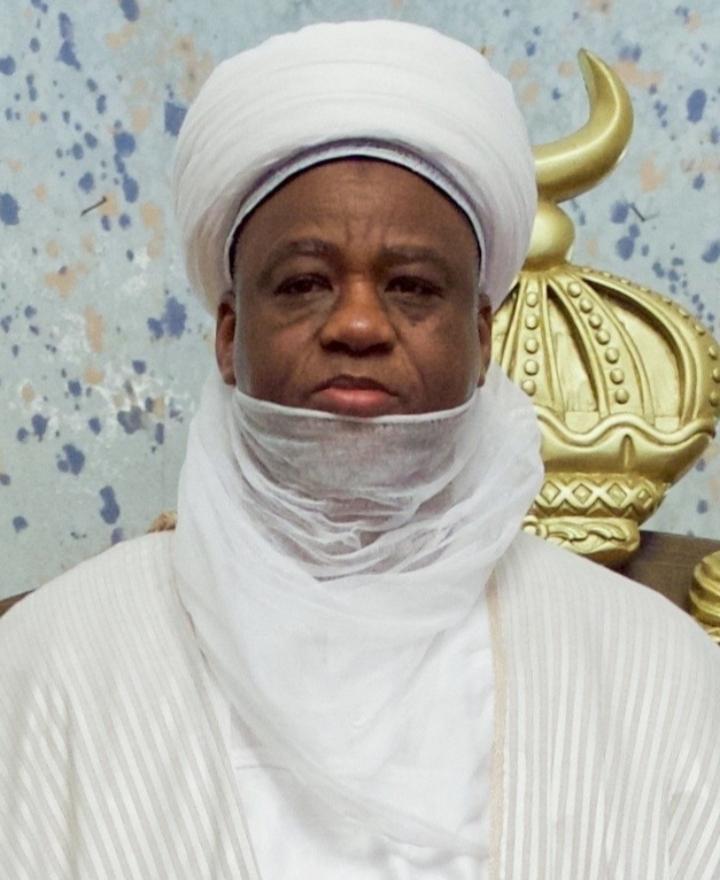
Sa’adu Abubakar
In the far northwest of Nigeria, where the sands of history meet the winds of faith, stands the ancient city of Sokoto. It is not just another northern town. It is the spiritual heart of millions of Muslims in Nigeria, the seat of the caliphate founded by Shehu Usman dan Fodio in the early nineteenth century.
From this sacred soil emerged a man whose life would travel from the discipline of military barracks to the dignity of a throne. That man is Saadu Abubakar, the 20th Sultan of Sokoto and President General of the Nigerian Supreme Council for Islamic Affairs.
His journey is one of faith, service, restraint, and quiet strength.
A Child of the Caliphate
Sa’adu Abubakar III was born on August 24, 1956, into one of the most respected royal families in Northern Nigeria. He is the son of Sir Siddiq Abubakar III, who reigned as Sultan of Sokoto for half a century from 1938 to 1988.
Growing up in the Sultan’s palace was not about luxury. It was about responsibility.
The Sokoto Caliphate is not just a traditional institution. It is a religious authority with deep historical roots dating back to the jihad movement led by Shehu Usman dan Fodio in 1804. The Sultan is regarded as the spiritual leader of Muslims in Nigeria.
From childhood, Sa’adu Abubakar was immersed in Islamic scholarship, discipline, and leadership culture. Yet, unlike many princes who remain within palace walls, he chose a different path.
He chose the military.
The Making of a Soldier
Sa’adu Abubakar attended Barewa College in Zaria, one of Northern Nigeria’s most prestigious institutions. Barewa produced many leaders, including prime ministers, governors, and senior military officers.
After secondary school, he joined the Nigerian Defence Academy in 1975. His path was clear. He would serve Nigeria in uniform.
He was commissioned into the Nigerian Army in 1979 and later trained at various military institutions, including courses abroad. He rose steadily through the ranks, known for discipline and professionalism.
Eventually, he attained the rank of Brigadier General in the Nigerian Army.
For decades, he served Nigeria in peacekeeping missions and command positions. He was part of Nigeria’s international military engagements and developed a reputation for calm leadership.
Few imagined that the soldier would one day exchange his military uniform for royal robes.
The Call to the Throne
In 2006, tragedy struck. Sultan Muhammadu Maccido died in a plane crash.
The throne of Sokoto became vacant.
The selection of a Sultan is not political theater. It is a sacred process involving kingmakers, tradition, and consultation within the caliphate.
On November 2, 2006, Sa’adu Abubakar was announced as the new Sultan of Sokoto.
The soldier prince became the 20th Sultan.
The transformation was profound. One day a Brigadier General. The next day the spiritual leader of millions.
He adopted the regnal title Sa’adu Abubakar III, honoring both his lineage and responsibility.
Spiritual Leadership in a Modern Nation
As Sultan, Sa’adu Abubakar’s role extends far beyond Sokoto State. He serves as President General of the Nigerian Supreme Council for Islamic Affairs, making him the highest Islamic authority in the country.
He announces the sighting of the moon that determines Ramadan and Eid celebrations. His voice marks sacred calendars.
But his influence goes deeper.
Nigeria is a nation of religious diversity and occasional tension. In times of crisis, the Sultan’s voice often becomes a stabilizing force.
He has consistently preached peaceful coexistence between Muslims and Christians. He has condemned extremism and violence carried out in the name of religion.
When terrorism threatened Northern Nigeria, he spoke firmly against radical interpretations of Islam.
To many Nigerians, he became a bridge builder.
A Voice for Peace and Unity
Sultan Sa’adu Abubakar is known for interfaith dialogue.
He has worked closely with Christian leaders, including the Christian Association of Nigeria, promoting harmony in a country often divided by politics and religion.
In moments of national tension, he calls for calm.
He emphasizes that leadership must serve the people, not divide them.
Unlike loud political figures, his approach is measured and dignified. He rarely engages in political controversy, choosing instead to focus on unity and moral guidance.
Global Recognition
Beyond Nigeria, Sultan Sa’adu Abubakar commands respect in the global Muslim community.
He participates in international Islamic conferences and diplomatic engagements. He represents Nigerian Islam on the world stage, advocating moderation and peaceful coexistence.
His military background gives him a unique aura. He understands security, governance, and global affairs.
He combines spiritual authority with worldly experience.
The Weight of History
To understand Sa’adu Abubakar’s significance, one must understand the Sokoto Caliphate.
Founded in 1804 by Shehu Usman dan Fodio, the caliphate became one of the largest empires in West Africa during the nineteenth century. Even after British colonial rule, the Sultan of Sokoto retained symbolic and religious authority.
Today, while Nigeria operates as a republic, the Sultan remains a central figure in Islamic affairs.
Sa’adu Abubakar carries the legacy of centuries.
Every decision, every statement, echoes beyond Sokoto’s palace walls.
Calm in Crisis
Throughout his reign, Nigeria has faced:
Insurgency in the northeast
Farmer herder conflicts
Economic instability
Religious tensions
In each instance, the Sultan has urged dialogue and compassion.
He frequently reminds leaders that power is temporary, but accountability before God is eternal.
His sermons often focus on justice, charity, and humility.
Personal Life
Sultan Sa’adu Abubakar is married with children. As a traditional and Islamic ruler, he maintains a family structure aligned with Islamic principles.
Despite his royal status, those close to him describe him as approachable and disciplined. His military training remains evident in his punctuality and structured lifestyle.
He balances palace protocol with personal humility.
Leadership Style
Unlike reformist monarchs who actively challenge political authorities, Sa’adu Abubakar’s leadership style is diplomatic.
He rarely engages in open confrontation. Instead, he prefers counsel behind closed doors.
His strength lies in moral authority rather than political combat.
This restraint has earned him broad respect across Nigeria’s political spectrum.
Legacy of a Soldier King
Sa’adu Abubakar’s life is a rare fusion of two worlds.
The structured command of the Nigerian Army
The sacred authority of the Sokoto Caliphate
He did not chase the throne. It came to him through destiny and lineage.
His reign symbolizes continuity in a rapidly changing Nigeria.
Where others may seek headlines, he seeks stability.
Where politics divides, he calls for unity.
The Spiritual Compass of a Nation
In the grand palace of Sokoto, beneath the banners of history and faith, Sultan Sa’adu Abubakar continues to guide millions.
He reminds Nigerians that religion should unite, not divide.
He stands as a symbol of endurance, faith, and responsibility.
From military barracks to royal chambers, his journey reflects service above self.
And in a nation often searching for calm voices, Sa’adu Abubakar remains a steady compass.

Catégories
Lire la suite
Regina Chukwu Regina Chukwu is a respected Nigerian actress, filmmaker, and producer known for her strong presence in the Yoruba sector of Nollywood. Over the years, she has built a reputation not only for her acting talent but also for her resilience as a single mother and entrepreneur. Her life story is one of determination, faith, and perseverance in the face of personal loss. Age...

Blessing Nkiruka Okoro Blessing CEO is a Nigerian relationship expert, social media personality, and entrepreneur known for her bold opinions on marriage, dating, and modern relationships. She gained widespread attention through viral videos and controversial statements that frequently trend across Nigerian social media. Blessing CEO’s full name is Blessing Nkiruka Okoro. She...

Abass Akande Obesere Abass Akande Obesere, popularly known simply as Obesere, is a renowned Nigerian Fuji musician celebrated for his bold style, energetic performances, and controversial lyrical approach. Born on January 28, 1965, in Ibadan, Oyo State, Nigeria, Obesere grew up in a culturally rich Yoruba environment that strongly influenced his musical journey. Raised...

Olubankole Wellington Before the tailored suits, before the sold-out concerts, before the fairy-tale wedding that captivated a nation, there was a young boy born far from Nigeria whose life would eventually shape the sound and structure of modern Nigerian R&B. The world knows him as Banky W — smooth-voiced singer, record executive, actor, pastor, and politician. But his story...
Ali Nuhu Mohammed Ali Nuhu (Ali Nuhu Mohammed) was not born with a crown, yet destiny quietly prepared one for him. Long before he became known as the King of Kannywood, before the flashing lights, red carpets, and roaring applause, he was simply a young boy growing up in Northern Nigeria, full of curiosity, discipline, and quiet dreams. Born on March 15, 1974, in Maiduguri,...