


 Environ
King Sunny Ade The Juju Maestro Who Carried Yoruba Music to the World
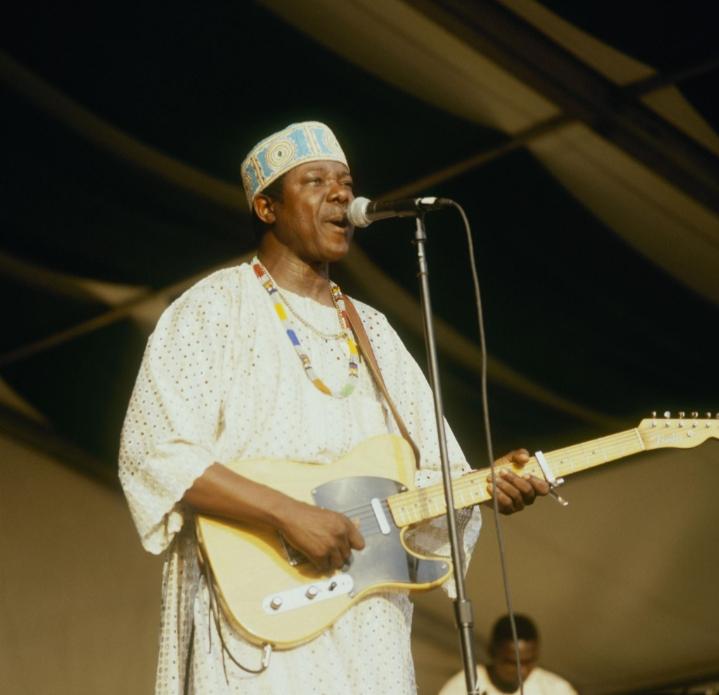
King Sunny Ade
Real Name: Sunday Adeniyi Adegeye
Long before global stages welcomed African rhythms, before Afrobeats became a worldwide movement, and before Nigerian music dominated international charts, there was a young boy born into royalty in Ondo State who would grow up to carry Yoruba sound across continents. The world knows him as King Sunny Ade, but his journey began as Sunday Adeniyi Adegeye.
Born on September 22, 1946, in Osogbo, though originally from Ondo, Sunday Adeniyi Adegeye grew up in a royal household. His father was a church organist, and his mother belonged to a royal lineage. Tradition surrounded him. Discipline shaped him. Culture defined him.
From a young age, music was not just entertainment; it was part of daily life. Church hymns echoed in his ears. Yoruba praise poetry flowed through family gatherings. Drums spoke at ceremonies. Songs marked every celebration and every sorrow. Music was not optional in his environment. It was identity.
A Royal Child With a Restless Dream
Being born into royalty meant expectations were heavy. As a prince, young Sunday was expected to follow a respectable path, possibly administrative or traditional leadership roles within the community. Music, especially secular performance music, was not considered prestigious.
But the heart does not always follow tradition.
As a child, he was fascinated by instruments. He would watch musicians perform at social gatherings with wide eyes. The talking drum, the guitar, the rhythm of juju music captivated him deeply. He was drawn not just to the sound, but to the joy it created in people.
His father’s involvement in church music exposed him to structured melodies, while Yoruba traditional music grounded him in indigenous rhythms. That blend would later define his sound.
Leaving Home for Music
Against family expectations, Sunday made a bold decision. He left home to pursue music professionally. It was not a small move. It was rebellion wrapped in passion.
In the 1960s, he joined the band of the legendary juju musician Moses Olaiya, also known as Baba Sala. That experience became his foundation. Touring, performing, understanding crowd dynamics, and learning the business of music all shaped him.
The stage became his classroom.
Juju music at the time was evolving. It blended traditional Yoruba percussion with Western instruments like the guitar. It was danceable, poetic, and deeply rooted in praise singing. Sunday soaked in every lesson.
Eventually, he formed his own band, the Green Spots Band, which later became known as the African Beats.
The Birth of King Sunny Ade
As his popularity grew, the name “King” became more than a title. It reflected both his royal heritage and his commanding presence on stage. King Sunny Ade was not just a performer; he was a bandleader, arranger, composer, and cultural ambassador.
In the 1970s, his music began to dominate Nigeria. Albums were released consistently. His stage performances were elaborate, energetic, and polished. Unlike many musicians of the time, he emphasized rehearsal, discipline, and organization within his band.
He introduced complex guitar techniques, layered percussion, and talking drum conversations that mimicked Yoruba speech patterns. His music was long, flowing, and hypnotic.
He was modern yet traditional.
Expanding Juju Music Globally
The 1980s marked a turning point. While juju music was already popular in Nigeria, King Sunny Ade aimed higher. He signed international distribution deals, bringing his music to Europe and the United States.
In 1982, he released the album “Juju Music” internationally. Western audiences were introduced to layered African rhythms in a way they had never experienced before. Critics were impressed. The New York Times praised him. He performed on major stages across America.
Soon after, he became one of the first Nigerian artists to receive Grammy nominations. For many Africans in the diaspora, he became a symbol of pride.
Long before Afrobeats stars filled arenas, King Sunny Ade was touring internationally with a full African band, complete with talking drums, steel guitars, and traditional attire.
Innovation and Musical Style
What made King Sunny Ade special was not just his voice. It was his arrangement.
He introduced pedal steel guitar into juju music, giving it a dreamy, almost spiritual tone. He blended synthesizers subtly without overpowering traditional percussion. His music was rich but balanced.
His songs often carried messages of gratitude, social advice, spirituality, and celebration. Yoruba proverbs filled his lyrics. Praise singing honored wealthy patrons, but he also addressed societal values and morality.
He was both entertainer and philosopher.
Leadership and Discipline
Managing a large band is not easy. The African Beats sometimes had over 20 members. King Sunny Ade was known for strict discipline. Rehearsals were serious. Performance standards were high.
Many musicians who later became stars passed through his band. He became a mentor figure within the Nigerian music industry.
His work ethic separated him from many contemporaries. While others faded, he sustained relevance decade after decade.
Recognition and Titles
Beyond music, King Sunny Ade received numerous honors. He was crowned as a king in his hometown due to his royal lineage. He has also been appointed to cultural ambassador roles within Nigeria.
He served as chairman of the Musical Copyright Society of Nigeria, advocating for artists’ rights. He understood that talent must be protected legally.
Governments honored him. Cultural institutions celebrated him. But he remained grounded in performance.
Family and Personal Life
Despite his global fame, King Sunny Ade maintained strong family ties. He is known to have multiple wives and many children, reflecting traditional Yoruba royal customs.
Unlike many modern celebrities, he kept his personal life relatively private. His focus has always remained on music and cultural preservation.
Enduring Influence
Generations of Nigerian musicians grew up listening to him. While Afrobeats now dominates globally, many of its foundational elements trace back to juju pioneers like King Sunny Ade.
He showed that African music could travel without losing its identity.
Artists today benefit from doors he helped open.
Legacy
From a royal child who defied expectations to become a global ambassador of Yoruba sound, Sunday Adeniyi Adegeye built an empire through rhythm and resilience.
King Sunny Ade did not chase trends. He built a tradition.
His guitars still sing. His drums still speak. His name remains synonymous with juju music.
More than five decades after he first stepped on stage, he remains active, respected, and celebrated.
He proved that African music does not need to imitate the West to be global.
It only needs authenticity.
And authenticity is exactly what King Sunny Ade gave the world.


Catégories
Lire la suite
Kenneth Okonkwo, lawyer and chieftain of the African Democratic Congress (ADC), has argued that Rivers State Governor Siminalayi Fubara should approach the courts to reclaim the six months he lost in office during the state of emergency declared by President Bola Tinubu. Okonkwo warned that unless legal redress is sought, Fubara’s four-year tenure would end prematurely on May 29, 2027,...

Ycee Ycee, whose real name is Oludemilade Martin Alejo, is a Nigerian rapper, singer, and songwriter known for his smooth rap delivery and hit songs in the Nigerian music industry. He gained widespread fame with his breakout single “Jagaban”, which established him as one of the leading voices in Nigerian hip hop. Early Life and Background Ycee was born on January...

I was born into comfort no, into excess. Anything I wanted appeared before I finished asking. New phones, designer bags, weekend trips, private lessons my parents never said no. In my world, money spoke before I did, and people listened. I walked through school like a queen, proud, arrogant, rude when I felt like it, and unapologetically beautiful. I knew it. Everyone knew it. Except him....

Priscilla Ojo Priscilla Ajoke Ojo, popularly known as Priscilla Ojo Mkambala, is a Nigerian social media influencer, fashion entrepreneur, and brand ambassador who has steadily built her own identity beyond the fame of her mother, Nollywood actress Iyabo Ojo. Born on March 13, 2001, in Lagos State, Nigeria, Priscilla grew up in the spotlight, but over the years, she has carefully crafted a...
According to a report by PM News Nigeria on Thursday, July 3, 2025, the United States Mission in Nigeria has announced that its diplomatic offices the Embassy in Abuja and the Consulate General in Lagos will be closed on Friday, July 4, 2025, in celebration of America’s Independence Day. The notice, shared on Thursday via the Mission’s official social media platform, stated that...

