About
About
Blackface Naija: The Voice Behind the Sound and the Storm

Blackface Naija
Some artists rise quietly. Others rise loudly and never escape controversy. The life of Blackface is a story of talent, brotherhood, betrayal, resilience, and unending debate. He is often remembered through headlines and public disagreements, but long before the controversies, there was a young boy with a gift for melody and a hunger for expression.
His real name is Ahmedu Augustine Obiabo, but to Nigeria and the African music scene, he became known simply as Blackface Naija.
This is the story of the man who helped shape modern Nigerian pop music and spent decades fighting to protect his place in it.
A Boy from Benue
Blackface was born on August 30, 1976, in Benue State, Nigeria. Growing up in northern Nigeria, his childhood was shaped by a blend of cultures and sounds. Benue, often called the “Food Basket of the Nation,” was rich in tradition, but like many parts of Nigeria in the 1980s and 1990s, it also absorbed foreign musical influences.
As a child, he was drawn to music early. Reggae and dancehall captured his imagination. Artists like Bob Marley, Buju Banton, and other Caribbean musicians influenced his style. He admired how reggae carried both rhythm and message.
Music, for him, was not just entertainment. It was identity.
Even as a teenager, he experimented with writing lyrics and harmonizing melodies.
He knew he was different.
Meeting 2Baba and the Birth of Plantashun Boiz
Blackface’s life changed when he moved to Lagos and met 2Baba, then known as 2Face Idibia.
The two bonded over music. They shared similar influences and ambition. Later, they were joined by Faze, completing the trio that would become Plantashun Boiz.
Plantashun Boiz emerged in the late 1990s, during a period when Nigerian music was still fighting for continental and global recognition. The industry was not as structured or profitable as it is today.
But the trio brought something fresh.
Their harmonies blended R&B, reggae, and Afro rhythms. Their style was modern yet distinctly Nigerian.
“African Queen” and the Rise to Fame
One of the group’s most iconic songs was African Queen.
The song became a massive hit, not only in Nigeria but across Africa and beyond. It would later become one of the most celebrated Nigerian songs of its era.
However, controversy would follow.
Blackface publicly claimed co-writing credits and later accused 2Baba of not properly acknowledging his contribution to the song. The dispute would span years, resurfacing repeatedly in interviews and legal discussions.
While African Queen elevated Nigerian pop music globally, it also planted seeds of tension within the group.
The Breakup
Plantashun Boiz eventually split in the early 2000s.
Creative differences, personal conflicts, and business disagreements contributed to the separation.
While 2Baba’s solo career skyrocketed, Blackface pursued his own path.
But the public often compared them.
For Blackface, this comparison became a source of frustration. He believed his contributions were overlooked.
Solo Career and Musical Identity
After the breakup, Blackface released solo albums such as Ghetto Child and Evergreen.
His music retained strong reggae and dancehall influences. His lyrics often carried social commentary, speaking about injustice, betrayal, and struggle.
He remained vocal about industry practices. He criticized what he saw as exploitation and unfair credit distribution.
Though he did not reach the same commercial heights as 2Baba, he maintained a loyal fan base.
His supporters saw him as a misunderstood pioneer.
Legal Battles and Public Controversy
Over the years, Blackface’s public disputes with 2Baba became recurring headlines.
He accused his former bandmate of intellectual property theft and demanded recognition.
In response, 2Baba denied wrongdoing and maintained that appropriate credits had been given.
The back-and-forth played out across interviews and social media.
For some observers, it tarnished Blackface’s image. For others, it showed a man fighting for what he believed was his rightful acknowledgment.
A Voice of Defiance
Blackface’s personality is often described as bold and uncompromising.
He speaks his mind.
He has never shied away from confronting major figures in the industry.
In a Nigerian entertainment culture that often values diplomacy and alliances, his bluntness sometimes isolates him.
Yet he remains consistent in one belief: recognition matters.
Influence on Nigerian Music
Regardless of controversy, Blackface’s role in the evolution of Nigerian pop music cannot be dismissed.
Plantashun Boiz helped lay the groundwork for modern Afropop success.
Their blend of harmonies and crossover sound influenced artists who came after.
In many ways, they were ahead of their time.
Personal Struggles and Resilience
Blackface has spoken about the emotional toll of public disputes and career challenges.
Life outside the spotlight is not always glamorous.
Yet he continues to create music and perform.
He refuses to disappear.
Standing Among Peers
Blackface’s name is often mentioned alongside 2Baba and other early 2000s pioneers.
Though their paths diverged, history links them permanently.
Blackface sees himself not as a side character, but as a central figure in that story.
The Meaning of His Journey
Blackface’s life is not a simple tale of triumph or tragedy.
It is a story of ambition, partnership, disagreement, resilience, and conviction.
He rose as part of a trio that reshaped Nigerian music. He faced comparison and controversy. He fought publicly for acknowledgment.
Some see him as combative. Others see him as courageous.
But one thing is clear.
He refuses silence.
Blackface Naija remains part of Nigeria’s musical history.
He represents a generation that built the bridge between old school and modern Afrobeats.
His story reminds us that success is not always clean or linear.
Sometimes it is messy.
Sometimes it is loud.
But it is always human.

Categories
Read More
Solidstar Solidstar, whose real name is Joshua Iniyezo, is a Nigerian singer, songwriter, and performer known for his melodious voice and blend of Afropop, reggae, and dancehall music. Born on November 8, 1988, in Lagos State, Nigeria, he became popular in the Nigerian music industry with his hit song One in a Million. Early Life and Background Solidstar was born and raised in...

Neo Akpofure Neo Akpofure is a Nigerian reality television personality, model, entrepreneur, and entertainer. He became widely known after participating in Big Brother Naija. Early Life and Background Neo whose full name is Emuobonuvie “Neo” Akpofure was born on August 1, 1994, in Delta State, Nigeria. He grew up in Warri, a city known for producing many entertainers and...
Bola Ige In the long and sometimes turbulent journey of Nigeria’s political history, a few names shine brightly for their courage, intellect, and unwavering commitment to justice. One of those names is Chief James Ajibola Idowu Ige, widely known as Bola Ige. He was more than just a politician. He was a fearless advocate of democracy, a brilliant lawyer, a powerful orator, and a...
Desmond Elliot is a celebrated Nigerian actor, film director, producer, and politician whose career spans over two decades in Nollywood and public service. Known for his versatility on screen and his transition into politics, Desmond Elliot remains one of the most influential figures in Nigeria’s entertainment industry and a prominent voice in Lagos State governance. Early Life and...

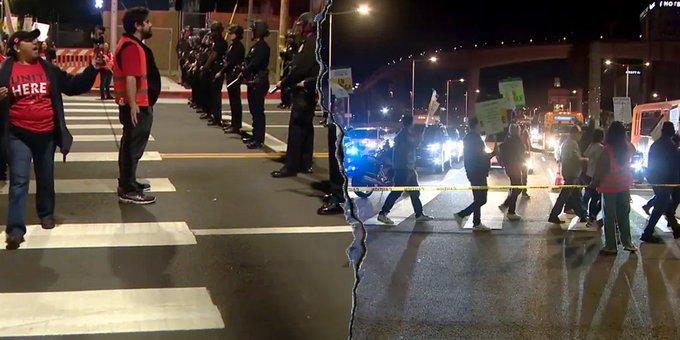
Holiday travelers heading to Los Angeles International Airport (LAX) faced severe disruptions as hundreds of protesters blocked the road outside during one of the busiest travel periods of the year, according to reports. The demonstrations brought traffic outside the main airport building to a standstill, forcing people to abandon their cars and walk to the airport to catch their flights on...