About
About
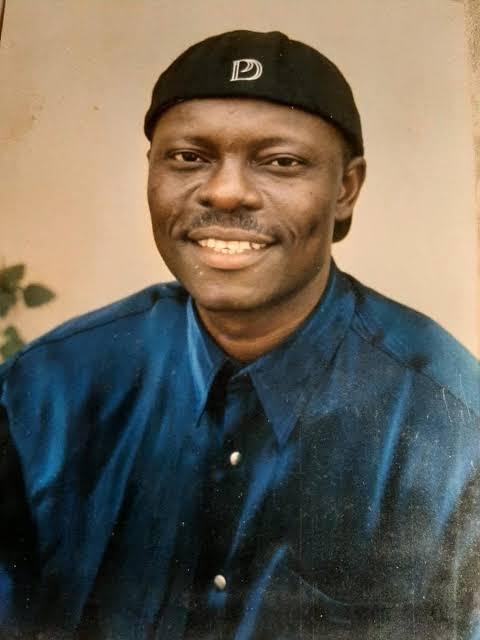
Chinweizu: The Relentless Voice That Challenged the West and Shook African Thought

Chinweizu:
Some writers seek applause. Others seek confrontation. The life of Chinweizu belongs firmly in the second category. He did not enter African literature quietly. He entered it like a storm. Sharp, unapologetic, intellectually fierce, Chinweizu became one of the most controversial and influential voices in postcolonial African thought.
He was not merely a poet. He was a cultural critic, a polemicist, and a man determined to dismantle what he saw as Western intellectual dominance over Africa. Loved by some, criticized by others, ignored by none, Chinweizu’s life is the story of a thinker who refused to soften his edges.
This is the journey of a man who chose intellectual battle over comfort.
A Child of Colonial Nigeria
Chinweizu was born in 1943 in eastern Nigeria, during the final years of British colonial rule. Nigeria was still under foreign administration. English was the language of power. European history filled schoolbooks. African traditions were often treated as backward or primitive.
He grew up in Igbo society, surrounded by proverbs, oral traditions, and communal structures that had existed long before colonialism. But he was also educated in colonial style institutions, where Shakespeare and Milton were prioritized over indigenous storytelling.
From an early age, Chinweizu noticed this imbalance.
He saw how colonial education shaped the minds of young Africans to admire Europe and question themselves. That awareness would later define his intellectual mission.
Education and the Awakening of Resistance
Chinweizu pursued higher education abroad, studying in the United States during the 1960s. America at that time was undergoing its own upheavals. The Civil Rights Movement was reshaping racial conversations. Anti Vietnam War protests filled campuses. Black Power activism challenged systemic inequality.
For a young African intellectual, this was transformative.
He encountered global debates about race, power, and identity. He read Frantz Fanon. He observed how African Americans confronted white supremacy.
But he also saw something troubling: Africa was still viewed through Western lenses.
Returning his gaze toward his homeland, Chinweizu began to formulate a radical idea. Political independence, he believed, was not enough. Africa needed cultural and intellectual independence.
The West and the Rest of Us
In 1975, Chinweizu published the book that would define his career: The West and the Rest of Us.
The book was explosive.
In it, he argued that Western dominance over Africa was not accidental or benevolent. It was the result of calculated military, economic, and cultural aggression. He rejected the idea that Europe had civilized Africa. Instead, he portrayed colonization as a violent imposition.
He challenged Western intellectual frameworks that judged African literature by European standards. He criticized African elites who imitated Western models instead of nurturing indigenous systems.
The book ignited debate across universities and political circles. Some praised its boldness. Others accused him of oversimplification.
Chinweizu did not retreat.
The Literary Debate
In the 1980s, Chinweizu became part of a heated debate about African literature.
He, alongside other critics, challenged writers like Wole Soyinka for what he considered overly complex and Eurocentric writing styles. He argued that African literature should be accessible to African audiences and rooted in African aesthetics.
This was controversial. Soyinka was already internationally acclaimed.
But Chinweizu believed that true decolonization required dismantling intellectual hierarchies.
He criticized what he saw as elitism in African writing. He advocated for simplicity, clarity, and connection to oral tradition.
The debate became known as one of the most intense literary confrontations in Nigerian history.
A Poet with an Edge
Though widely known as a critic, Chinweizu was also a poet.
His poetry carried the same confrontational energy as his essays. He wrote about colonial history, masculinity, gender politics, and African pride.
He refused to romanticize Africa, but he fiercely defended its cultural autonomy.
His poems often blended anger with irony, intellect with satire.
He was not afraid to offend.
Gender and Controversy
Chinweizu’s writings on gender sparked additional controversy. In some essays, he critiqued what he perceived as Western feminist frameworks influencing African society.
These views attracted criticism from scholars who felt his arguments were too rigid or dismissive.
But once again, Chinweizu stood firm.
He believed that African societies should shape their own gender narratives rather than adopt foreign models wholesale.
His stance placed him at odds with many intellectual circles.
The Thinker Outside the Establishment
Unlike many writers who seek institutional comfort, Chinweizu often positioned himself outside mainstream academia.
He did not chase international prizes. He did not soften his tone for global approval.
Instead, he cultivated a reputation as an independent thinker.
He wrote essays, delivered lectures, and engaged in debates that questioned Africa’s relationship with the West.
His central message remained consistent: Africa must define itself on its own terms.
Themes That Defined His Work
Across his career, Chinweizu returned to recurring themes:
Decolonization of knowledge
Cultural self determination
Critique of Western imperialism
Defense of African traditions
Rejection of intellectual elitism
He believed that intellectual independence was as important as political sovereignty.
Standing Among Giants
Chinweizu belonged to the same intellectual generation as Chinua Achebe and Wole Soyinka, yet his role was distinct.
Where Achebe told stories of cultural collision and Soyinka explored myth and drama, Chinweizu positioned himself as critic and provocateur.
He was less interested in narrative beauty and more interested in ideological clarity.
A Life of Relentless Conviction
Chinweizu’s biography is not a tale of awards and ceremonies. It is a tale of intellectual warfare.
He challenged dominant narratives even when doing so isolated him.
He believed Africa’s greatest threat was not external conquest alone but internal acceptance of foreign superiority.
That belief fueled his writing for decades.
The Meaning of His Journey
From a boy educated under colonial frameworks to a man who questioned those very frameworks, Chinweizu’s life is a story of resistance.
He refused to accept inherited assumptions. He questioned literary hierarchies. He provoked debate where silence might have been easier.
Whether one agrees with his views or not, his influence on African intellectual discourse is undeniable.
He forced conversations that might otherwise have remained dormant.
Chinweizu remains a symbol of uncompromising thought.
He chose argument over applause. Confrontation over comfort.
And in doing so, he carved out a space in African intellectual history that cannot be ignored.

Categories
Read More
Omoni Oboli Omoni Oboli is a Nigerian actress, filmmaker, scriptwriter, producer, and director known for her versatility and strong influence in Nollywood. Over the years, she has grown from a young actress into one of the most respected female filmmakers in Nigeria. Early Life and Background Omoni Oboli was born on April 22, 1978, in Benin City, Edo State, Nigeria. She hails...

Political activist Usman Bugaje has taken a swipe at President Bola Tinubu, claiming the president is out of touch with the daily struggles of ordinary Nigerians due to being shielded by sycophantic aides. Bugaje argued that the rising poverty, insecurity, and economic hardship across the nation are being overlooked by the presidency, blaming the "echo chamber of praise-singers" around Tinubu...

The Child of a Hidden Bloodline My name is Aishat. I am twenty four years old now, living in Abuja where the city never truly sleeps. Cars hiss past my window at night like restless spirits, and sometimes when the traffic slows and the air becomes still, memories return without warning. When they do, my chest burns the way hot palm oil burns skin. Slowly. Deeply. Leaving scars...
Amitabh Bachchan Amitabh Bachchan was born on October 11, 1942, in Allahabad (now Prayagraj), India. He was born into a respected and intellectual family. His father, Harivansh Rai Bachchan, was a famous Hindi poet, while his mother, Teji Bachchan, was known for her interest in theatre and social activities. Growing up in a literary environment influenced Amitabh greatly. He studied...

Gbenga Adeboye In the bustling streets of southwestern Nigeria, where storytelling is as old as the talking drum and humor travels faster than harmattan wind, a young boy once discovered that laughter could open hearts, soften pain, and command crowds. That boy grew into one of the most influential comedians Nigeria has ever produced. His name was Gbenga Adeboye. Long before comedy...