Environ
Buchi Emecheta: The Woman Who Refused to Be Silenced
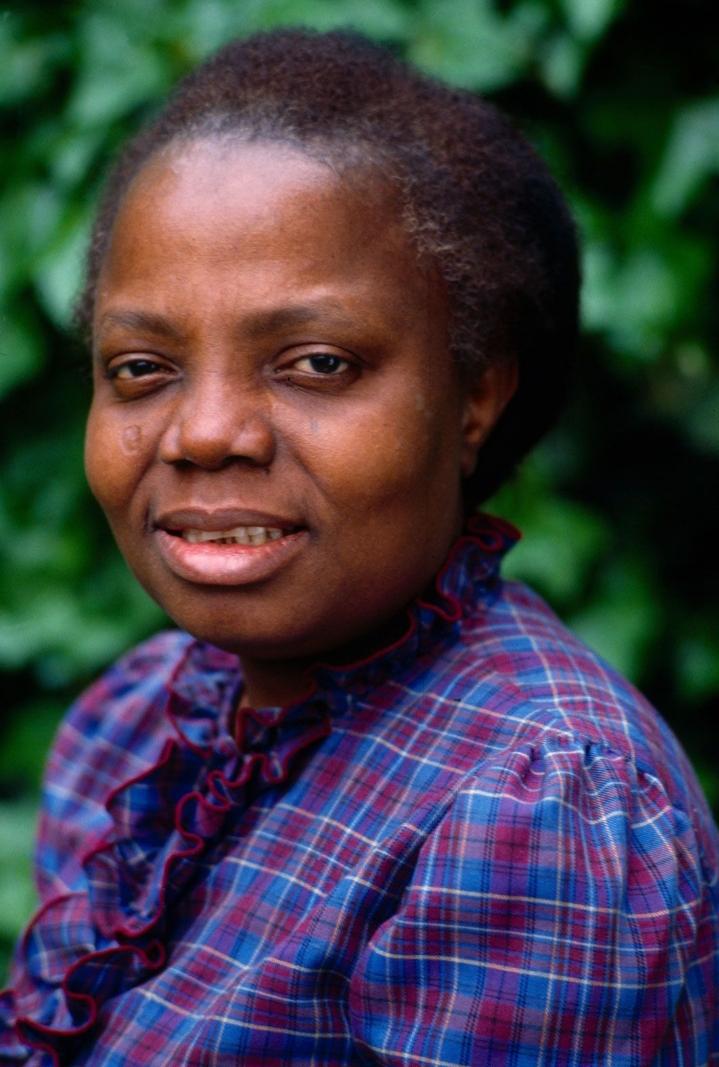
Buchi Emecheta:
Some lives begin quietly and unfold gently. Others begin in struggle and rise in defiance. The life of Buchi Emecheta was shaped by hardship from the very beginning, yet she transformed every wound into words. She did not inherit comfort. She inherited expectation. She did not grow up with freedom. She fought for it.
Through sheer determination, Buchi Emecheta became one of Africa’s most influential female writers. Her novels spoke boldly about motherhood, migration, patriarchy, poverty, race, and survival. But before she became a celebrated author, she was simply a girl in Lagos with dreams too large for the life assigned to her.
This is the story of a woman who refused to remain second class.
A Childhood Marked by Loss
Buchi Emecheta was born Florence Onyebuchi Emecheta on July 21, 1944, in Lagos, Nigeria, to Igbo parents. Though she was born in Lagos, her family roots traced back to Ibuza in present day Delta State.
Her childhood was not easy. Her father was a railway worker, and her mother worked hard to support the family. Money was limited, but discipline was strict. As a young girl, Buchi was curious and intelligent. She loved stories and school. But society did not always see education as important for girls.
Tragedy struck early. When Buchi was about eleven years old, her father died. His death brought emotional and financial strain. Soon after, according to Igbo custom, she was sent back to her ancestral village. Life in the village was restrictive compared to Lagos.
Yet even there, she carried her love of learning.
Her mother insisted she continue her education. That insistence would change everything.
Marriage at a Young Age
At just sixteen years old, Buchi was married to Sylvester Onwordi, a student who was preparing to study abroad. Marriage was not a romantic escape. It was expectation.
Soon after, her husband left for London to study. Buchi joined him later, arriving in Britain in 1962 with two small children and another pregnancy.
She was barely an adult, yet already a mother and immigrant.
London in the 1960s was not welcoming to African migrants. Racism was open. Housing was difficult. Work was hard to find.
And within her marriage, life became even more difficult.
Abuse and Determination
Buchi’s marriage was deeply troubled. Her husband was abusive and dismissive of her ambitions. When she began writing stories in her spare time, he did not encourage her.
In fact, when she completed her first manuscript, he burned it.
For many, that would have ended the dream.
For Buchi, it became fuel.
She rewrote the manuscript from memory.
That act alone defined her character. She would not allow her voice to be erased.
She separated from her husband and became a single mother of five children in a foreign country. She worked multiple jobs to survive. She studied sociology at the University of London in the evenings.
Life was exhausting. But she refused defeat.
Second Class Citizen
In 1974, Buchi Emecheta published the novel that would cement her reputation: Second Class Citizen.
The novel, semi autobiographical, tells the story of Adah, a Nigerian woman who moves to London and confronts racism, poverty, and an abusive marriage.
The title alone carried power.
Second Class Citizen was not just about race in Britain. It was about how women were treated as second class within their own communities.
Readers across Africa and the diaspora saw themselves in Adah’s struggles.
The novel was raw and honest. It did not romanticize migration. It showed its loneliness.
The Joys of Motherhood
In 1979, Emecheta published The Joys of Motherhood, one of her most celebrated works.
The title is ironic.
The novel tells the story of Nnu Ego, a woman whose identity is tied to motherhood in traditional Igbo society. She sacrifices everything for her children, yet receives little gratitude.
Through Nnu Ego’s life, Emecheta explored the pressures placed on African women to define themselves solely through motherhood.
The novel challenged cultural assumptions without condemning tradition outright. It asked difficult questions: What happens when a woman’s worth is measured only by her children? Who cares for the caregiver?
The Joys of Motherhood became a cornerstone of feminist African literature.
A Writer of Many Stories
Buchi Emecheta wrote more than twenty books.
Her works included:
The Bride Price
In the Ditch
Kehinde
Destination Biafra
Each novel explored different aspects of African and diasporic life. She wrote about colonialism, civil war, migration, marriage, and economic survival.
Her writing style was direct and accessible. She avoided complex symbolism. She wanted her books to reach ordinary readers.
She once described herself as “an African feminist with a small f.”
She did not reject men. She rejected injustice.
Recognition and Influence
Over time, Buchi Emecheta gained international recognition. Her works were studied in universities worldwide. She received honors including an Order of the British Empire in 2005 for services to literature.
Yet her journey had been anything but easy.
She had written while raising five children alone. She had faced racism in Britain and criticism in Nigeria.
Some critics accused her of portraying African men negatively. Others felt she exposed private cultural issues too openly.
But she remained unapologetic.
She believed stories must reflect truth, even when uncomfortable.
Themes That Defined Her Work
Across her novels, recurring themes include:
Migration and displacement
Female independence
Motherhood and sacrifice
Patriarchy and tradition
Resilience and survival
Emecheta’s heroines are rarely passive. They endure, adapt, and sometimes rebel.
Her stories resonate because they feel lived.
Standing Among Literary Giants
Buchi Emecheta belongs to the generation of Nigerian writers that includes Chinua Achebe and Wole Soyinka, yet her focus was distinct.
Where many male writers centered politics and nationalism, Emecheta centered domestic life.
She showed that the kitchen could be as political as parliament.
Later Years and Legacy
Buchi Emecheta continued writing into the 1990s and 2000s. Though she became quieter in public life later on, her books never stopped circulating.
She passed away in London on January 25, 2017.
Tributes poured in from across the world.
Readers remembered her courage. Writers acknowledged her influence.
The Meaning of Her Story
Buchi Emecheta’s life is a testament to persistence.
She was a girl who lost her father young. A teenage bride. A migrant facing racism. A single mother struggling financially.
And yet she became one of Africa’s most important literary voices.
She rewrote her burned manuscript. She rewrote her destiny.
She refused to be second class.
Today, young African women writers speak boldly about identity, sexuality, motherhood, and migration.
They do so partly because Buchi Emecheta opened the door.
Her story reminds us that resilience is not loud. It is steady.
And sometimes, the most powerful revolution begins with a woman who decides to write again after her manuscript is burned.


Catégories
Lire la suite
Davido is one of Africa’s most successful and globally recognized music artists. Known for his energetic performances, hit songs, and strong influence in the Afrobeats movement, he has played a major role in taking Nigerian music to the world stage. Early Life and Background Davido was born David Adedeji Adeleke on November 21, 1992, in Atlanta, Georgia, United States. He was raised in...
Mr Eazi Mr Eazi, born Oluwatosin Oluwole Ajibade on July 19, 1991, in Port Harcourt, Rivers State, Nigeria, is a Nigerian singer, songwriter, and entrepreneur widely recognized for pioneering the Banku music sound. His unique fusion of Ghanaian highlife, Nigerian chord progressions, and laid-back Afrobeats rhythms has made him one of Africa’s most influential...

Chinweizu: Some writers seek applause. Others seek confrontation. The life of Chinweizu belongs firmly in the second category. He did not enter African literature quietly. He entered it like a storm. Sharp, unapologetic, intellectually fierce, Chinweizu became one of the most controversial and influential voices in postcolonial African thought. He was not merely a poet. He was a...

Chapter One: The Door That Opened My Eyes If anyone had told me Lola would be the reason my world collapsed, I would have laughed. Because Lola wasn’t just my friend. She was my chosen sister. She was there the day Daniel proposed to me screaming louder than I did, jumping up and down like it was her ring too. “God finally did it for you!” she shouted, hugging me until...

Everyone used to admire me without question. They praised my beauty, my dressing, the way I carried myself like royalty. I was the girl people pointed at and whispered about not out of pity, but admiration. “She’s so neat.” “She looks expensive.” “That one has her life together.” I wore their words like jewelry, polished and shining. What they...