About
About
Helon Habila: The Quiet Chronicler of Nigeria’s Broken Dreams

Helon Habila:
Some writers chase fame. Others chase truth. The life of Helon Habila is the story of a man who chose the second path. His words are not loud, but they cut deep. His stories do not rush, but they linger. Through fiction and journalism, he has told the story of Nigeria’s hopes, wounds, dictatorships, and resilience with clarity and compassion.
Helon Habila did not grow up in luxury. He grew up in a nation wrestling with itself. And from that wrestling, he learned to write.
A Boy from Northern Nigeria
Helon Habila was born in 1967 in Kaltungo, in present day Gombe State, Nigeria. His birth came at a turbulent time. Nigeria was on the brink of civil war. The Biafran conflict would erupt that same year, reshaping the country’s political and emotional landscape.
Though he was too young to understand the war directly, its shadow hung over his childhood. Stories of division, suffering, and displacement became part of the national memory he inherited.
He grew up in northern Nigeria, in a region often portrayed in simplified terms. But Habila saw complexity. He saw coexistence between Christians and Muslims, ethnic diversity, and quiet struggles beneath everyday life.
His early education took place in modest schools where resources were limited but ambition was not. Books became his companions. He read widely, discovering both African and Western writers.
Even as a child, he noticed injustice. He noticed silence. And he began to sense that stories could carry weight.
University and the Awakening of a Writer
Helon Habila attended the University of Jos, where he studied English language and literature. University life exposed him to broader intellectual conversations. He encountered Nigerian literary giants like Chinua Achebe and Wole Soyinka, whose works demonstrated that African stories could confront power and still achieve global recognition.
During these years, Nigeria was under military rule. Dictatorships under Generals Babangida and later Abacha created an atmosphere of fear and censorship. Students protested. Journalists were harassed. Writers were watched.
Habila absorbed this tension. It would later shape his fiction.
He began writing poetry and short stories, experimenting with voice and perspective. Writing was not just creative expression. It was survival.
Journalism and the Reality of Power
After university, Habila worked as a journalist in Lagos. Journalism brought him face to face with the realities of Nigeria’s political system. Corruption was not abstract. It was daily. Military authority was not theoretical. It was enforced.
Working in media during those years required courage. Publications could be shut down. Reporters could be arrested.
This environment sharpened his understanding of power dynamics. It also deepened his empathy for ordinary Nigerians caught between ambition and oppression.
Journalism taught him discipline. Fiction gave him freedom.
The Breakthrough: Waiting for an Angel
In 2002, Helon Habila published his first major novel, Waiting for an Angel.
The novel is set in Lagos during the military dictatorship of General Sani Abacha. It follows Lomba, a journalist imprisoned for his writings. Through Lomba’s reflections and the stories of those around him, Habila paints a portrait of a society suffocated by repression yet stubbornly hopeful.
The novel won the Commonwealth Writers’ Prize for Best First Book. Critics praised its lyrical prose and emotional depth.
What made Waiting for an Angel powerful was its intimacy. Instead of focusing solely on grand political speeches, Habila focused on individual lives. He showed how dictatorship seeps into friendships, love affairs, dreams.
He wrote about fear without melodrama. About resistance without romanticizing it.
Oil on Water and the Niger Delta
In 2010, Habila published Oil on Water, a novel set in the Niger Delta.
The story follows two journalists searching for a kidnapped woman in a region devastated by oil exploitation and environmental destruction. Through their journey, readers encounter polluted rivers, militant groups, corrupt officials, and communities trapped between multinational corporations and government neglect.
Oil on Water is not propaganda. It is layered and nuanced. Habila refuses simple villains. Instead, he reveals a web of complicity and desperation.
The novel was shortlisted for the Man Booker Prize, further establishing his international reputation.
Through this work, Habila became one of the most important literary voices addressing environmental injustice in Africa.
The Poet’s Sensibility
Before novels brought him fame, Habila wrote poetry. His poetry collections reveal a sensitivity to rhythm and imagery that shapes his prose.
He writes about silence, about absence, about longing. Even in his novels, scenes often feel poetic. He uses restraint rather than excess.
This poetic quality distinguishes his work from more dramatic storytelling styles. He trusts readers to feel the weight beneath the surface.
Teaching and Global Influence
Helon Habila eventually moved to the United States, where he became a professor of creative writing at George Mason University.
Teaching allowed him to mentor young writers from diverse backgrounds. He carried Nigeria with him into American classrooms, sharing stories of military regimes, oil politics, and everyday resilience.
Living abroad also deepened his understanding of migration and identity. Like many African writers in the diaspora, he navigates the space between home and elsewhere.
Themes That Define His Work
Across his novels and essays, several themes appear repeatedly:
Military repression
Journalism under threat
Environmental destruction
Ordinary lives under extraordinary pressure
Hope amid despair
Habila’s writing refuses spectacle. He does not exaggerate suffering for dramatic effect. Instead, he shows how oppression shapes daily life.
His characters are often journalists, observers, or wanderers. They seek truth even when truth is dangerous.
A Voice Among Contemporaries
Helon Habila belongs to a generation of Nigerian writers that includes Chimamanda Ngozi Adichie and Teju Cole.
Yet his voice remains distinct. Where Adichie often centers gender and Teju Cole emphasizes philosophical wandering, Habila focuses on political atmosphere and moral complexity.
He writes about power structures without turning characters into mere symbols.
Journalism Revisited: The Chibok Girls
In addition to fiction, Habila wrote The Chibok Girls, a nonfiction work investigating the kidnapping of schoolgirls by Boko Haram in 2014.
In this work, he combined journalistic rigor with narrative empathy. He traveled, interviewed families, and documented grief.
The book reinforced his commitment to telling stories that others might prefer to ignore.
A Life of Steady Commitment
Helon Habila’s life is not defined by scandal or loud public persona. It is defined by steady commitment to craft.
He writes carefully. Teaches thoughtfully. Speaks calmly.
His power lies in consistency.
The Meaning of His Journey
From a boy in northern Nigeria growing up in a nation at war with itself, to a novelist recognized globally, Helon Habila’s journey is one of perseverance.
He did not abandon Nigeria’s stories when he moved abroad. He carried them with him.
He writes about broken systems but refuses to surrender hope. His characters struggle, but they endure.
Helon Habila continues to write and teach, shaping the next generation of storytellers.
His life reminds us that literature can document injustice without losing beauty. That quiet voices can carry enormous weight.
He is a chronicler of Nigeria’s broken dreams, but also of its stubborn resilience.
And in every sentence he writes, there is a belief that stories matter.


Categories
Read More
The Nigeria Police Force has recorded a string of major victories in its relentless fight against kidnapping and arms trafficking across the country. In a statement released on Friday, Force PRO ACP Muyiwa Adejobi announced that 11 kidnapped victims were rescued unharmed during a daring joint operation in Katsina State. The success came after a fierce gunfight between police-led security...
They say fashion is cyclical, and Xiaomi has just proved it. In an era dominated by 5G smartphones and AI gadgets, the tech giant is bringing back an old classic — the walkie-talkie — but with a modern twist. Almost a century after Motorola introduced the first walkie-talkies for military use, Xiaomi is reviving the concept with the Xiaomi Digital Walkie-Talkie, a device that...

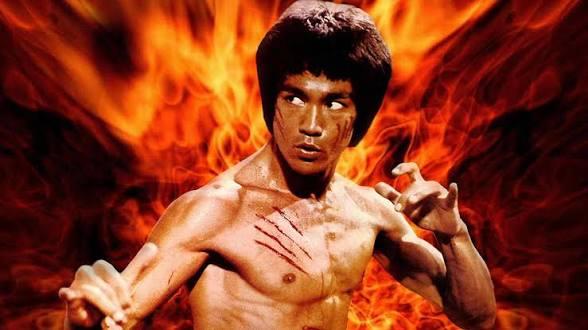
Bruce Lee Bruce Lee was a legendary martial artist, actor, filmmaker, philosopher, and cultural icon who revolutionized martial arts cinema and inspired generations around the world. Born Lee Jun fan on November 27, 1940, in San Francisco, United States, and raised in Hong Kong, he became one of the most influential figures in martial arts history. Early Life and Background...
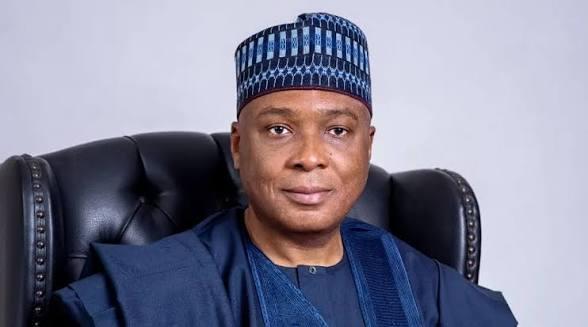
Bukola Saraki Bukola Saraki is a Nigerian politician, medical doctor, and public administrator. He is widely known for serving as the President of the Nigerian Senate from 2015 to 2019 and as the Governor of Kwara State from 2003 to 2011. Early Life and Background Bukola Saraki whose full name is Olubukola Abubakar Saraki was born on December 19, 1962, in London, United Kingdom. He...
Lasisi Elenu Lasisi Elenu, whose real name is Nosa Afolabi, is a Nigerian comedian, actor, and social media personality widely known for his energetic comedy skits and the popular wide mouth Snapchat filter that became his signature style. Born on April 20, 1989, in Offa, Kwara State, Nigeria, he rose to fame through short online comedy videos that gained massive popularity...