Prophet T.B. Joshua: The Controversial Healer Who Built a Global Altar
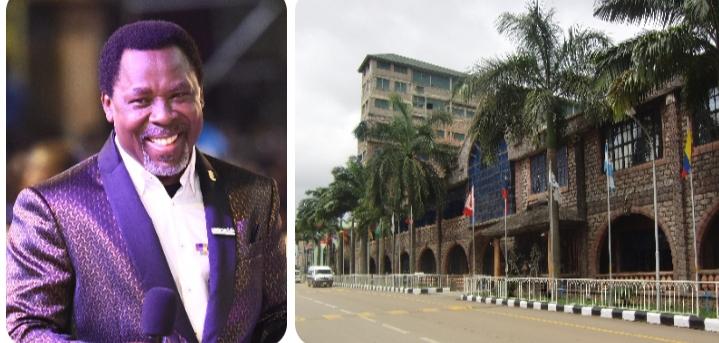
Prophet T.B. Joshua: The Controversial Healer Who Built a Global Altar
T. B. Joshua
Some lives move quietly. Others move like storms. The life of Prophet Temitope Balogun Joshua was not subtle. It was dramatic, debated, admired, criticized, celebrated, and questioned. He built one of the most famous prophetic ministries in Africa. He attracted presidents, celebrities, and ordinary seekers. He was called a prophet by millions and doubted by others.
Yet before the global crowds and international headlines, before Emmanuel TV beamed into living rooms across continents, there was a boy born in rural Nigeria whose story began in mystery.
This is the story of T.B. Joshua.
A Birth Surrounded by Stories
Temitope Balogun Joshua was born on June 12, 1963, in Arigidi Akoko, Ondo State, Nigeria. His birth itself became part of legend within his community. According to accounts often shared by his followers, he remained in his mother’s womb for fifteen months before being born. While medical science does not support such a timeline, the story became symbolic among supporters, representing a child marked for something unusual.
He was born into a humble family. His father worked as a small scale farmer and manual laborer. His mother was a devout woman of faith. Poverty was not theoretical in his household. It was daily reality.
As a child, Joshua was said to be quiet and reflective. He attended St. Stephen’s Anglican Primary School in Arigidi Akoko. But his formal education did not extend far. He did not complete secondary school in the conventional sense.
Yet lack of formal academic achievement did not prevent his spiritual imagination from expanding.
A Restless Youth
Growing up in southwestern Nigeria during the 1960s and 1970s meant living through a country adjusting to independence and recovering from civil war. Economic instability was common. Religious life was vibrant.
Joshua reportedly worked various small jobs in his youth. He assisted in farms. He worked in bricklaying. He did manual labor to support himself.
But even during these years, stories circulated that he was spiritually inclined. Some accounts suggest he spent long periods in prayer and fasting as a young man.
He did not enter ministry through theological school. His path was unconventional.
The Call to Ministry
In the late 1980s, Joshua claimed to have experienced a divine encounter during an extended period of prayer and fasting. According to his testimony, he spent forty days in solitary prayer and received a spiritual mandate.
This experience marked the beginning of his public ministry.
In 1987, he founded The Synagogue, Church of All Nations in Lagos, Nigeria. It began modestly. Small gatherings. Few members. Limited resources.
But what distinguished his ministry early was emphasis on prophecy and healing.
The Rise of SCOAN
As the 1990s progressed, the Synagogue Church began to grow rapidly. Joshua’s reputation spread through testimonies of healing, deliverance, and prophetic revelations.
People traveled from across Nigeria seeking spiritual intervention. Soon, visitors from other African countries arrived.
He was different from many Pentecostal leaders of his time. His preaching style was calm, sometimes almost understated. He often emphasized love and practical Christianity.
But it was the testimonies that drove growth.
Emmanuel TV
In 2006, Joshua launched Emmanuel TV, a satellite television network broadcasting sermons, healing sessions, and testimonies globally.
This changed everything.
Through Emmanuel TV, his ministry reached audiences in Africa, Europe, Latin America, and Asia. People who had never stepped into Lagos felt connected to the Synagogue.
The phrase Emmanuel God With Us became associated with his ministry.
The television platform amplified his influence exponentially.
Global Attention
Joshua became one of the most internationally recognized African televangelists.
Presidents and political figures visited his church seeking prayer.
Celebrities sought his counsel.
He conducted crusades outside Nigeria, including in countries like South Africa.
His healing services were often dramatic. Participants claimed instant cures from illnesses. Others testified to prophetic accuracy in personal matters.
Supporters viewed these as evidence of divine power.
Skeptics questioned the authenticity of such claims.
Humanitarian Work
Beyond ministry, Joshua engaged in charitable activities. His foundation reportedly provided support to widows, students, and communities in need.
He donated to disaster victims in various countries. He supported prisoners and funded medical outreach programs.
His church became a destination not only for spiritual encounters but also for social support.
Controversies
No biography of T.B. Joshua is complete without addressing controversy.
He was often at the center of debate within Nigerian Christian circles. Some Pentecostal leaders questioned his methods and theological stance.
In 2014, tragedy struck when a guesthouse building within the SCOAN premises collapsed, killing over one hundred people, many of them foreign visitors.
The incident drew international scrutiny. Investigations followed. The event marked one of the most painful chapters in his ministry.
Critics blamed negligence. Supporters defended him.
The tragedy left scars.
Joshua continued preaching, but public opinion became more divided.
Personal Life
T.B. Joshua was married to Evelyn Joshua. They had children together.
Despite public visibility, he maintained relatively guarded personal privacy. He preferred ministry activities to public interviews about private life.
His appearance was simple. Often dressed in modest clothing. Rarely flamboyant compared to some megachurch leaders.
Theology and Style
Joshua’s teachings emphasized love, forgiveness, faith, and practical Christianity.
He often said that the beauty of life does not depend on how happy you are, but on how happy others can be because of you.
He avoided heavy theological jargon. His sermons were accessible.
His ministry style relied heavily on live demonstrations of prayer and deliverance.
His Death
On June 5, 2021, T.B. Joshua died at the age of fifty seven.
His death was sudden. According to church statements, he had concluded a church service and later passed away.
News of his death spread quickly across social media and global news outlets.
Thousands mourned. Tributes poured in from different countries.
His body was eventually laid to rest in Lagos after a period of memorial services.
Legacy
Joshua left behind a ministry that continues under the leadership of his wife and church elders.
Emmanuel TV still broadcasts.
SCOAN still attracts visitors.
His supporters remember him as a prophet who demonstrated love and compassion.
Critics remember him as a controversial figure whose ministry blurred lines between faith and spectacle.
History will likely continue to debate his impact.
Final Reflection
Temitope Balogun Joshua was not an ordinary village boy.
He rose from modest beginnings to global religious prominence.
He built a church that became a spiritual tourism destination.
He inspired devotion and skepticism in equal measure.
He experienced triumph and tragedy.
He died relatively young, leaving questions unanswered and faith stories unfinished.
Whether seen as prophet, healer, or controversial televangelist, T.B. Joshua shaped a chapter of modern African Christianity that cannot be ignored.
His life remains part of Nigeria’s religious narrative.
And like many figures who move between faith and fame, his story continues to echo long after his voice fell silent.


الأقسام
إقرأ المزيد
Ivie Okujaye Ivie Okujaye is a Nigerian actress, singer, and filmmaker known for her strong acting skills, emotional performances, and creativity in Nollywood. She gained prominence after winning a reality TV talent show and has since built a respected career in the Nigerian film industry. Early Life and Background Ivie Okujaye was born on May 16, 1987, in Benin City, Edo State,...

Episode Nine: Unequal Strokes By this time, pain had become familiar. Not normal but familiar. One evening, me and the second-to-last born were sent to fetch water from the tap inside the compound. The water was meant to fill a big blue drum, the kind that swallowed effort and returned exhaustion. The problem was simple. I was still small. Carrying a full big paint rubber of water was not...

Agena Robert Ande, human rights advocate and Chairman of the African Action Congress (AAC) in the Federal Capital Territory, has strongly condemned what he described as a violent and disproportionate response to peaceful protests in Makurdi, Benue State. According to Ande, demonstrators gathered to demand an end to the ongoing killings in the state but were met with “state-sponsored...

A former president of Nigeria, Yemi Osinbajo has appealed to young Christians across the country to get involved in politics. Osinbajo urged the younger Christian population to ensure they become part of the deciding bloc during elections in the country. The former vice president and senior lawyer made the appeal while delivering his keynote address at the 2nd Annual Daniel Taiwo Odukoya...

Mmanwu Ojionu Agaba Long before the noise of modern life filled the streets, before phones and flashing lights took over the nights, there was a time when silence itself carried meaning. In the heart of Igbo land, when the wind moved through the trees at dusk, elders would lower their voices, children would draw closer to their mothers, and even the bravest men would think twice before...