About
About
Lola Shoneyin: The Fearless Voice Who Turned Stories into Power
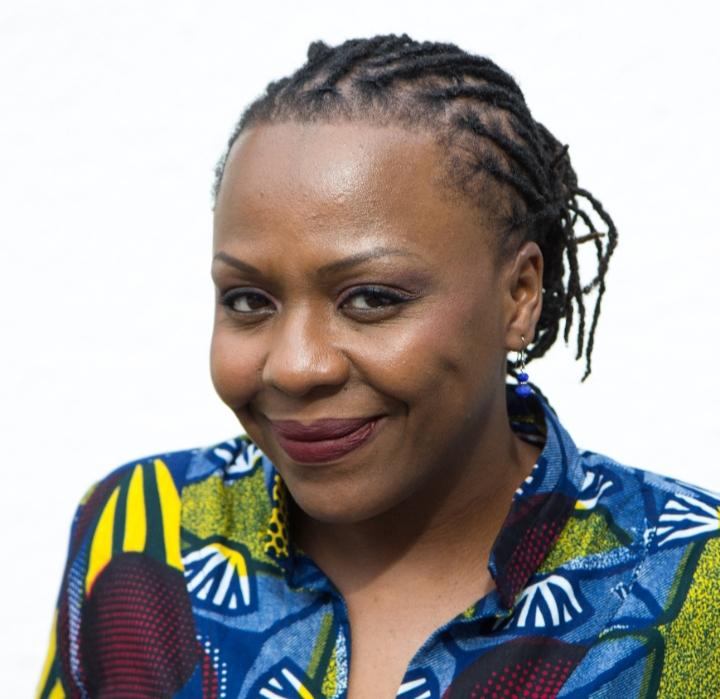
Lola Shoneyin:
There are writers who simply tell stories, and there are writers who disturb silence. The life of Lola Shoneyin belongs firmly in the second category. She did not grow up dreaming of controversy, but she grew up in a country where certain truths were whispered behind closed doors. When she finally began to write, she chose not to whisper.
Her voice became bold, playful, provocative, and deeply Nigerian. Through poetry, fiction, and cultural activism, she carved out a space where women’s stories could breathe freely.
This is the story of a girl born into history who chose to make her own.
A Childhood Surrounded by Ideas
Lola Shoneyin was born Titilola Atinuke Alexandrah Shoneyin in 1974 in Ibadan, Nigeria. She was born into a family where history, politics, and intellect were part of everyday conversation. She is the granddaughter of Obafemi Awolowo, one of Nigeria’s most influential political leaders.
Growing up in such a family meant expectations were high. But it also meant exposure to ideas. Politics was not abstract in her world. It was personal. It was discussed at dinner tables. It shaped communities.
Yet Lola’s childhood was not defined only by legacy. It was filled with imagination. She grew up in a Nigeria that was vibrant, noisy, contradictory, and culturally rich. Markets buzzed with gossip. Families carried secrets. Society had strict rules about what women should be.
From an early age, Lola observed everything.
She attended school in Nigeria and later continued her education in the United Kingdom. Studying abroad widened her perspective. She experienced life as a Nigerian in the diaspora. She saw how Africa was misunderstood, simplified, or romanticized. Those observations would later influence her writing.
Finding Her Voice in Poetry
Before she became known for her novels, Lola Shoneyin was a poet.
Poetry was her first love. It gave her freedom to experiment with language. It allowed her to be sharp and intimate at the same time. Her early poetry collections tackled themes that many avoided: sexuality, religion, hypocrisy, power, and the emotional lives of women.
Her poems were bold. Sometimes playful. Sometimes uncomfortable.
She refused to present Nigerian women as flat characters. Instead, she explored their desires, frustrations, and contradictions. She wrote about bodies and faith in ways that startled conservative readers.
But controversy did not silence her. If anything, it confirmed that she was touching nerves.
She understood that literature could challenge cultural taboos without abandoning humor. That balance became one of her strengths.
The Birth of a Literary Sensation
In 2010, Lola Shoneyin published the novel that would transform her career: The Secret Lives of Baba Segi's Wives.
The novel told the story of a polygamous household in Nigeria. Baba Segi, the patriarch, has four wives. Into this already complicated family enters Bolanle, the educated, modern fourth wife. Beneath the surface of this domestic arrangement lies jealousy, secrets, infertility, betrayal, and survival.
The book was vibrant with dialogue and deeply rooted in Nigerian culture. It was also daring. Shoneyin explored issues of patriarchy, female rivalry, reproductive pressure, and the quiet strategies women use to survive in male dominated systems.
Readers were captivated.
The novel gained international recognition. It was translated into several languages and adapted for stage performances in different countries. Suddenly, Lola Shoneyin was not just a Nigerian writer. She was a global literary voice.
But what made the book powerful was not just its storyline. It was its honesty. She did not romanticize polygamy or condemn it in simplistic terms. She showed its complexity. She gave each wife a voice.
And in doing so, she challenged stereotypes about African women.
Beyond the Page: Building a Cultural Movement
Some writers are satisfied with publishing books. Lola Shoneyin wanted more.
In 2013, she founded the Ake Arts and Book Festival in Abeokuta, Nigeria. Named after Chinua Achebe’s memoir, the festival became one of Africa’s most significant cultural gatherings.
Ake was not just about books. It was about conversation.
Writers, poets, musicians, filmmakers, and thinkers gathered annually to discuss politics, art, identity, and the future of Africa. The festival created space for African voices to define themselves on their own terms.
In a continent where literary infrastructure often struggles for funding and visibility, Ake became a beacon. It attracted global attention while remaining proudly African.
Through Ake, Shoneyin shifted from being solely a storyteller to becoming a cultural architect.
Navigating Controversy
Outspoken women rarely avoid controversy, especially in societies where gender roles are tightly defined.
Lola Shoneyin has never been timid in expressing her opinions. Whether discussing feminism, Nigerian politics, or cultural hypocrisy, she speaks plainly.
Some admire her boldness. Others criticize her views.
But she remains consistent in one belief: stories matter. Conversations matter. Silence is dangerous.
Her writing often exposes uncomfortable truths about family structures, societal expectations, and the tension between tradition and modernity. She does so with wit rather than bitterness.
A Woman of Many Layers
To reduce Lola Shoneyin to a single identity would be inaccurate.
She is a mother. A wife. A poet. A novelist. A festival director. A commentator. A businesswoman.
Her life bridges multiple worlds. She carries the legacy of a political dynasty yet has built a creative identity independent of it. She writes about domestic spaces yet operates confidently on global stages.
She represents a generation of Nigerian women who are redefining what influence looks like.
The Power of Female Stories
At the heart of Lola Shoneyin’s work is a commitment to women’s stories.
In many traditional settings, women are expected to endure quietly. Their struggles are hidden behind smiles and proverbs. Shoneyin pulls back the curtain.
She shows women who scheme, love, suffer, desire, compete, forgive, and survive. She refuses to make them saints or villains. She makes them human.
That humanity resonates far beyond Nigeria.
International Recognition
Over the years, Shoneyin has participated in major literary festivals worldwide. Her work has been studied in universities. Critics have praised her for blending humor with social critique.
She belongs to a powerful lineage of Nigerian writers that includes Chimamanda Ngozi Adichie and Wole Soyinka, but her voice remains distinct.
Where Soyinka often confronts politics through drama and Adichie through expansive narrative, Shoneyin uses domestic intimacy and satire as her tools.
The Woman Behind the Confidence
Behind the public persona is someone who understands vulnerability.
Writing boldly requires courage. Hosting a festival in Nigeria’s fluctuating economic climate requires resilience. Managing criticism requires emotional strength.
Yet she continues.
Her journey shows that influence does not always require political office. Sometimes it requires imagination and persistence.
A Legacy Still Unfolding
Unlike historical figures whose legacies are sealed by death, Lola Shoneyin’s story is still being written.
Her impact on Nigerian literature and cultural conversation is undeniable. Through her novel, she gave voice to hidden lives. Through Ake, she built a platform for others.
She reminds young writers that storytelling is not just art. It is power.
The Meaning of Her Journey
From a girl growing up under the shadow of a political giant to a woman who created her own spotlight, Lola Shoneyin’s life is a study in self definition.
She could have relied solely on her family name. Instead, she built something personal.
She writes without apology. She speaks without shrinking. She creates spaces where African voices gather unapologetically.
And in doing so, she has become one of the most influential literary figures of her generation.
Lola Shoneyin’s story teaches that stories are not trivial. They shape culture. They challenge systems. They preserve memory.
In a world that often tries to confine women to silence, she chose to write.
And the world listened.


Categorías
Read More
Ethiopian volcano erupts after 12,000 years: What we know A long-inactive volcano in northern Ethiopia unexpectedly erupted on Sunday, sending up plumes of volcanic ash and dust, which have since spread across continents and disrupted flights in India and the United Arab Emirate No casualties were reported in Ethiopia following the eruption, but local government officials told...

Charles Olumo Charles Olumo, popularly known as Agbako, is a legendary Nigerian actor and one of the pioneers of the Yoruba film industry. He is widely respected for his powerful roles in traditional Yoruba movies, often playing tough, mystical, or villainous characters. Born on February 20, 1923, in Abeokuta, Ogun State, Nigeria, Charles Olumo became one of the oldest and most...
IK Ogbonna IK Ogbonna is a Nigerian actor, model, television personality, and entrepreneur. He is well known for his roles in Nollywood films and for his presence in the fashion and entertainment industry. Early Life and Background IK Ogbonna whose full name is Ikechukwu Mitchel Ogbonna was born on January 11, 1984, in Abia State, Nigeria. He grew up in Nigeria and spent part of his...

Chidinma Ekile Chidinma, born Chidinma Ekile, is a Nigerian singer and songwriter who rose to fame after winning a major music reality show and later transitioned from secular Afrobeats to gospel music. Known for her petite frame, powerful voice, and calm personality, Chidinma has built a career marked by talent, transformation, and faith. Early Life and Background...

The Sultan of Sokoto and President-General of the Nigeria Supreme Council for Islamic Affairs (NSCIA), Alhaji Muhammad Sa’ad Abubakar, has officially declared Tuesday, January 20, 2026, as the first day of Sha’aban 1447AH. The announcement was contained in a statement issued on Monday, January 19, 2026, by the Wazirin Sokoto, who also serves as the Chairman of the Advisory...