


 Über
Über
The Biafra War
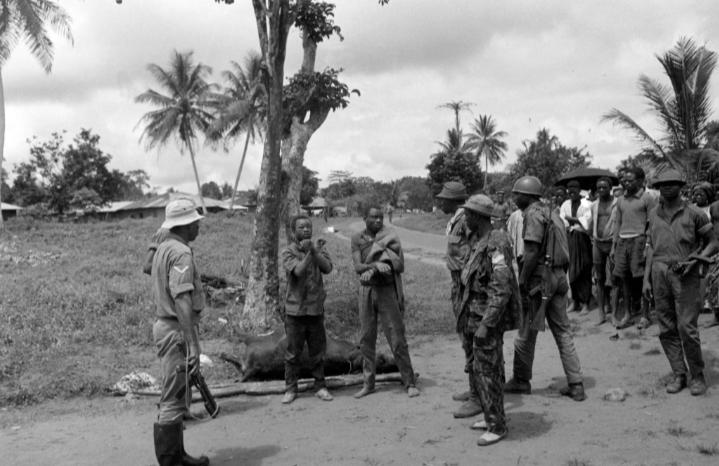
The Biafra War
This is a story of how it began how it was fought and how it ended
The Biafra War remains the darkest and most painful chapter in the history of Nigeria. It was not just a war of soldiers and guns. It was a war that entered kitchens bedrooms churches hospitals and the bodies of children. It was a war where hunger became deadlier than bullets and silence became heavier than bombs. To understand how it happened one must go back to the years.
Nigeria became independent in 1960 as a single country made up of many nations forced together by colonial rule. The British had joined people of different languages religions and histories into one political entity. When the British left they handed power to local politicians without fixing the deep cracks they had created. From the beginning Nigeria was uneasy. Politics quickly followed ethnic lines. The North the West and the East struggled for power and control. Every election created tension. Every political disagreement felt like a threat to survival.
By the mid nineteen sixties corruption was widespread and trust in civilian government collapsed. Many Nigerians believed the politicians were stealing the future of the country. This anger led to the first military coup in January nineteen sixty six. Young soldiers overthrew the government and killed several top political leaders mostly from the North and the West. Although the coup leaders said they were fighting corruption many people saw it as an ethnic attack. Fear spread quickly across the country.
Six months later a counter coup took place. Northern officers struck back with anger and revenge. The head of state was killed and the military took full control. What followed was even more terrible. Across Northern cities Igbo civilians were attacked. Men women and children were hunted down in markets streets and homes. Trains carrying Igbo passengers were stopped and people were dragged out and killed. Thousands died. Survivors fled with nothing back to the Eastern Region carrying stories of horror and blood.
The East was shaken. Families returned with scars and trauma. Trust in Nigeria was gone. Many Igbos believed they could never be safe again in a country that failed to protect them. At this point the military governor of the Eastern Region was Chukwuemeka Odumegwu Ojukwu. He demanded guarantees of safety and true federalism. Meetings were held but promises were broken. Agreements reached were later ignored. The East felt betrayed again and again.
As tension grew soldiers from other regions began to leave the East while Eastern soldiers returned home. Nigeria was slowly breaking apart. On May thirty nineteen sixty seven Ojukwu made a historic announcement. The Eastern Region declared itself an independent nation called the Republic of Biafra. For the people of the East it was a declaration of survival. For the Nigerian government it was rebellion.
Nigeria was led at the time by Yakubu Gowon. He insisted that Nigeria must remain one country. Talks failed. Borders closed. On July six nineteen sixty seven Nigerian troops moved toward Biafra. The war had begun.
At the start Biafra surprised many observers. Its soldiers were motivated and defending what they believed was their homeland. They advanced westward and took control of parts of the Midwest. For a brief moment it seemed Nigeria might struggle to contain the breakaway state. But Nigeria had greater resources. It had a larger army more weapons and international support. Slowly the balance shifted.
The Nigerian military changed strategy. Instead of quick victory it decided to surround Biafra completely. Roads were blocked ports were closed and airspace was controlled. Nothing was allowed in. No food no medicine no fuel. This blockade turned the war into something far more terrible than fighting on the battlefield. Hunger entered homes and camps. Children became thin. Mothers searched endlessly for food that no longer existed.
Inside Biafra life became a daily struggle for survival. Farms were abandoned because fighting made them unsafe. Markets disappeared. Hospitals overflowed with wounded civilians but had no drugs. Doctors performed surgeries without anesthesia. Relief agencies tried to help but access was limited. Only small night flights brought in supplies and many planes were shot down.
Images of starving Biafran children shocked the world. Their bodies were weak their bellies swollen their eyes empty. Hunger became a weapon of war. It killed quietly and slowly. By the end more than one million civilians mostly children had died not from bullets but from starvation and disease.
Yet even in this suffering Biafra tried to survive as a nation. It created its own currency its own radio station and even homemade weapons. Radio Biafra broadcast messages of hope resistance and identity. Songs and speeches reminded people why they were fighting. Churches became shelters. Schools closed and children grew up too fast. Teenagers joined the army. Women became traders smugglers and heads of families.
On the Nigerian side soldiers advanced steadily. Town after town fell. As territory shrank the humanitarian crisis worsened. Refugee camps overflowed. Diseases spread quickly. The world called for peace but the fighting continued. Each side believed it had no choice.
By late nineteen sixty nine Biafra was collapsing. Food was almost gone. Weapons were scarce. Soldiers were exhausted. Civilians were dying in large numbers every day. Ojukwu realized the end was near. In January nineteen seventy he left Biafra and went into exile. His deputy announced surrender.
Nigeria declared the war over. The government announced a policy of reconciliation saying there was no victor and no vanquished. But for the people of Biafra the pain did not end with surrender. Homes were destroyed. Businesses were gone. Savings were lost. Many families had no one left.
Former Biafrans were given a small amount of money regardless of what they had owned before the war. People returned to cities like Onitsha Aba and Enugu only to find ruins. The trauma remained unspoken. Many survivors chose silence over memory because the pain was too deep.
The Biafra War officially ended in nineteen seventy but its shadow still lies across Nigeria. It changed the way Nigerians see the state power and identity. It taught a painful lesson about what happens when fear hatred and pride are allowed to grow unchecked. It showed how civilians suffer most when leaders fail.
Today the war lives on in stories told by parents and grandparents. It lives in unmarked graves and in memories that refuse to fade. It is remembered not only as a fight for territory but as a human tragedy of enormous scale.
The Biafra War was the longest and cruelest war in Nigerian history because it did not just take lives. It took childhoods futures and trust. It remains a warning written in blood and hunger reminding generations of the cost of division and silence.

Kategorien
Mehr lesen
Netizens are buzzing with reactions after Yul Edochie’s elder brother, Linc, made a bold move by unfollowing May Edochie on Instagram, stirring up heated debates online. This unexpected action comes amid ongoing family drama, with Linc’s new wife, Yinka, publicly supporting Yul’s second wife, Judy Austin. Fans are divided, with many speculating about Linc’s intentions...

Poju Oyemade Poju Oyemade is a Nigerian pastor, teacher, conference convener, and public speaker best known as the Senior Pastor and Founder of The Covenant Nation, a Lagos based ministry founded in 1994. He is also widely known as the convener of The Platform Nigeria and WAFBEC, two influential faith and public engagement events connected to his ministry. Early Life and Background Public...
A Lagos High Court in Ikeja has dismissed the defamation lawsuit filed by Olalekan Fatodu and Leeman Communications Limited against journalist Omoyele Sowore and Sahara Reporters, awarding ₦500,000 in costs against Fatodu. Justice Oyindamola Ogala struck out the case on Tuesday, ruling that the claimants failed to prove that the allegedly defamatory content was published to a third...

Agbado/Oke-Odo LCDA Agboyi-Ketu LCDA Apapa-Iganmu LCDA Ayobo-Ipaja LCDA Bariga LCDA Egbe-Idimu LCDA Ejigbo LCDA Eredo LCDA Igando-Ikotun LCDA Ikosi-Isheri LCDA Isolo LCDA Mosan-Okunola LCDA Odi-Olowo/Ojuwoye LCDA Ojodu LCDA Ojokoro LCDA Onigbongbo LCDA Orile-Agege LCDA Iba LCDA Ifelodun LCDA Igbogbo-Baiyeku LCDA Ikorodu North LCDA Ikorodu West LCDA Imota LCDA...
Life as a single mother had never been the dream, but it became my reality the day Richard packed his bags and left the country. He promised it was for a better future, that distance wouldn’t change anything. I believed him because love can make you believe what logic warns you against. Months later, the calls reduced. Messages became excuses. Then silence. I was left with a growing...

