Σχετικά
THE ORPHANAGE WHERE MEN VOMITED MONEY
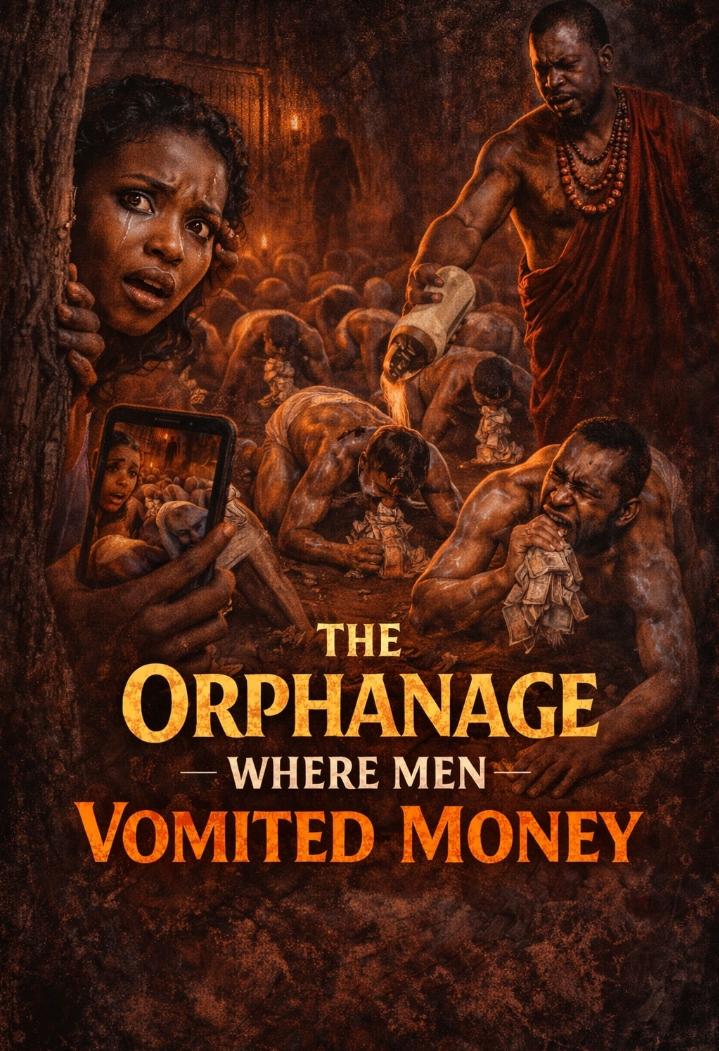
THE ORPHANAGE WHERE MEN VOMITED MONEY
My name is Bolanle and for 12 years, I thought I married a man heaven personally packaged for me.
Chief Femi Adeyemi wasn’t just rich. He was respected.
The kind of man people stood up to greet even when they were not sure why they were standing. The kind of man whose name opened gates before security men could ask questions. The kind of man pastors used as sermon examples.
In our church, they didn’t call him by his real name again. They called him “Father Christmas.”
Because every Sunday, just when the service was getting hot and the pastor’s voice was rising, Chief Femi would stand up like a king rising from his throne. He would pull out a fat envelope and wave it gently, as if he was blessing the air.
Then he would walk to the altar and drop it like it was small change.
The pastor would shout, “Somebody shout hallelujah!”
Women would whisper, “Ah! This man is God’s friend.”
Men would tap each other, “That’s the kind of grace I want.”
And I, his wife, would sit there smiling proud, calm, enjoying the sweet respect that comes with being the woman beside a “helper of destiny.”
Because if you marry a man the whole church admires, you start believing you are also covered by that admiration.
That was my mistake.
We lived the kind of life people prayed for.
A house in Lekki with tall fences and cameras that followed movement. Another in Abuja near Maitama, where the air smelled like oil money. We traveled Dubai like it was Ajah. Our children attended the kind of school that had “International” in its name and “British” in its fees.
Chief Femi never raised his voice in public. Never fought in public. Never looked messy.
Even the way he ate food was controlled small bites, slow chewing, like he was always aware somebody might be watching.
But behind closed doors, my husband had one obsession:
Giving.
Not the normal giving of rich men who want to show off.
This one was different.
It was almost… urgent.
Every month, the last Saturday, Chief Femi would wake before daybreak. He would bathe, pray loudly, and dress in a white agbada that looked freshly ironed by angels.
Then he would supervise as the houseboys loaded the G Wagon with bags of rice, cartons of Indomie, beverages, toiletries, and heavy Ghana-must go bags filled with cash.
And every single month, he would say the same thing:
“Bolanle, you know I made a covenant with God. This orphanage is the secret to my open doors. I must go alone to pray with them.”
I never followed him.
Because honestly, who follows a man that is doing “God’s work”?
Who suspects charity?
That’s how evil hides inside good reputation.
The orphanage was called St. Moses Orphanage, somewhere deep along the Lagos-Ibadan expressway. A “forest area,” he called it. He said the children there were abandoned, forgotten, living with nothing.
And because my husband was “Father Christmas,” he carried them like a personal assignment from heaven.
I used to brag about it.
When my friends complained about their husbands buying side chicks phones, I would smile and say:
“Mine spends on widows and orphans.”
They would sigh.
“Bolanle, you’re lucky.”
I believed I was lucky too.
Until last month.
That’s when the cracks started showing.
WHEN DONATION STARTED SMELLING LIKE SOMETHING ELSE
It began with things that didn’t make sense.
One evening, I walked into the store room and saw stacked cartons.
I read the label and frowned.
Adult diapers.
Not small. Not medium.
Big adult diapers. Enough to supply a hospital ward.
I laughed at first and assumed it was for an old people’s home donation. But when I checked the list, it was on the “orphanage” supplies.
I asked him gently that night while he was packing.
“Femi… why are you buying adult diapers for an orphanage?”
His hand froze on the Ghana-must-go bag. His eyes flickered, like a bulb struggling with electricity.
He forced a smile.
“Some of the children have special needs.”
That answer didn’t satisfy me, but I didn’t press.
Two days later, he bought twenty crates of schnapps.
Schnapps?
For children?
I asked again, this time more direct.
“Are the orphans sick? Or do they have visitors? Why schnapps?”
Chief Femi’s jaw tightened.
“Don’t ask questions about my covenant,” he snapped.
His eyes God help me his eyes turned red for a second. Not normal red like anger. A deep red, like something lit inside him.
Then he leaned closer and hissed:
“Do you want us to go back to poverty? Do you want to sell roasted corn on the roadside?”
The way he said “roasted corn” was like a curse.
I went quiet.
But even though my mouth shut, my mind opened.
Because when a man reacts violently to a simple question, it means the question hit something he wanted hidden.
After that, I began noticing strange things.
The herbs he bought weren’t normal. They smelled like rotten fish and burnt leaves. He hid them in the boot like contraband.
He stopped allowing drivers to follow him. He drove himself.
He stopped answering calls on speaker. He started stepping outside to talk, even in his own home.
At night, he began waking up to pray, but it wasn’t the kind of prayer that sounded like faith.
It sounded like negotiation.
“Please… just give me this month… I will deliver… I will deliver…”
Deliver what?
Deliver who?
I started sleeping with one eye open, even beside my husband.
And then came the day he left at 5:00 AM.
I stood at the window watching the G-Wagon roll out like a black beast, and something inside me whispered:
Follow him.
Not because I wanted to control him.
But because I needed to know the truth before the truth entered my house and swallowed me too.
I waited ten minutes, then I entered my small Sienna and followed.
I kept a safe distance.
He drove past Redemption Camp, past busy areas, past where normal people would stop for fuel or snacks.
Then he turned into a bush path that looked like the entrance to kidnapping.
My heart started beating like a talking drum.
Trees closed in. The road became smaller. The air became thick. Even the birds sounded like they were warning me.
After about thirty minutes of driving inside the bush, he reached a tall black gate with barbed wire.
No signboard.
No “St. Moses Orphanage.”
Nothing.
Just a gate like prison.
Two scary looking men with machetes opened it after he honked.
I parked my car far in the bush and trekked.
Fear was pushing me, but curiosity was leading me.
I approached carefully, crawling through dry leaves until I reached a mango tree close enough to see inside the compound.
I climbed with shaking hands.
And that was where my life ended and restarted.
Because what I saw inside that gate was not an orphanage.
There were no children.
No toys. No classrooms. No beds of little ones.
Instead, in the middle of the compound, were about thirty full grown men some young, some old, some with gray beards crawling on the floor like babies.
They wore only diapers.
Their bodies were covered in white chalk.
Some had bruises on their knees like they had been crawling for weeks.
And my husband…
My husband, Chief Femi Adeyemi the “Father Christmas” of church
Was standing in the middle wearing a red wrapper like a shrine man.
In his hand was a large feeding bottle filled with a thick black liquid.
He was shouting:
“Suck for your destiny! Suck for your glory!”
One by one, those men crawled to him and drank from the bottle.
And as they drank… they vomited money.
Not symbolic money.
Not spiritual money.
Physical bundles of naira notes fresh, clean pouring out of their mouths as if their stomachs were printing presses.
Some of the men were crying while vomiting.
“Baba… please… I am tired!” one cried. “Let me die!”
Chief Femi kicked him.
“You signed the contract! You wanted to be rich in the spirit world, but here you are my cattle! Keep vomiting!”
My stomach turned. My throat tightened.
I felt hot urine run down my legs on that tree.
I was watching a human farm.
A factory where men had sold their dignity for wealth and my husband was the owner.
I started recording with trembling hands.
Fifteen seconds. That’s all I got.
Because that was when my phone rang.
It was my alarm.
In that silent bush, the ringtone sounded like a bomb.
Chief Femi stopped.
The guards looked up.
“Who is there?!” my husband roared.
And that’s when I understood:
If they caught me, I wouldn’t return home.
I didn’t climb down. I jumped.
My ankle cracked when I landed, but fear gave me speed.
“Catch her! Kill her!” I heard him screaming.
I ran into the bush.
I didn’t go to my car because they would see it.
I ran like a mad woman bleeding from thorns, tearing my blouse, swallowing my cries.
My ankle was screaming pain, but my spirit was screaming louder:
Live. Live. Live.
Somehow, I reached the expressway and flagged down a trailer heading toward Ibadan.
The driver looked at me like I was possessed, but pity made him stop.
That was three days ago.
Now I’m in a small, cheap room in Ibadan. My ankle is swollen like yam.
I have no money left.
Because the moment I ran, I became “missing.”
And Chief Femi moved fast.
He went on Facebook with tears in his eyes.
He posted my picture.
He wrote that I had “mental challenges.”
He told people I ran away due to “breakdown.”
And everybody believed him.
Because in Nigeria, the public will believe a respected man over a frightened woman especially if the man donates millions.
Worst of all, I heard something that crushed my stomach:
The Commissioner of Police is his close friend.
The truth is dangerous when the liar has power.
Now I’m here.
With a swollen ankle, a 15-second video, and fear sitting beside me like a roommate.
And the question I keep asking myself is:
Should I post it? Or should I disappear?
THE WOMAN WHO HELPED ME THINK
On the fourth night, when hunger was turning my eyes into fire, I went downstairs to beg the hotel woman for food on credit.
The woman looked at my ankle and sighed.
“Madam, you don enter trouble.”
I didn’t even have strength to lie.
I nodded.
She gave me beans and garri and told me to sit.
Then she asked the question that changed my life:
“Madam… if you die, who benefits?”
I stared at her.
She continued calmly:
“If you post video anyhow, you can die. If you run away without plan, you can still die. But if you think well, plan well, and place your truth where power cannot bury it… you will live.”
Her name was Aunty Sade.
A simple woman.
But wisdom was living in her mouth.
She told me something I will never forget:
“Don’t throw your truth like stone. Throw it like seed. Put it where it will grow even if you’re not there.”
That night, I cried quietly until my pillow was soaked.
Then I made a decision:
I wasn’t going to fight like a panicked victim.
I was going to fight like a woman who wanted to live.
WHAT I DID WITH THE VIDEO
I didn’t post it immediately.
Instead, I did three things:
1. I sent the video to three trusted people at once my elder brother, my old school friend who now works with a human rights NGO, and a journalist I once helped in church when he was struggling. I told them:
“If anything happens to me, release this.”
2. I wrote a detailed statement names, date, time, the location directions, the gate description, the machete guards, my husband’s words. I wrote it like a confession letter.
3. I moved.
Not to a village. Not to a place where he could easily find me through family. I moved to a safe house through the NGO contact.
Because I finally understood:
When you fight a powerful lie, you don’t stand in open field.
You find cover first.
Two days after I moved, the NGO contacted a federal unit that didn’t answer to my husband’s friend.
The journalist also did something smart:
He didn’t publish it as “Bolanle vs Chief Femi.”
He published it as:
“BUSH FACTORY: Secret Compound Along Expressway Under Investigation”
No name.
No direct accusation yet.
Just a story.
But the story was enough to pull attention.
And once attention comes, silence becomes harder.
THE DAY THE GATE OPENED
Three weeks later, officers from Abuja came quietly.
Not the ones that collect brown envelopes.
The ones that move like they don’t fear Lekki money.
They raided the compound early morning.
But Chief Femi had already smelled danger.
The place was half empty.
Some of the men were gone.
Some of the “guards” had disappeared.
But they still found enough:
Chains. Herbs. Chalk. Diapers. Feeding bottles. Records. Names.
And they found two of the “men” still there too weak to run.
One of them, shaking like leaf, said one sentence that made the whole case burn:
“Chief Femi no be our helper. Na our owner.”
When Chief Femi heard the news, he did what wicked people always do:
He tried to turn it into religion.
He called a press conference in church.
He claimed “the devil is attacking his ministry of giving.”
He cried on camera.
He said my video was “AI.”
He said I was “possessed.”
But this time, something had changed.
Because when power meets evidence, power starts sweating.
And when the men who were crawling in diapers started speaking one by one the story became too heavy to carry with lies.
Chief Femi was arrested briefly.
Then he got bail because Nigeria.
But the real punishment started another way:
His name became poison.
Sponsors stepped back.
Church members started whispering.
Some pastors stopped collecting his offerings publicly.
His political friends started avoiding photos with him.
And the funniest part?
The same people who used to shout “Father Christmas” began to say:
“Ah… I always suspected that man.”
Human beings are like that.
But I didn’t care.
Because I was alive.
I walked again.
My ankle healed.
And one evening, as I stood in front of a mirror in the safe house, I realized something shocking:
For 12 years, I had been living in luxury…
But it was the first time I was breathing freely.
Because I had escaped a man who built wealth by turning humans into cows.
MY FINAL WORD
If you see a “big man” donating to a project you have never seen…
Ask questions.
If your spouse tells you “Don’t ask about my covenant…”
Ask louder.
Because sometimes, “covenant” is not covenant.
It’s cover.
And not every helper is sent by God.
Some helpers are looking for cattle to milk.

Κατηγορίες
Διαβάζω περισσότερα
THE MIDNIGHT SACRIFICE Episode One: The Night the House Locked Itself “Junior, come and serve me. Your father is too old to satisfy the spirits tonight.” The words didn’t sound human. They slid out of my stepmother’s mouth as she loosened her wrapper, slow and deliberate, like she had rehearsed it in front of a mirror. My scream hit the wall before my body did....
Olubankole Wellington Before the tailored suits, before the sold-out concerts, before the fairy-tale wedding that captivated a nation, there was a young boy born far from Nigeria whose life would eventually shape the sound and structure of modern Nigerian R&B. The world knows him as Banky W — smooth-voiced singer, record executive, actor, pastor, and politician. But his story...

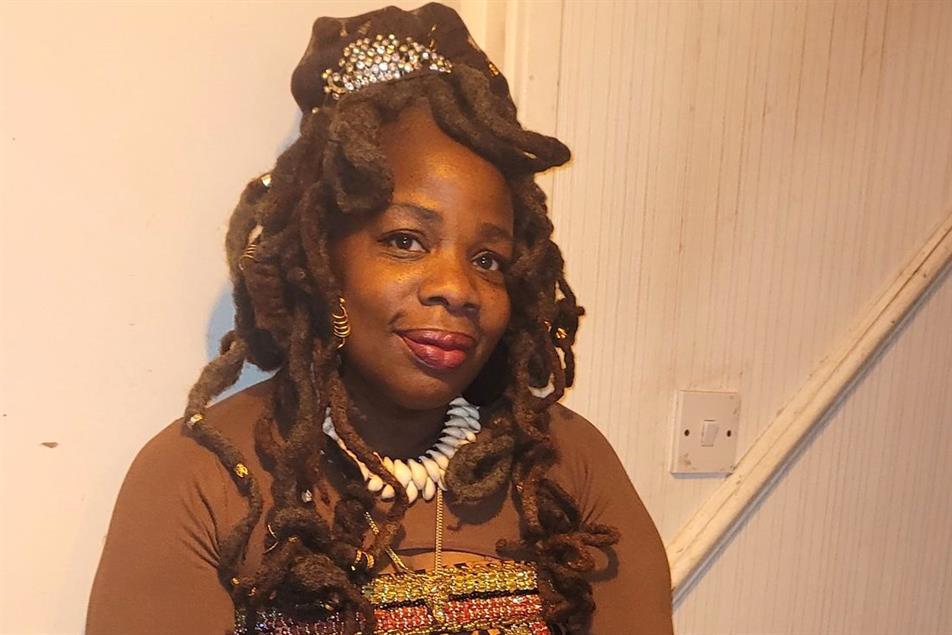
Ngozi Fulani: There are people who live quiet lives, and there are people whose lives become symbols of deeper conversations. The story of Ngozi Fulani is one of identity, survival, activism, and controversy. It is the story of a British woman of Caribbean heritage who built a refuge for vulnerable women and, decades later, found herself at the center of a national debate about race and...
Four Nigerian banks — Zenith Bank, Fidelity Bank, GTBank, and FCMB — are facing class action lawsuits at the Federal High Court in Lagos for allegedly misusing customers’ personal data during aggressive share offer campaigns. The suits claim the banks used KYC data to send unsolicited emails, SMS, calls, and in-app pop-ups urging customers to buy shares. In GTBank’s...

At least 150 people have now been confirmed dead following devastating floods in Niger State, according to an update from the National Emergency Management Agency (NEMA) on Saturday. The agency’s spokesperson, Ibrahim Husseini, revealed the significant jump from the earlier toll of 115, stating that additional bodies were recovered up to 10 kilometers away from Mokwa—the area...