About
About
The Boy Who Escaped the Shrine
The Boy Who Escaped the Shrine
They said the curse arrived the night Ayo was born.
Thunder split the sky without rain. A goat broke its rope and died at the shrine gate. By morning, the elders had agreed: the child carried bad blood. Every failed harvest, every sudden illness, every death that followed was quietly added to his name.
Ayo grew up feeling eyes on his back. Mothers pulled their children away from him. Old men spat on the ground when he passed. Only his mother believed the whispers were lies, but belief is weak when fear has teeth.
When a strange sickness swept through the village—burning fevers, coughing blood—the elders acted fast. They took Ayo at dawn and led him to Baba Alasẹ, the native doctor whose shrine sat deep in the forest where sunlight feared to stay.
“Blood must answer blood,” Baba Alasẹ said, his voice dry like dead leaves.
That night, the drums began.
Tied to a wooden post, Ayo watched shadows dance on the shrine walls. He smelled smoke, herbs, and something worse—old death. As the chanting rose, fear sharpened into clarity. He remembered his mother’s voice: Run if you ever can.
When the fire flared and the doctor turned away, a rope loosened—perhaps cut by chance, perhaps by mercy. Ayo didn’t think. He ran.
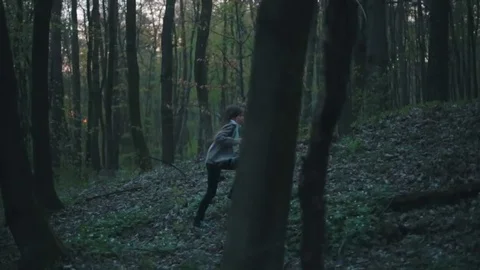
Branches tore his skin. Roots grabbed his feet. Drums chased him through the forest, but the city lights beyond the trees burned brighter than fear. By dawn, the village was behind him.
The city did not care about curses.
It cared about strength.
Ayo slept under bridges, washed cars, carried cement, learned to read from torn newspapers. Hunger taught him discipline. Pain taught him patience. Years passed. The boy became a man who built himself brick by brick.
By thirty, Ayo owned a transport company. His name appeared in newspapers—not as a curse, but as success. Yet every night, he dreamed of drums.
So he returned.
The village looked smaller, poorer, unchanged. The shrine still stood. Baba Alasẹ was dead, but his apprentice now wore the beads. The sickness still came. The sacrifices never stopped.
When the elders saw Ayo, their faces emptied of blood.
“The curse has returned,” someone whispered.
Ayo smiled—not in anger, but in truth.
“You were wrong,” he said calmly. “There was never a curse. Only fear… and men who used it.”
He revealed what the city had taught him: records, land theft, lies hidden behind rituals. Baba Alasẹ had grown rich while the village stayed hungry. Children had died for nothing.
That night, the drums were silent.
By morning, the shrine burned—not by spirits, but by choice.
Ayo didn’t stay. Freedom had already claimed him. As he left, the village faced a new destiny: one without blood, without lies… and without excuses.
And for the first time, the forest felt quiet.

Categorieën
Read More
No one remembered when the sun had last risen over Aurelion. There were records, of course dusty ledgers sealed in the High Archive, poems etched into cathedral stone, children’s rhymes half-erased by time but memory itself had failed the kingdom. People spoke of daylight the way one spoke of myths: carefully, skeptically, as if too much belief might invite ridicule. The sky above...

Raymond pov I had not been home for one whole week. Seven long days away from the house I once called my peace, seven nights sleeping with lies on my chest as heavy as stones. As a married man, that alone was a sin, but I kept convincing myself that I had things under control. My wife kept calling morning, afternoon, midnight but I couldn’t pick up. Each time her...

Yul Edochie Yul Edochie is a Nigerian actor, film director, and politician known for his strong roles in Nollywood movies and his connection to one of Nigeria’s most famous acting families. Born Yul Chibuike Daniel Edochie on January 7, 1982, in Lagos State, Nigeria, he rose to prominence as one of the respected actors in the Nigerian film industry. Early Life and...

Adebimpe (POV) My body gave up before my spirit did. It started as a dull ache behind my eyes, the kind I could ignore if I worked slowly. Then my limbs grew heavy, as though the palace itself had climbed onto my back. Still, I swept. Still, I cleaned. Still, I served. Because in the palace, rest was a luxury slaves could not afford. That morning, when I tried to rise from my mat, the room...

Oluyemi’s POV I couldn’t deny it any longer. The late nights, the lingering glances, the ache in my chest when she wasn’t around it had all become unbearable. I told myself I could maintain professionalism, keep my distance, control my feelings. But that was a lie. It happened on a rainy Thursday evening. The office was empty, except for the hum of the air...