


The Sea Turns Red
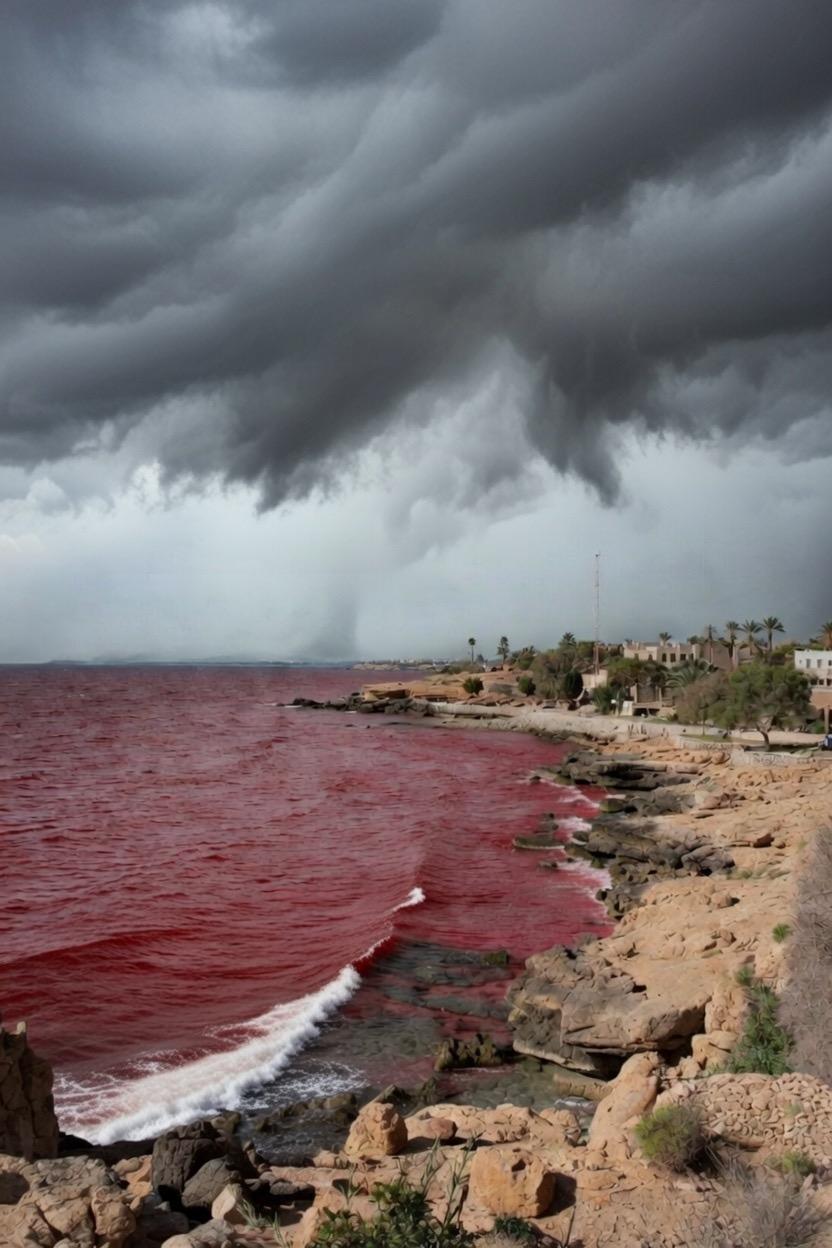
The village of Igbogun had always been small, quiet, and almost forgotten by the rest of the world. It clung to the edge of the Atlantic, where the waves whispered secrets no one dared repeat. Fishermen went to sea in the mornings and returned in the evenings with their nets heavy with fish, and mothers waited by the shore, calling their sons’ names into the wind. Life was simple, routine, predictable. Until the sea began to turn red.
It started on a Tuesday morning. Olumide, a young fisherman with skin like bronze and hands scarred from years of hauling nets, noticed it first. He had rowed out further than usual, past the point where the sea met the horizon. That morning, the sun was pale, almost sickly, and the waves looked… wrong.
At first, he thought it was the reflection of dawn. But as he neared the deeper waters, the blue-green waves shimmered into a dark, crimson hue. He blinked, rubbed his eyes, and touched the water with his hand. It was cold but red, deep red, almost like blood.
Olumide’s heart pounded. He called to the other fishermen, but they laughed. “Na algae bloom,” they said. “No dey fear, small thing.”
But Olumide knew better. This was not algae. This was older. This was alive.
By evening, the tide had carried the red water closer to the village. Mothers screamed as fish floated dead, their scales coated in the strange color. Dogs barked at the shore, and the elders sat in silence, staring at the waves. No one spoke of it, but everyone knew: something unnatural had come from the sea.
The next morning, the village woke to a more terrifying sight. The tide had pulled further inland. Red water lapped at the steps of the old marketplace. Children had stopped playing. Fishermen refused to row their boats. And the sea… it seemed to pulse, as though it were breathing.
It was Nana Titi, the oldest woman in Igbogun, who finally spoke. She had lived through storms, droughts, and war, but never anything like this. Her eyes, clouded with age yet piercing, scanned the crimson waves. “This is the curse of the sea,” she said in a voice that carried like thunder. “The sea does not turn red for nothing. Something we have angered. Something we have ignored for generations.”
The villagers were terrified. Some believed the sea was thirsty for blood. Others whispered of ancient spirits, of creatures from the deep that demanded sacrifice. But no one dared go near the shore to find out.
Olumide, however, could not ignore it. He had seen something in the water something moving beneath the red waves, large and powerful. Curiosity, and perhaps fear, drove him to gather a small group of fishermen that night. By lantern light, they rowed past the crimson tide, their hearts heavy with dread.
The sea was silent. Too silent. The usual songs of waves and wind were gone. Then Olumide saw it: a dark shape beneath the red surface, moving slowly, deliberately. A shadow larger than any whale he had ever seen. Its presence made the water ripple unnaturally. The fishermen froze, and even the lanterns seemed to dim as if the night itself feared the creature.
Suddenly, a voice boomed not from any person, but from the sea itself. “You have forgotten us.”
The men screamed. They saw, beneath the waves, figures rising spirits, tall and skeletal, their eyes glowing like embers, their mouths twisted in silent cries. They reached out from the red water, and the sea pulsed around them as though alive, warning, demanding.
Olumide fell to his knees, heart hammering. “What do you want?” he shouted, his voice swallowed by the wind.
The oldest spirit, taller than the others, pointed toward the village. “Blood. Life. Respect,” it said, each word like thunder cracking over the ocean. “You have taken without giving. You have fished without asking. You have built without remembering. The sea remembers.”
The fishermen rowed back in terror, barely noticing the red water climbing higher with each stroke. By dawn, the village was almost surrounded. And then it happened: the red waves receded, leaving a thick, oily residue on the sand, fish dead, and the smell of iron heavy in the air.
For days, no one went to the shore. Mothers refused to wash clothes; fishermen stayed home. The village seemed trapped in fear. And Olumide could not shake the feeling that the sea was watching, waiting.
It was Nana Titi again who gave them hope. She called the villagers together and told them a story no one had heard before.
“Many generations ago,” she said, voice shaking yet strong, “our ancestors made a pact with the spirits of the sea. The sea would give us life, fish for our families, and protection from storms. In return, we would honor it, respect it, never take more than needed. But as time passed, we forgot. We built too many homes. We fished too much. We disrespected the waters. That is why the sea has turned red.”
The villagers listened, horrified. The curse, Nana Titi said, could only be lifted if the village remembered the old ways, if they offered respect and acknowledgment to the spirits that had once protected them. They would need to make a sacrifice not of blood, but of acknowledgment: a festival, offerings of the sea’s bounty, and a promise to fish wisely.
But as preparations began, Olumide could not forget the eyes beneath the waves. He had seen one spirit closer than the others a woman, her hair floating like seaweed, her face sorrowful. That spirit had lingered longer, staring directly at him, almost… pleading.
The night of the festival came. The villagers gathered on the shore, drums pounding, fires burning, fish and yams laid in small baskets, candles lit and prayers whispered. Nana Titi chanted in the old tongue, calling out to the sea spirits to accept the offering, to forgive the village, to calm the crimson tide.
And then, the sea spoke. The water shimmered in moonlight, turning from deep red to a darker, more forgiving shade. Figures rose from the waves not menacing this time, but regal and sorrowful. The woman spirit Olumide had seen hovered over the offerings, her eyes soft, and slowly she smiled.
The waves receded. By morning, the sea was blue again, calm and familiar, as if nothing had happened. Fish returned, and the village slowly returned to life.
Olumide never forgot what he had seen. Neither did the villagers. From that day, Igbogun honored the sea every month, offering thanks, respecting its boundaries, remembering that the water that fed them could also claim them if forgotten.
And sometimes, on still nights, when the moon is high and the tide gentle, Olumide swears he sees a flicker of red beneath the waves a reminder that the sea remembers.
Because some things, once awakened, never truly rest.

Categories
Read More
A devastating air disaster has struck Ahmedabad, India, as an Air India Boeing 787-8 Dreamliner crashed into a residential area shortly after takeoff, claiming the lives of at least 265 people. The ill-fated flight, bound for London, reportedly lost communication shortly after leaving Ahmedabad airport. Onboard were 242 passengers and crew, including: 169 Indians 53 British nationals 7...

When speaking about safe and practical workplace gear, Tyvek Breathing Cover often surfaces as a topic of discussion, especially when paired with the trusted name Hopeway AMD. This connection brings attention to the balance between functionality and everyday usability, a matter that professionals across different industries continue to prioritize. Work environments today require solutions that...

A late-night bandit attack on Efagi village, under the Lafiagi Emirate in Edu Local Government Area of Kwara State, has left one man kidnapped, his wife briefly abducted, and a vigilante injured. The incident occurred between 1 a.m. and 2 a.m. on Friday when the assailants stormed the community, firing indiscriminately. In the chaos, the couple was seized from their home, while a vigilante...

The #EndMalariaInNigeria coalition has raised serious alarms over worsening waste management in Lagos State, warning that uncollected refuse on roads, markets, and neighborhoods could spark a major health crisis. Convener Francis Nwapa highlighted the link between overflowing trash and the rise of mosquito-borne diseases, including malaria, and criticized politically motivated waste contracts...

Chapter Three: What I Gained by Losing Them Healing wasn’t quick. Some days I woke up angry. Other days numb. Sometimes I missed the version of myself who trusted easily. But slowly, clarity came. I realized something painful but freeing: Lola didn’t steal my man. She exposed him. A man who could betray me weeks before our wedding would have betrayed me after. A friend who...