• Naphtha Scam Burst: EFCC Return N64.8m Give Edo Businessman, Carry Suspects Go Court

    Big relief land for Benin as EFCC recover N64.8 million and return am to businessman Uzoechina Anene after fuel deal wey turn scam. Anene talk say one Adegboyega Adebanbo collect N65.7m promise say e go supply 90,000 litres of naphtha, but after money enter, product no show. EFCC investigate for months, trace the cash through different accounts, even after suspect waka comot Nigeria and try hide the money through him associate wife. Finally, commission recover the funds and hand am back to the victim. EFCC warn Nigerians make dem shine eye for business deals, say fraudsters plenty. Dem don already charge all suspects to court.
    🔥 Naphtha Scam Burst: EFCC Return N64.8m Give Edo Businessman, Carry Suspects Go Court Big relief land for Benin as EFCC recover N64.8 million and return am to businessman Uzoechina Anene after fuel deal wey turn scam. Anene talk say one Adegboyega Adebanbo collect N65.7m promise say e go supply 90,000 litres of naphtha, but after money enter, product no show. EFCC investigate for months, trace the cash through different accounts, even after suspect waka comot Nigeria and try hide the money through him associate wife. Finally, commission recover the funds and hand am back to the victim. EFCC warn Nigerians make dem shine eye for business deals, say fraudsters plenty. Dem don already charge all suspects to court.
    0 Commenti ·0 condivisioni ·342 Views
  • Bauchi Audit Exposes Universities, Polytechnics, Colleges, and Parastatals: How Did ₦Billions in Public Funds Go Unaccounted For, Why Were Revenues Unremitted, and Who Will Be Held Legally Responsible?

    How did institutions meant to uphold discipline, transparency, and public trust become hubs of financial disorder? An audit investigation by WikkiTimes reveals widespread financial mismanagement across Bauchi State’s universities, polytechnics, colleges, hospitals, agencies, and parastatals, raising urgent questions about accountability, oversight, and the future of public finance in the state.

    The Auditor-General’s report shows a consistent pattern: payments without documentation, unretired advances, missing revenue, inflated costs, forged or incomplete records, and expenditures without approval. These violations were not isolated to ministries or Government House—they extended deep into educational institutions and public agencies that are supposed to set standards in record-keeping, training, and ethical governance.

    At Sa’adu Zungur University, the state’s flagship institution, auditors recorded ₦63.5 million in payments without supporting documents, ₦12 million in unretired advances, ₦48 million in vouchers not presented for audit, ₦9.1 million in receipt discrepancies, ₦14.5 million in inflated diesel costs, and ₦84.2 million in unremitted tax deductions. Another ₦101 million was not posted to the cash book, making the trail of funds impossible to trace. An institution named after a symbol of moral discipline now stands accused of systemic financial indiscipline.

    At Abubakar Tatari Ali Polytechnic, auditors uncovered what they described as one of the most detailed cases of financial breakdown: ₦21.4 million in government revenue with no evidence of remittance, ₦13.4 million in undocumented payments, ₦15.1 million in vouchers withheld from audit, ₦28.6 million in store purchases not entered into ledgers, and multiple unretired advances and imprests. Additional red flags included ₦32.8 million in unauthorised payments, ₦5.7 million paid without documentation, and ₦5.2 million in soft loans without proof of recovery.

    Other institutions followed the same pattern. A.D. Rufa’i College of Legal Studies recorded millions in undocumented, unauthorised, and unacknowledged payments, alongside major store ledger discrepancies—echoing earlier reports of student exploitation. At the Bill and Melinda Gates College of Health Sciences, auditors flagged bank reconciliation gaps, voucher irregularities, and cash-book discrepancies. Health agencies, including the Specialist Hospital Board and Bauchi State Health Contributory Management Agency, were cited for diesel payments without retirement records and funds disbursed without approval.

    The audit further exposed revenue losses in parastatals. At Yankari Express Corporation, auditors recorded a staggering ₦165.5 million gap between revenue collected and bank lodgements, alongside missing vehicles, undocumented spare parts purchases, and multiple unsubmitted vouchers. At Yankari Game Reserve, findings included unauthorised payments, ghost beneficiaries, unaccounted revenue, undocumented diesel purchases, and unexplained bank withdrawals—suggesting deep-seated weaknesses in financial controls.

    Perhaps most alarming is what did not happen. According to the audit, missing vouchers remained missing, unremitted revenue was not accounted for, advances were not recovered, and disputed sums were not refunded. Explanations submitted by institutions failed to resolve the issues, leaving large portions of public funds in limbo.

    The report also outlines the legal consequences. Under the 1999 Constitution, all public spending must be authorised by law, with the Auditor-General empowered under Section 125 to refer violations to the House of Assembly. The ICPC Act criminalises abuse of office, while the EFCC Act classifies tax non-remittance and fund diversion as economic crimes—offences that remain prosecutable even after restitution.

    This investigation forces urgent questions: How did so many institutions operate for years without basic financial controls? Why were revenues collected but never remitted? Who authorised payments without records? And will the ICPC, EFCC, and lawmakers move from exposure to prosecution? As billions of naira remain unaccounted for, Bauchi’s audit report is no longer just a financial document—it is a test of whether public office will finally be matched with public accountability.

    Bauchi Audit Exposes Universities, Polytechnics, Colleges, and Parastatals: How Did ₦Billions in Public Funds Go Unaccounted For, Why Were Revenues Unremitted, and Who Will Be Held Legally Responsible? How did institutions meant to uphold discipline, transparency, and public trust become hubs of financial disorder? An audit investigation by WikkiTimes reveals widespread financial mismanagement across Bauchi State’s universities, polytechnics, colleges, hospitals, agencies, and parastatals, raising urgent questions about accountability, oversight, and the future of public finance in the state. The Auditor-General’s report shows a consistent pattern: payments without documentation, unretired advances, missing revenue, inflated costs, forged or incomplete records, and expenditures without approval. These violations were not isolated to ministries or Government House—they extended deep into educational institutions and public agencies that are supposed to set standards in record-keeping, training, and ethical governance. At Sa’adu Zungur University, the state’s flagship institution, auditors recorded ₦63.5 million in payments without supporting documents, ₦12 million in unretired advances, ₦48 million in vouchers not presented for audit, ₦9.1 million in receipt discrepancies, ₦14.5 million in inflated diesel costs, and ₦84.2 million in unremitted tax deductions. Another ₦101 million was not posted to the cash book, making the trail of funds impossible to trace. An institution named after a symbol of moral discipline now stands accused of systemic financial indiscipline. At Abubakar Tatari Ali Polytechnic, auditors uncovered what they described as one of the most detailed cases of financial breakdown: ₦21.4 million in government revenue with no evidence of remittance, ₦13.4 million in undocumented payments, ₦15.1 million in vouchers withheld from audit, ₦28.6 million in store purchases not entered into ledgers, and multiple unretired advances and imprests. Additional red flags included ₦32.8 million in unauthorised payments, ₦5.7 million paid without documentation, and ₦5.2 million in soft loans without proof of recovery. Other institutions followed the same pattern. A.D. Rufa’i College of Legal Studies recorded millions in undocumented, unauthorised, and unacknowledged payments, alongside major store ledger discrepancies—echoing earlier reports of student exploitation. At the Bill and Melinda Gates College of Health Sciences, auditors flagged bank reconciliation gaps, voucher irregularities, and cash-book discrepancies. Health agencies, including the Specialist Hospital Board and Bauchi State Health Contributory Management Agency, were cited for diesel payments without retirement records and funds disbursed without approval. The audit further exposed revenue losses in parastatals. At Yankari Express Corporation, auditors recorded a staggering ₦165.5 million gap between revenue collected and bank lodgements, alongside missing vehicles, undocumented spare parts purchases, and multiple unsubmitted vouchers. At Yankari Game Reserve, findings included unauthorised payments, ghost beneficiaries, unaccounted revenue, undocumented diesel purchases, and unexplained bank withdrawals—suggesting deep-seated weaknesses in financial controls. Perhaps most alarming is what did not happen. According to the audit, missing vouchers remained missing, unremitted revenue was not accounted for, advances were not recovered, and disputed sums were not refunded. Explanations submitted by institutions failed to resolve the issues, leaving large portions of public funds in limbo. The report also outlines the legal consequences. Under the 1999 Constitution, all public spending must be authorised by law, with the Auditor-General empowered under Section 125 to refer violations to the House of Assembly. The ICPC Act criminalises abuse of office, while the EFCC Act classifies tax non-remittance and fund diversion as economic crimes—offences that remain prosecutable even after restitution. This investigation forces urgent questions: How did so many institutions operate for years without basic financial controls? Why were revenues collected but never remitted? Who authorised payments without records? And will the ICPC, EFCC, and lawmakers move from exposure to prosecution? As billions of naira remain unaccounted for, Bauchi’s audit report is no longer just a financial document—it is a test of whether public office will finally be matched with public accountability.
    0 Commenti ·0 condivisioni ·809 Views
  • Jersey to Return $9.5 Million Abacha Loot to Nigeria for Major Infrastructure Project

    The Channel Island of Jersey has agreed to repatriate over $9.5 million (£7 million) linked to corrupt funds to the Nigerian government, continuing its cooperation in recovering assets stolen during the late military ruler Sani Abacha’s regime. The funds, traced to a Jersey bank account, were adjudged proceeds of corruption and will be returned under a Memorandum of Understanding (MoU) signed in December between Jersey’s Attorney General, Mark Temple KC, and Nigerian officials.

    This latest repatriation builds on prior agreements that recovered more than $300 million (£230 million) from Abacha-era looted funds. In January 2024, Jersey’s Royal Court confirmed that the funds were likely diverted by third-party contractors for the benefit of senior Nigerian officials.

    Nigeria’s Attorney-General and Minister of Justice, Lateef Fagbemi (SAN), stated that the recovered money will be used strictly according to the MoU and will fund infrastructure, specifically a critical highway connecting Abuja to Nigeria’s second-largest city. Mark Temple KC emphasized that Jersey’s civil forfeiture laws are effective tools in the fight against corruption, demonstrating the island’s commitment to preventing foreign safe havens for illicit wealth.

    The move underscores Nigeria’s ongoing international collaboration to retrieve stolen public assets and demonstrates the effectiveness of cross-border legal frameworks in combatting financial crimes and enhancing accountability.


    #AbachaLoot #NigeriaRecoversFunds #JerseyReturnsMoney #InfrastructureBoost


    Jersey to Return $9.5 Million Abacha Loot to Nigeria for Major Infrastructure Project The Channel Island of Jersey has agreed to repatriate over $9.5 million (£7 million) linked to corrupt funds to the Nigerian government, continuing its cooperation in recovering assets stolen during the late military ruler Sani Abacha’s regime. The funds, traced to a Jersey bank account, were adjudged proceeds of corruption and will be returned under a Memorandum of Understanding (MoU) signed in December between Jersey’s Attorney General, Mark Temple KC, and Nigerian officials. This latest repatriation builds on prior agreements that recovered more than $300 million (£230 million) from Abacha-era looted funds. In January 2024, Jersey’s Royal Court confirmed that the funds were likely diverted by third-party contractors for the benefit of senior Nigerian officials. Nigeria’s Attorney-General and Minister of Justice, Lateef Fagbemi (SAN), stated that the recovered money will be used strictly according to the MoU and will fund infrastructure, specifically a critical highway connecting Abuja to Nigeria’s second-largest city. Mark Temple KC emphasized that Jersey’s civil forfeiture laws are effective tools in the fight against corruption, demonstrating the island’s commitment to preventing foreign safe havens for illicit wealth. The move underscores Nigeria’s ongoing international collaboration to retrieve stolen public assets and demonstrates the effectiveness of cross-border legal frameworks in combatting financial crimes and enhancing accountability. #AbachaLoot #NigeriaRecoversFunds #JerseyReturnsMoney #InfrastructureBoost
    0 Commenti ·0 condivisioni ·684 Views
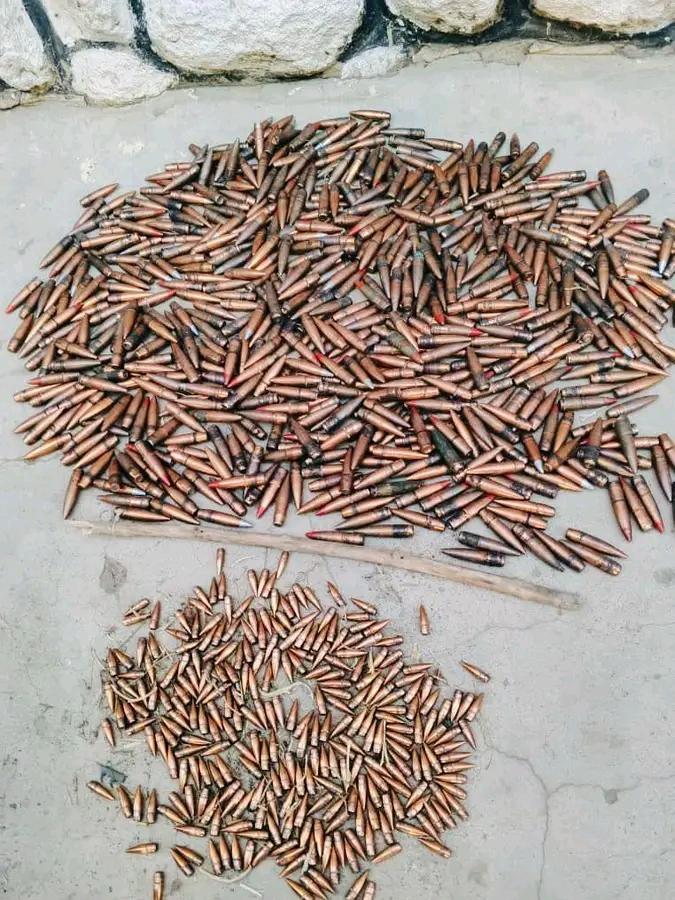
  • BORNO POLICE RECOVER 912 ROUNDS OF AMMUNITION

    The Borno State Police Command has recorded a major security breakthrough with the recovery of a hidden cache of ammunition in Maiduguri.

    According to a statement by the Police Public Relations Officer, ASP Nahum Kenneth Daso, the discovery was made last Sunday when the Divisional Police Officer of Lamisula Division, acting on credible intelligence, led a team of operatives to the Kumshe Jamba Mari area of the metropolis.

    The Explosive Ordnance Disposal Unit was immediately deployed, and the area was secured before the safe recovery of nine hundred and twelve rounds of B32 API ammunition, calibre 7.62 by 51 millimetres.

    The recovered ammunition has been secured, while investigations are ongoing to trace its source and intended use, as well as arrest those behind it.

    Meanwhile, the Commissioner of Police, CP Naziru Abdulmajid, commended members of the public for providing timely information and reaffirmed the Command’s commitment to intelligence-driven policing.

    He also urged residents to continue cooperating with the Police by reporting suspicious activities within their communities.
    BORNO POLICE RECOVER 912 ROUNDS OF AMMUNITION The Borno State Police Command has recorded a major security breakthrough with the recovery of a hidden cache of ammunition in Maiduguri. According to a statement by the Police Public Relations Officer, ASP Nahum Kenneth Daso, the discovery was made last Sunday when the Divisional Police Officer of Lamisula Division, acting on credible intelligence, led a team of operatives to the Kumshe Jamba Mari area of the metropolis. The Explosive Ordnance Disposal Unit was immediately deployed, and the area was secured before the safe recovery of nine hundred and twelve rounds of B32 API ammunition, calibre 7.62 by 51 millimetres. The recovered ammunition has been secured, while investigations are ongoing to trace its source and intended use, as well as arrest those behind it. Meanwhile, the Commissioner of Police, CP Naziru Abdulmajid, commended members of the public for providing timely information and reaffirmed the Command’s commitment to intelligence-driven policing. He also urged residents to continue cooperating with the Police by reporting suspicious activities within their communities.
    0 Commenti ·0 condivisioni ·472 Views
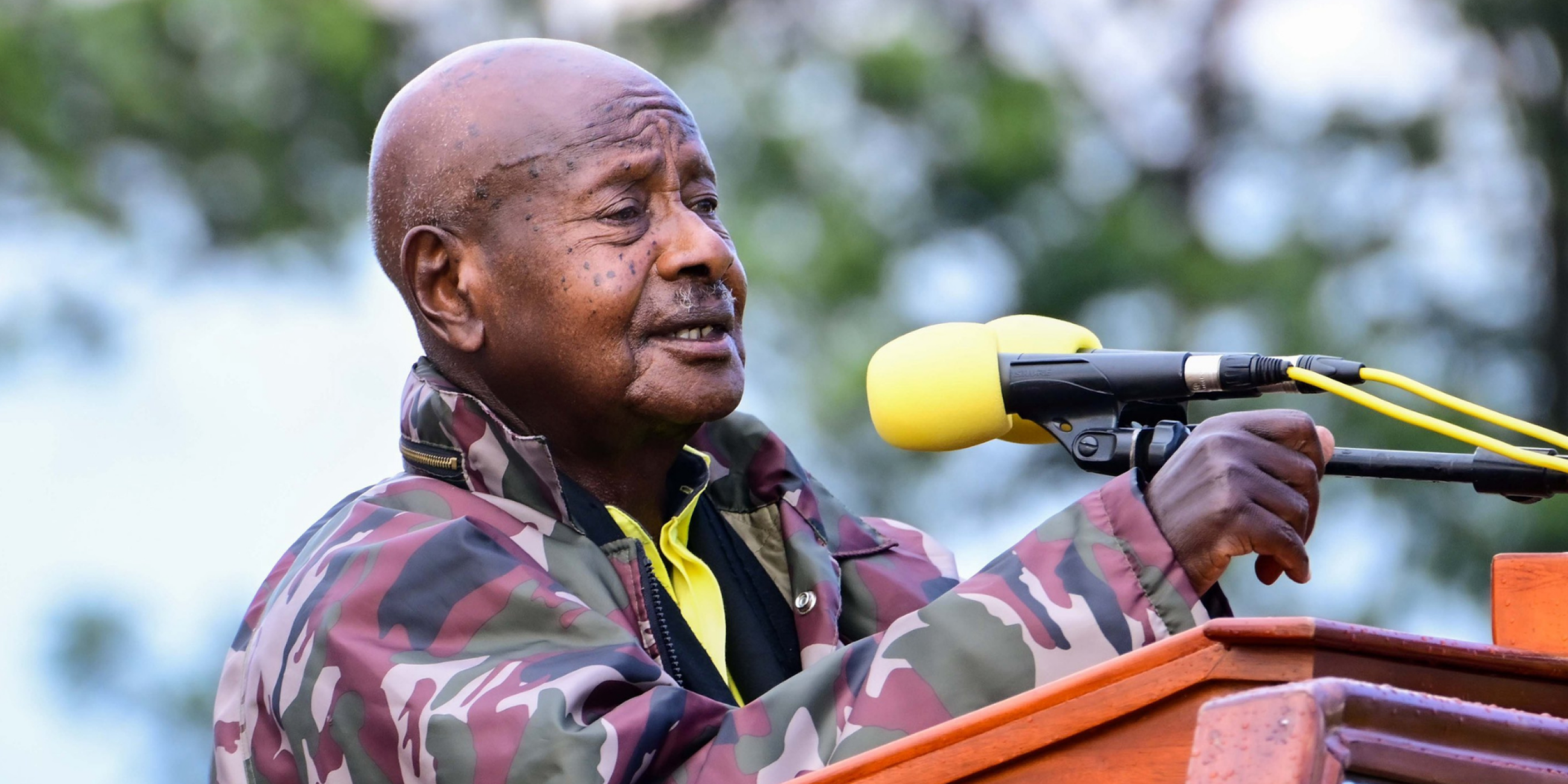
  • Museveni Says Even Uganda Can Harm U.S. in Ground War, Cites Venezuela Crisis to Renew Call for Pan-African Security and Military Unity

    Ugandan President Yoweri Museveni has stated that despite the United States’ overwhelming military dominance across sea, air, and space, it remains vulnerable in ground combat, arguing that even countries like Uganda could inflict damage in a close-range land confrontation. Museveni made the remarks while responding to questions on Pan-Africanism and lessons Africa can draw from Washington’s recent military intervention in Venezuela.

    According to Museveni, U.S. military power lies in its ability to operate simultaneously across four domains—sea, air, space, and land—giving it a decisive advantage over many adversaries long before direct engagement. However, he noted that once operations shift to land, that advantage diminishes, exposing even powerful forces to harm.

    He further explained that while the United States maintains surveillance and technological superiority even on land, weaker states remain strategically exposed across multiple fronts, highlighting a deep imbalance in global security. Museveni traced Africa’s vulnerability to the failure of post-independence leaders to pursue collective security and genuine Pan-African unity in the 1960s.

    Citing the Venezuela crisis as a warning, Museveni concluded that Africa must urgently revive Pan-African cooperation, particularly in defence and security, to avoid remaining fragmented and strategically disadvantaged in an increasingly militarised world.
    Museveni Says Even Uganda Can Harm U.S. in Ground War, Cites Venezuela Crisis to Renew Call for Pan-African Security and Military Unity Ugandan President Yoweri Museveni has stated that despite the United States’ overwhelming military dominance across sea, air, and space, it remains vulnerable in ground combat, arguing that even countries like Uganda could inflict damage in a close-range land confrontation. Museveni made the remarks while responding to questions on Pan-Africanism and lessons Africa can draw from Washington’s recent military intervention in Venezuela. According to Museveni, U.S. military power lies in its ability to operate simultaneously across four domains—sea, air, space, and land—giving it a decisive advantage over many adversaries long before direct engagement. However, he noted that once operations shift to land, that advantage diminishes, exposing even powerful forces to harm. He further explained that while the United States maintains surveillance and technological superiority even on land, weaker states remain strategically exposed across multiple fronts, highlighting a deep imbalance in global security. Museveni traced Africa’s vulnerability to the failure of post-independence leaders to pursue collective security and genuine Pan-African unity in the 1960s. Citing the Venezuela crisis as a warning, Museveni concluded that Africa must urgently revive Pan-African cooperation, particularly in defence and security, to avoid remaining fragmented and strategically disadvantaged in an increasingly militarised world.
    0 Commenti ·0 condivisioni ·465 Views
  • Tinubu’s Legal Practitioners Bill Targets Capture of Nigeria’s Bar, Undermines Independence and Punishes NBA, Chidi Odinkalu Warns

    In this opinion piece, human rights lawyer and former chairman of Nigeria’s National Human Rights Commission, Chidi Anselm Odinkalu, delivers a scathing critique of President Bola Ahmed Tinubu’s Legal Practitioners Bill, warning that it represents institutional capture, legislative reprisal, and a grave threat to the independence of Nigeria’s legal profession.

    Odinkalu traces the origins of the proposed law to long-standing efforts to reform the Legal Practitioners Act of 1962, noting that despite widespread agreement on the need for modernization, deep divisions within the Nigerian Bar Association (NBA) and the Body of Benchers (BoB) derailed genuine reform. He argues that the new bill, now moving swiftly through the Senate, abandons the original vision of strengthening regulation in the public interest and instead concentrates power in the hands of a government-dominated Body of Benchers.

    According to Odinkalu, the bill effectively transforms the BoB into a supreme regulator and owner of the legal profession, funded by the federal government and dominated by political office holders, senior judges, and government officials. He warns that this structure subordinates the NBA, erodes professional self-regulation, and compromises the independence of lawyers by placing discipline, admissions, and professional privileges under a body closely tied to the ruling government.

    The article also highlights what Odinkalu describes as acts of reprisal, including the exclusion of the NBA president from the Legal Practitioners Privileges Committee unless they are a Senior Advocate of Nigeria — a move he links directly to the election of a non-SAN NBA president in 2020. He further criticises provisions granting the BoB oversight over the conferment and withdrawal of the SAN rank, arguing that this entrenches unaccountable power and shields elites from discipline.

    Odinkalu contends that the bill’s ambitions are both unrealistic and dangerous, particularly its attempt to assert control over legal services connected to Nigeria even beyond its borders, and its tone-deaf treatment of foreign and dual-qualified Nigerian lawyers. He concludes that if passed in its current form, the Legal Practitioners Bill will not reform the profession but instead create a new class of “super lawyers” whose influence will be built on access and power rather than integrity, marking a tragic failure of a long-overdue reform effort.
    Tinubu’s Legal Practitioners Bill Targets Capture of Nigeria’s Bar, Undermines Independence and Punishes NBA, Chidi Odinkalu Warns In this opinion piece, human rights lawyer and former chairman of Nigeria’s National Human Rights Commission, Chidi Anselm Odinkalu, delivers a scathing critique of President Bola Ahmed Tinubu’s Legal Practitioners Bill, warning that it represents institutional capture, legislative reprisal, and a grave threat to the independence of Nigeria’s legal profession. Odinkalu traces the origins of the proposed law to long-standing efforts to reform the Legal Practitioners Act of 1962, noting that despite widespread agreement on the need for modernization, deep divisions within the Nigerian Bar Association (NBA) and the Body of Benchers (BoB) derailed genuine reform. He argues that the new bill, now moving swiftly through the Senate, abandons the original vision of strengthening regulation in the public interest and instead concentrates power in the hands of a government-dominated Body of Benchers. According to Odinkalu, the bill effectively transforms the BoB into a supreme regulator and owner of the legal profession, funded by the federal government and dominated by political office holders, senior judges, and government officials. He warns that this structure subordinates the NBA, erodes professional self-regulation, and compromises the independence of lawyers by placing discipline, admissions, and professional privileges under a body closely tied to the ruling government. The article also highlights what Odinkalu describes as acts of reprisal, including the exclusion of the NBA president from the Legal Practitioners Privileges Committee unless they are a Senior Advocate of Nigeria — a move he links directly to the election of a non-SAN NBA president in 2020. He further criticises provisions granting the BoB oversight over the conferment and withdrawal of the SAN rank, arguing that this entrenches unaccountable power and shields elites from discipline. Odinkalu contends that the bill’s ambitions are both unrealistic and dangerous, particularly its attempt to assert control over legal services connected to Nigeria even beyond its borders, and its tone-deaf treatment of foreign and dual-qualified Nigerian lawyers. He concludes that if passed in its current form, the Legal Practitioners Bill will not reform the profession but instead create a new class of “super lawyers” whose influence will be built on access and power rather than integrity, marking a tragic failure of a long-overdue reform effort.
    0 Commenti ·0 condivisioni ·354 Views
  • China Imposes 13% VAT on Condoms and Contraceptive Pills to Boost Birth Rate Amid Population Decline

    China has ended a three-decade exemption on contraceptives, introducing a 13% value-added tax (VAT) on condoms and contraceptive pills starting January 1, 2026. The move is part of Beijing’s efforts to reverse a sustained decline in the country’s birth rate, following three consecutive years of population decrease.

    The government has implemented multiple “fertility-friendly” initiatives in recent years, including childcare subsidies and programs promoting marriage and family life, as authorities confront the demographic challenges created by the legacy of the one-child policy, rapid urbanization, and economic pressures. Rising childcare costs, job insecurity, and economic uncertainty have also contributed to young people delaying marriage and family formation.

    Chinese authorities argue that the VAT policy is aimed at encouraging childbearing, even as the country grapples with an aging population and shrinking workforce, highlighting the tension between economic policy and social planning in addressing demographic decline.
    China Imposes 13% VAT on Condoms and Contraceptive Pills to Boost Birth Rate Amid Population Decline China has ended a three-decade exemption on contraceptives, introducing a 13% value-added tax (VAT) on condoms and contraceptive pills starting January 1, 2026. The move is part of Beijing’s efforts to reverse a sustained decline in the country’s birth rate, following three consecutive years of population decrease. The government has implemented multiple “fertility-friendly” initiatives in recent years, including childcare subsidies and programs promoting marriage and family life, as authorities confront the demographic challenges created by the legacy of the one-child policy, rapid urbanization, and economic pressures. Rising childcare costs, job insecurity, and economic uncertainty have also contributed to young people delaying marriage and family formation. Chinese authorities argue that the VAT policy is aimed at encouraging childbearing, even as the country grapples with an aging population and shrinking workforce, highlighting the tension between economic policy and social planning in addressing demographic decline.
    0 Commenti ·0 condivisioni ·324 Views
  • Anthony Joshua’s Driver Discharged, May Face Prosecution Over Fatal Lagos-Ibadan Crash

    The driver of the vehicle carrying former heavyweight champion Anthony Joshua during the fatal Lagos-Ibadan Expressway crash has been discharged from Duchess International Hospital and may face prosecution for reckless driving. Preliminary investigations by the Ogun State Traffic Compliance and Enforcement Agency (TRACE) indicate that the crash was caused by a burst front tyre and excessive speed, which led the SUV to collide with a stationary truck. Joshua is in stable condition, but two members of his team, Sina Ghami and Latif Ayodele, died at the scene. Authorities are also seeking the driver of the truck involved, who fled immediately after the accident.

    #AnthonyJoshua #CarCrash #LagosIbadanExpressway #FRSC #RecklessDriving #NigeriaNews #FatalAccident #TRACE
    Anthony Joshua’s Driver Discharged, May Face Prosecution Over Fatal Lagos-Ibadan Crash The driver of the vehicle carrying former heavyweight champion Anthony Joshua during the fatal Lagos-Ibadan Expressway crash has been discharged from Duchess International Hospital and may face prosecution for reckless driving. Preliminary investigations by the Ogun State Traffic Compliance and Enforcement Agency (TRACE) indicate that the crash was caused by a burst front tyre and excessive speed, which led the SUV to collide with a stationary truck. Joshua is in stable condition, but two members of his team, Sina Ghami and Latif Ayodele, died at the scene. Authorities are also seeking the driver of the truck involved, who fled immediately after the accident. #AnthonyJoshua #CarCrash #LagosIbadanExpressway #FRSC #RecklessDriving #NigeriaNews #FatalAccident #TRACE
    0 Commenti ·0 condivisioni ·529 Views
  • Fact Check: Has Hushpuppi Been Released and Deported to Nigeria? Viral Social Media Claim Debunked as False

    Claims circulating on social media that convicted Nigerian internet celebrity Ramon Abbas, popularly known as Hushpuppi, has been released from a U.S. prison and deported to Nigeria have been proven false. A viral post on X alleged that Hushpuppi was freed for good behaviour, supported by misleading images. However, fact-checks confirmed that Hushpuppi, sentenced in November 2022 to over 11 years for multi-million-dollar fraud, remains in U.S. federal custody and is not due for release until 2029. The images used in the viral claim were traced to an unrelated INTERPOL arrest in Nigeria, further discrediting the rumour.
    Fact Check: Has Hushpuppi Been Released and Deported to Nigeria? Viral Social Media Claim Debunked as False Claims circulating on social media that convicted Nigerian internet celebrity Ramon Abbas, popularly known as Hushpuppi, has been released from a U.S. prison and deported to Nigeria have been proven false. A viral post on X alleged that Hushpuppi was freed for good behaviour, supported by misleading images. However, fact-checks confirmed that Hushpuppi, sentenced in November 2022 to over 11 years for multi-million-dollar fraud, remains in U.S. federal custody and is not due for release until 2029. The images used in the viral claim were traced to an unrelated INTERPOL arrest in Nigeria, further discrediting the rumour.
    0 Commenti ·0 condivisioni ·332 Views
  • Christmas Reflections: Northern Nigeria’s Journey from Unity to Division

    On Christmas Day, Samuel Aruwan reflects on Northern Nigeria’s historical trajectory, highlighting the contrast between its once-promising unity and its current state of division. He recalls Sir Ahmadu Bello’s 1959 Christmas message, which emphasized religious tolerance, shared citizenship, and mutual respect as foundational principles for the region. This vision of “Work and Worship” promoted coexistence and a common purpose despite ethnic and religious diversity.
    Aruwan traces the erosion of this unity to the late 1970s, when political maneuvering, economic frustrations, and sectarian ideologies began to weaken communal bonds. Ethno-religious conflicts of the 1980s and 1990s, followed by terrorism and widespread banditry in the 21st century, further fragmented society. Incidents such as the Kaduna clashes (2000), Jos violence (2001), terror in Maiduguri (2009), and the spread of banditry from Zamfara (2011 onward) illustrate the human and social costs, including mass displacement, poverty, and insecurity.
    Aruwan emphasizes that restoring Northern Nigeria’s cohesion requires deliberate, courageous leadership at all levels—community, religious, and political. He calls for a return to religious tolerance, impartial law enforcement, and rebuilding of trust as essential steps toward reconciliation. The article concludes that Northern Nigeria’s redemption depends on acknowledging past failures and actively reconstructing a society rooted in mutual respect, security, and opportunity for all.
    Christmas Reflections: Northern Nigeria’s Journey from Unity to Division On Christmas Day, Samuel Aruwan reflects on Northern Nigeria’s historical trajectory, highlighting the contrast between its once-promising unity and its current state of division. He recalls Sir Ahmadu Bello’s 1959 Christmas message, which emphasized religious tolerance, shared citizenship, and mutual respect as foundational principles for the region. This vision of “Work and Worship” promoted coexistence and a common purpose despite ethnic and religious diversity. Aruwan traces the erosion of this unity to the late 1970s, when political maneuvering, economic frustrations, and sectarian ideologies began to weaken communal bonds. Ethno-religious conflicts of the 1980s and 1990s, followed by terrorism and widespread banditry in the 21st century, further fragmented society. Incidents such as the Kaduna clashes (2000), Jos violence (2001), terror in Maiduguri (2009), and the spread of banditry from Zamfara (2011 onward) illustrate the human and social costs, including mass displacement, poverty, and insecurity. Aruwan emphasizes that restoring Northern Nigeria’s cohesion requires deliberate, courageous leadership at all levels—community, religious, and political. He calls for a return to religious tolerance, impartial law enforcement, and rebuilding of trust as essential steps toward reconciliation. The article concludes that Northern Nigeria’s redemption depends on acknowledging past failures and actively reconstructing a society rooted in mutual respect, security, and opportunity for all.
    0 Commenti ·0 condivisioni ·370 Views
  • Things Must Be Done Differently: Prof. Usman Yusuf Warns Nigeria Cannot End Banditry Through Militarisation Alone

    In this opinion piece, Professor Usman Yusuf argues that Nigeria’s twelve-year war against banditry has failed largely due to an overreliance on militarisation without addressing the deep-rooted social, economic and governance failures that fuel the conflict. He traces banditry to local political irresponsibility, corruption, poverty, youth unemployment, arms proliferation and the breakdown of trust within communities. According to Yusuf, repeated top-down security strategies from Abuja have proven ineffective, leaving the military overstretched, battle-fatigued and increasingly vulnerable to psychological trauma. He insists that there is no purely military solution to banditry and calls for a shift toward inclusive, locally driven approaches involving traditional rulers, clerics, elders and community leaders. Yusuf advocates sincere dialogue, trust rebuilding and social investment as prerequisites for disarmament and lasting peace, urging the President to rethink Nigeria’s security strategy as the conflict enters its thirteenth year.
    Things Must Be Done Differently: Prof. Usman Yusuf Warns Nigeria Cannot End Banditry Through Militarisation Alone In this opinion piece, Professor Usman Yusuf argues that Nigeria’s twelve-year war against banditry has failed largely due to an overreliance on militarisation without addressing the deep-rooted social, economic and governance failures that fuel the conflict. He traces banditry to local political irresponsibility, corruption, poverty, youth unemployment, arms proliferation and the breakdown of trust within communities. According to Yusuf, repeated top-down security strategies from Abuja have proven ineffective, leaving the military overstretched, battle-fatigued and increasingly vulnerable to psychological trauma. He insists that there is no purely military solution to banditry and calls for a shift toward inclusive, locally driven approaches involving traditional rulers, clerics, elders and community leaders. Yusuf advocates sincere dialogue, trust rebuilding and social investment as prerequisites for disarmament and lasting peace, urging the President to rethink Nigeria’s security strategy as the conflict enters its thirteenth year.
    0 Commenti ·0 condivisioni ·337 Views
  • When Power Cuts Corners: Tinubu, Elite Impunity, and Nigeria’s Democratic Dilemma

    Babayola M. Toungo examines the ideological crises in Nigeria’s democracy under President Bola Ahmed Tinubu. The article argues that controversies over Tinubu’s academic credentials, alleged legislative manipulations, and elite impunity highlight systemic challenges that compromise transparency, accountability, and popular sovereignty. The piece traces historical continuities from military rule to civilian governance, showing how elite power remains insulated from scrutiny. It critiques the disconnect between executive actions and democratic ideals, including fiscal policies that burden citizens while elite interests persist. The article concludes that meaningful democratic reform in Nigeria requires radical transparency, accountability, and a restructuring of the power relationship between rulers and the ruled.
    When Power Cuts Corners: Tinubu, Elite Impunity, and Nigeria’s Democratic Dilemma Babayola M. Toungo examines the ideological crises in Nigeria’s democracy under President Bola Ahmed Tinubu. The article argues that controversies over Tinubu’s academic credentials, alleged legislative manipulations, and elite impunity highlight systemic challenges that compromise transparency, accountability, and popular sovereignty. The piece traces historical continuities from military rule to civilian governance, showing how elite power remains insulated from scrutiny. It critiques the disconnect between executive actions and democratic ideals, including fiscal policies that burden citizens while elite interests persist. The article concludes that meaningful democratic reform in Nigeria requires radical transparency, accountability, and a restructuring of the power relationship between rulers and the ruled.
    0 Commenti ·0 condivisioni ·247 Views
  • China slams high tax on condoms in attempt to boost falling birth rate

    China has announced plans to begin taxing contraceptive products for the first time in over 30 years, as authorities intensify efforts to encourage childbirth amid a sharp population decline.

    Under the country's revised tax laws, contraceptives such as condoms and birth control drugs will lose their value-added tax exemption and become subject to a 13% VAT from January 1.

    The decision comes as China's birth rate continues to fall. Official data shows that only 9.5 million babies were born in 2024, a significant drop from the 14.7 million recorded in 2019. With deaths now exceeding births, India surpassed China as the world's most populous country in 2023.

    The policy shift has sparked widespread criticism online, with many social media users mocking the move and pointing out that raising a child is far more expensive than buying contraception, even with added tax.

    One mother, Hu Lingling, said the policy had strengthened her resolve not to have another child, joking that she would "lead the way in abstinence." She described the decision as harsh and ironic, especially given China's past family planning policies.
    China slams high tax on condoms in attempt to boost falling birth rate China has announced plans to begin taxing contraceptive products for the first time in over 30 years, as authorities intensify efforts to encourage childbirth amid a sharp population decline. Under the country's revised tax laws, contraceptives such as condoms and birth control drugs will lose their value-added tax exemption and become subject to a 13% VAT from January 1. The decision comes as China's birth rate continues to fall. Official data shows that only 9.5 million babies were born in 2024, a significant drop from the 14.7 million recorded in 2019. With deaths now exceeding births, India surpassed China as the world's most populous country in 2023. The policy shift has sparked widespread criticism online, with many social media users mocking the move and pointing out that raising a child is far more expensive than buying contraception, even with added tax. One mother, Hu Lingling, said the policy had strengthened her resolve not to have another child, joking that she would "lead the way in abstinence." She described the decision as harsh and ironic, especially given China's past family planning policies.
    0 Commenti ·0 condivisioni ·243 Views
  • Lagos Police Arrest Five Suspects Over Staged Kidnapping Scam as Schoolboy, Friends Extort ₦1.7 Million Ransom From Mother

    The Lagos State Police Command has arrested five suspects for orchestrating a fake kidnapping involving a schoolboy who collaborated with his friends to extort ₦1.7 million from his mother. Investigations revealed the distress video was staged in a suspect’s room, with the ransom traced through a POS transaction, leading to the syndicate’s arrest and ongoing prosecution.
    Lagos Police Arrest Five Suspects Over Staged Kidnapping Scam as Schoolboy, Friends Extort ₦1.7 Million Ransom From Mother The Lagos State Police Command has arrested five suspects for orchestrating a fake kidnapping involving a schoolboy who collaborated with his friends to extort ₦1.7 million from his mother. Investigations revealed the distress video was staged in a suspect’s room, with the ransom traced through a POS transaction, leading to the syndicate’s arrest and ongoing prosecution.
    0 Commenti ·0 condivisioni ·218 Views
  • A Deputy Superintendent of Police (DSP) attached to the Mobile Police Force, Mopol 12, in Niger State has died while under investigation over alleged involvement in the diversion of arms and ammunition to bandits operating in parts of the state.

    The officer, identified as Isah Abdullahi, also known as Kunkuri, was until his death the officer in charge of the Mopol 12 armoury located within the B Division premises of the Niger State Police Command along Paikoro Road, Minna.

    The Sun reports that trouble began for the senior officer when a team of detectives from Abuja arrived at the unit for the routine annual audit of arms and ammunition.

    However, during the exercise, several rounds of ammunition were reportedly found to be missing or unaccounted for.

    Meanwhile, preliminary findings allegedly showed that 13 AK-47 rifles and more than 2000 rounds of ammunition could not be traced.

    Investigators were said to have commenced auditing the AK-47 section of the armoury when the incident occurred.

    Further investigations reportedly led to the arrest of Inspector John Moses, attached to the Niger State Government House in Minna.

    During interrogation, Moses allegedly confessed that the late DSP supplied him with arms and ammunition, which were later delivered to bandits and other criminal elements operating in Erena community, Shiroro Local Government Area.

    The inspector was also said to have disclosed that the weapons were sold through his brother, an indigene of the area who allegedly acted as an intermediary and informant to the armed groups.

    Following the development, operatives from the Office of the National Security Adviser (NSA) reportedly stormed Minna and transferred the suspects to Abuja for further interrogation.

    It was gathered that the late DSP was later returned from Abuja and taken to the armoury for a physical audit of weapons and ammunition. During the process, he reportedly accessed a pistol within the armoury and died on the spot.

    Investigators said the officer could not be restrained at the time because the armoury operates an electronic control system, with access reportedly limited to him, allowing him to reach a weapon before officers could intervene.

    However, in the aftermath, officers who accompanied him to the armoury were immediately arrested and are facing an orderly room trial over alleged negligence, while four policemen attached to the deceased had also been taken into custody for interrogation.

    A special security team from the NSA is said to have taken over the armoury and is currently guarding the facility.

    Confirming the incident, the Niger State Commissioner of Police, Adamu Elleman, told journalists that Inspector John Moses remains under investigation at the NSA office in Abuja.

    The DSP brought out boxes that were supposed to contain ammunition and they were empty.

    In the process, he suddenly produced a pistol and shot himself, Elleman said, adding that an autopsy would be conducted to determine the exact cause of death.

    Also speaking on the matter, the Police Public Relations Officer in the state, DSP Wasiu Abiodun, said the officer was initially arrested on December 15, 2025, over suspected illegal dealings in ammunition.

    Abiodun said on 16 December 2025 at about 2.30pm, one DSP Abdullahi Isah attached to Mopol 12 Minna was initially arrested on 15 December for being suspected to be involved in illegal dealings of ammunition.

    He added that officers indicted in the audit had been arrested for negligence, stressing that investigations into the missing weapons and the wider arms supply network are still ongoing.
    A Deputy Superintendent of Police (DSP) attached to the Mobile Police Force, Mopol 12, in Niger State has died while under investigation over alleged involvement in the diversion of arms and ammunition to bandits operating in parts of the state. The officer, identified as Isah Abdullahi, also known as Kunkuri, was until his death the officer in charge of the Mopol 12 armoury located within the B Division premises of the Niger State Police Command along Paikoro Road, Minna. The Sun reports that trouble began for the senior officer when a team of detectives from Abuja arrived at the unit for the routine annual audit of arms and ammunition. However, during the exercise, several rounds of ammunition were reportedly found to be missing or unaccounted for. Meanwhile, preliminary findings allegedly showed that 13 AK-47 rifles and more than 2000 rounds of ammunition could not be traced. Investigators were said to have commenced auditing the AK-47 section of the armoury when the incident occurred. Further investigations reportedly led to the arrest of Inspector John Moses, attached to the Niger State Government House in Minna. During interrogation, Moses allegedly confessed that the late DSP supplied him with arms and ammunition, which were later delivered to bandits and other criminal elements operating in Erena community, Shiroro Local Government Area. The inspector was also said to have disclosed that the weapons were sold through his brother, an indigene of the area who allegedly acted as an intermediary and informant to the armed groups. Following the development, operatives from the Office of the National Security Adviser (NSA) reportedly stormed Minna and transferred the suspects to Abuja for further interrogation. It was gathered that the late DSP was later returned from Abuja and taken to the armoury for a physical audit of weapons and ammunition. During the process, he reportedly accessed a pistol within the armoury and died on the spot. Investigators said the officer could not be restrained at the time because the armoury operates an electronic control system, with access reportedly limited to him, allowing him to reach a weapon before officers could intervene. However, in the aftermath, officers who accompanied him to the armoury were immediately arrested and are facing an orderly room trial over alleged negligence, while four policemen attached to the deceased had also been taken into custody for interrogation. A special security team from the NSA is said to have taken over the armoury and is currently guarding the facility. Confirming the incident, the Niger State Commissioner of Police, Adamu Elleman, told journalists that Inspector John Moses remains under investigation at the NSA office in Abuja. The DSP brought out boxes that were supposed to contain ammunition and they were empty. In the process, he suddenly produced a pistol and shot himself, Elleman said, adding that an autopsy would be conducted to determine the exact cause of death. Also speaking on the matter, the Police Public Relations Officer in the state, DSP Wasiu Abiodun, said the officer was initially arrested on December 15, 2025, over suspected illegal dealings in ammunition. Abiodun said on 16 December 2025 at about 2.30pm, one DSP Abdullahi Isah attached to Mopol 12 Minna was initially arrested on 15 December for being suspected to be involved in illegal dealings of ammunition. He added that officers indicted in the audit had been arrested for negligence, stressing that investigations into the missing weapons and the wider arms supply network are still ongoing.
    0 Commenti ·0 condivisioni ·211 Views
  • Ahmed’s Fall, Dangote vs NMDPRA And Nigeria’s Rentier Oil System: How Vested Interests, Regulation Failures And Power Struggles Shape the Refinery Battle

    In this opinion piece, Azu Ishiekwene examines the high-stakes confrontation between Africa’s richest man, Aliko Dangote, and former NMDPRA boss Farouk Ahmed, framing it as a deeper clash between private capital and Nigeria’s entrenched rentier oil system. The article traces how Dangote’s $20bn refinery threatens decades-old fuel import rents, regulatory capture, and political patronage embedded in the petroleum sector. While Ahmed’s exit may appear as a victory for reform, Ishiekwene argues it could also represent a strategic reset to preserve elite control. The piece explores oil’s unique political power, regulatory failures under the Petroleum Industry Act, and the resistance faced by disruptors challenging Nigeria’s fuel import dependency and economic rents.
    Ahmed’s Fall, Dangote vs NMDPRA And Nigeria’s Rentier Oil System: How Vested Interests, Regulation Failures And Power Struggles Shape the Refinery Battle In this opinion piece, Azu Ishiekwene examines the high-stakes confrontation between Africa’s richest man, Aliko Dangote, and former NMDPRA boss Farouk Ahmed, framing it as a deeper clash between private capital and Nigeria’s entrenched rentier oil system. The article traces how Dangote’s $20bn refinery threatens decades-old fuel import rents, regulatory capture, and political patronage embedded in the petroleum sector. While Ahmed’s exit may appear as a victory for reform, Ishiekwene argues it could also represent a strategic reset to preserve elite control. The piece explores oil’s unique political power, regulatory failures under the Petroleum Industry Act, and the resistance faced by disruptors challenging Nigeria’s fuel import dependency and economic rents.
    0 Commenti ·0 condivisioni ·327 Views
  • Ahmed’s Fall, Dangote vs NMDPRA And Nigeria’s Rentier Oil System: How Vested Interests, Regulation Failures And Power Struggles Shape the Refinery Battle

    In this opinion piece, Azu Ishiekwene examines the high-stakes confrontation between Africa’s richest man, Aliko Dangote, and former NMDPRA boss Farouk Ahmed, framing it as a deeper clash between private capital and Nigeria’s entrenched rentier oil system. The article traces how Dangote’s $20bn refinery threatens decades-old fuel import rents, regulatory capture, and political patronage embedded in the petroleum sector. While Ahmed’s exit may appear as a victory for reform, Ishiekwene argues it could also represent a strategic reset to preserve elite control. The piece explores oil’s unique political power, regulatory failures under the Petroleum Industry Act, and the resistance faced by disruptors challenging Nigeria’s fuel import dependency and economic rents.
    Ahmed’s Fall, Dangote vs NMDPRA And Nigeria’s Rentier Oil System: How Vested Interests, Regulation Failures And Power Struggles Shape the Refinery Battle In this opinion piece, Azu Ishiekwene examines the high-stakes confrontation between Africa’s richest man, Aliko Dangote, and former NMDPRA boss Farouk Ahmed, framing it as a deeper clash between private capital and Nigeria’s entrenched rentier oil system. The article traces how Dangote’s $20bn refinery threatens decades-old fuel import rents, regulatory capture, and political patronage embedded in the petroleum sector. While Ahmed’s exit may appear as a victory for reform, Ishiekwene argues it could also represent a strategic reset to preserve elite control. The piece explores oil’s unique political power, regulatory failures under the Petroleum Industry Act, and the resistance faced by disruptors challenging Nigeria’s fuel import dependency and economic rents.
    0 Commenti ·0 condivisioni ·333 Views
  • Nigerian Police Rescue Two-Month-Old Baby Allegedly Sold by Mother to Pastor in Delta State

    The Delta State Police Command has rescued a two-month-old baby boy allegedly sold by his mother to a pastor in Agbarho, Delta State. The case, initially reported as a child abduction, took a dramatic turn after security operatives noticed inconsistencies in the mother’s account. Following further investigation and a reported confession, police traced the baby to a church in Agbarho, where he was successfully recovered. The pastor and his wife were arrested, while authorities have launched a full-scale investigation to uncover all those involved in the alleged child sale. Community cooperation and swift police action were credited for the successful rescue.
    Nigerian Police Rescue Two-Month-Old Baby Allegedly Sold by Mother to Pastor in Delta State The Delta State Police Command has rescued a two-month-old baby boy allegedly sold by his mother to a pastor in Agbarho, Delta State. The case, initially reported as a child abduction, took a dramatic turn after security operatives noticed inconsistencies in the mother’s account. Following further investigation and a reported confession, police traced the baby to a church in Agbarho, where he was successfully recovered. The pastor and his wife were arrested, while authorities have launched a full-scale investigation to uncover all those involved in the alleged child sale. Community cooperation and swift police action were credited for the successful rescue.
    0 Commenti ·0 condivisioni ·201 Views

  • Beaten, tortured, and burned alive: Son of Kharkiv’s deputy mayor killed in Vienna over crypto

    21-year-old Danylo Kuzmin, the son of Kharkiv’s deputy mayor, was murdered over $200,000 in cryptocurrency, Austria’s Kronen Zeitung reports. According to the outlet, he was lured into a trap in the underground garage of the luxury Sofitel hotel by a 19-year-old compatriot he trusted.

    During meetings in Vienna, Kuzmin allegedly carelessly told the acquaintance about his father’s assets stored in digital wallets. The young man then teamed up with a 45-year-old Ukrainian to plan the murder. In the garage, the victim was brutally beaten — blood traces were found in the stairwell, and Kuzmin was left with almost no teeth. Under torture, he gave up the access codes to two crypto wallets.

    The severely injured Kuzmin was forced into the back seat of his father’s Mercedes, driven to the Donaustadt district of Vienna, doused with gasoline, and the car was set on fire while he was still alive.

    Using hotel surveillance footage, Vienna police quickly identified the suspects. After an international manhunt, they were arrested in Ukraine, where they will stand trial. The killers managed to withdraw $200,000; about $100,000 was found on the 19-year-old at the time of arrest.

    According to unofficial reports, the 45-year-old suspect is a former senior official of the Odesa customs service, while the 19-year-old is the son of a well-known businessman from Chernivtsi and the stepson of Ukraine’s ambassador to Bulgaria.
    🤯 Beaten, tortured, and burned alive: Son of Kharkiv’s deputy mayor killed in Vienna over crypto 21-year-old Danylo Kuzmin, the son of Kharkiv’s deputy mayor, was murdered over $200,000 in cryptocurrency, Austria’s Kronen Zeitung reports. According to the outlet, he was lured into a trap in the underground garage of the luxury Sofitel hotel by a 19-year-old compatriot he trusted. During meetings in Vienna, Kuzmin allegedly carelessly told the acquaintance about his father’s assets stored in digital wallets. The young man then teamed up with a 45-year-old Ukrainian to plan the murder. In the garage, the victim was brutally beaten — blood traces were found in the stairwell, and Kuzmin was left with almost no teeth. Under torture, he gave up the access codes to two crypto wallets. The severely injured Kuzmin was forced into the back seat of his father’s Mercedes, driven to the Donaustadt district of Vienna, doused with gasoline, and the car was set on fire while he was still alive. Using hotel surveillance footage, Vienna police quickly identified the suspects. After an international manhunt, they were arrested in Ukraine, where they will stand trial. The killers managed to withdraw $200,000; about $100,000 was found on the 19-year-old at the time of arrest. According to unofficial reports, the 45-year-old suspect is a former senior official of the Odesa customs service, while the 19-year-old is the son of a well-known businessman from Chernivtsi and the stepson of Ukraine’s ambassador to Bulgaria.
    0 Commenti ·0 condivisioni ·553 Views
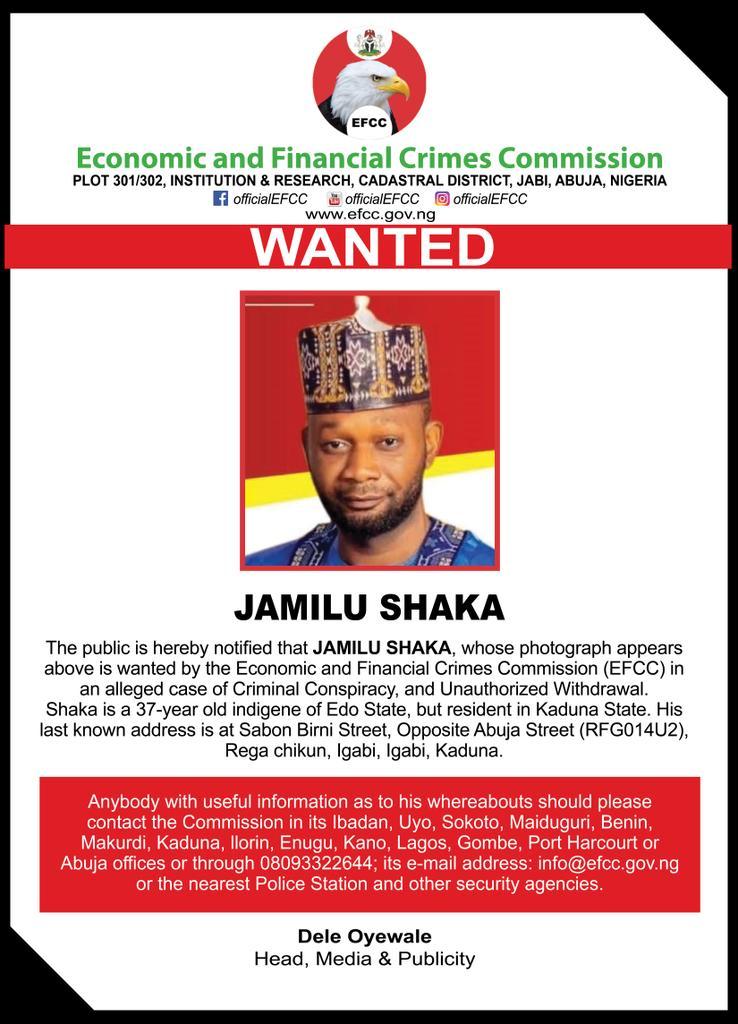
  • EFCC Declares Edo-Born Jamilu Shaka Wanted Over Criminal Conspiracy, Unauthorised Withdrawals, Issues Nationwide Alert

    The Economic and Financial Crimes Commission (EFCC) has declared 37-year-old Edo State indigene, Jamilu Shaka, wanted over allegations of criminal conspiracy and unauthorised withdrawals. According to the EFCC, Shaka is currently believed to be residing in Kaduna State, with his last known address traced to Rega Chikun area of Igabi Local Government. The anti-graft agency has urged members of the public to provide credible information that could lead to his arrest, while also referencing a similar case involving another suspect earlier declared wanted for financial crimes.
    EFCC Declares Edo-Born Jamilu Shaka Wanted Over Criminal Conspiracy, Unauthorised Withdrawals, Issues Nationwide Alert The Economic and Financial Crimes Commission (EFCC) has declared 37-year-old Edo State indigene, Jamilu Shaka, wanted over allegations of criminal conspiracy and unauthorised withdrawals. According to the EFCC, Shaka is currently believed to be residing in Kaduna State, with his last known address traced to Rega Chikun area of Igabi Local Government. The anti-graft agency has urged members of the public to provide credible information that could lead to his arrest, while also referencing a similar case involving another suspect earlier declared wanted for financial crimes.
    0 Commenti ·0 condivisioni ·675 Views
Pagine in Evidenza
Fintter https://fintter.com