About
About
The Priest Who Blessed the Trade
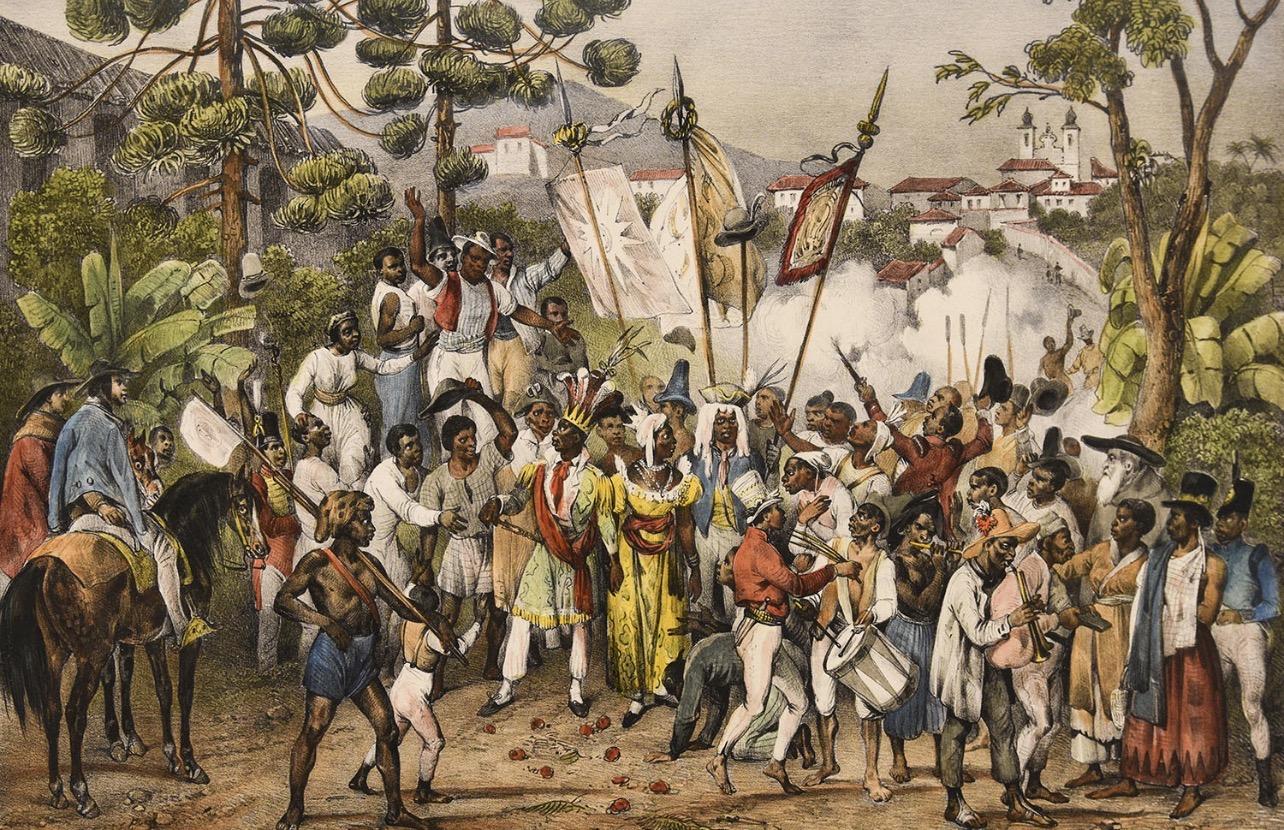
The Priest
The night the first ship came, the ocean did not roar, it whispered, as if it knew something the land had refused to understand. In the village, under the heavy breath of ancient trees, the priest stood before the shrine, his body painted in white chalk, his eyes lost somewhere between fear and power. The people trusted him, not because he was perfect, but because he spoke to the unseen, and in a world ruled by spirits, that made him more than a man. When the strangers arrived from the sea, with their pale faces and polished words, it was not the king they sought first, it was him.
They brought gifts that glittered like temptation itself, mirrors that showed a man his own face as if for the first time, fabrics softer than anything the land had ever produced, and metal that did not bend under fire. But the greatest gift they brought was a promise, whispered carefully into the priest’s ear: power that would outlive kings, influence that would stretch beyond the forest, and a place in a new order that was already being written across the world. The priest listened, and in that moment, something shifted within him, not loudly, not dramatically, but quietly, like a crack forming in a sacred wall.
He told himself it was for the people. That was how it always begins. He said the spirits had shown him visions of prosperity, of a future where the village would no longer fear hunger or rival clans. He said the strangers were not enemies, but messengers of change. And because the people believed in him, they believed in his words. That was the first blessing he gave, not with his hands raised to the sky, but with his voice bending truth into something easier to accept.
At first, it was just prisoners from distant conflicts, men and women already seen as outsiders, already stripped of belonging. The priest stood before the shrine, chanting, pouring libations onto the earth, declaring that the spirits approved of this exchange. The drums beat slowly, uncertainly, as if even the rhythm hesitated. The people watched as the captives were led away, their wrists bound, their eyes carrying questions no one wanted to answer. The priest did not look into their eyes. He looked at the shrine, at the fire, at anything that would not accuse him.
The gifts continued to flow. The village grew richer. Houses became stronger, clothes became finer, and the priest’s influence deepened like a river after the rains. He was no longer just a bridge between worlds, he had become a gatekeeper of destiny itself. And yet, with every blessing he gave, something inside him grew quieter. The spirits he once heard so clearly began to feel distant, like voices fading into the wind. But he could not stop now. Power has a way of closing doors behind you.
Soon, it was no longer just outsiders. The line blurred. Debts became reasons, disagreements became excuses, and suddenly, people began to disappear in ways that could no longer be explained by war. The priest still performed the rituals, still raised his voice to the sky, still declared that all was in accordance with the will of the unseen. But now, when he closed his eyes, he saw faces. Faces that did not leave. Faces that followed him even into sleep.
One night, as the moon hung low and heavy, a woman came to the shrine. She did not come with offerings or prayers. She came with silence that carried more weight than words. Her son had been taken, sold under the justification of a minor offense, a decision sealed with the priest’s blessing. She stood before him, not crying, not shouting, just looking at him as if she could see through every layer of paint and title. And when she finally spoke, her voice was soft, but it struck harder than thunder.
“Did the spirits truly speak,” she asked, “or did you speak for them?”
The question lingered in the air, refusing to fade. For the first time in years, the priest had no answer. The drums were silent. The fire flickered uncertainly. And in that moment, he realized something he had spent so long avoiding: the spirits had not spoken to him about this trade. Not once. Every blessing, every ritual, every declaration had been his own creation, dressed in the language of the sacred.
But realization does not undo what has been done. The ships still came. The people still vanished. And the priest, now trapped between truth and consequence, continued his role, because to stop would mean to admit everything. It would mean facing the anger of the people, the betrayal of trust, and the weight of every soul he had sent away. So he carried on, a man slowly disappearing inside the shadow of his own decisions.
Years passed, and the village changed in ways no one had imagined. Wealth remained, but peace did not. Suspicion grew. Trust faded. The songs became quieter. And the priest, once a symbol of connection to the divine, became a figure people respected but no longer loved. They still came to him, still followed his rituals, but something essential had been broken, something that could not be restored by offerings or chants.
In his final days, the priest returned to the shrine alone. The forest seemed different now, less welcoming, as if it too had withdrawn its blessing. He sat before the fire, his hands trembling, his voice no longer carrying the authority it once held. He called out to the spirits, not as a leader, but as a man desperate for an answer. For a long time, there was nothing. Just silence stretching endlessly.
And then, in that silence, he understood.
The spirits had never needed to punish him. The true punishment had been the slow unraveling of his own soul, the knowledge that he had traded truth for power, trust for influence, and people for promises that were never his to make. He had not just blessed the trade. He had blessed the breaking of something sacred within himself.
When the priest died, the village did not celebrate, nor did it mourn loudly. His story remained, carried in whispers, told not to glorify him, but to remind future generations of a simple, painful truth: that the most dangerous betrayal is not always done with force, but with belief. And that when a man speaks in the name of what is sacred, he must be certain it is not his own voice echoing back at him.

Categories
Read More
Al Hajj Umar Tall Early Life Al Hajj Umar Tall was born around 1797 in Futa Toro, a region along the Senegal River in West Africa. He came from a respected Muslim family known for knowledge and leadership. From a young age, Umar showed deep interest in learning and religion. He studied the Qur’an, Islamic law, and spiritual teachings. People around him quickly noticed his...
Etsu Umaru Majigi Early Life Etsu Umaru Majigi was born into a royal family in the ancient Nupe Kingdom, in what is now part of present-day Nigeria. From childhood, he was raised with discipline, wisdom, and deep respect for tradition. Growing up, he learned the values of leadership, courage, and responsibility. Elders in the palace trained him in the customs of the Nupe people,...
Maja Salvador is a Filipina actress, singer, dancer, and television personality known for her powerful acting roles and impressive dancing skills. She is one of the most popular entertainers in the Philippines and has been active in the entertainment industry for many years. Early Life Maja Salvador was born October 5, 1988, in Aparri. Her full name is Maja Ross Andres Salvador. She grew up...

Stella Obasanjo Stella Oluremi Obasanjo was the wife of former Nigerian president Olusegun Obasanjo and served as First Lady of Nigeria from 1999 to 2005. She became known for her humanitarian activities, charity work, and advocacy for women, children, and vulnerable people in society. Although her time as First Lady was relatively short, Stella Obasanjo left a lasting impression...
Omotola Jalade Ekeinde Omotola Jalade Ekeinde is one of Nollywood’s most celebrated icons, known for her powerful screen presence, longevity, and influence in African popular culture. With a career that began in the mid 1990s, she has appeared in hundreds of films, built a strong public brand, and gained international recognition for both entertainment and humanitarian work. Early Life...