The Hidden Language of African Masks and Sculptures
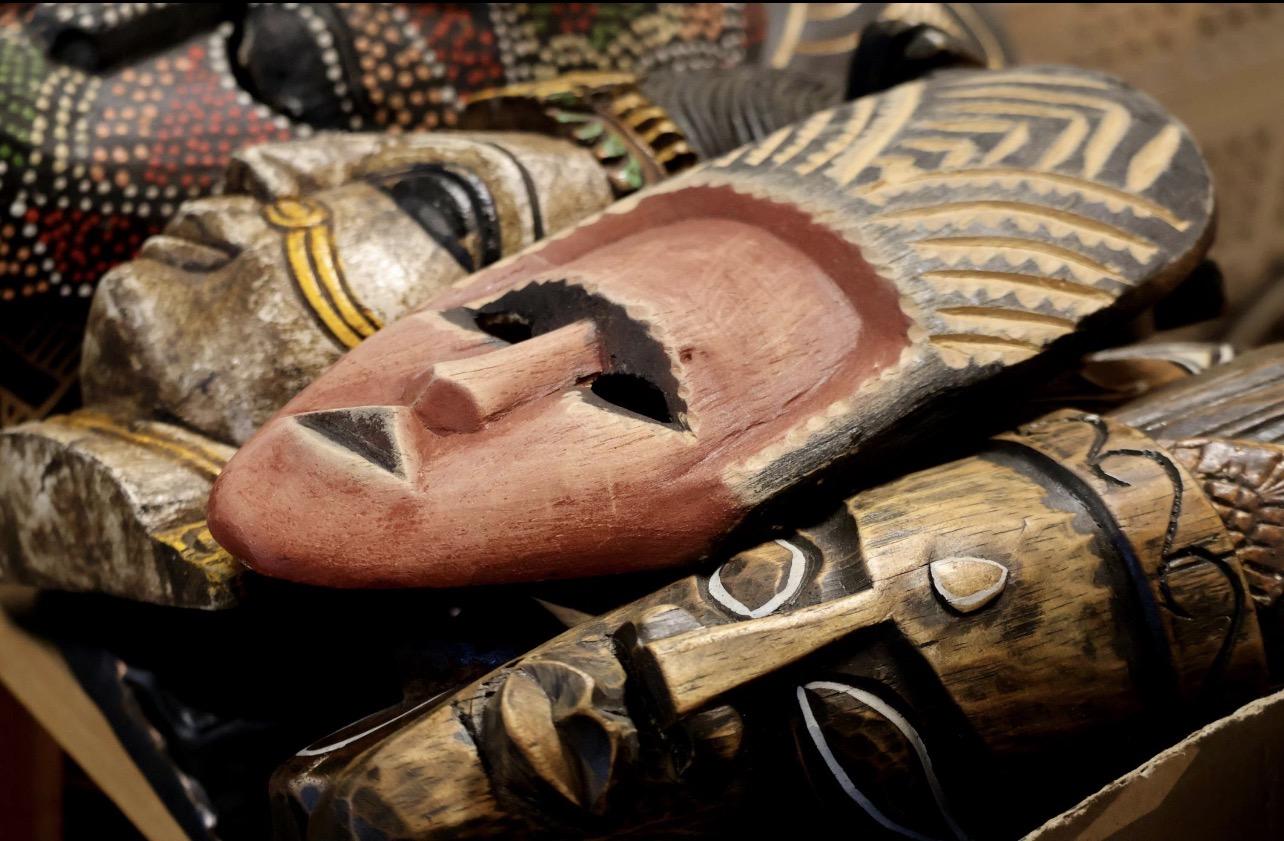
African Masks
Across the vast lands of Africa, from the forests of West Africa to the savannahs of the east and the ancient kingdoms of Central Africa, there exists a language that is not spoken with words. It is a language carved in wood, shaped in bronze, and painted with symbols passed down through generations. This language lives within African masks and sculptures.
To many outsiders, these objects appear to be simple works of art or decorations. Some see them as museum pieces displayed behind glass walls. But for the people who created them, they are far more than art. They are living storytellers. They carry messages about ancestors, spirits, community values, and the unseen forces believed to shape human life.
For centuries, African masks and sculptures have played important roles in ceremonies, storytelling traditions, and spiritual practices. They connect the living with the ancestors, the physical world with the spiritual world. Every line carved into the wood and every color painted onto the surface holds meaning.
The story of African masks and sculptures is not just the story of art. It is the story of identity, belief, power, and communication.
Understanding these objects means learning to see beyond their beauty and discovering the messages hidden within them.
The Language Hidden in Wood and Spirit
Long before written books became common in many African societies, knowledge was preserved through oral storytelling, music, dance, and visual symbols. Masks and sculptures became part of this system of communication.
When a sculptor began carving a mask, he was not simply creating something beautiful. He was translating the spirit of his community into a physical form. The shape of the eyes, the size of the forehead, the patterns on the cheeks, and even the colors used in decoration all represented ideas or messages.
A large forehead might symbolize wisdom. Narrow eyes could represent calmness and spiritual awareness. Bright colors might represent energy, fertility, or spiritual power.
Every element had a purpose.
In many communities, these meanings were understood by everyone in the village. When people saw a mask during a ceremony, they immediately recognized what it represented.
The mask could symbolize an ancestor returning to guide the living. It could represent a spirit that protects the community. Sometimes it represented moral lessons such as bravery, honesty, or humility.
Through these carvings, entire philosophies were communicated without a single spoken word.
The Sacred Role of the Mask Maker
The creation of a mask or sculpture was not an ordinary job. In many African cultures, the artist was believed to have a special connection with the spiritual world.
Mask makers were often trained from a young age. They learned not only carving techniques but also the meanings of symbols and the spiritual responsibilities attached to their work.
Before carving certain masks, rituals were sometimes performed. The artist might offer prayers or sacrifices to ask permission from the ancestors or spirits before beginning the work.
The choice of wood was also important. Certain trees were believed to hold spiritual energy. The sculptor carefully selected the right piece of wood, knowing that the spirit of the mask would live within it once it was completed.
This process transformed the artwork from a simple object into something sacred.
When the mask was finally finished, it was often blessed by elders or spiritual leaders before being used in ceremonies.
Masks as Living Spirits
In many African traditions, a mask is not considered complete until someone wears it.
When a dancer puts on the mask during a ceremony, the person is believed to disappear and the spirit represented by the mask takes over.
The dancer becomes a messenger of the spirit world.
The movements, gestures, and dances performed while wearing the mask tell stories about the community’s history, beliefs, and moral lessons.
Villagers watching the performance do not see a human dancer. They see the ancestor or spirit the mask represents.
This belief gives masks extraordinary power.
Some masks are believed to bring blessings, healing, or protection. Others are used to discipline members of the community who break important social rules.
The mask becomes a bridge between the human world and the spiritual world.
The Symbolism of African Sculptures
While masks often appear in ceremonies and festivals, sculptures serve another important role. They often act as guardians, memorials, or spiritual protectors.
Many African sculptures represent ancestors. These figures are placed in shrines or special locations where families can honor those who came before them.
In many traditions, ancestors are believed to continue watching over the living. Sculptures provide a physical way for people to connect with them.
A carved figure might represent a respected elder who guided the community during their lifetime. By honoring the sculpture, the community honors the wisdom and legacy of that person.
Some sculptures also represent spiritual forces connected to nature such as fertility, harvest, or protection.
The posture of the sculpture often carries symbolic meaning. A seated figure might represent calm authority. A standing figure might represent vigilance and strength.
Even the smallest details are deliberate.
The Colors That Speak Without Words
Color plays a powerful role in African masks and sculptures.
Each color carries symbolic meaning that communicates ideas instantly to those who understand the cultural language.
White often represents purity, the spirit world, and ancestors. It can symbolize peace or spiritual presence.
Black may represent maturity, mystery, and the unseen forces of life.
Red is frequently associated with power, life energy, conflict, or transformation.
Yellow or gold can represent wealth, sunlight, and prosperity.
These colors are rarely chosen randomly. They form part of the storytelling embedded within the mask or sculpture.
When combined with dance, music, and costume, the visual impact becomes even more powerful.
The Connection Between Community and Identity
African masks and sculptures are deeply connected to the identity of the communities that create them.
Each ethnic group often develops its own artistic style and symbolic language.
The patterns used by one community may differ greatly from another. These differences allow people to recognize where a mask or sculpture originates.
For example, some communities favor geometric designs, while others create elongated faces or exaggerated features.
These variations reflect local beliefs, history, and cultural priorities.
In many cases, the art also marks important stages of life. Masks may appear during initiation ceremonies that welcome young people into adulthood.
They may also appear during harvest festivals, funerals, or celebrations of community achievements.
Through these traditions, masks and sculptures help maintain cultural continuity across generations.
Colonial Encounters and Misunderstood Art
When European explorers and colonial administrators first encountered African masks and sculptures centuries ago, they often misunderstood their purpose.
Many colonial observers saw the objects simply as curiosities or primitive decorations. Some were taken away and displayed in museums without understanding their spiritual significance.
Unfortunately, this led to the removal of countless sacred objects from their communities.
Yet, despite this disruption, African art had a powerful influence on the world.
In the early twentieth century, European artists began studying African masks and sculptures closely. They were inspired by the bold shapes, abstract forms, and symbolic designs.
These influences helped shape modern art movements such as Cubism.
Although the global art world eventually recognized the brilliance of African artistry, the deeper cultural meanings behind these works were often overlooked.
The Enduring Legacy of African Symbolism
Today, African masks and sculptures continue to inspire artists, historians, and cultural scholars around the world.
Many African communities still maintain their traditions, using masks in ceremonies that celebrate history, identity, and spiritual connection.
Museums and cultural institutions are also working to return stolen artifacts to their rightful communities.
This process acknowledges that these objects are not merely artworks but cultural treasures deeply tied to identity and heritage.
For younger generations of Africans, these traditions provide a powerful reminder of their ancestors’ wisdom and creativity.
Every mask tells a story.
Every sculpture carries memory.
Together they form a visual archive of African knowledge passed through centuries.
Listening to the Stories Hidden in Wood
To truly understand African masks and sculptures, one must look beyond their beauty and learn to listen to what they are saying.
They speak about leadership, morality, courage, and the connection between humans and the spiritual world.
They remind communities of their shared values and collective history.
Even today, when many of these objects are displayed in galleries or museums far from their origins, they still carry the voices of the people who created them.
Those voices whisper stories about ancestors, spirits, festivals, and lessons learned through generations of experience.
African masks and sculptures are not silent objects.
They are storytellers carved in wood, guardians shaped by tradition, and symbols that continue to connect the past with the present.
The hidden meanings within them remind us that art can be more than decoration.
It can be memory, identity, and a bridge between worlds.

Categories
Read More
Victoria’s Mother POV Abuja has a way of making silence feel heavy. The day Mr. Benson came to visit me, the harmattan air was dry and still. I welcomed him warmly, though something inside me felt unsettled. It had been many years since we last saw each other, yet the past walked in with him and sat quietly in my living room. After the usual greetings and memories, his...

In Grow A Garden, one of the most thrilling aspects of gameplay is taking on challenging boss battles. While mastering your own character’s abilities is essential, a well-chosen pet can make a huge difference in surviving and even countering a boss’s most devastating attacks. In this guide, we’ll break down strategies for using pets effectively and share tips on how to...

Alleged National Guard shooter worked with US government entities in Afghanistan, including CIA: Ratcliffe Rahmanullah Lakanwal, 29, entered the United States on the heels of the disastrous withdrawal from Afghanistan in August 2021 under the Biden administration. Lakanwal arrived in the U.S. a month later under "Operation Allies Welcome." Intelligence sources told Fox News Digital...
Everyone feared Ajànàkú. His shrine sat at the edge of the village where the forest thickened and the air smelled of burnt herbs and old secrets. People came to him for protection, power, luck—and revenge. He never failed them, and that was the problem. Power had made his heart dry. When Kunle, a trader from a neighboring town, visited Ajànàkú...
Kola Ajeyemi Early Life and Age Kola Ajeyemi is a respected Nigerian actor and filmmaker known for his strong presence in the Yoruba segment of Nollywood. He was born on January 17, 1982, in Ogbomosho, Oyo State, Nigeria. As of 2026, he is 44 years old. Growing up in Ogbomosho, Kola was raised in a traditional Yoruba family where discipline, culture, and respect were deeply...