


The City Where Knowledge Was a Treasure Greater Than Gold
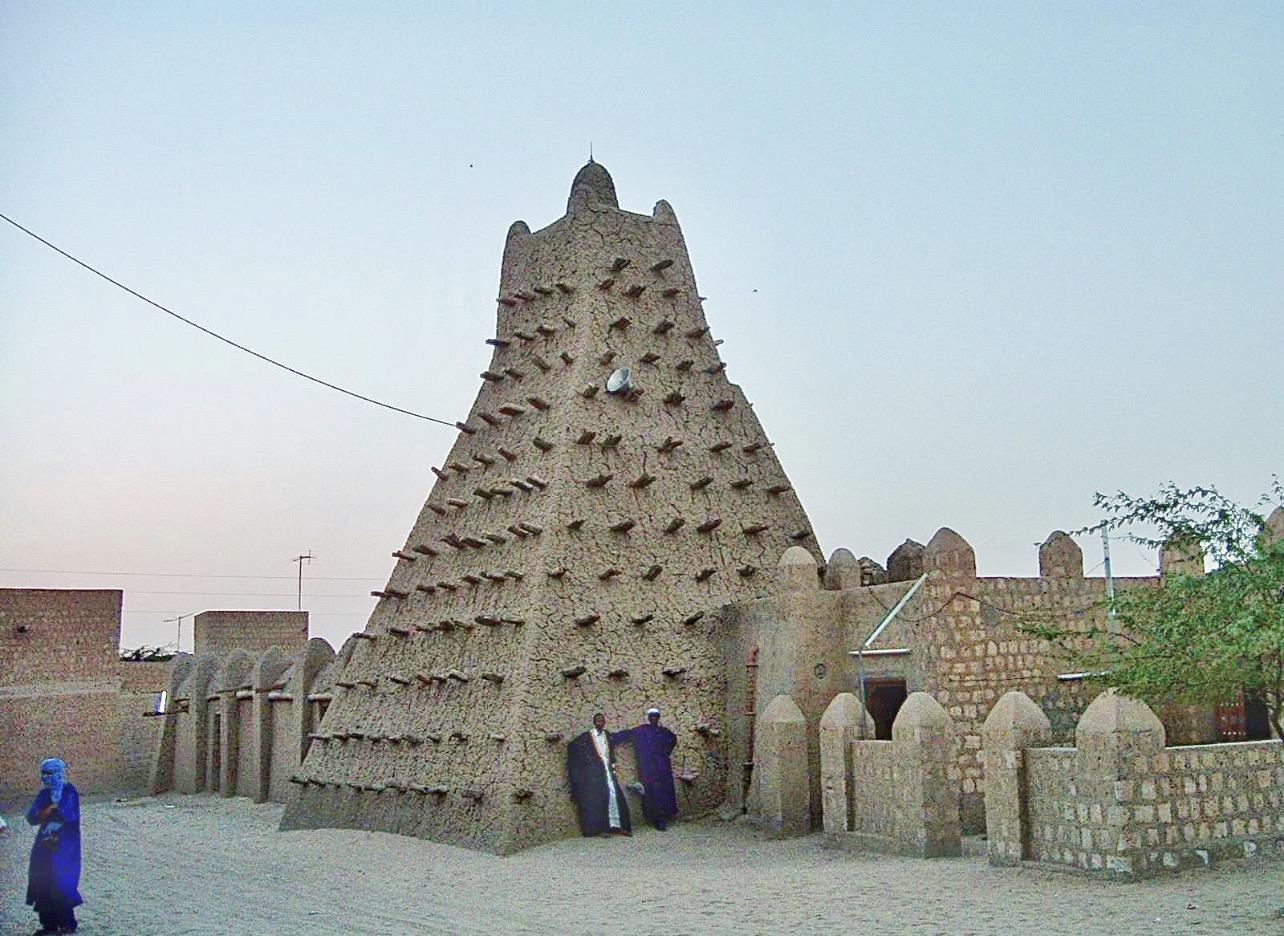
Timbuktu
The City Where Knowledge Was a Treasure Greater Than Gold
Long before modern universities were built and long before printing presses spread knowledge across continents, there existed a city on the edge of the Sahara Desert where books were treasured more than gold. That city was Timbuktu.
Today many people hear the name Timbuktu and imagine a distant or mysterious place. But centuries ago, Timbuktu was one of the greatest centers of learning in the world. It attracted scholars, poets, jurists, astronomers, mathematicians, and philosophers from across Africa and the Islamic world.
In the heart of Mali, along the trading routes that crossed the Sahara, Timbuktu became famous not only for commerce but also for knowledge. While merchants traded salt, gold, and ivory, scholars traded ideas. In the quiet rooms of its libraries, thousands of handwritten manuscripts were carefully studied and preserved.
The story of the libraries and scholars of Timbuktu is not simply a story about books. It is a story about curiosity, dedication, and the belief that knowledge could shape civilizations.
The Desert City That Became a Center of Knowledge
Timbuktu began as a small settlement near the Niger River in the twelfth century. Its location made it an important stopping point for caravans traveling between North Africa and the interior of West Africa.
Merchants carrying salt from the Sahara met traders bringing gold from the forests of the south. The city grew quickly as trade flourished.
But wealth alone did not make Timbuktu famous. Its reputation grew because of its scholars.
When the Mali Empire rose to power, particularly during the reign of the great ruler Mansa Musa, Timbuktu began transforming into a center of education. Mansa Musa believed that knowledge was essential for the strength of his empire. After his famous pilgrimage to Mecca in the fourteenth century, he returned with scholars, architects, and books.
Mosques became schools. Homes became libraries. Learning became a respected profession.
Soon students from faraway lands began traveling across deserts just to study in Timbuktu.
The Rise of the Great Mosques of Learning
Three mosques formed the heart of Timbuktu’s educational system. They were not only places of worship but also places of scholarship.
The most famous was the Sankore Mosque. It eventually developed into what many historians consider one of the earliest universities in Africa.
Students gathered under the guidance of respected scholars. Education was not centralized like modern universities. Instead, individual scholars taught students in circles, often in courtyards or shaded spaces.
Each teacher specialized in different subjects.
Students studied theology, law, grammar, history, mathematics, astronomy, philosophy, and medicine. Learning was rigorous, and students had to memorize large portions of texts while also engaging in debates.
Knowledge was passed from teacher to student in a deeply personal way.
A student’s reputation depended largely on the reputation of their teacher.
The Scholars Who Shaped Timbuktu
Among the many scholars who made Timbuktu famous, one name stands out in particular. His works influenced generations of students and scholars.
Ahmad Baba al-Massufi was one of the greatest intellectual figures in the history of West Africa.
Born in Timbuktu in the sixteenth century, Ahmad Baba came from a family of scholars. From a young age he was surrounded by books and discussions about philosophy and law.
His curiosity was endless. He studied various fields including Islamic law, grammar, history, and literature. Over time he wrote dozens of books and became widely respected across the region.
Students traveled long distances to learn from him. His lectures were known for their depth and clarity.
But his life was not always peaceful.
During the Moroccan invasion of the Songhai Empire in the late sixteenth century, many scholars in Timbuktu were arrested or exiled. Ahmad Baba himself was taken to Morocco as a prisoner.
Even in exile he continued writing and teaching. When he eventually returned to Timbuktu, his reputation had grown even greater.
His story shows the resilience of scholarship even during political upheaval.
The Manuscripts That Preserved a Civilization
One of the greatest treasures of Timbuktu was its vast collection of manuscripts.
These manuscripts were handwritten documents produced over many centuries. They covered a wide range of subjects including religion, astronomy, medicine, poetry, mathematics, trade, and law.
Families often passed manuscripts down through generations. Owning a large collection of books was a sign of prestige and learning.
Some manuscripts were copied by students as part of their education. Others were written by famous scholars and circulated across the region.
Unlike printed books, each manuscript was unique.
The pages were carefully written with ink and decorated with beautiful calligraphy. Leather covers protected the fragile papers from the desert climate.
Some manuscripts contained practical advice about everyday life. Others explored philosophical questions about the nature of knowledge, justice, and society.
These manuscripts demonstrate that intellectual life in West Africa was rich and sophisticated long before European colonial influence.
The Hidden Libraries of Timbuktu
Over time, many of the manuscripts were stored in private libraries throughout the city.
Families became guardians of knowledge. Some houses contained rooms filled with centuries old books carefully wrapped in cloth or stored in wooden chests.
These collections became known as the hidden libraries of Timbuktu.
Generations of families preserved them through wars, political changes, and environmental challenges. Some manuscripts survived for hundreds of years because families understood their importance.
Even when outsiders showed little interest in these documents, the people of Timbuktu continued protecting them.
Their dedication ensured that the intellectual heritage of the city would not disappear.
Education and Daily Life in Timbuktu
Education in Timbuktu was deeply woven into daily life.
Students woke early for prayers before beginning their studies. Lessons often lasted for many hours and required intense concentration.
Debates were common. Students were encouraged to question ideas and defend their arguments.
Respect for teachers was fundamental. Scholars were not only educators but also moral guides within the community.
People often consulted scholars on legal matters, ethical questions, and community disputes.
This respect gave scholars a powerful role in shaping society.
Knowledge was not viewed as something distant or abstract. It was seen as a tool for building a just and organized community.
Timbuktu’s Influence Across Africa
The reputation of Timbuktu spread far beyond Mali.
Scholars from North Africa, Egypt, and the Middle East visited the city. African students from regions that are now Nigeria, Senegal, Niger, and Ghana traveled there to study.
Books written in Timbuktu circulated across the Islamic world.
Ideas developed in the city influenced legal traditions and educational practices throughout West Africa.
Timbuktu became a symbol of African intellectual achievement.
At a time when many parts of the world were still developing their academic institutions, Timbuktu had already built a thriving culture of scholarship.
The Threats to Timbuktu’s Knowledge
Despite its remarkable achievements, Timbuktu eventually faced many challenges.
Political instability, economic changes, and shifting trade routes weakened the city’s influence. Over time, its prominence as a center of learning declined.
Centuries later, modern conflicts threatened the survival of the manuscripts.
During periods of unrest in Mali, there were fears that priceless documents might be destroyed or stolen.
But once again the people of Timbuktu acted as protectors of knowledge.
Families secretly moved thousands of manuscripts out of the city to safer locations. Some were transported in trunks, boxes, and even rice sacks.
This remarkable effort saved many manuscripts from destruction.
It demonstrated that the legacy of Timbuktu’s scholars still lived in the hearts of its people.
A Legacy That Still Inspires the World
Today historians and researchers continue studying the manuscripts of Timbuktu.
They reveal valuable insights into African history, science, law, and literature.
For many years the world underestimated the intellectual contributions of African civilizations. The manuscripts of Timbuktu challenge that misconception.
They show that Africa has a long tradition of scholarship and learning.
The city stands as proof that curiosity and dedication can flourish anywhere, even in a desert city surrounded by sand.
The libraries and scholars of Timbuktu remind us that knowledge is one of humanity’s greatest treasures.
Empires rise and fall. Cities change. But the written word has the power to carry wisdom across centuries.
And in the quiet pages of Timbuktu’s manuscripts, the voices of ancient scholars continue to speak to the world.

Categorias
Leia mais
Episode Three (18+) “Why she no go open? She go don hear about us na, and have decided to give in. I thought she is claiming hard to get?” Mark said smiling…. That was the beginning of their DOOM.. One week gone, and they kept counting down on the two weeks given to them by Lucifiana. But in all these period, she was not seen anywhere around the campus, neither...

The Edo State House of Assembly has summoned Egor Constituency lawmaker, Natasha Irobosa, to appear before its Standing Committee on Ethics and Privileges following viral videos involving her and her husband, Nigerian music star Innocent “2Baba” Idibia. The summons aims to allow Irobosa defend herself against allegations of misconduct after videos showed an altercation between the...

Humblesmith Humblesmith, whose real name is Ekenedirichukwu Ijemba, is a Nigerian singer and songwriter known for his soulful voice and blend of Afropop with highlife influences. Born on May 14, 1991, in Abakaliki, Ebonyi State, Nigeria, he became widely known after the release of his hit song Osinachi. Early Life and Background Humblesmith was born and raised in Abakaliki, the...

There was a time I realized I was no longer scared of Kunle and that realization terrified me more than the bruises ever did. Fear had once kept me careful. It made me cautious with my words, slow with my movements. But after months of fighting, fear grew tired. It hardened into anger. I woke up angry. I slept angry. I carried rage like a second skin, tight and suffocating. Kunle...

Daniel’s POV That night, after Victoria told me everything her mother said, sleep refused to come. I lay on my bed staring at the ceiling, listening to the hum of the fan, my mind louder than the room. Her mother’s words replayed in my head even though she hadn’t said them to me directly. Teachers are not rich.Love doesn’t pay bills.You will suffer.* I sat up...

