Komfo Anokye and the Stool That Bound a Nation
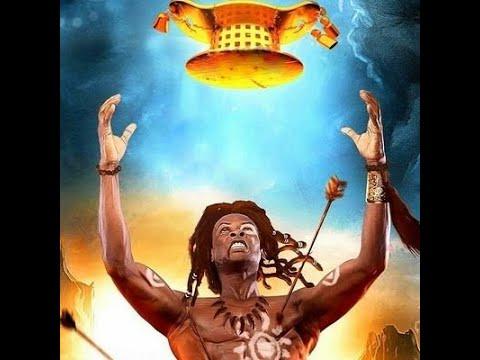
Komfo Anokye
Long before Ghana became a modern nation, before roads and governments and printed history books, the forests of the Akan world carried stories from village to village like wind through leaves. In those days, power was not held by one town alone. It was scattered among chiefs, clans, warriors, and rival kingdoms. Fear moved as quickly as trade, and ambition lived in every royal court. Out of that world rose a figure whose name still stands between history and legend: Komfo Anokye.
He is remembered not simply as a priest, but as a force. In Ashanti memory, he was a spiritual giant, a man whose words were said to carry fire, whose presence could steady kings, and whose vision helped turn many divided people into one united nation. Tradition and history both connect him closely to Osei Tutu, the ruler who became the first Asantehene, and together they helped shape the early Asante state in the late seventeenth century. Britannica notes that Anokye and Osei Tutu were central to building Kumasi into the capital region, organizing state councils, reshaping the army, and forging unity among smaller states. Anokye is especially linked to the appearance of the Golden Stool, which became the great sacred symbol of Asante authority and unity.
To understand why Komfo Anokye became such a towering figure, one must first understand the world around him. The Akan states were rich in culture, trade, and gold, but they were not always united. Smaller kingdoms and chiefdoms had their own loyalties and rivalries. Over them loomed stronger powers, especially Denkyera, which had become dominant in the region. The people who would become the Asante were not yet one great empire. They were many, and being many made them vulnerable. Britannica describes Denkyera as a major power at the end of the seventeenth century, controlling important gold regions and dominating neighboring peoples until the Asante challenge rose against it.
Into this tense landscape stepped Komfo Anokye, remembered as a priest of rare authority. Even the title attached to his name tells part of the story. “Komfo” or “Okomfo” marks him as a spiritual man, one who stood close to sacred power. He was not merely a court adviser who offered polite counsel from the side of the room. In the traditions surrounding him, he appears as a maker of destiny, someone whose spiritual influence was inseparable from politics, warfare, kingship, and nation building. Britannica describes him as the priest partner of Osei Tutu and one of the major architects of the Asante union.
Many stories surround his birth and early life, and like many great figures of precolonial Africa, the line between fact and sacred memory is not always sharp. That does not weaken his importance. In African historical tradition, legend often preserves a deeper truth about how a people understood greatness. What matters is that Komfo Anokye entered the memory of the Asante not as an ordinary man who happened to live at the right time, but as a chosen vessel of power, a priest whose mind could see farther than the quarrels of the day.
The most famous moment in his story is the coming of the Golden Stool. This is the heart of his legend and the center of his lasting fame. According to Asante tradition, Komfo Anokye caused the Golden Stool to descend from the sky and settle before Osei Tutu. The stool was no ordinary royal seat. It became the soul of the nation, the spiritual bond that tied all Asante together. Britannica states that Anokye is credited with producing the famed Golden Stool, which established the legal authority of Osei Tutu as the first Asantehene, while other sources note that the Stool symbolized the mystical unity of the people and the authority of kingship.
This matters because the story of the Golden Stool is not just about wonder. It is about political genius. A kingdom can be built by force, but an enduring nation usually needs a symbol greater than any one man. If unity had rested only on Osei Tutu’s personality, it might have died with him. If it had depended only on military victory, it might have been broken by the next defeat. But by placing the soul of the nation in the Golden Stool, Komfo Anokye gave the Asante something sacred, something above individual ambition. The Stool did not belong to a chief as private property. It belonged to the nation. It turned scattered loyalties into one deeper allegiance. That is why it endured as the highest emblem of Ashanti identity. UNESCO materials on Asante heritage likewise describe the Golden Stool as the symbol of the new nation.
One can imagine the effect of that moment. Chiefs who once guarded their own authority had before them a mystery no one could easily challenge. Warriors who fought for clan and town were now invited to see themselves as part of something holier and larger. The sacred entered politics, and politics borrowed the strength of faith. That is one reason Komfo Anokye remains unforgettable. He did not simply speak unity. He gave unity a body, a symbol, a presence.
His work with Osei Tutu went beyond symbols. Together they are remembered as builders of the Asante state. Kumasi emerged as the center of power, councils were organized, and military structures were strengthened. Britannica says that by around 1695 they had organized the capital region, state councils, and a new martial philosophy, binding minor kings into a common oath.
That phrase, a common oath, says a great deal. It tells us that Komfo Anokye was not merely summoning miracles in public memory. He was part of the difficult, practical labor of state formation. He helped turn alliance into system, loyalty into institution, and kingship into a framework that others could recognize. The priest was also a strategist.
Then came the struggle against Denkyera. The rising Asante could not remain free while a stronger kingdom overshadowed them. War became unavoidable. Britannica records that conflict between Asante and Denkyera lasted from 1699 to 1701 and ended in Denkyera’s defeat, after which many chiefs recognized the authority of Osei Tutu. Tradition gives Komfo Anokye an extraordinary role in this struggle, saying that his spiritual power helped turn the tide of battle when the war seemed to be going badly.
Whether one reads this literally or symbolically, the meaning is powerful. In the memory of the people, Komfo Anokye was the man who did not tremble when the future of the nation was on the line. He stood where fear was thickest and transformed it into confidence. Even if stripped of the miraculous language, the historical truth remains that he was one of the central minds behind the rise of Asante power.
That is why Komfo Anokye survives in memory not just as a religious figure, but as a nation maker. He helped shape the moral imagination of the Asante. He stood for the idea that a people could become stronger when held together by sacred duty, common purpose, and respect for lawful authority. He linked the throne to something higher than wealth or weapons.
In Kumasi today, his memory still breathes through shrines, stories, and public reverence. The city itself remains the seat of the Asantehene, and Britannica notes that Kumasi is still associated with the Golden Stool and the royal heart of Asante identity.
What makes Komfo Anokye so fascinating is that he belongs to two worlds at once. In one world, he is historical: a priest adviser, political thinker, and ally of Osei Tutu during the formation of the Asante kingdom. In the other, he is legendary: a man who could call down a stool from the heavens and command destiny into shape. But perhaps that is exactly why he lasts. Some people live in records. Others live in memory. Komfo Anokye lives in both.
His story also reminds Africa of something important. The building of civilization on the continent did not begin with colonial maps or foreign institutions. Long before that, African thinkers, priests, rulers, and warriors were shaping systems of government, symbols of national unity, and philosophies of power that commanded loyalty across vast communities. Komfo Anokye stands among those builders.
So when his name is spoken in Ghana, it is not spoken lightly. It carries the sound of drums from royal courts, the hush of sacred ceremony, and the confidence of a people who found a way to become one. He is remembered as the priest who did more than pray. He imagined a nation into being. He tied its spirit to the Golden Stool. He helped turn Kumasi into a center of authority. He stood beside Osei Tutu as unity was forged from division.
And that is why Komfo Anokye endures.
Not only as a legend of the Ashanti
But as one of the great spiritual architects of African history

الأقسام
إقرأ المزيد
Tiwa Savage Biography Full Name:Tiwatope Omolara SavageBorn: February 5, 1980Birthplace:Isale Eko, LagosNationality:NigerianProfession:Singer, songwriter, actress Early Life and Education Tiwa Savage was born in Lagos, Nigeria, and later moved to London, United Kingdom,at the age of 11 for her secondary education. While in the UK, she developed a strong passion for music and joined her...

Oba Ewuare II In the ancient city of Benin, where bronze remembers what books sometimes forget, the palace rises like a guardian of history. The red earth of Edo carries stories of warriors, queens, craftsmen, and kings whose authority once stretched across forests and trade routes of West Africa. From this sacred ground emerged a prince who would travel the world as a diplomat before...
After the heartbreak, Kashali did not chase love again. He chased purpose. The pain Anita gave him became fuel. While others slept, Kashali worked. He took extra shifts, learned new skills online, saved every naira, and stayed away from anything that would distract him. Lagos was still hard.Transport was still expensive.Life was still unfair. But Kashali was different now. He moved with...

A fire outbreak has razed a cargo ship, CHANG Min, at the Apapa Port in Lagos. The ship arrived at the port on Saturday, June 21, with a consignment which included CNG trucks, tyres, iron rods and construction equipment. It was gathered that the vessel upon arrival went up in flames as the captain successfully managed to steer it into the port vicinity for immediate rescue operations....

Despite President Bola Ahmed Tinubu’s directive ordering the withdrawal of police and DSS personnel from VIP security duties, fresh findings from Abuja and Lagos reveal that officers continue to perform private errands for influential individuals. Field observations show police and DSS operatives still escorting VIP families, handling school runs, and running personal errands,...