Bayajidda and the Well of Destiny
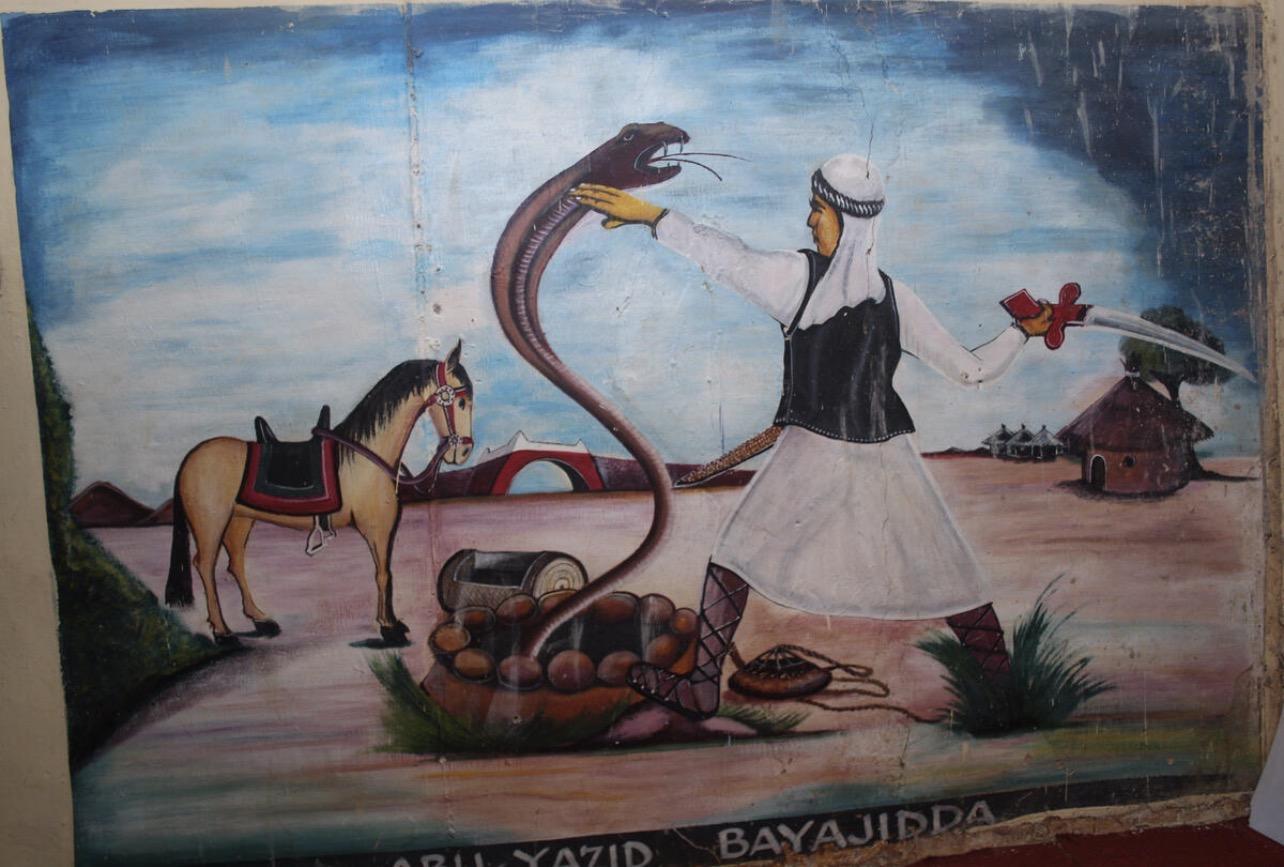
Bayajidda and the Well of Destiny
Long before the map of Northern Nigeria and southern Niger was drawn the way people know it today, there lived in the memory of the Hausa people a hero whose name traveled farther than the dust of caravans and deeper than the old wells of the savanna. His name was Bayajidda, and in the origin stories of the Hausa states, he stands not just as a man, but as a turning point. He is remembered as the stranger who arrived in a land of fear, faced what others could not face, and changed the future of kingdoms with one act of courage. In the most widely told versions of the legend, Bayajidda is linked with Daura, the famous well called Kusugu, the slaying of the serpent Sarki, and the rise of the Hausa Bakwai, the seven true Hausa states.
The story often begins far away, with a prince said to have come from Baghdad. Some versions call him Abu Yazid, while the name Bayajidda became the one that lived on in Hausa memory. Like many ancient legends, the tale carries the feel of exile, movement, and destiny. He is described as a royal figure who left home after conflict over power and inheritance. He traveled across lands and through hardship, carrying with him the silence of someone who had lost much, but not his courage. Whether taken as literal history or as a cultural myth shaped over centuries, Bayajidda’s journey is treated as one of the most important foundation stories in Hausa tradition.
After passing through other lands, Bayajidda eventually came to Daura, one of the most famous places in Hausa tradition. But he did not arrive in a city at peace. Daura, according to the legend, lived under a shadow. Its people depended on the Kusugu well for water, yet their access to it was controlled by a terrible serpent called Sarki. This snake was no ordinary creature in the story. It was fear made visible. It kept the people from drawing water freely, allowing them access only on limited terms. Imagine a whole community living with thirst not because the well was dry, but because terror stood guard over survival itself. That is the world Bayajidda entered.
When Bayajidda asked for water, he was told of the danger. In one version of the story, an old woman sheltered him and explained why the people could not simply go to the well whenever they wished. To many, this warning would have been enough. A traveler alone in a strange land would usually keep his head down, accept what he had been told, and move on. But Bayajidda was not made for the quiet surrender of helpless men. He chose to go to the well himself. That decision is one of the reasons the legend has endured so strongly. Heroism in African oral tradition is often not just about strength. It is about the willingness to act when a whole people have grown used to fear.
At the well, he encountered the serpent Sarki. The legend tells of a fierce struggle. In some retellings he fought with a sword and later cut off the serpent’s head with a knife made by blacksmiths during his earlier journey. In that moment the story becomes larger than a battle between a man and a snake. It becomes the clash between courage and bondage, between a stranger’s boldness and a people’s long suffering. When Bayajidda killed Sarki, he did more than defeat a monster. He restored freedom to water. He broke the rule of fear over daily life. He turned a place of dread into a place of memory. That is why Kusugu remains central to the story even now.
The next day, the people of Daura discovered that the serpent was dead. In the legend, Queen Daurama sought the one responsible for the deed. Different men tried to claim the honor, but the truth could not be hidden for long. Bayajidda proved that he was the one who had slain Sarki. Out of gratitude and recognition, Queen Daurama offered him a reward. In the best known versions, he asked not for wealth or part of the town, but for her hand in marriage. She agreed, and from that union came a dynasty that would echo through Hausa tradition for generations.
This is where Bayajidda’s story becomes more than an adventure tale. It becomes an origin story. Through Bayajidda and Daurama, the legend connects the past of Daura to the broader identity of Hausaland. Their descendants, according to tradition, became the ancestors of the rulers of the Hausa Bakwai, the seven true Hausa states. These states are usually listed as Daura, Kano, Katsina, Zazzau, Gobir, Rano, and Biram. In some versions, Bayajidda’s son Bawo becomes an important link in this chain, with Bawo’s sons becoming rulers of the core Hausa states. The details vary from telling to telling, but the meaning remains the same: Bayajidda is remembered as a founding figure whose line shaped political identity in the Hausa world.
There is another layer to the legend that makes it powerful. Bayajidda was not originally from Daura. He was an outsider. Yet in the story, it is the outsider who saves the city, marries its queen, and becomes part of its future. This detail gives the legend unusual depth. It suggests that identity can be formed through encounter, alliance, and shared destiny. It also reflects the history of the Sahel itself, a region shaped by migration, trade, war, religion, and cultural blending. Scholars have long debated whether Bayajidda was a real historical person, a symbolic memory of outside influence, or a heroic figure formed by oral tradition to explain how Hausa states emerged. Some see the story as reflecting contact with Borno and wider Islamic or trans Saharan worlds. Others treat it mainly as myth. But even where scholars disagree, they agree on one point: the Bayajidda legend has been enormously important in explaining Hausa political origins and royal legitimacy.
That is why Bayajidda’s name still carries weight. He belongs to that special class of figures who live between history and legend. Such figures are often more powerful in memory than ordinary kings recorded in dry chronicles. People return to them because they answer emotional questions as much as historical ones. Where did we come from. Who first united courage with leadership. How did fear lose its hold on a people. Why does a city matter. In the Bayajidda story, Daura is not simply a location. It is the womb of identity. The well is not just a source of water. It is the place where destiny turned. The marriage is not just a union of two people. It is the symbolic joining of heroism and kingship.
In Northern Nigeria and parts of Niger, such stories matter because they hold together memory, place, and people. They explain why certain cities are honored. They help royal traditions claim depth and continuity. They give younger generations a doorway into the imagination of their ancestors. In a modern world that often asks only for documented proof, legends like that of Bayajidda remind us that communities also preserve truth through meaning. Even when a story cannot be verified in every detail, it can still reveal what a people believed was noble, necessary, and worth remembering. Bayajidda is remembered because he embodies bravery, initiative, and the power to change society by confronting what everyone else feared.
And so the hero remains. He remains in the walls of Daura. He remains in the telling of elders. He remains in the image of a man standing at a well where others dared not stand. He remains in the memory of the serpent Sarki falling, in the gratitude of a queen, and in the naming of states that became central to Hausa civilization. Bayajidda may belong to legend, but legends are never empty. They are vessels of identity. They are maps of memory. They are the stories people tell when they want to explain not just what happened, but who they are.
In the end, Bayajidda’s greatness is not simply that he killed a serpent. It is that he arrived as a stranger and became an ancestor. He came with nothing the people could see except courage, yet from that courage came honor, marriage, lineage, and statehood. That is why his story has lasted. That is why the well is remembered. That is why the Hausa origin tradition still speaks his name with reverence. Bayajidda stands in legend as the man who turned thirst into freedom and memory into nation.

Categorii
Citeste mai mult
Ibrahim Chatta The Relentless Voice of Yoruba Cinema Ibrahim Abiodun Chatta is one of the most powerful and respected faces in the Yoruba film industry. Known for his deep voice, intense delivery, and commanding presence on screen, Ibrahim Chatta has built a career defined by resilience, talent, and cultural pride. His journey from a modest background to becoming a household name in...

Rivers State Governor Siminalayi Fubara has pledged full support for the National Directorate of Employment (NDE) as part of efforts to expand job creation and empower youth and women across the state. The governor made the commitment while receiving NDE Director-General Silas Agara and his team at Government House, Port Harcourt. He commended President Bola Tinubu’s job-creation...

As Nigerians prepare to celebrate Eid-El-Kabir (Sallah), just one day away, many ram sellers nationwide are expressing concern over disappointing sales figures despite rising prices. Across major markets, traders are caught in a challenging bind—while the cost of rams has skyrocketed due to inflation and supply constraints, buyers are reluctant to make purchases, leading to low patronage...
Wunmi Toriola Wunmi Toriola is one of the vibrant and respected faces in Nigeria’s Yoruba movie industry. Known for her expressive acting, strong screen presence, and ability to interpret emotional roles effortlessly, she has built a steady career in Nollywood over the years. Her journey reflects persistence, talent, and an unwavering passion for storytelling. Early Life and...

Apples are among the most popular and nutritious fruits in the world. They have been cultivated for thousands of years and are widely known for their health benefits, refreshing taste, and versatility. The saying “an apple a day keeps the doctor away” became popular because apples contain many nutrients that support overall health. Below is a clear explanation of the...