


 About
About
Kankan Musa and the River of Gold That Turned a Kingdom Into Legend
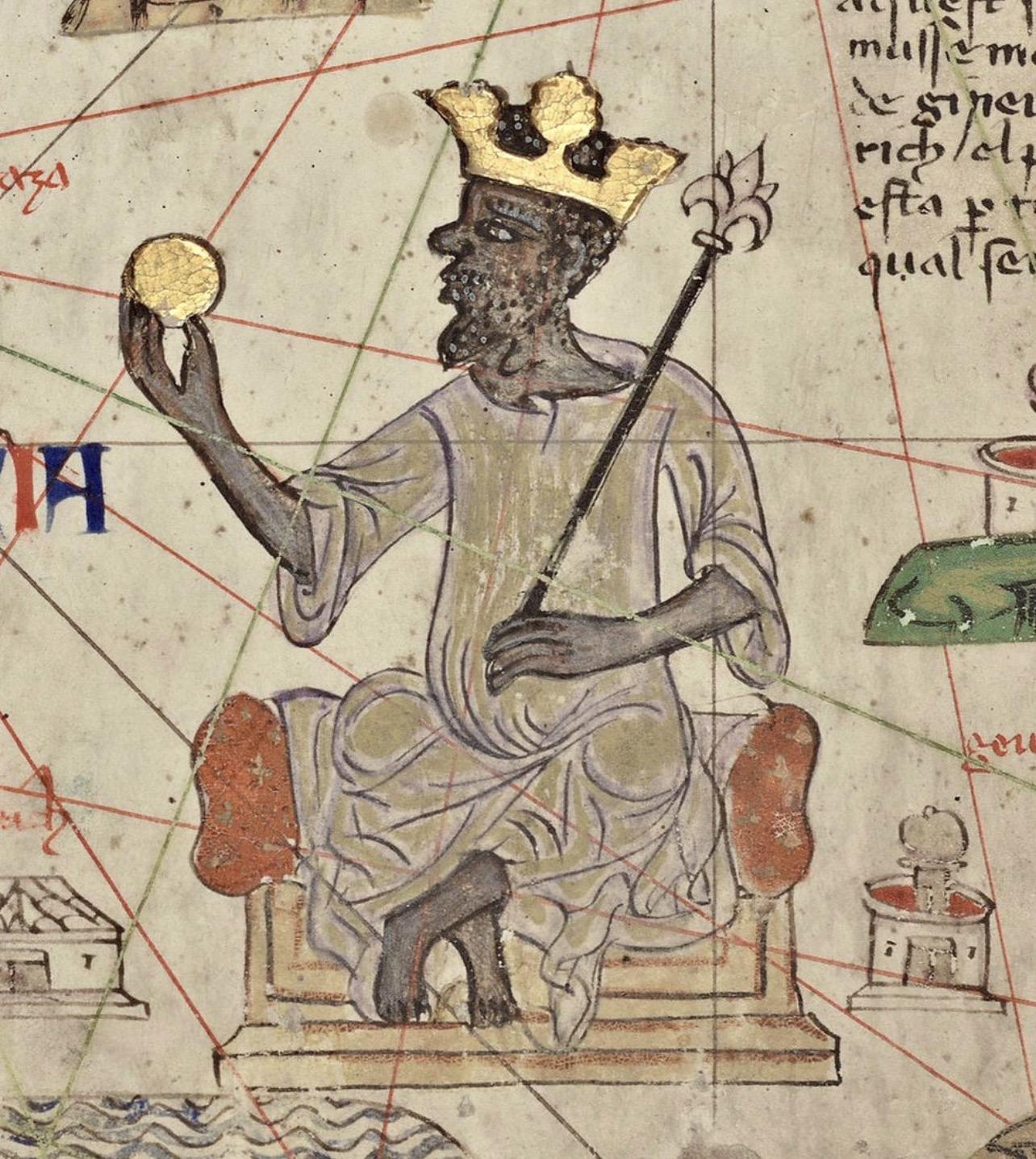
Kankan Musa
In the old lands of West Africa, where caravans crossed the desert like moving lines of fate and where stories could live longer than palaces, there rose a name that still glitters through memory like sunlight on gold. That name is Kankan Musa.
Some call him Mansa Musa. In oral and written traditions, his name appears in different forms, including Kanku Musa or Kankan Musa, reflecting the way memory, language, and royal praise can reshape a ruler across generations. Historians connect him to the famous emperor of Mali whose reign is often remembered as part of the empire’s golden age. At the same time, oral tradition does not always preserve him in one fixed way, and some legendary elements around him have grown larger than history itself.
So this is not only the story of a man.
It is the story of how a king became an echo.
It is the story of how wealth became wonder.
It is the story of how an empire became a legend told in courtyards, under trees, beside lamps, and in the mouths of griots who knew that sometimes the truth of a people lives not only in records, but in remembrance.
Long before foreign maps tried to capture the greatness of Mali, the empire had already become a giant in the savannah and Sahel. It was a land tied together by trade, authority, faith, and movement. Gold moved through it. Salt moved through it. Horses, scholars, merchants, pilgrims, and praise singers moved through it. Cities such as Timbuktu and Gao grew into places of influence, learning, and exchange. Under Musa’s rule, Mali became widely known far beyond West Africa, and later writers remembered his era as one of extraordinary prestige and riches.
But stories do not begin with glory. They begin with a child, a household, a lineage, and a listening ear.
In the tradition that carried the name Kankan Musa, he does not enter the imagination as a simple ruler seated on a throne from the first page. He comes like a figure already wrapped in expectation. His name itself carries the sound of ancestry. Scholars note that forms such as Kanku Musa may reflect naming tied to his mother, which fits Mandé naming traditions. That detail matters because royal memory in Mali was never just about one man standing alone. A king was a branch of a living tree, and every branch carried roots beneath it.
One can imagine the child Musa growing in a world where stories were not entertainment alone. Stories were instruction. Stories were warning. Stories were inheritance. The griot did not merely sing to fill the night. The griot guarded the memory of dynasties. A child born into power would have heard of Sundiata, of founders, of warriors, of oaths, of old struggles that turned scattered strength into imperial authority. Before he became a ruler of men, he would have first been a listener among voices older than himself.
That is how legends prepare a king. They do not place a crown on his head first. They place a world in his ears.
When Musa rose to power in the early fourteenth century, Mali was already significant, but his reign expanded its fame beyond ordinary measure. He ruled a vast empire enriched by major gold producing regions and by control over trade routes across the Sahara. Later traditions, admirers, and storytellers would turn this wealth into a kind of shimmering excess, until the man almost ceased to look human and began to look like abundance given a face.
And perhaps that is how Kankan Musa entered legend most powerfully.
Not merely as a king who had gold.
But as a king whose name became another word for gold itself.
In village retellings and grand historical imagination alike, the court of Mali becomes almost impossible to measure. Fabrics seem richer. Horses seem taller. Drums seem deeper. The air itself seems to carry the smell of leather, dust, incense, and treasure. Courtiers stand in long lines. Messengers come and go. Judgment is given. Tribute arrives. The empire breathes from palace to market, from river town to desert edge.
Then the greatest image begins to form.
The journey.
No ruler tied to Mali’s golden age looms larger in global memory than the emperor who made the pilgrimage to Mecca with astonishing wealth. Contemporary and later accounts describe a magnificent caravan, with large retinues and gold carried in abundance. The journey through Egypt especially became famous because of the scale of Musa’s spending and generosity. That pilgrimage helped stamp his name into the imagination of Africa, the Middle East, and Europe.
But history gives the skeleton. Legend gives the flesh.
And in legend, the road to Mecca becomes more than a route. It becomes a river of destiny crossing sand.
Picture it.
The morning is pale over the desert. The first light catches metal, cloth, and the patient backs of camels. Men move with discipline. Servants, scholars, guards, attendants, and officials prepare for another day under a sky so wide it seems to swallow ordinary men whole. Yet at the center of that vast moving world is Kankan Musa, not as a traveler merely, but as the human sign of Mali’s greatness.
Where he passes, strangers stare.
Where he pauses, markets awaken.
Where he gives, memory opens its mouth and never closes again.
One chronicler remembers the flood of gold. Another remembers the sheer scale of the entourage. Another remembers how the fame of Mali blazed outward because one king moved through foreign lands with such splendor that people far away began to redraw their mental map of Africa. In time, cartographers would even place Musa on maps holding gold, a symbol of his fame and the wealth associated with Mali.
Yet legends always ask a deeper question.
What does so much wealth mean?
For some, Kankan Musa became the image of blessing, power, divine favor, and civilizational greatness. For others, especially in some strands of oral memory, Musa could also be viewed with more complexity. Scholars note that he is not always the central hero in Mandé oral tradition, and some remember him as a ruler whose relationship to older tradition could be questioned. That tension is important. It reminds us that royal legends are not always praise alone. They can also carry debate, caution, and cultural judgment.
That is part of what makes the figure of Kankan Musa so fascinating.
He stands at the edge where admiration and reflection meet.
He is the ruler of abundance, but also a mirror held up to the meaning of abundance.
Was gold merely for display, or for purpose
Was greatness measured by what he owned, or by what he built
Was the empire shining because of wealth alone, or because wealth allowed knowledge, architecture, religion, and power to rise together
History strongly suggests that Musa’s legacy was not only material. He is associated with the strengthening of cities such as Timbuktu and Gao and with support for Islamic learning and monumental building, including the famous mosque at Timbuktu. His reign helped deepen Mali’s reputation as a center not just of riches but of scholarship and religious prestige.
So when the old storytellers spoke of Kankan Musa, the gold was never the whole point.
Gold dazzles the eye, yes.
But what made a golden age truly golden was what survived after the glitter settled.
Books.
Mosques.
Learning.
Names spoken with respect.
A kingdom whose sound traveled farther than its borders.
In this way, Kankan Musa became a legend not simply because he was rich, but because he represented a moment when Mali stood at the height of its renown. His name came to symbolize a time when the empire was strong, connected, and admired. Modern historians caution that the image of Musa as the unquestioned peak of Mali may partly reflect the fact that his reign is better documented than some others. Even so, his rule remains central to how the world remembers Mali’s golden age.
And that is how folk memory works.
It does not preserve every date.
It does not weigh every archive equally.
It keeps what burns brightest.
A king with unimaginable wealth.
A caravan that turned heads across continents.
A ruler whose empire was tied to gold, learning, and fame.
A name repeated until it became music.
Kankan Musa.
In some tellings, one can almost hear the griot lean forward before saying it, allowing the syllables to carry both reverence and wonder. Not because every detail is fixed, but because the emotional truth of the figure remains alive. He is a royal echo of a time when Mali seemed touched by destiny.
Children hearing such a tale would not first ask for exact borders or dates. They would ask how a man could carry so much wealth. They would ask whether the roads truly trembled under his caravan. They would ask whether kings in distant lands feared him, admired him, or envied him. They would ask whether Timbuktu truly shone with learning. They would ask whether the stories were real.
And the old answer would come gently.
Real enough to survive.
That may be the finest way to understand Kankan Musa in legendary tradition. He lives in the meeting place of history and memory. He is not invented from nothing. He rises from the life and reign of the ruler known widely as Mansa Musa of Mali. Yet around that historical core, generations have wrapped image, wonder, exaggeration, pride, caution, and praise. The result is a figure larger than biography, one who belongs as much to the imagination of a people as to the pages of historians.
Even now, centuries later, when people speak of Africa’s great historical names, Musa still appears like a golden door opening into another vision of the continent. Not a place of silence or emptiness, but a place of empires, networks, libraries, wealth, and statecraft. His story pushes back against every small telling of African history. It insists that the world once looked toward Mali with amazement.
That is why the legend endures.
Not because gold lasts forever. It does not.
Not because power lasts forever. It does not.
But because a people remembered that there was once a season when their empire stood radiant in the eyes of the world.
And in that season, among royal names carried across time, one name kept returning like a drumbeat from far away.
Kankan Musa.
The king of echoing abundance.
The royal shadow on the desert road.
The keeper of a fame so large that maps, manuscripts, and memory all bowed before it in their own way.
When the fires burned low and the storytellers neared the end, perhaps they did not end with numbers or titles. Perhaps they ended with an image.
A ruler seated in calm dignity.
A gold coin bright in hand.
A kingdom behind him.
A road before him.
And all around him, the long unbroken song of Mali.
If you want, I can also turn this into a cleaner blog post format with an SEO title, 4 tags, and 4 hashtags.

Categories
Read More
Security has been tightened across the South-East as the Federal High Court in Abuja delivers judgment today in the long-running terrorism trial of IPOB leader Nnamdi Kanu, who has been in DSS custody since his alleged “extraordinary rendition” from Kenya in 2021. Justice James Omotosho fixed the judgment for November 20 after ruling that Kanu failed to present his defence within...
Mo Cheddah Mo'Cheddah did not enter the Nigerian music industry quietly. She came in bold, confident, stylish, and unapologetically different. At a time when female rappers were rare and often boxed into stereotypes, she carved her own lane with charisma, intelligence, and fearless delivery. But before the fame, before the hit songs, before the glamorous red carpets, there was a young...

Iyabo Ojo The Fearless Queen of Nollywood Iyabo Ojo is one of Nigeria’s most vibrant and outspoken actresses, producers, and entrepreneurs. Known for her bold personality and emotional performances, she has built a strong reputation in Nollywood through hard work, resilience, and determination. Beyond acting, she is also admired for her business ventures and her role...

Sheikh Qaribullah Nasiru Kabara Early Life and Background Sheikh Qaribullah Nasiru Kabara was born into a respected Islamic family in Kano State, Nigeria. He came from the famous Kabara lineage, a family widely known for its deep roots in Islamic scholarship and leadership, especially within the Qadiriyya Islamic movement in Northern Nigeria. Growing up in Kano, a city known for its...
Victoria’s POV Monday came too quickly. I woke up earlier than usual, my mind still wrapped around Saturday his smile, his voice, that gentle peck on my cheek. I tried to act normal while getting ready for work, but my heart betrayed me. It beat faster than it should have for an ordinary Monday. At school, I felt it immediately. Daniel was already in the staffroom. The moment...

