About
About
Hannibal Barca The Fearless Genius Who Brought Rome to Its Knees
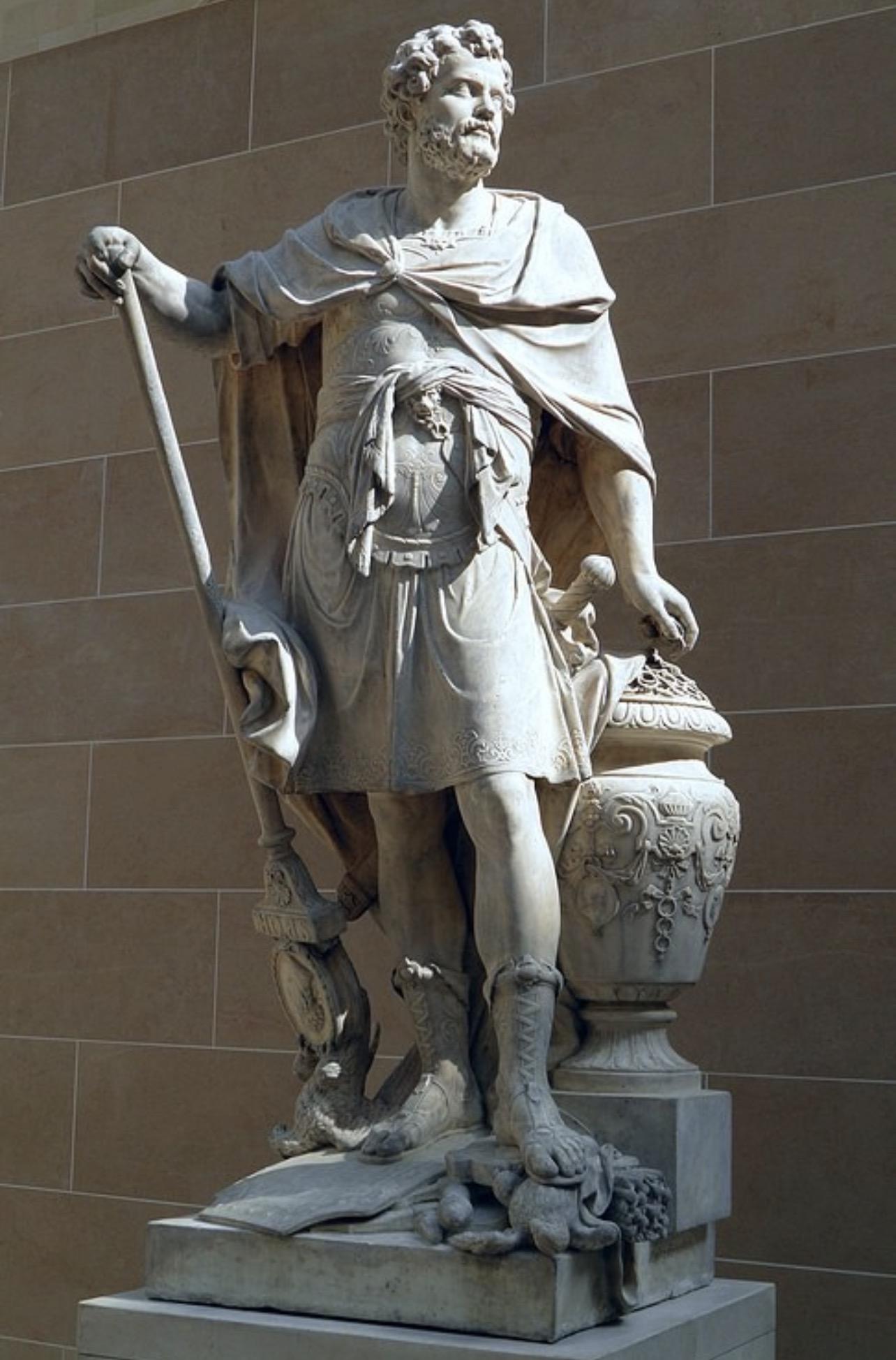
Hannibal Barca
There are some names in history that do not fade even after kingdoms fall, cities burn, and empires turn to dust. Hannibal Barca is one of those names. He was born in Carthage, the great North African power located in what is now Tunisia, and he became one of the most brilliant military commanders the ancient world ever knew. Long after his death, Roman parents were still said to frighten children with his name. He was the enemy Rome could never forget, the man whose courage, strategy, and relentless will shook one of the greatest republics in history.
His life feels like the making of a legend from the very beginning. Hannibal was not simply a general who won battles. He was a symbol of defiance, a man whose mind seemed to move faster than armies, and whose ambition was fueled by memory, family pride, and the bitter struggle between Carthage and Rome. His story is not only the story of war. It is the story of inheritance, revenge, endurance, and one of the boldest marches ever attempted by any commander. When people speak of Hannibal, they almost always remember one image above all others: a determined leader crossing the Alps with an army and elephants, descending into Italy like a storm from the mountains.
But Hannibal’s greatness did not begin in the snow. It began in the fire of an older conflict.
Before Hannibal rose to fame, Carthage and Rome had already fought one another in the First Punic War. Carthage was a wealthy maritime power with deep trading networks stretching across the Mediterranean. Rome was a rising force, disciplined, determined, and growing stronger with every challenge. Their first great war was long and costly, and in the end Rome emerged victorious. Carthage lost territory, wealth, and pride. For many Carthaginians, the defeat was not just political. It was personal. Among those who felt its sting most deeply was Hamilcar Barca, Hannibal’s father.
Hamilcar was a fierce commander and a man of enormous ambition. He did not accept humiliation easily. Instead of surrendering to despair, he turned his attention to Spain, where Carthage could rebuild its wealth and military power. He wanted to create a new base of strength, perhaps even a foundation for future revenge against Rome. Hannibal was still a boy when he came under the shadow of this mission. Ancient tradition tells us that before leaving for Spain, Hannibal was brought before an altar by his father and made to swear eternal hostility toward Rome. Whether every detail of that scene happened exactly as later writers described it, the story captures something true about his life. Hannibal grew up with Rome not as a distant rival, but as the great enemy of his people and his family.
In Spain, Hannibal was shaped by camp life, military discipline, and the example of commanders who believed that greatness belonged to those willing to seize it. He did not grow up in luxury cut off from danger. He learned war early. He observed men, terrain, command, supply, and the fragile thread by which victory hangs. He also witnessed the expansion of Carthaginian power under his father and later under Hasdrubal, another important leader in the Barca circle. Spain became the training ground of his mind.
Ancient writers often describe Hannibal as a man of exceptional endurance. He could bear hunger, cold, and exhaustion better than many around him. He was fearless without being reckless, and stern without losing the ability to inspire loyalty. Soldiers followed him not only because he held command, but because he shared hardship. He marched as they marched. He suffered as they suffered. That quality mattered deeply in the world he inhabited. An army made of different peoples, speaking different languages and coming from different lands, could not be held together by rank alone. It required charisma, intelligence, and a reputation for courage. Hannibal possessed all three.
After the death of Hasdrubal, Hannibal rose to supreme command in Spain while still a young man. This was no small thing. He had not merely inherited a title. He had earned trust among soldiers and officers who knew talent when they saw it. Once in command, he moved quickly and with purpose. He expanded Carthaginian influence and strengthened his position. Yet the peace between Carthage and Rome was thin and uneasy, like dry grass waiting for a spark.
That spark came at Saguntum, a city in Spain allied with Rome. Hannibal attacked it. Rome protested. Diplomacy turned sharp. Demands were made. Tensions hardened into war. The Second Punic War had begun, and with it Hannibal would attempt something so audacious that even centuries later it still feels almost impossible.
Rome expected conflict, but it did not expect Hannibal’s chosen path.
A lesser commander might have fought defensively in Spain or tried to challenge Roman naval strength at sea. Hannibal thought differently. He looked at the balance of power and understood that Rome was strongest when war remained at the edges of its world. If he wanted to shake Rome, he had to bring the war to Italy itself. That meant doing what many would have considered madness. He would march overland from Spain, through Gaul, across mighty rivers, and over the Alps into the Italian peninsula.
It was a plan of staggering boldness. It demanded speed, secrecy, diplomacy with tribes, ruthless endurance, and faith in the impossible. Hannibal gathered an army made up of Africans, Iberians, and others under Carthaginian leadership. He pushed northward. Along the way he faced resistance, treachery, harsh geography, and constant logistical difficulties. Rivers had to be crossed. Supplies had to be secured. Men had to be kept united even as the path grew more dangerous.
The crossing of the Alps became the defining image of his legend for good reason. Mountains are enemies even without an opposing army. Hannibal led tens of thousands of men and surviving elephants through freezing conditions, narrow passes, collapsing paths, hostile tribes, and deadly uncertainty. Soldiers slipped on ice. Animals fell into ravines. Fear spread through the ranks as the heights seemed endless. Yet Hannibal pressed on.
One can imagine the sight. The white vastness of the mountains. Men from warmer lands struggling through cold they had never known. Officers shouting above the wind. Pack animals stumbling. The commander himself moving among the troops, urging them forward, reminding them that beyond the mountains lay Italy and the chance to humble Rome on its own soil. This was not just a march. It was an act of will against nature.
By the time Hannibal descended into Italy, his army had paid an enormous price. Yet the very fact that he had arrived at all was a strategic shock. Rome now faced not a distant enemy, but a brilliant invader standing in northern Italy with battle hardened troops and a commander whose daring had already become a weapon. The psychological blow alone was immense. Hannibal had done what many thought could not be done. He had appeared where he was least expected.
Then he began to fight.
The first major clashes showed that Hannibal was not merely bold. He was a master of battlefield judgment. At the Trebia River he defeated Roman forces through a combination of tactical deception, timing, and control of terrain. He used cold, hidden troops, and the enemy’s impatience against them. Rome learned painfully that Hannibal could manipulate the rhythm of battle better than most commanders alive.
Soon after came Lake Trasimene, one of the most astonishing ambushes in ancient warfare. Hannibal used the geography of the area with frightening intelligence. He lured Roman forces into a trap set amid mist and enclosed terrain. When the moment came, the Romans were struck with devastating surprise. Confusion spread. Men died without even understanding the full shape of the battlefield. The defeat was catastrophic. It proved that Hannibal was not simply reacting to Roman moves. He was designing their destruction.
Fear spread through Rome. This was no ordinary enemy. This was a commander who seemed to read not only maps but minds. He could anticipate pride, impatience, and predictable Roman aggression. He knew how to tempt his opponents into disaster. Yet Rome, for all its losses, was not a weak state. It could absorb terrible blows and continue fighting. This endurance would become one of the central facts of Hannibal’s life. Again and again he defeated Roman armies, but Rome itself refused to break.
The greatest of Hannibal’s victories came in 216 BCE at Cannae. To this day the battle is studied as one of the finest tactical masterpieces in military history. The Roman army that marched against him was enormous, filled with confidence that sheer numbers would crush the invader once and for all. But Hannibal understood something many commanders never grasp fully. Victory does not belong to the largest force. It belongs to the force better positioned, better timed, and better led.
At Cannae he arranged his line in a way that invited Roman pressure. His center gradually bent inward under the Roman advance, creating the impression that the Carthaginian line was collapsing. The Romans surged forward, packed tighter and tighter into a mass that lost flexibility and awareness. Meanwhile Hannibal’s stronger troops on the wings held firm. Then came the decisive moment. The Carthaginian wings and cavalry closed around the Roman army from the sides and rear. What followed was horror. The Romans were surrounded, compressed, and slaughtered in numbers that stunned the ancient world.
Cannae was more than a victory. It was a demonstration of military genius so complete that it entered the permanent memory of warfare. Hannibal had taken a larger Roman force and turned its strength into weakness. He had shown how discipline, design, and timing could annihilate brute numbers. Even Rome’s later commanders never forgot the lesson. Cannae became the standard by which encirclement battles would be measured for centuries.
After Cannae, many believed Rome must surely sue for peace. A string of defeats, shattered armies, panic, and the presence of Hannibal in Italy all seemed to point toward a final Carthaginian triumph. Yet this is where the tragedy of Hannibal’s story begins to deepen. His brilliance on the battlefield did not produce the decisive political collapse he needed. Some allies of Rome defected, and some cities opened their gates, but Rome itself remained stubborn. Its institutions held. Its leaders argued, adapted, recruited, and endured. Instead of risking everything in another direct confrontation, they increasingly chose caution. This approach is often associated with Fabius Maximus, the Roman statesman who understood that the safest way to fight Hannibal was often not to fight him on Hannibal’s terms at all.
So the war changed shape. Hannibal remained dangerous, undefeated in open battle for years, but he was operating deep in enemy territory without enough consistent support from Carthage to finish the job. This is one of the great frustrations in his life. He had done the nearly impossible, but the machinery behind him was not always equal to his genius. Reinforcements, political unity, and strategic coordination were never strong enough to turn his victories into final success.
Meanwhile Rome expanded the war elsewhere. Roman commanders attacked Carthaginian interests in Spain, cutting into the Barca power base. The conflict spread across the Mediterranean. In time a new Roman leader emerged whose patience and intelligence would mirror some of Hannibal’s own qualities. This was Publius Cornelius Scipio, later known as Scipio Africanus.
Scipio understood that to beat Hannibal one had to attack the wider structure supporting him. Rome’s operations in Spain weakened Carthaginian strength there. Then Scipio carried the war into North Africa itself. At last Carthage faced a terrible choice. Hannibal, after years of campaigning in Italy, was recalled home to defend his city.
There is something deeply dramatic in that moment. The man who had spent so long threatening Rome now had to leave Italy and return to the land of his birth, where the fate of Carthage itself was at stake. One imagines him departing the fields and roads that had witnessed so many of his triumphs, carrying with him the memory of victories that had shaken the world but had not ended the war.
The final great confrontation came at Zama in 202 BCE. There Hannibal faced Scipio in one of history’s most famous duels of command. This time the outcome was different. Hannibal was still formidable, but circumstances had changed. Scipio had learned from Carthaginian methods, secured powerful cavalry support, and prepared carefully. At Zama Hannibal was defeated. Carthage sued for peace. Rome emerged the victor in the Second Punic War.
For many men, that would have been the end of significance. For Hannibal, it was not. Even in defeat he remained a figure of immense ability and presence. Back in Carthage he entered public life and sought reforms, especially financial and political changes aimed at strengthening the state. This tells us something important about him. He was not only a battlefield mind. He also understood administration, public order, and the dangers of corruption and weakness within a government.
But Rome never stopped fearing him. Even after Zama, even after peace, the name Hannibal still troubled Roman imagination. Pressure mounted. Political enemies watched him. In time he left Carthage and lived in exile, moving through the eastern Mediterranean and offering his skills to rulers hostile to Rome. He became in a sense a wandering legend, still pursued by the shadow of the republic he had once nearly broken.
His final years carry the sadness often found in the lives of great defeated men. He had shaken the mightiest power of his age, yet he could not restore Carthage to lasting supremacy. He had won immortal fame, yet he spent his last years away from the city he had fought for. When Roman pressure again threatened his freedom, Hannibal chose death over capture. He is said to have taken poison, refusing to let Rome enjoy the spectacle of his submission.
So ended the life of one of history’s greatest commanders. Yet death did not diminish him. In many ways it enlarged him. Rome defeated Carthage, but it could never fully conquer the memory of Hannibal Barca. Roman historians wrote about him with a strange mixture of hatred, admiration, and awe. They knew they had faced someone extraordinary. Even enemies who despised him had to acknowledge his genius.
Why does Hannibal still matter so much today?
Part of the answer lies in the sheer scale of his daring. Crossing the Alps with an army remains one of the most astonishing acts in military history. It captures the imagination because it feels larger than strategy alone. It feels like myth made real. But Hannibal matters for deeper reasons too. He represents the power of imagination in leadership. He refused to think in ordinary ways. When others saw obstacles, he saw routes. When others trusted numbers, he trusted design. When others accepted limits, he challenged them.
He also matters because his life reminds us that genius does not always win in the end. Hannibal’s story is not a simple tale of triumph. It is more human and more haunting than that. He won brilliant victories and still lost the war. He terrified Rome and still could not destroy it. He became immortal in memory while seeing his own city forced into humiliation. In that sense, his life carries both glory and sorrow.
For Tunisia and the wider history of ancient Carthage, Hannibal remains one of the greatest figures ever produced by the region. He stands as proof that North Africa was not a side note in ancient history, but a center of power, thought, and military brilliance. Carthage was wealthy, complex, and formidable, and Hannibal was one of its finest sons. Through him, the world remembers that the Mediterranean was shaped not by Rome alone, but by fierce rivals whose achievements were vast.
His story also survives because it speaks to something timeless in the human spirit. There is something irresistible about the image of a man who faces overwhelming odds and does not shrink. A man who loses much but never loses the sharpness of his mind or the force of his will. A man who remains dangerous not because fortune favors him, but because courage and intellect have become part of his nature.
When people remember Hannibal Barca, they remember the thunder of armies, the terror of ambush, the brilliance of Cannae, and the impossible road over the Alps. They remember a commander whose enemies feared his presence and whose soldiers trusted his leadership. They remember the Carthaginian who made Rome tremble.
And perhaps that is why his name still walks through history with such power. He was not merely a general. He was a challenge to certainty. He was the reminder that even the greatest empire can be made to bleed. He was the lion of Carthage, the storm from Africa, the strategist who came over the mountains and wrote his name across the memory of the ancient world.
Even now, after more than two thousand years, Hannibal Barca still stands at the edge of the Alps in the imagination of history, looking south toward Italy, carrying in his heart the oath of his youth, and moving forward with the calm of a man who has decided that fear belongs to others.
That is why he endures. That is why the world still speaks his name.

Categories
Read More
Former Minister of Education, Dr. Obiageli Ezekwesili, has condemned the Federal Government over its handling of Senator Natasha Akpoti-Uduaghan’s trial, warning that Nigeria is becoming a global embarrassment due to what she called blatant abuse of state power. In a statement posted to her verified X handle, Ezekwesili criticized the “atrocious” criminal defamation charges...

Bidemi Kosoko Bidemi Kosoko is a Nigerian actress known for her energetic performances in Nollywood, especially in Yoruba-language films. She was born on October 21 in Lagos State, Nigeria, into a family deeply rooted in the entertainment industry. As the daughter of veteran actor and filmmaker Jide Kosoko, Bidemi grew up surrounded by cameras, scripts, rehearsals, and movie...

The Hazard Control Market Report documents the United States oil and gas industry as one of the most significant and technically demanding end-user sectors for certified hazard control equipment within the global market. The pervasive presence of classified hazardous area environments across upstream production facilities, midstream pipeline and compression infrastructure, and...
N igerians have expressed outrage over the lack of information on the kidnappers responsible for abducting 38 worshippers at the Christ Apostolic Church in Eruku, Kwara State, even after their release. President Bola Tinubu and Kwara Governor Abdulrahman Abdulrazaq confirmed the rescue but gave no details about arrests or actions against the perpetrators. Social media users questioned whether...
Joseph Benjamin Joseph Benjamin is a Nigerian actor, model, and television presenter known for his charming screen presence and roles in Nollywood films and TV shows. He gained widespread recognition for his smooth acting style and ability to play romantic and sophisticated characters. He was born on November 9, 1976, in Benue State, Nigeria. Early Life and Background Joseph Benjamin...