About
About
Yaa Asantewaa The Lionhearted Queen Mother Who Defied an Empire
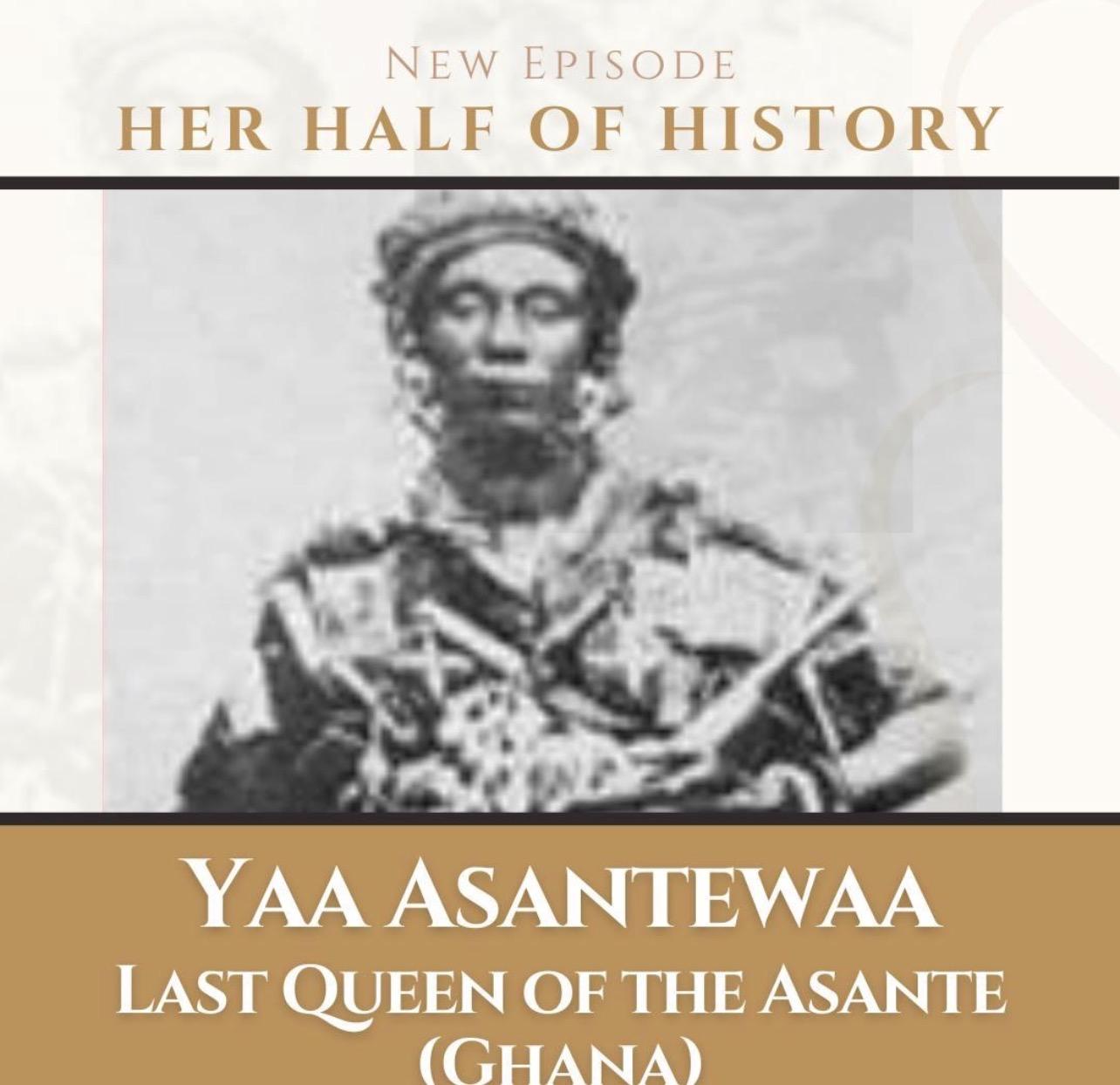
Yaa Asantewaa
There are some names in African history that do not simply belong to the past. They live on like a drumbeat that refuses to fade. They echo through stories told by elders, through songs of remembrance, through the pride of a people who refuse to forget who they are. Yaa Asantewaa is one of those names. In Ghana, and far beyond Ghana, she is remembered as the Ashanti queen mother who rose in a moment of fear and humiliation and chose courage when many around her were losing heart. She did not step into history quietly. She stepped into it with fire in her spirit, with her people on the edge of submission, and with a determination that turned her into one of the greatest symbols of African resistance to British colonial rule.
To tell the story of Yaa Asantewaa properly, one must first enter the world she lived in. This was the world of the Asante kingdom, one of the most powerful states in West Africa. The Asante had built a strong political order, a rich culture, and a proud sense of identity centered on authority, kinship, sacred symbols, and collective honor. Among their most powerful symbols was the Golden Stool, which was not merely a royal seat. It represented the soul of the Asante nation itself. To threaten that stool was to threaten the dignity and spiritual foundation of the people. This is why the story of Yaa Asantewaa cannot be separated from the story of the Golden Stool and from the long shadow of British colonial expansion on the Gold Coast.
Yaa Asantewaa was born around the middle of the nineteenth century, in or near Besease in the Ashanti region. She did not begin life as a figure the wider world expected to remember. She grew up in a society with strong political traditions and with a system in which women, especially queen mothers, held serious social and political influence. She later became the queen mother of Ejisu, a major Asante state, after being appointed during the rule of her brother, who was chief there. Her position was not a ceremonial decoration. In Asante political life, a queen mother could advise, guide succession, protect the interests of the royal line, and speak with moral and political weight. Yaa Asantewaa grew into that responsibility with intelligence, confidence, and authority.
Before war made her famous, she had already lived a full and capable life. Accounts describe her as a successful farmer, a mother, and a woman of substance. That detail matters. Great resistance leaders are often imagined only in the instant of battle, but the strength they show in crisis usually grows from the discipline and dignity of ordinary life. Yaa Asantewaa was not shaped by power alone. She was shaped by work, by community, by practical responsibility, and by a deep understanding of the world around her. She knew what it meant to protect, to provide, and to stand firm. Those qualities would later matter more than any royal title.
By the late nineteenth century, the Asante kingdom was under severe pressure. British power was expanding, and the relationship between the British and the Asante had become increasingly violent and tense after a series of wars. The British wanted control, access, submission, and the end of Asante independence. The Asante, proud and deeply rooted in their own political order, did not accept this quietly. There had already been earlier conflicts, defeats, and humiliations. In 1896, the British exiled Asantehene Prempeh the First, along with other leaders, to the Seychelles. This was more than a political act. It was a deep wound to the pride and sovereignty of the Asante people. After the exile of her grandson and the wider weakening of Asante leadership, Yaa Asantewaa became regent in Ejisu. She stood in a time of uncertainty, with the old order battered but not spiritually broken.
Then came the insult that would ignite history.
In 1900, the British governor Frederick Hodgson made a demand that revealed how little he understood the people he was trying to dominate. He demanded the Golden Stool. To the British, this may have looked like a symbol of political supremacy that could be seized or displayed. To the Asante, it was sacred. It was the embodiment of the nation. It was not an object one sat on casually or handed over to a foreign ruler. Hodgson’s demand was not simply offensive. It was an assault on the spiritual and political core of Asante identity. The remaining leaders gathered at Kumasi to decide what to do. Fear was in the air. Many had seen the strength of British military power. Many had seen kings humbled and authority broken. It was one of those moments in history when a people stand at the edge of surrender and wait for someone to speak the truth that everyone else is afraid to say.
That person was Yaa Asantewaa.
The story of her famous speech has traveled far because it captures the very heart of courage. Surrounded by men who hesitated, who feared what war would cost, she rose and challenged them. In the tradition remembered around her, she made it clear that if the men of Asante would not go forward, then the women would. Whether quoted word for word or remembered through the spirit of the moment, the meaning is the same. She shamed fear. She called forth pride. She refused humiliation. In that council, Yaa Asantewaa did more than encourage resistance. She transformed the emotional atmosphere. She reminded the Asante who they were.
What makes this moment so powerful is not only that she was brave, but that she was a woman stepping into a military role that was extraordinary in Asante history. Sources describe her selection as war leader as the first and only known instance of a woman being given that role in Asante history. That does not mean Asante women were politically invisible. Far from it. But this was a moment of unusual scale and seriousness. It required not simply influence, but command. And Yaa Asantewaa accepted it. She did not ask permission from history to become great. She answered the need of her people.
The war that followed came to be known as the War of the Golden Stool, and it is also remembered as the Yaa Asantewaa War. Beginning in 1900, Asante fighters rose against British power. One of the major episodes of the conflict was the siege of the British fort in Kumasi, where British officials and others took refuge. The resistance was fierce and determined. The British were not facing a scattered or confused response. They were facing a people fighting for spiritual dignity, political survival, and national honor under the inspiration of a woman who refused to let colonial arrogance pass unchallenged.
It is easy for modern readers to forget what resistance meant in such a time. It did not mean posting words or making speeches to distant audiences. It meant risking death. It meant villages threatened, families broken, leaders hunted, livelihoods destroyed, and defeat followed by exile or execution. Yaa Asantewaa knew this. She was not choosing a symbolic protest. She was choosing armed resistance against one of the most powerful imperial systems in the world. That choice alone places her among the bravest figures in African history.
The British eventually sent a large relief force to crush the uprising. The conflict was hard and bloody. The Asante fought with determination, but imperial military power, logistics, and resources gave the British major advantages. In the end, the resistance was suppressed. Yaa Asantewaa and several of her close advisers were captured and exiled to the Seychelles, the same distant islands where other Asante royals had already been sent. She would remain there until her death in 1921. In the narrow military sense, the war did not end in victory for her side. But history is not measured by battlefield results alone. Sometimes the true meaning of resistance lies in what it refuses to surrender even in defeat.
Exile is one of the saddest chapters in her life. To be taken from one’s homeland, from one’s people, from the soil that gave shape to identity, is a painful fate. For a leader who had fought to defend the spirit of her nation, exile carried a special bitterness. Yet even there, her story did not end in silence. The woman the British removed from Asante land remained alive in memory. Her absence made her even larger. She became not only a leader of a particular war, but a symbol of unbroken dignity. Her body was far from home, but her name had already returned to the hearts of her people.
To understand why Yaa Asantewaa remains so revered, one must look beyond the war itself and into the role she came to represent. She stands at the meeting point of several histories at once. She belongs to the history of Ghana. She belongs to the history of anti colonial struggle in Africa. She belongs to the history of women’s political leadership. And she belongs to the deeper moral history of courage, where individuals choose honor over fear when everything is at stake.
Her story also reveals something important about Asante society. Outside observers have often misunderstood African political systems, especially the roles of women within them. In Asante tradition, queen mothers were not decorative figures standing in the background of male power. They had meaningful influence in succession, counsel, and political life. Yaa Asantewaa’s rise as a war leader was extraordinary, but it did not come from nowhere. It came from a world in which women could possess recognized authority and act as guardians of communal dignity. Her life therefore challenges simplistic ideas about African women in the past. She was not waiting to be discovered by history. She was already part of a system that understood female power, even if colonial writers often failed to see it properly.
There is also something deeply moving about the emotional structure of her legend. Many heroic stories begin with a man on horseback or a warrior in armor. Yaa Asantewaa’s story begins in council, in insult, in the wound of humiliation, and in a refusal to let sacred things be mocked. Her power was moral before it was military. She saw what the British demand for the Golden Stool really meant. She understood that a people can lose more than land. They can lose the sacred center that tells them who they are. So she stood not only for territory, but for meaning. That is why her resistance still matters.
Over time, Yaa Asantewaa became one of the greatest heroines of Ghanaian memory. She has been remembered in scholarship, oral tradition, public ceremony, music, education, theater, and museum culture. A girls’ secondary school in Kumasi was named after her in 1960 to encourage leadership and excellence among young women. In 2000, the centenary of the war was marked with national remembrance, including a festival and the opening of a museum dedicated to her legacy in the Ejisu area. Though the museum later suffered a fire, the fact that such a memorial existed at all shows how firmly she remains rooted in public memory. Her image and name continue to inspire cultural and historical projects in Ghana and beyond.
Even the wider world has not forgotten her. Writers, dramatists, historians, activists, and artists have continued to return to her story. She has appeared in documentaries and stage productions. Her name has been used to honor strong women of African descent. In 2024, the British Museum installed a painting of Yaa Asantewaa in its Africa gallery, a reminder that the woman who once resisted imperial power now stands in historical view as one of the great figures colonial history could not erase.
Yet for all the memorials and tributes, the deepest place Yaa Asantewaa lives is not inside buildings or exhibitions. She lives in imagination. She lives wherever people ask what courage looks like when defeat seems likely. She lives wherever women refuse to accept silence as their assigned role. She lives wherever a people remember that sacred things must not be surrendered for comfort. That is why her story continues to travel. It speaks to something larger than one war.
Imagine the moment again. The British are pressing inward. Leaders are uncertain. The king is in exile. The proud Asante nation is wounded. A sacred symbol is threatened. Fear hangs over the room. And then a queen mother rises. She does not speak as someone protecting privilege. She speaks as someone protecting a civilization’s dignity. She refuses to let the story end in shame. That image is unforgettable.
It is also why Yaa Asantewaa has become a particularly powerful figure for women across Africa and the African diaspora. She was not brave in a quiet or hidden way. She was publicly brave. She confronted male hesitation. She stepped into strategy, war, and command. She refused the narrow boundaries fear tried to draw around her. In doing so, she became a model of leadership that still feels urgent today. Her life says that courage is not granted by gender. It is proven by action.
At the same time, her story is not one of simple triumph. That complexity makes it richer. She fought and was captured. She resisted and was exiled. Her side did not win the war in the immediate sense. But her moral stature only grew. This is one of the paradoxes of history. Some people win battles and vanish from memory. Others lose in the short term and become immortal. Yaa Asantewaa belongs to the second kind. The British defeated the uprising, but they did not conquer the meaning of her defiance. In fact, her resistance exposed the violence and arrogance of colonial rule more clearly than submission ever could.
Her story also forces us to rethink what victory means. Was victory only the survival of political independence in that exact moment? Or can victory also be the preservation of dignity, the refusal of spiritual humiliation, the inspiration given to future generations, and the creation of a symbol too strong for empire to destroy? By that deeper measure, Yaa Asantewaa did win. She won a place in the conscience of history. She won the love of memory. She won the right to be named among the great defenders of African freedom.
There is another reason her story matters in our own time. Across the world, people still wrestle with the afterlives of colonialism, with stolen artifacts, with distorted histories, and with narratives that once treated African leaders as side notes in someone else’s imperial story. Yaa Asantewaa stands against that distortion. She reminds us that Africans were never passive spectators in the making of modern history. They resisted. They argued. They organized. They fought. They led. And among them were women whose courage was as fierce and decisive as any king’s.
In Ghana today, her name carries pride because it joins patriotism with moral force. She is not remembered merely because she fought the British. She is remembered because she represented the finest qualities of resistance. She was loyal to her people. She understood the sacredness of identity. She refused cowardice. She embodied duty. She turned grief into resolve. These are not small qualities. They are the very materials from which legends are made.
If one listens carefully, the story of Yaa Asantewaa is also a story about timing. There are many people with strength, but only a few recognize the hour when strength must become action. She understood her moment. She recognized that silence would become surrender. She recognized that delay would become dishonor. She recognized that leadership sometimes means stepping forward when others shrink back. Because she understood that hour, her name crossed beyond Ghanaian history into African history, and beyond African history into the universal history of human courage.
When she died in exile in 1921, the British Empire still stood tall in many parts of the world. It may have seemed then that colonial rule had the final word. But history kept moving. Empires weakened. Colonized peoples rose. Ghana itself would one day become the first sub Saharan African colony to gain independence in 1957. Though Yaa Asantewaa did not live to see that day, her spirit belonged to the long line of resistance that made such futures imaginable. In that sense, she was not only defending the Asante of her own time. She was defending the right of future Africans to stand upright and free.
And so her story remains alive.
It remains alive in the memory of the queen mother who would not bow.
It remains alive in the cry of a people who would not let their sacred stool be seized.
It remains alive in every retelling of the woman who asked what had become of the courage of Asante men and then showed them what courage looked like.
It remains alive in the image of a leader who chose resistance over comfort, exile over submission, and honor over fear.
Yaa Asantewaa was more than a queen mother. She was a turning point. She was a voice in a dark room that changed the fate of a people’s memory. She was a woman who saw clearly what was at stake and refused to let empire define the worth of her nation. She was fierce, politically wise, spiritually grounded, and morally unshaken. That is why she still stands, even now, as one of the brightest lights in the history of Ghana and one of the most unforgettable heroines in all of Africa.
When people speak her name today, they are not only remembering a war. They are remembering a standard. They are remembering that dignity must be defended. They are remembering that women have always stood at the center of African history, even when others tried to write them out. They are remembering that courage can rise from any throne, any village, any council, any wounded nation. And above all, they are remembering Yaa Asantewaa, the lionhearted queen mother of Ashanti, whose resistance outlived the empire that tried to break her.

Kategoriler
Read More
Fela Anikulapo Kuti Fela Kuti was one of Africa’s most revolutionary musicians and political voices. Widely recognized as the pioneer of Afrobeat, he fused highlife, jazz, funk, and Yoruba rhythms into a powerful sound that became a weapon against corruption, dictatorship, and social injustice. Beyond music, he was a fearless activist whose life was marked by constant clashes with...

Evangelist Niyi Adedokun Niyi Adedokun is a Nigerian evangelist, actor, and gospel filmmaker known for his strong involvement in Christian ministry and faith-based movie productions. He is widely respected within the gospel film community for his dedication to spreading Christian messages through drama and preaching. Early Life and Background Evangelist Niyi Adedokun was...

In a surprising political development, former Jigawa State Governor and influential PDP chieftain, Sule Lamido, has publicly declared his support for Peter Obi, the Labour Party’s 2023 presidential candidate. Speaking in a recent interview, Lamido stated firmly that President Bola Tinubu is not unbeatable, adding fuel to rising opposition momentum ahead of the 2027 general elections....
President Bola Tinubu on Tuesday commissioned the first-ever bus terminal in the nation’s capital, Abuja, with a declaration that his administration was taking decisive steps to bring order, accountability and safety to public transportation. Speaking at the Terminal in Mabushi, the president, who was represented by the Speaker of the House of Representatives, Dr Tajudeen Abbas, expressed...

My name is Tomilola. I was fifteen years old then, a JSS 3 student who believed school was one of the safest places on earth. That morning began like every other weekday ordinary, predictable, and calm. I woke up before dawn to the familiar sound of my mother calling my name, her voice firm but loving. I dragged myself out of bed, still half-asleep, already complaining in my heart about...