About
About
Shaka Zulu The Storm King Who Forged a Nation Through Fire and Iron
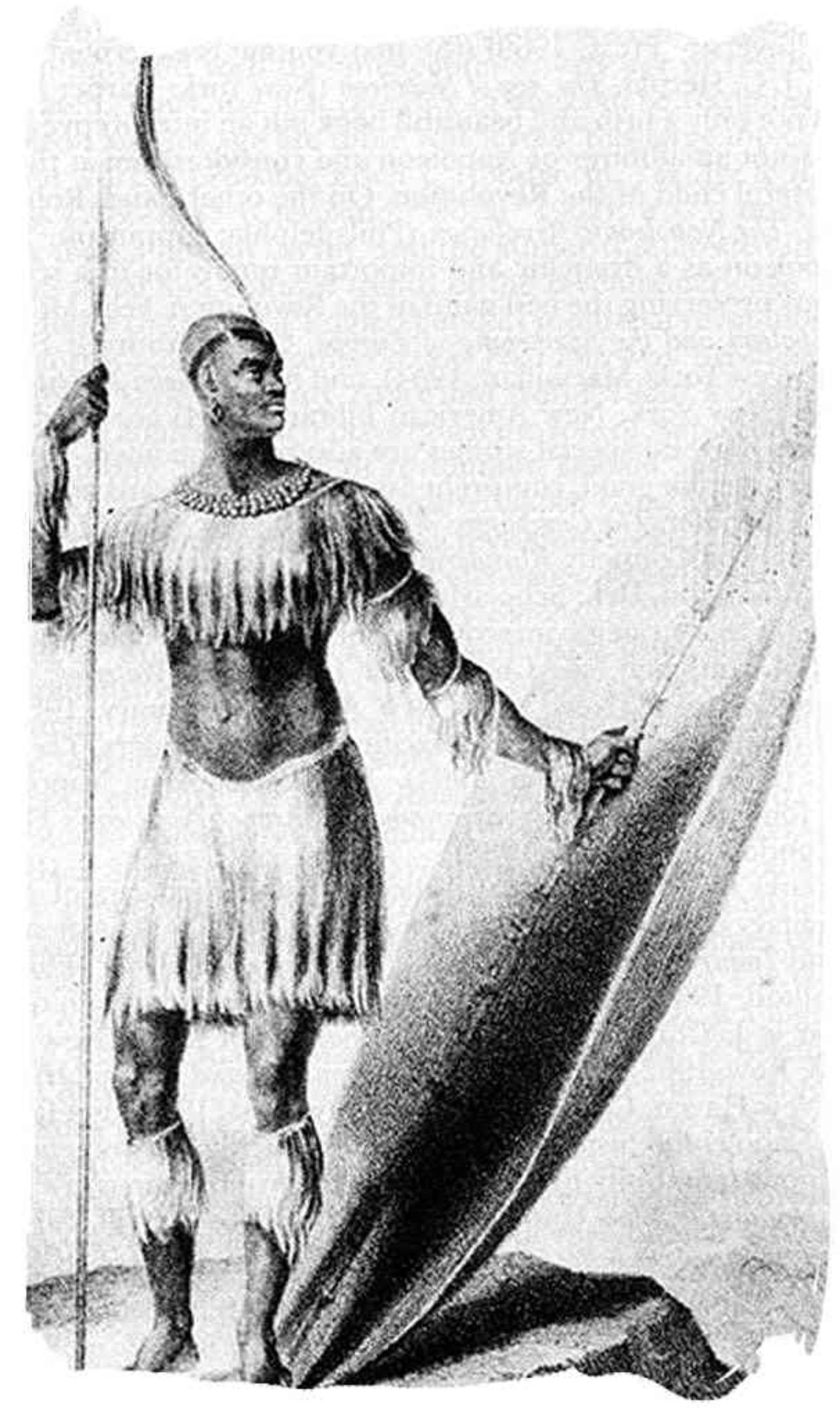
Shaka Zulu
Long before the borders of modern South Africa were drawn on maps, before colonial powers tried to force their own order upon the land, the hills and valleys of southeastern Africa carried the footsteps of cattle herders, hunters, chiefs, warriors, mothers, dreamers, and kings. It was a world alive with movement and memory. People measured wealth in cattle, honor in courage, and leadership in the ability to protect, unite, and command respect. In that world, one name rose above the dust and entered legend with terrifying force. That name was Shaka Zulu.
To some, he was a genius. To others, he was a tyrant. To many, he was both. But whatever name one gives him, his place in history cannot be ignored. Shaka Zulu was the great military innovator who transformed a small Zulu chiefdom into a kingdom of fearsome strength. He did not inherit a vast empire already made. He built power through discipline, strategy, and vision. He reshaped warfare, reorganized society, and turned the Zulu name into one that echoed across southern Africa. His life remains one of the most dramatic stories in African history because it is a story of ambition, suffering, invention, conquest, and the heavy loneliness of power.
Shaka was born around the late eighteenth century, in a time of tension and shifting alliances among the Nguni speaking peoples. His father was Senzangakhona, chief of the Zulu, and his mother was Nandi. But his birth was not welcomed in comfort and celebration. In many retellings of his early life, Shaka’s parents were not properly married at the time of his birth, and this gave his childhood a shadow of shame and rejection. The child who would one day command armies and shape kingdoms began life not in secure privilege, but in uncertainty.
His mother Nandi became central to his story. She was strong, determined, and fiercely protective, yet she and her son faced humiliation. They were pushed aside, mocked, and forced to live with hardship. In the oral memory surrounding Shaka’s youth, his early years were marked by insult and exclusion. He knew what it meant to be treated as lesser. He knew what it meant to be watched with suspicion. He knew what it meant to carry anger in silence. These experiences did not break him. They sharpened him.
As a boy, Shaka is often imagined walking through the grasslands with cattle, learning the rhythms of the land, watching animals move, observing danger, and storing every lesson in the deep chamber of his mind. Herding was no small thing. It taught alertness, patience, and command. A boy who watched cattle learned how living bodies move together, how fear spreads through a group, how direction can be controlled, and how survival often belongs to the one who notices first. These lessons would one day reappear on the battlefield.
Shaka and his mother eventually found refuge among the Mthethwa, a more powerful confederation under the leadership of Dingiswayo. This was one of the great turning points in his life. Under Dingiswayo, Shaka entered a wider political and military world. He saw how authority could be organized beyond a small clan. He saw discipline at work. He saw the use of regiments and the power of structure. Most importantly, he found a space in which his ability could be recognized.
As a young man, Shaka entered military service and began to rise. Accounts of him describe a warrior of remarkable courage, physical endurance, and presence. He was not merely brave in the ordinary sense. He possessed the intense, magnetic quality that makes others follow. He stood out. He thought differently. He observed weaknesses in existing methods of fighting and began to imagine something more effective, more brutal, and more decisive.
Traditional warfare in the region often involved skirmishing at a distance with throwing spears, displays of bravery, and limited casualties. Battles could be fierce, but they did not always aim at total destruction. Shaka changed that. He believed warfare should not be half decided. It should overwhelm, break, and finish the enemy. This belief would make him famous and feared.
One of Shaka’s greatest military innovations was the transformation of the spear. Instead of depending mainly on the long throwing spear, he promoted the use of a shorter stabbing spear, often called the iklwa. This weapon forced combat into terrifying closeness. It demanded nerve, strength, and aggression. A warrior could no longer remain at safer distance and hurl weapons from afar. He had to close in, face his enemy directly, and kill at close range. This change alone altered the psychology of battle.
But a weapon is only as effective as the system around it, and Shaka was not simply a man who changed equipment. He changed organization. He refined the age based regimental system into a tighter, more disciplined military structure. Young men were grouped into regiments and trained to move, obey, endure hardship, and function as one body. Loyalty shifted increasingly toward the king and the military order he embodied. Shaka understood something many rulers learn too late. Courage in scattered individuals is not enough. Real power comes when human energy is forged into disciplined formation.
He trained his warriors hard. They learned to march long distances rapidly, often barefoot, over difficult terrain. He expected toughness beyond ordinary limits. He demanded speed. He demanded obedience. He demanded that warriors become instruments of relentless force. To modern eyes, his methods may appear harsh, even extreme, and in truth they often were. But through that severity he created an army unlike those around him.
His most famous tactical formation is often described as the horns of the buffalo. It was both simple and brilliant. The central body, the chest, would engage the enemy directly and hold attention. Meanwhile the flanking forces, the horns, would move around the sides to encircle. The reserve, the loins, remained ready behind, able to reinforce or pursue. This was not mindless charging. It was shaped movement, designed to trap and crush. It turned battle into a living machine. When it worked, the enemy found itself pinned, surrounded, and broken.
Military innovation alone, however, does not explain Shaka’s rise. He lived at a time of major upheaval in southern Africa, a period often associated with intense conflict, migration, and state formation. Competition over resources, drought pressures in some regions, growing political centralization, and the rise and fall of powerful leaders created a volatile world. In such times, men of ruthless talent could change history quickly. Shaka was one of those men.
When Senzangakhona died, Shaka, with support from Dingiswayo, moved to claim leadership of the Zulu. This was not a peaceful inheritance. Power rarely changes hands gently where ambition is strong. Shaka secured control and began transforming the Zulu chiefdom into something much larger and more dangerous. At first, the Zulu were not yet a giant kingdom towering above all others. But under Shaka, that changed with astonishing speed.
His rise was helped by the fall of old protective structures. Dingiswayo, whose support had been crucial, was later killed by Zwide, leader of the Ndwandwe, a rival power. This left Shaka exposed but also forced him into full command of his own destiny. He now had to stand not as a talented subordinate in another man’s system, but as a central power in his own right. He did not retreat. He met the moment with force.
The struggle with Zwide and the Ndwandwe became one of the defining conflicts of Shaka’s career. These were not small local disputes. They were contests over regional dominance. Through strategy, discipline, and military reorganization, Shaka defeated major opponents and absorbed or scattered rivals. Some groups were incorporated into his expanding power. Others fled, carrying the shock of these conflicts into distant regions. The wider upheavals connected to this era reshaped much of southern Africa.
As Shaka’s authority grew, so did the Zulu Kingdom’s strength. The kingdom was not built only on battlefield success. It rested on a broad restructuring of society. Military service became central. Regiments were tied not only to warfare but to social order. Age groups, settlement patterns, marriage arrangements, and labor could all be influenced by the central power of the king. In Shaka’s world, the boundary between military life and political life became thin. The state itself took on a disciplined, martial rhythm.
This made the Zulu Kingdom formidable. It was no longer merely a clan led by a local chief. It became a centralized power capable of projecting force, absorbing territory, and commanding loyalty on a larger scale. Under Shaka, the Zulu developed not just an army, but a system that fused politics and military organization into a single engine of expansion.
Yet no story about Shaka can remain only a tale of brilliance and triumph. His life was darker than that. Great power often carries its own destruction inside it, and Shaka’s reign has long been remembered for both achievement and cruelty. Accounts describe severe punishments, heavy discipline, and rule by fear. Whether all stories told about his harshness are equally accurate is difficult to determine, because legend, colonial writing, oral memory, and later interpretation have all shaped his image. Still, there is little doubt that he ruled with ferocity.
That ferocity partly came from the world he inhabited. He did not lead in a peaceful age where soft compromise could preserve power. He led in a violent and unstable environment where hesitation could invite defeat. But that truth does not erase the suffering caused by his methods. It only helps explain how a man of strategic genius could also become feared by many around him.
One of the most emotionally charged chapters of his life followed the death of his mother, Nandi. If Nandi had been the suffering woman of his early years, the mother who endured humiliation with him and for him, then her death struck Shaka at the deepest part of his being. He was devastated. In some traditions and accounts, his grief became extreme and destructive. Mourning turned into a force that swept across the kingdom with terrible consequences. People were reportedly forbidden from planting crops, drinking milk, or behaving as though ordinary life could continue. Executions and mass punishments were said to have followed.
Whether every detail of these stories is literal or shaped by later retelling, they reveal something important about how Shaka was remembered. He was seen as a man whose emotions, once released, could become national storms. His love, grief, rage, and ambition did not remain private feelings. They became public force. In kings, this is both power and danger.
By this time, Shaka had become larger than ordinary leadership. He was a symbol, a commander, a lawgiver, a source of terror, and the central pillar of the kingdom’s order. But kingdoms built so intensely around one man can become unstable when that man grows isolated. Power narrows trust. Fear poisons loyalty. Even brothers begin to measure the future differently.
Shaka’s own end came not on the battlefield at the hands of some distant enemy, but through assassination. In 1828, he was killed by his half brothers Dingane and Mhlangana, with the support of another figure named Mbopa. It was a political killing, born of fear, ambition, and the unbearable tension of living too close to overwhelming power. The great maker of the Zulu state fell not because he lacked military talent, but because strength cannot fully protect a ruler from the enemies within his own circle.
His death closed one chapter but did not end his legacy. The Zulu Kingdom he had forged did not vanish with him. Others ruled after him, and the Zulu remained a major force in southern African history. Later generations would face colonial expansion and violent clashes with European powers, most famously in the nineteenth century. The military culture and state structure that Shaka helped shape became part of the reason the Zulu could stand with such force in those later struggles.
His legacy survives in several forms. First, there is the political legacy. Shaka transformed the Zulu from a relatively small chiefdom into a powerful centralized kingdom. He reorganized authority, imposed discipline, and created a durable framework of power. Even after his death, the Zulu state continued to matter.
Second, there is the military legacy. He is remembered as one of Africa’s most significant military innovators. His reforms in weapons, training, tactics, and regimental organization changed the nature of warfare in his region. He did not merely command battles well. He changed how war itself was fought.
Third, there is the cultural legacy. Shaka became a figure of legend. His name entered storytelling, praise poetry, drama, film, and historical debate. He is remembered not only in textbooks but in imagination. For some he is a nation builder. For others he is a warning about power without restraint. For many he is both, and perhaps that is why he endures so strongly. Simple figures fade. Contradictory ones remain alive in memory.
To understand why Shaka continues to fascinate people, one must see the dramatic shape of his life. He was born under a shadow, hardened by humiliation, trained in exile, lifted by talent, transformed by warfare, and elevated by ambition. He saw weakness around him and resolved never to be weak. He looked at the old ways of fighting and found them insufficient. He looked at scattered loyalties and forged them into regiments. He looked at a small people and imagined a kingdom.
That imagination was not gentle. It was sharpened like a spear. Shaka did not persuade the world with softness. He remade it with force. Yet even the harshness of his methods cannot erase the reality of his achievement. He altered the political map of his region. He changed military thinking. He left behind a state stronger than the one he inherited. Whether loved or feared, he could not be ignored.
He also stands as part of a larger truth about African history. Too often, the continent’s past has been reduced, simplified, or told through the eyes of outsiders who misunderstood what they saw. The story of Shaka Zulu challenges such shallow views. Here was a sophisticated state builder and military organizer in southern Africa, developing systems of command, tactical formations, and centralized power long before many outsiders recognized the depth of political life on the continent. His life reminds the world that African history contains its own grand strategists, empire makers, and transformational leaders.
At the same time, his story warns against turning powerful rulers into saints. Shaka’s greatness does not require pretending he was gentle or just in every act. History is not honored by smoothing away its roughness. Part of what makes Shaka important is that he forces us to confront the difficult truth that the making of states often involves pain as well as order, invention as well as blood, and vision as well as fear.
This tension gives his story its tragic force. He rose from rejection to command a kingdom. He brought discipline where there had been fragmentation. He gave the Zulu military power that changed the balance of the region. Yet the very intensity that made him extraordinary also made him dangerous. The man who forged a nation through iron rule became too fearsome to remain safe among those closest to him. He mastered warfare, but not the fatal fragility of absolute power.
Even so, when the name Shaka Zulu is spoken, it still carries the sound of marching feet. One imagines shields, dust, shouted commands, cattle bells in the distance, and the harsh sunlight of the southern plains. One imagines a leader moving with certainty, seeing battle not as chaos but as geometry, timing, and will. One imagines a kingdom rising where once there had been only a smaller clan. This is the image that history and legend together have preserved.
In many ways, Shaka’s life reads like an epic. There is the wounded beginning, the rise through talent, the mastering of new forms of power, the expansion of dominion, the grief that turns destructive, and the final betrayal. It has all the shape of great tragic kingship. Yet unlike pure legend, Shaka’s life changed the real world. The armies were real. The regiments were real. The kingdom was real. The fear he inspired was real. So was the political structure he left behind.
And perhaps this is why people still return to his story. He represents the terrifying energy of transformation. He shows how one leader can gather scattered forces and forge them into a new historical reality. He also shows that power built on relentless command can become a prison even for the one who wields it. In Shaka, creation and destruction stand side by side.
For the Zulu people and for South African history more broadly, he remains one of the defining figures of the precolonial era. His memory cannot be erased, simplified, or buried. He stands at the crossroads of history and legend, a warrior king whose innovations made his people stronger and whose force reshaped an age.
So when the story of Shaka Zulu is told, it should be told with the full weight it deserves. Not as a flat tale of violence alone, and not as blind praise for conquest, but as the story of a man who saw beyond the limits of his birth and imposed his vision upon the world. He took the raw material of hardship, sharpened it into discipline, and built a kingdom of formidable strength. He made warfare more organized, more intimate, and more devastating. He turned the Zulu into a major power. He carved his name into the memory of Africa.
Shaka Zulu was not ordinary, and his age was not gentle. He was a military innovator, a kingdom builder, a feared ruler, and a historical force whose shadow still reaches across time. His life began in rejection and ended in betrayal, but between those two points he transformed the destiny of his people. That is why his story still lives. That is why the dust of history still rises when his name is spoken. That is why Shaka Zulu remains one of Africa’s most unforgettable kings.

Categories
Read More
Life as a single mother had never been the dream, but it became my reality the day Richard packed his bags and left the country. He promised it was for a better future, that distance wouldn’t change anything. I believed him because love can make you believe what logic warns you against. Months later, the calls reduced. Messages became excuses. Then silence. I was left with a growing...

Lola Rae Lola Rae is a Nigerian-born singer, songwriter, dancer, and performer known for her smooth blend of Afrobeats, R&B, and pop music. With her soft vocals, captivating stage presence, and multicultural background, Lola Rae has built a unique identity in the African music industry. Early Life and Background Lola Rae was born Rachel Akosua Funmilola Garton...

The long-running case between the Federal Government and Nnamdi Kanu reached a decisive point on November 20, 2025, when the Federal High Court in Abuja delivered its judgment after years of litigation. Justice James Omotosho convicted the IPOB leader on all seven terrorism-related counts and sentenced him to life imprisonment on counts one, four, five, and six. He also received 20 years and...

War Secretary Pete Hegseth spends Thanksgiving with US troops in Latin America: 'We are grateful for you' In a video posted to X, Pete Hegseth and his wife, Jennifer, said they chose to spend the holiday aboard Navy warships with sailors supporting Southern Spear, a mission targeting narco-terror networks across Latin America. "I was deployed three times — was always...

King Sunny Ade Real Name: Sunday Adeniyi Adegeye Long before global stages welcomed African rhythms, before Afrobeats became a worldwide movement, and before Nigerian music dominated international charts, there was a young boy born into royalty in Ondo State who would grow up to carry Yoruba sound across continents. The world knows him as King Sunny Ade, but his journey began as Sunday...