


 About
About
The Man Who Refused to Bow How Strive Masiyiwa Built a Dream Bigger Than Borders
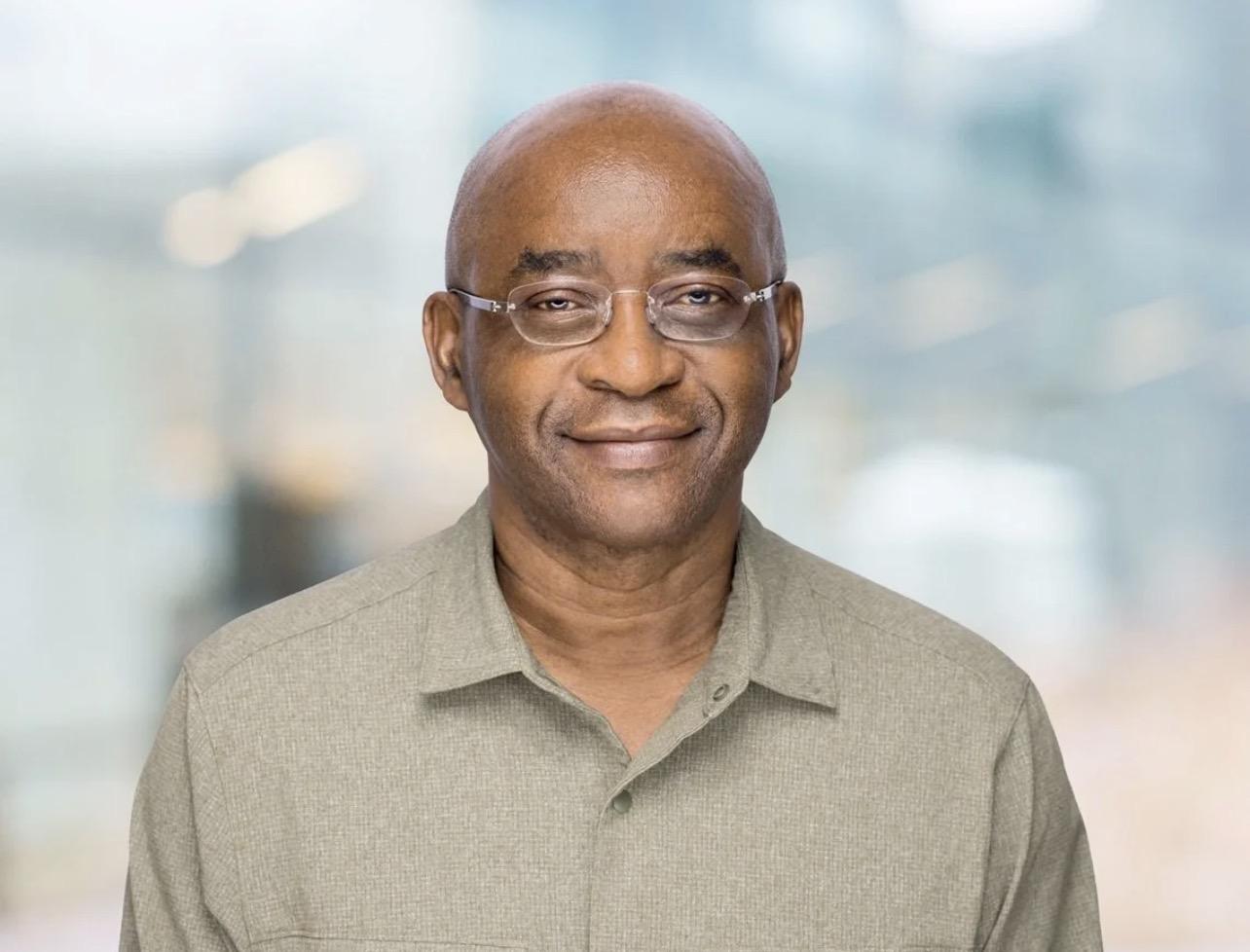
Strive Masiyiwa
There are some lives that read like ordinary success stories. A young man studies hard, starts a company, makes money, becomes famous, and joins the long list of people the world calls accomplished. But the story of Strive Masiyiwa is not that kind of story. His journey feels more like a long road walked through fire, faith, exile, stubbornness, and vision. It is the story of a man who did not simply build companies. He challenged systems, opened doors that had been shut for others, and helped change the face of telecommunications and philanthropy across Africa. He was born in Zimbabwe in 1961, later studied electrical and electronic engineering at Cardiff University, founded Econet, and went on to build a business and investment portfolio that stretches across more than 40 countries.
To understand Strive Masiyiwa, it helps to begin before the business empire, before the headlines, before the billionaire label. He was born into a turbulent time. Zimbabwe was not yet the nation it would later become. The region was shaped by colonial rule, racial tension, political uncertainty, and the struggle for self determination. As a child, he left the country with his family and spent important years growing up outside Zimbabwe. Sources on his early life note that his family lived in Zambia, and that he later studied in Scotland before continuing his university education in Britain. Those years away from home did not make him less Zimbabwean. In some ways, they sharpened his identity. They gave him distance, perspective, and perhaps the restlessness of someone who knows what it means to belong to a place while being separated from it.
By the time he completed his studies in electrical and electronic engineering, he had gained the kind of technical training that could have guaranteed a safe life somewhere far from struggle. He could have settled into a comfortable career abroad. Many would have done exactly that. But Strive Masiyiwa returned to Zimbabwe after independence in 1984. That choice alone says much about him. He came back at a time when the country was still defining itself. Hope was alive, but the structures of opportunity were uneven, and the state still controlled major sectors. He worked briefly as a telecoms engineer, enough to understand the system from the inside, enough to see both its possibilities and its limits. Soon, he left employment and started his first business in 1986. Official biographies note that this first step into business marked the beginning of nearly four decades of entrepreneurship and investment across several continents.
Many stories of great entrepreneurs celebrate the first big win. Masiyiwa’s story is more powerful because it lingers on the first serious resistance. Before Econet became a giant name, before mobile phones became everyday objects in African hands, he saw an opening in telecommunications. He understood that phone access could not remain a privilege. He believed private enterprise could help bring connectivity to ordinary people. Today that may sound obvious, but at the time it was a dangerous idea in a heavily controlled environment. Zimbabwe’s telecom space was protected by a state monopoly, and those who challenged monopolies did not usually receive warm handshakes and encouragement. They received rejection, pressure, and, in many cases, quiet destruction.
Masiyiwa asked for a license to operate a private mobile network. He was denied. That moment could have ended his dream. It would have ended many ambitions. But this is where the central force of his life becomes visible. He did not simply accept the refusal as fate. He went to court. He challenged the state. According to accounts of the dispute, he argued against the government monopoly and fought what became a years long legal battle that pushed him close to financial collapse. Wired’s reporting from 2001 described him as a man who kept confronting political power when most others knew better than to try. The legal fight lasted years, and official and widely cited summaries describe the eventual outcome as a landmark victory that helped break the monopoly and opened the sector to private capital.
That victory matters for more than business history. It matters because it changed what was imaginable. In Africa, many people have brilliant ideas, but not everyone can survive the systems built to frustrate innovation. Masiyiwa’s triumph was not merely that he got a license. It was that he proved power could be challenged lawfully and won against. He showed that entrepreneurship was not only about selling products or making profit. Sometimes it was also about confronting rules that blocked progress. The court battle almost broke him, but it also revealed the steel in his character. Some people are brave in speeches. Others are brave when they have already won. Masiyiwa had to be brave while losing money, while being opposed, while standing in uncertainty, and while not knowing whether history would remember him as stubborn or foolish.
When the door finally opened, he moved with purpose. Econet Wireless Zimbabwe became one of the foundations of a wider telecom story. Over time, Masiyiwa helped launch and invest in major ventures across different markets. Official biographies list companies and investments including Econet Wireless Zimbabwe, Econet Wireless Nigeria, Mascom in Botswana, Liquid Intelligent Technologies, Africa Data Centres, Sasai Fintech, and Cassava Technologies. This is not the profile of a man who built one lucky company and stopped there. It is the profile of a builder who kept scanning the horizon for the next frontier.
Nigeria became one of the chapters that showed how ambitious his vision had become. Reporting from the early 2000s noted that Econet secured one of Nigeria’s major GSM licenses at a time when the country represented a massive untapped telecom market. That move signaled that Masiyiwa was no longer thinking only as a Zimbabwean entrepreneur or even a Southern African businessman. He was thinking continentally. He saw Africa not as a patchwork of disconnected markets but as a place whose future would depend on networks, infrastructure, and access. He was not simply trying to participate in that future. He wanted to shape it.
What makes his rise remarkable is that it was never only about phones. The deeper pattern in his career is infrastructure. Connectivity. Systems. Platforms. First, it was telecommunications. Then it expanded into fiber, digital infrastructure, data centers, fintech, and broader technology platforms. Cassava Technologies today sits as one of the clearest expressions of that long term thinking. Official profiles describe him as founder and executive chairman of Econet Group and Cassava Technologies, with business interests and investments spanning Africa, Europe, India, Latin America, the Middle East, New Zealand, the United States, and more. He built outward from one hard won victory into an ecosystem.
Yet wealth alone does not explain why Strive Masiyiwa became such an influential figure. Africa has produced wealthy people before. The deeper reason his name travels so widely is that he linked enterprise with purpose in a way many found compelling. Alongside his wife Tsitsi Masiyiwa, he built a philanthropic tradition that became central to their public identity. Higherlife Foundation, founded in 1996 during the HIV and AIDS crisis, grew into a major platform for education, health, and community support. Higherlife says it was established to uplift vulnerable people and invest in opportunity, while official biographical material states that the Masiyiwa family foundations have supported more than 350,000 scholarships for African youth. Other reputable profiles also note that the foundation has supported very large numbers of children through scholarships and broader social programs over the years.
That part of the story matters because it changes how his success should be read. He did not present philanthropy as decoration after profit. In the Masiyiwa story, giving is woven into the architecture of achievement. The scholarships were not abstract numbers. They represented children who might have been left out of education, families who might have lost hope, and futures that might never have opened. When people speak of changing lives, it can become a tired phrase. But education is one of the few interventions that truly bends the direction of a life. To support schooling at that scale is to alter thousands upon thousands of stories that will never all be publicly told.
Faith also runs quietly but firmly through his story. Official biographies describe Strive and Tsitsi Masiyiwa as committed Christians, and many accounts of his leadership style point to personal discipline, moral conviction, and a refusal to normalize corruption. That reputation became part of the legend around him. In environments where business success is often assumed to require compromise, backroom deals, or surrendering principles, Masiyiwa’s public voice often insisted on integrity, long term thinking, and values. Whether one agrees with every statement he has made over the years, the consistency of that moral framing helped distinguish him. He was not just selling a business philosophy. He was trying to model a way of standing in the world.
His influence eventually spread far beyond commerce and philanthropy into global leadership circles. Current official biographies list board and advisory roles that include Netflix, the Gates Foundation, the National Geographic Society, and the UK Advanced Research and Invention Agency, among others. The Gates Foundation states that he has served on its board of trustees since January 2022. These roles suggest something important. Masiyiwa is not only seen as a businessman from Africa. He is regarded as a voice in discussions about technology, development, education, and global problem solving. His place at such tables reflects the authority he earned through decades of doing rather than merely speaking.
Recognition followed. Forbes continues to list him among Africa’s wealthy business leaders, with its 2026 profile estimating his net worth at about 2.2 billion US dollars. Official biographies also note honors from institutions such as Harvard, the American Academy of Arts and Sciences, Yale, and others, along with the 2025 David Rockefeller Bridging Leadership Award that he and Tsitsi Masiyiwa received. Time also included the couple in its 2025 philanthropy recognition. Awards do not define a life, but they do show how widely his work has been noticed.
Still, the most memorable thing about Strive Masiyiwa is not the list of boards or awards. It is the emotional center of his story. He is compelling because he lived through the test that many dreamers fear most. What happens when the gatekeepers say no. What happens when the law, the market, and the mood of the powerful all seem arranged against you. What happens when your idea is good but the system is hostile. His life answers with a kind of fierce clarity. You fight. You learn. You endure. You keep building. You refuse to let one closed door define the size of your future.
There is also something deeply African about his journey, though it speaks to the world. It is the story of return. He studied abroad, but returned home. He built in difficult conditions, but refused to believe difficulty meant impossibility. He saw a continent often described by outsiders in the language of lack, and he chose instead the language of potential. Networks could be built here. Capital could be mobilized here. Talent could be trained here. Infrastructure could be imagined here. Futures could be born here. His career has been, in many ways, an argument against the smallness imposed on African possibility.
That is why young entrepreneurs across Africa continue to study him. Not because every detail of his life can be copied. It cannot. Not because everyone will become a billionaire. They will not. But because his story offers something rarer than money. It offers a framework for courage. It teaches that skill matters, but conviction matters too. It teaches that technical knowledge can become power when joined with purpose. It teaches that setbacks are not always signs to stop. Sometimes they are the furnace in which endurance is formed. It teaches that when success finally comes, it can be used to widen the road for others.
In the end, Strive Masiyiwa’s life is not simply about becoming rich. It is about becoming difficult to silence. A child born in 1961 during a troubled era grew into a man who challenged monopoly, built one of Africa’s most consequential telecom and technology stories, and then used his influence to invest in education, health, and leadership on a global scale. His foundations have supported hundreds of thousands of scholarships. His companies have helped wire and connect markets. His voice has traveled from courtrooms and boardrooms to classrooms and international forums.
And perhaps that is the most fitting way to remember him. Not only as a billionaire. Not only as the founder of Econet. Not only as the chairman of Cassava Technologies. But as a man who refused to shrink when power told him to shrink. A man who looked at barriers and saw assignments. A man who understood that history rarely changes because someone waited politely for permission. It changes because someone decided that the future must be larger than fear.
Strive Masiyiwa’s story endures because it carries a lesson every generation needs. Dreams are fragile when they are only spoken. They become history when they are fought for.

Categories
Read More
Peller Peller is a Nigerian online streamer, TikTok personality, and content creator known for his energetic livestreams, comic style, and fast rise in Nigeria’s digital entertainment space. He gained wide public attention as one of the young creators who helped make livestreaming and short form online content more popular among Nigerian youth. Early Life and Background Peller was born...

He almost lost her… Not because he didn’t love her but because he stopped showing it. Days turned into weeks. Messages became shorter. The laughter faded. One evening, she said it quietly… “I feel forgotten.” That line hit him hard. Not long after, he found something simple a small, thoughtful gift. Nothing expensive. Just something that said,...

In a remarkable act of bravery, John Okeke, a vigilant security officer, thwarted a kidnapping attempt by a native doctor named Ezeani in Enugu State, Nigeria. While inspecting his property, Okeke noticed suspicious individuals with a young girl whose mouth was covered. After narrowly escaping an attack, he sought help from various community members, including a priest and an elderly man, but...

Chris Okotie Early Life Chris Okotie was born on June 16, 1958, in Lagos, Nigeria. He grew up in a disciplined and educated family. His father worked in the banking sector, which exposed him early to structure and responsibility. From a young age, Chris showed intelligence and confidence. He attended reputable schools in Lagos and later gained admission into the University of...

My name is Esther, and my life story is not one of comfort or easy smiles. It is a story written with tears, strength, and hope. I was born into a family that believed love was the greatest gift a child could receive. For some years, I enjoyed that love fully, especially from my mother, who was my first teacher and my best friend. Sadly, life changed when she passed away. Her death marked the...

