Über
Über
Where Footsteps Became Echoes of History The Story of Ouidah Route of Slaves and the Memory of a People
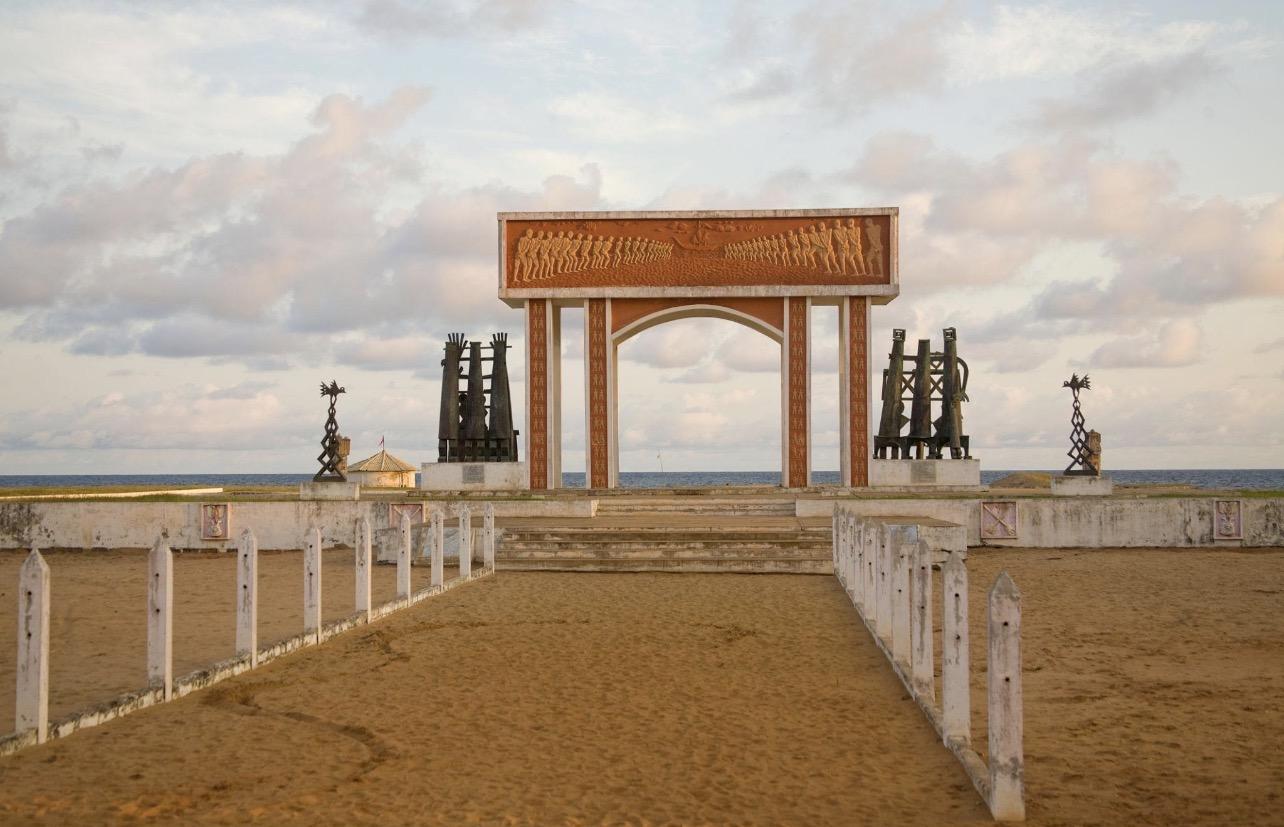
Ouidah Route of Slaves
In the quiet coastal town of Ouidah in the Republic of Benin stands one of the most powerful historical reminders of human suffering, survival, and memory. The place is known as the Route of Slaves, a path of about four kilometers that once carried thousands of captured African men, women, and children from the slave markets of Ouidah to the shores of the Atlantic Ocean.
Today the path is marked with monuments, statues, and memorial structures that tell the story of one of the darkest periods in human history. These monuments do not simply decorate the landscape. They carry the weight of memory, pain, and truth. Every step along the route reflects a moment that once changed lives forever.
The Route of Slaves is not just a road. It is a living historical testimony of the transatlantic slave trade, a place where silence speaks louder than words and where the past continues to shape the present.
The Rise of Ouidah as a Slave Trading Port
To understand the importance of the Route of Slaves, one must first understand the history of Ouidah itself.
Ouidah became an important town in the seventeenth and eighteenth centuries during the rise of the Kingdom of Dahomey, a powerful West African kingdom that once controlled the region now known as Benin. The kingdom had strong military power and an organized political structure.
During this time European traders began arriving along the West African coast in search of goods such as ivory, pepper, palm oil, and gold. However, the demand that soon overshadowed all others was the demand for human labor.
European traders from Portugal, France, Britain, and Brazil built trading posts along the coast. Ouidah became one of the most important slave ports in West Africa.
Captured Africans were brought from different parts of the region and gathered in Ouidah before being transported across the Atlantic Ocean.
Historians believe that more than one million Africans passed through Ouidah during the transatlantic slave trade. Many of them would never see their homeland again.
The Slave Market of Ouidah
The journey along the Route of Slaves began at the slave market in the center of Ouidah.
Here enslaved people were gathered after being captured during wars or raids in different parts of West Africa. Some were sold by local leaders, while others were taken by force.
In the market they were inspected and examined by slave traders who treated them like commodities rather than human beings. Buyers checked their teeth, muscles, and physical strength in the same way livestock might be inspected.
Families were often separated during these sales. Parents were taken away from children, husbands separated from wives, and siblings scattered across different ships.
For many captives this was the moment when their lives were permanently changed.
The Tree of Forgetfulness
One of the most haunting landmarks along the Route of Slaves is the Tree of Forgetfulness.
According to historical accounts, enslaved men and women were forced to walk around this tree before beginning the final journey to the ocean.
Men were made to walk around it nine times while women walked around it seven times.
Slave traders believed that this ritual would cause the captives to forget their past lives, their families, their cultures, and their identities.
It was an attempt to erase memory itself.
But history proved otherwise. Even after crossing oceans and generations of suffering, many descendants of enslaved Africans still remember their roots and continue searching for their ancestral heritage.
The Tree of Forgetfulness stands today as a reminder of how powerful memory truly is.
The Journey Along the Router
From the slave market the captives were forced to walk along a sandy path leading toward the coast.
The journey was only about four kilometers long, but for those walking it under chains and armed supervision it must have felt endless.
Along the path guards watched carefully to prevent escape. Many captives were already weak from long marches from inland regions.
Some collapsed along the way due to exhaustion, illness, or injury. Those who could not continue were sometimes abandoned.
The path became a silent witness to countless stories of suffering.
Today statues along the Route of Slaves represent chained men, women carrying children, and guards standing over them. These sculptures help visitors imagine the painful reality of that journey.
The Tree of Return
Another important monument along the route is the Tree of Return.
While the Tree of Forgetfulness symbolized the forced attempt to erase identity, the Tree of Return represents hope and spiritual connection.
Tradition says that enslaved Africans were made to circle this tree before boarding ships so that their spirits would one day find their way back home.
For many people in the African diaspora this belief carries deep meaning.
Descendants of enslaved Africans from countries such as Brazil, Haiti, Cuba, and the United States often visit Ouidah to reconnect with their history.
Standing near the Tree of Return is often an emotional experience for visitors who feel they are reconnecting with ancestors who once walked that same path centuries ago.
The Final Walk to the Ocean
At the end of the route the captives reached the beach where slave ships waited in the Atlantic Ocean.
Before boarding the ships many captives were held in barracks or temporary enclosures near the shore.
From there they were loaded onto boats that carried them to larger ships anchored offshore.
These ships were part of the transatlantic slave trade network that transported millions of Africans to plantations in the Americas.
Conditions aboard the ships were extremely brutal.
Captives were packed tightly below deck with little space to move. Many died during the journey due to disease, hunger, dehydration, or abuse.
Historians estimate that millions of Africans died during these voyages across the Atlantic Ocean.
For those who survived, the arrival in the Americas marked the beginning of a life of forced labor and hardship.
The Door of No Return
Perhaps the most powerful monument along the Route of Slaves is the Door of No Return.
This large memorial arch stands on the beach facing the Atlantic Ocean. It marks the point where enslaved Africans were loaded onto ships and taken away from their homeland.
The structure was built in 1995 as a memorial to honor the victims of the slave trade.
Carved images on the monument show enslaved men and women walking in chains.
The arch stands not only as a reminder of departure but also as a symbol of remembrance and reflection.
For many visitors the Door of No Return represents the moment when millions of Africans were forced into a journey that changed world history.
Yet today the monument also symbolizes resilience and survival.
The Cultural Memory of Ouidah
Ouidah remains one of the most historically significant places connected to the transatlantic slave trade.
Every year people from around the world visit the town to learn about its history and honor the memory of those who suffered.
Festivals and ceremonies are sometimes held to remember the victims and celebrate African heritage.
Scholars, historians, and members of the African diaspora continue studying the history of the slave trade and its lasting effects on societies across the world.
Ouidah has become a place of education, reflection, and reconciliation.
The Monuments Along the Route
The modern Route of Slaves includes several monuments and sculptures created by artists to help tell the story of this historical path.
Each monument represents different aspects of the slave trade experience.
Some sculptures show chained figures walking under the watch of guards. Others depict spiritual symbols connected to African traditions and beliefs.
These artworks were designed to preserve historical memory and encourage visitors to reflect on the lessons of the past.
Walking along the route today allows people to experience history in a powerful and personal way.
Why the Route of Slaves Is Important
The Route of Slaves in Ouidah is important because it helps the world remember a painful chapter in human history.
The transatlantic slave trade lasted for more than four hundred years and affected millions of lives across Africa, Europe, and the Americas.
Places like Ouidah remind us that history is not only about victories and achievements. It is also about suffering, injustice, and the struggle for human dignity.
By preserving these monuments, Benin helps ensure that future generations will continue learning about this past.
The Route of Slaves stands as a powerful reminder of the consequences of greed, power, and inequality.
But it also highlights the resilience of African cultures and the strength of communities that survived despite unimaginable hardship.
A Path That Still Speaks
Today when visitors walk along the sandy path from Ouidah to the Atlantic Ocean they follow the same road once walked by countless enslaved Africans centuries ago.
The wind from the ocean blows softly across the monuments.
The statues stand quietly along the path.
And the Door of No Return looks out over the endless sea.
Yet the story does not end there.
For many descendants of enslaved Africans the journey has become a path of return rather than departure.
They come back to Ouidah to reconnect with their roots and honor their ancestors.
The Route of Slaves has become a place where history, memory, and identity meet.
It reminds the world that even in the darkest chapters of history, the human spirit can survive, remember, and continue searching for justice and understanding.

Kategorien
Mehr lesen
Trailblazing Nigerian referee Yemisi Akintoye has been selected by the Confederation of African Football (CAF) to officiate at the 2025 Women’s Africa Cup of Nations (WAFCON) in Morocco. Hailing from Lagos, Akintoye’s appointment places her among Africa’s top female referees and highlights Nigeria’s growing influence in global women’s football. Her selection is a...

Jumoke Odetola Jumoke Odetola is a Nigerian actress and producer known for her emotional performances in Yoruba-language films and Nollywood productions. With her calm personality and natural acting style, she has become one of the respected actresses in contemporary Nigerian cinema. Early Life and Background Jumoke Odetola was born on October 16, 1983, in Lagos State,...

Chioma Adeleke Chioma Avril Rowland Adeleke, popularly known as Chioma Adeleke, is a Nigerian chef, entrepreneur, and public figure who rose to national and international prominence through her relationship with Afrobeats superstar Davido. Beyond the spotlight of celebrity marriage, Chioma has carved out her own identity as a culinary enthusiast and a resilient woman whose life story...

Before Lagos became a city of endless traffic, towering bridges, and restless ambition, it was Eko a quiet but strategic island settlement surrounded by creeks, mangroves, and the Atlantic Ocean. Fishermen cast their nets into calm waters, traders paddled wooden canoes through narrow channels, and authority rested in the hands of local chiefs loyal to a distant but powerful kingdom. Eko: The...
Muhammad Ali: Biography The Fighter Who Shook the World Introduction Muhammad Ali was not just a heavyweight champion. He was a cultural force, a political voice, a symbol of pride, resistance, faith, controversy, and resilience. His fists won titles, but his words reshaped conversations about race, religion, war, and identity in America and around the world. Born as Cassius Marcellus Clay...