About
About
Philip Kyeswa of Uganda and the Story of the Peec REM Innovation
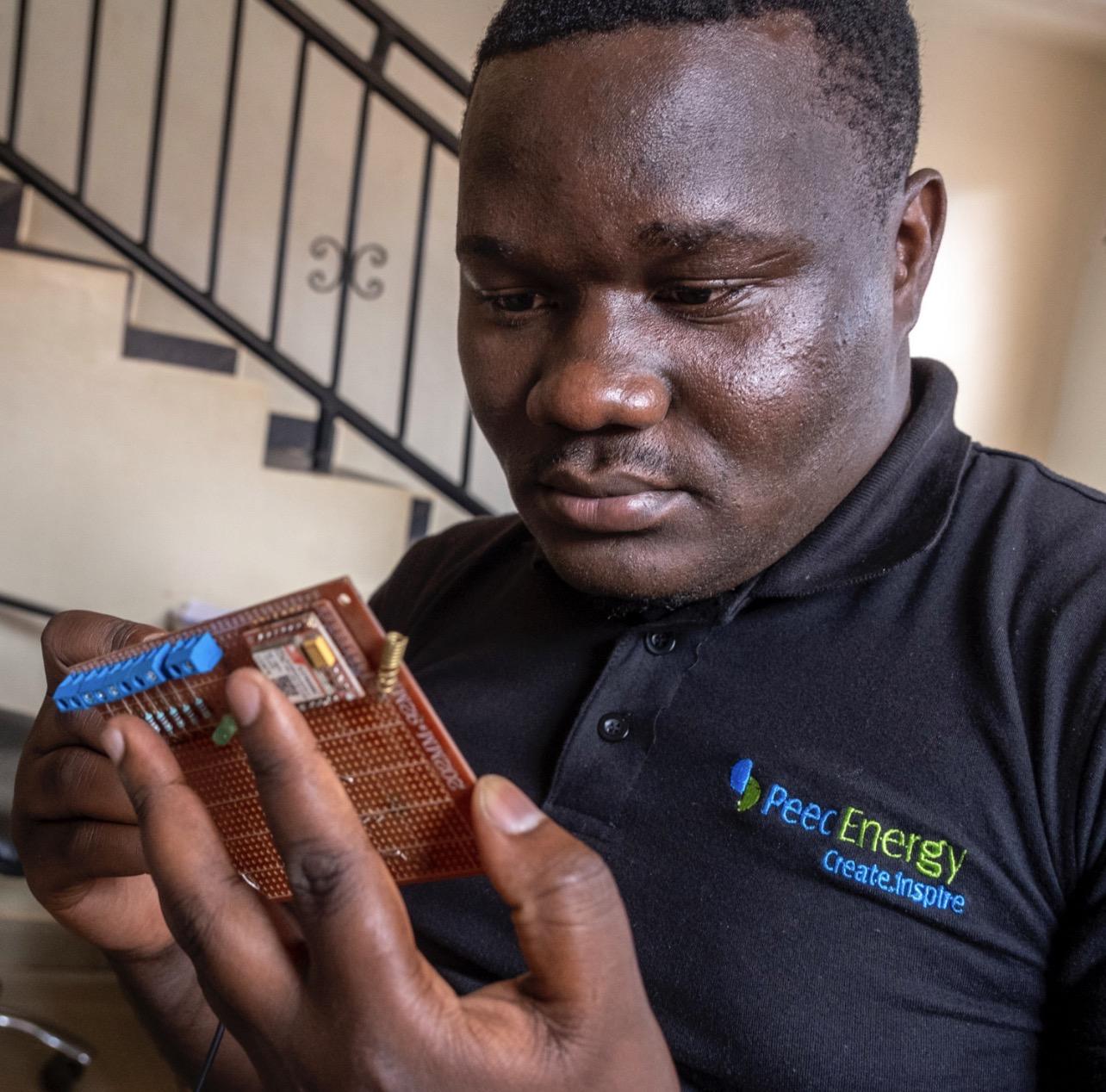
Philip Kyeswa
Philip Kyeswa is one of the emerging innovators from Uganda whose work has drawn attention in the fields of technology, electronics, and creative engineering. His name became associated with the concept known as Peec REM, an innovative idea that represents creativity, experimentation, and the determination of an African mind to solve real problems through technology. The story of Philip Kyeswa is not just the story of a person who built a concept. It is the story of curiosity, persistence, and the desire to contribute something meaningful to society.
Early Life and Background
Philip Kyeswa was born in Uganda, a country in East Africa known for its cultural diversity, energetic youth population, and growing technology scene. Like many African innovators, his journey began in a modest environment where resources were limited but imagination was limitless.
From an early age, Philip displayed unusual curiosity about how things worked. While other children played with toys, he was often interested in opening radios, small electronics, and household gadgets just to understand the mechanisms inside them. This habit sometimes caused trouble because he would dismantle devices that others expected to keep working. Yet this curiosity laid the foundation for his future path as a creative inventor.
Growing up in Uganda exposed him to both challenges and opportunities. The country had many bright minds but often lacked access to advanced research tools or large technological laboratories. Instead of discouraging him, these limitations pushed Philip to become more resourceful. He learned how to experiment with whatever materials he could find. Old wires, broken circuit boards, and discarded electronics became learning tools.
During his school years, teachers noticed that he was particularly drawn to science subjects. Physics, mathematics, and basic electronics fascinated him. He enjoyed understanding how energy flows through circuits and how electronic components interact to produce useful results. While many students studied these subjects simply to pass exams, Philip treated them as tools for discovery.
The Birth of an Innovator
The journey toward the invention known as Peec REM did not happen overnight. It was the result of years of thinking, testing, failure, and improvement.
As Philip grew older, he became more interested in designing systems that could improve everyday life. Uganda, like many developing countries, faces challenges related to energy efficiency, technology access, and modern infrastructure. These challenges inspired him to think about solutions that could work within local environments.
He began experimenting with electronic signal control, energy management, and digital processing ideas. These experiments slowly shaped his thinking about how technology could be simplified while still remaining powerful.
At this stage of his life, Philip developed the mindset that innovation does not require expensive laboratories. Instead it requires creativity, patience, and the courage to test new ideas even when others doubt them.
The Idea Behind Peec REM
The concept called Peec REM emerged from Philip Kyeswa’s deep interest in electronic processing and system optimization. The name Peec REM represents a technological framework that focuses on improving the way electronic systems manage signals, respond to inputs, and perform intelligent operations.
The innovation revolves around a system architecture designed to enhance electronic responsiveness and energy management. In simple terms, Peec REM focuses on making electronic systems more efficient, adaptive, and intelligent.
Philip imagined a system where electronic components could communicate in a more organized manner, allowing devices to operate with improved speed and reliability while using less energy.
The Peec REM concept combines ideas from electronic circuit design, signal regulation, and responsive system behavior. It explores how circuits can be designed to automatically regulate themselves according to different environmental or operational conditions.
This means that devices using Peec REM principles could potentially adapt to changes such as temperature variation, power supply fluctuation, or signal noise without losing performance.
Development of the Technology
Turning the Peec REM idea into a working concept required many years of experimentation.
Philip spent long periods testing circuit arrangements and developing prototypes. Some experiments failed completely, while others showed promising results. Each failure became a lesson that helped him refine the design.
He used a wide range of electronic components including resistors, capacitors, transistors, and programmable modules. By carefully arranging these components and studying their behavior, he gradually shaped the system architecture behind Peec REM.
One of the key goals was to build a system that could operate reliably even in environments where power supply is unstable. In many parts of Africa, electrical systems can experience fluctuations or interruptions. A resilient electronic system could therefore become extremely valuable.
Philip focused on creating circuits capable of stabilizing signals and maintaining consistent performance. His research included studying how signals propagate through electronic pathways and how interference can be minimized.
Another important aspect of the development was responsiveness. The Peec REM approach aimed to make systems react faster to inputs. In modern technology, responsiveness is crucial because devices must process information quickly and accurately.
By designing smarter signal routing patterns, Philip sought to improve the speed at which systems could analyze and respond to information.
Potential Applications of Peec Red
The Peec REM innovation has potential applications across several technological fields.
One possible application lies in smart electronics. Devices that incorporate Peec REM concepts could manage energy more efficiently and maintain stability even when conditions change.
Another application involves communication systems. Electronic networks rely heavily on signal clarity and processing speed. The Peec REM design principles may help reduce interference and improve signal quality.
Automation systems could also benefit from the technology. Machines that depend on accurate electronic responses require reliable circuit behavior. A system that automatically adjusts to maintain stability can increase reliability and performance.
In addition, Peec REM may contribute to improvements in energy sensitive devices. Electronics that consume less power while maintaining high performance are increasingly important in the modern world.
This includes portable devices, smart sensors, and remote monitoring systems.
Challenges Along the Way
Like many innovators in developing regions, Philip Kyeswa faced significant challenges during his journey.
Access to funding was one of the major obstacles. Building prototypes and conducting experiments requires equipment, components, and tools. Without strong financial backing, progress can be slow.
Another challenge was recognition. Many talented inventors struggle to gain visibility for their work, especially when operating outside major global technology centers.
Despite these difficulties, Philip continued developing his ideas with determination. He believed that innovation is driven by persistence rather than convenience.
He also faced skepticism from people who doubted whether such a concept could succeed. However, history shows that many great inventions were initially dismissed before gaining acceptance.
Inspiration for Young African Innovators
The story of Philip Kyeswa serves as inspiration for young Africans who dream of creating technology.
His journey demonstrates that innovation does not require perfect conditions. What matters most is curiosity, dedication, and the willingness to learn.
Africa is home to millions of creative young minds. Many of them grow up surrounded by challenges that require practical solutions. This environment can actually inspire unique innovations that address real needs.
Philip’s work with Peec REM reflects the growing movement of African technological creativity. Across the continent, engineers, programmers, and inventors are building solutions that respond to local challenges while also contributing to global technology development.
The Importance of Local Innovation
Local innovation plays a vital role in economic and technological development.
When inventors like Philip Kyeswa create new ideas, they contribute to knowledge that can lead to new industries, businesses, and educational opportunities.
Technological innovation also helps countries become more self reliant. Instead of depending entirely on imported solutions, local engineers can design systems tailored to their own environments.
Peec REM represents an example of how local thinking can generate technological frameworks that may have broader applications.
The Future of Peec REM
The future of the Peec REM concept depends on continued research, testing, and collaboration.
Technology evolves rapidly, and new ideas often grow through partnerships between engineers, researchers, and institutions. By sharing knowledge and refining the design, Peec REM could develop into more advanced systems.
Further experimentation may reveal additional applications that extend beyond the original vision.
It is possible that future engineers will build upon Philip Kyeswa’s work, improving and expanding the concept into new technological solutions.
Innovation rarely stops with one inventor. Instead it becomes a chain of ideas where each generation adds new improvements.
Legacy of Determination
The most important lesson from the story of Philip Kyeswa is determination.
Inventors often spend years working quietly before their ideas become widely recognized. Success requires patience and resilience.
Philip’s dedication to developing the Peec REM concept reflects the spirit of innovation that exists across Africa.
His journey reminds us that great ideas can emerge from any part of the world when individuals dare to experiment and challenge existing limitations.
Technology does not belong to one country or region. It is a universal language of creativity and problem solving.
Conclusion
Philip Kyeswa stands as a symbol of emerging African innovation. Through his work on the Peec REM concept, he has demonstrated how curiosity and persistence can lead to new technological ideas.
His story highlights the power of creativity in environments where resources may be limited but imagination is abundant.
The development of Peec REM reflects a vision of smarter electronic systems capable of improved responsiveness, energy management, and signal stability.
While the journey of innovation continues, the work of Philip Kyeswa already contributes to the growing narrative of African inventors who are shaping the future of technology.
As more young minds become inspired by stories like his, the continent will continue to produce inventors, engineers, and creators who push the boundaries of what is possible.
Innovation begins with curiosity, grows through experimentation, and succeeds through persistence. The story of Philip Kyeswa and the Peec REM concept captures all three elements, making it a powerful example of how determination can transform an idea into a technological vision.


Categories
Read More
The Indigenous People of Biafra (IPOB) has accused the British government of applying double standards after celebrating the release and return of British-Egyptian activist Alaa Abd el-Fattah, while IPOB leader Nnamdi Kanu remains detained in Nigeria. The group said Britain’s swift intervention in Abd el-Fattah’s case contrasts sharply with what it described as minimal action over...

“Wars are won by well-trained personnel who know how to employ their platforms effectively.” — Chief of the Air Staff, Air Marshal Hasan Bala Abubakar Under the visionary leadership of Air Marshal Hasan Bala Abubakar, the Nigerian Air Force (NAF) is undergoing a powerful transformation — one centered on Deliberate Training and Mission-Oriented Force Development. This is...

Adebayo Salami Adebayo Salami, popularly known as Oga Bello, is one of the most respected veterans in the Nigerian film industry. Born on May 9, 1953, in Lagos State, Nigeria, he grew up in a culturally rich Yoruba environment that would later shape his passion for storytelling and performance. From a young age, Salami displayed a natural flair for drama, often participating in school...

Big news for Africa’s industrial landscape! According to a recent report by The African Exponent, Nigeria has been ranked 3rd among the top 10 manufacturing countries in Africa, solidifying its place as a growing force in the continent’s economic future. The report highlights Nigeria's evolving industrial sector and its potential for investment, innovation, and job creation —...

Renowned journalist and PDP chieftain, Dele Momodu, has issued a sobering warning about the state of Nigeria’s democracy, claiming the country is sliding dangerously toward civilian dictatorship. In his statement, Momodu expressed deep concern over the growing centralization of power, suppression of dissent, and a political climate that increasingly mirrors the authoritarian tendencies of...