About
About
Juveline Ngum Ngwa and BleagLee: The Cameroonian Innovator Turning Waste Into Clean Energy and Climate Hope
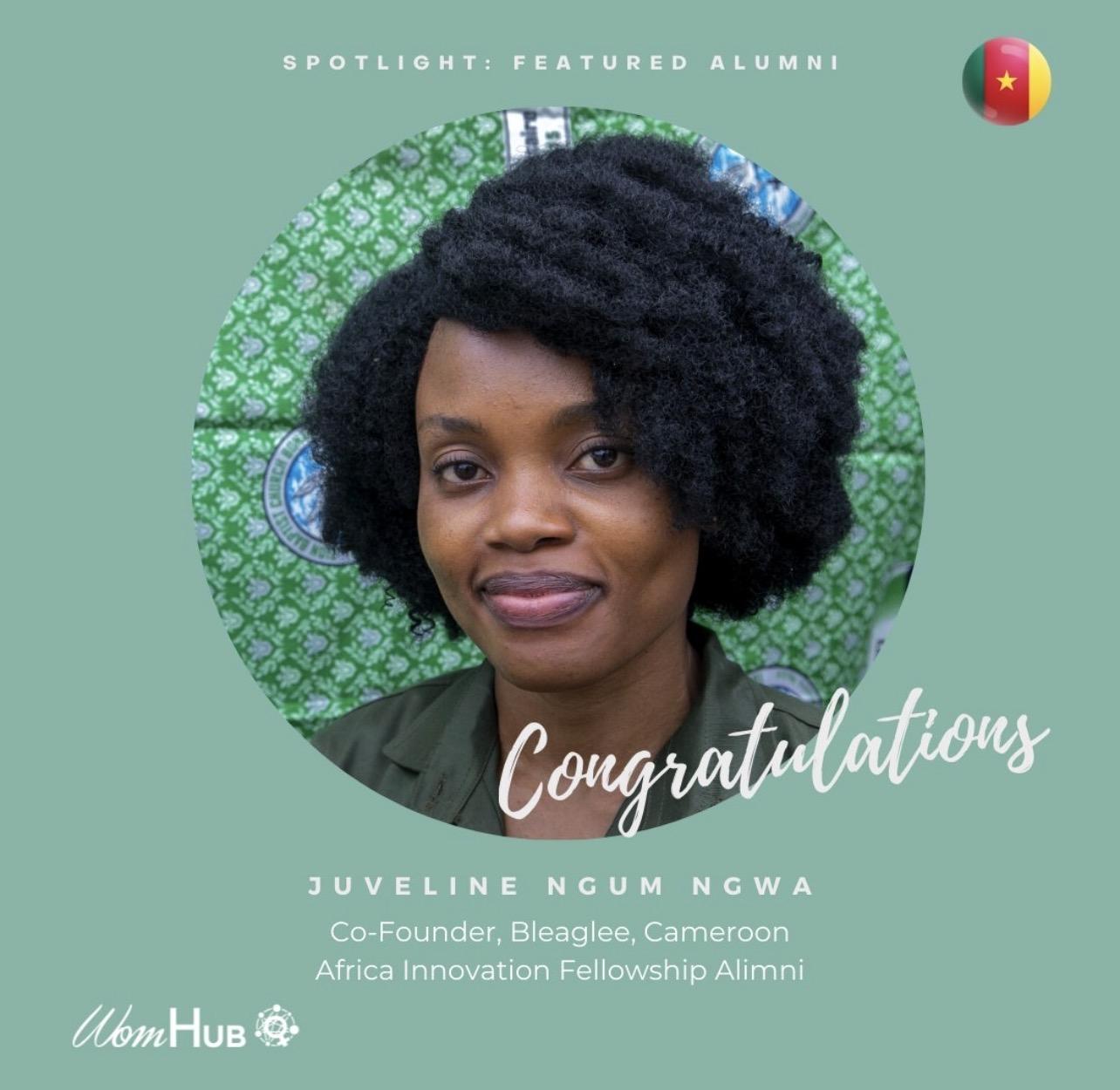
Juveline Ngum Ngwa
Juveline Ngum Ngwa’s story begins with a problem many people in African cities know too well. Waste piles up where it should not be. Drainage channels become blocked. Floods become more destructive. Smoke from dirty cooking fuels fills homes and harms the lungs of women and children. What many people see as scattered rubbish, she saw as a system failure and also as an opportunity. Out of that vision came BleagLee, a Cameroonian cleantech enterprise built to turn waste into useful products, cleaner cooking systems, jobs, and climate solutions. BleagLee was founded in 2019, and Juveline emerged as its co founder and CEO, leading a mission centered on giving economic value to waste while reducing the dangers caused by poor disposal and weak recycling systems.
Her background helps explain why her solution did not stop at a simple recycling idea. The Royal Academy of Engineering notes that she worked in metals and materials engineering before focusing more deeply on sustainability, including climate change, recycling, and renewable energy. Another profile states that she also studied marketing and environmental management. These different strands matter because BleagLee is not just a technical invention, and not just a social project. It sits at the meeting point of engineering, environmental thinking, business development, and community organizing. That is part of what makes her work stand out. She did not only want to build a device. She wanted to build a system.
To understand BleagLee, it helps to understand the scale of the waste challenge behind it. According to the Africa Prize profile on Juveline, metal scrap makes up a major share of Cameroon’s annual waste stream, while poor waste management also contributes to broader environmental and public health costs. The Global Center on Adaptation adds that poorly disposed waste in drainage channels is a major cause of flooding in Douala and in many western parts of Cameroon. Limited waste collection, inadequate recycling facilities, insufficient drainage systems, and low public awareness all combine to turn a city sanitation issue into a climate vulnerability issue. In other words, this is not just about untidy streets. It is about flood risk, pollution, lost economic value, and unsafe living conditions, especially for lower income communities.
BleagLee was created to answer that challenge with practical innovation. On one side, the company uses specialized software, drones, and artificial intelligence driven systems to detect waste quickly on drainage channels, waterways, streets, fields, and other physical spaces. Instead of sending teams to spend long hours driving around to survey waste manually, the company’s technology helps locate concentrations of waste more rapidly and at lower cost. On the other side, it organizes collection, sorting, and processing so that the waste becomes a raw material for new products and energy solutions. That dual approach matters. Detection without recovery leaves the problem unsolved. Recovery without good detection wastes time and money. BleagLee tries to connect both.
One of Juveline’s most notable inventions through BleagLee is the smart cooking system highlighted by the Africa Prize. This system is made entirely from recycled materials and includes a smokeless cook stove built from metal scraps, a clean cooking fuel produced in solar powered biodigesters from plastic and agricultural waste, and a digital platform that allows users to track and offset their carbon footprint. The company has also been described as producing sustainable baking ovens from recycled metals and smokeless stoves crafted from recycled scrap combined with cooking fuel derived from biomass waste. What ties these products together is a single idea: waste should not remain waste when it can become a cleaner, safer, and more valuable tool for daily life.
This invention is important because it responds to more than one need at once. Traditional cooking methods in many communities rely on firewood, charcoal, or smoky stoves that create severe indoor air pollution. The Africa Prize profile notes that the BleagLee stove can be supported by sensors and timers powered by artificial intelligence, including functions that can automatically switch the stove off when food is ready and monitor air quality. The same source places the innovation against the wider crisis of indoor air pollution, which is especially dangerous in lower income settings. BleagLee’s cooking system is therefore not only an environmental product. It is also a public health intervention, a household cost intervention, and a climate intervention. It aims to reduce smoke exposure, cut waste, lower carbon emissions, and improve the cooking experience all at once.
Another strong part of the invention is inclusiveness. The Africa Prize profile says Juveline and her team wanted the solution to be accessible to users with disabilities, which shaped the mobility and assistive features of the cookstove. That detail is easy to overlook, but it says a lot about the philosophy behind the product. Many innovations are celebrated for their novelty while ignoring who gets left out. BleagLee’s design approach suggests a different mindset. Technology should not only be clever. It should also be usable, humane, and responsive to the people who need it most. That makes Juveline’s work feel less like a laboratory experiment and more like grounded engineering with social purpose.
BleagLee’s invention expanded beyond cooking systems into a wider circular economy model. The Tony Elumelu Foundation profile explains that the company collects and processes plastic, electronic, and agricultural waste. Plastic waste is turned into pellets sold to manufacturing firms. Agricultural waste is converted into clean cooking briquettes, biochar, compost, and processed packaging materials. Electronic waste is collected and sold onward to e recycling companies. This matters because it shows that Juveline’s innovation is not a single product standing alone. It is a chain of value creation. Waste is tracked, recovered, processed, sold, and reused in different markets. Instead of treating waste as a final stage, BleagLee treats it as the first stage in another product life cycle.
That idea of value creation is at the emotional core of Juveline’s story. Many entrepreneurs begin with comfort and then pursue scale. Her story appears to move in the opposite direction. She began with what society often ignores: clogging drains, smoke filled kitchens, discarded metal, agricultural residue, and the kinds of environmental burdens that often sit closest to the poor. BleagLee’s name has become associated with gathering value from waste, and that phrase captures the spirit of the work. There is a practical side to it, because recycled outputs can be sold. There is also a philosophical side. She is asking people to see hidden worth where they were trained to see only dirt, danger, and inconvenience.
The company also pays close attention to the way climate change intersects with urban disorder. In Cameroon, especially around flood prone places, unmanaged waste can make rainfall events more destructive by obstructing water flow. The Global Center on Adaptation interview places this problem at the center of BleagLee’s response. That means Juveline’s work is not only about cleaning up after environmental damage. It is part of climate adaptation, because it reduces the conditions that worsen flood risk. This is one reason BleagLee received recognition in adaptation focused circles. It is not merely recycling for appearance. It is waste management as resilience building.
Recognition began to follow. A profile from We Are Tech reports that in 2019, through BleagLee, Juveline developed a project to produce sustainable baking ovens from recycled metals and won first prize in the economic development category at the third YouthConnekt Africa Summit in Kigali. That early award matters because it suggests the company’s ideas had practical appeal from the beginning. It also gave public validation to a vision that might have seemed unusual at first. Turning scrap and waste streams into cleaner stoves and ovens does not sound glamorous in the world of startup hype. But in many African communities, it is exactly the sort of grounded innovation that can change daily life.
Her achievements did not stop there. The same source says BleagLee also won the YouthAdapt Solutions Challenge and the AFD Digital Challenge Awards in 2021. The Global Center on Adaptation confirms that Juveline Ngum Ngwa was among fifteen winners announced under the YouthADAPT Challenge during COP26 in Glasgow, from a pool of more than two thousand applications across forty five African countries. That is significant because it places her among a highly competitive group of young African innovators building adaptation solutions. It suggests that institutions focused on climate and development saw real promise in BleagLee’s blend of technology, waste management, and community impact.
Her profile rose further through the Africa Prize for Engineering Innovation. The Royal Academy of Engineering featured her in its 2022 cohort and later highlighted her in anniversary materials celebrating the prize’s impact across the continent. The Africa Prize is especially notable because it focuses on engineering solutions with commercial and social promise. Juveline’s inclusion there helped frame BleagLee not just as a local initiative, but as an African innovation worth watching within a broader continental ecosystem of invention. It also emphasized that her work belongs in serious conversations about engineering, not only in social enterprise discussions.
By 2025, BleagLee had gained even wider recognition. The Lipman Family Prize identified it as a 2025 winner and described the organization as a trailblazer in sustainable waste management. The prize highlighted BleagLee’s use of AI driven waste tracking systems, community engagement, innovation, and transferability. That final point, transferability, is powerful. It suggests that the model Juveline has built in Cameroon may be adaptable elsewhere. When an innovation can travel, it stops being a local fix and starts becoming a framework. Waste, flooding, smoky cooking, and low value disposal systems are not unique to one city or one country. BleagLee’s methods may speak to much broader needs across the continent and beyond.
Another major dimension of the story is the company’s social model. According to the Tony Elumelu Foundation and the Equator Initiative, BleagLee works with waste collectors, youth environmental groups, rural communities, and smallholder farmers. It also uses incentive systems such as giving seedlings in exchange for recyclable waste, then encouraging those seedlings to be planted for both income and environmental restoration. The Equator Initiative says the organization uses this model to help reduce fossil fuel use, promote clean energy, create jobs and livelihoods, and restore forests and agricultural ecosystems. It further reports that many participants and beneficiaries are women, and that women form a large share of the farmers and team members involved. This broadens Juveline’s innovation even more. She is not just manufacturing products. She is designing participation.
That participation matters because climate innovation often fails when it arrives as a top down technical package with no local roots. BleagLee appears to work differently. Community members help identify, collect, and exchange waste. Eco groups support recovery. Farmers are brought into a system where waste and seedlings are linked. Alternative livelihoods are offered in some cases to people whose previous means of survival contributed to environmental degradation. The Equator Initiative even notes efforts to train illegal tree poachers in recycling based clean fuel activities. Whether one views that as environmental justice, local development, or practical transition policy, it shows a willingness to deal with the economic realities behind ecological harm.
This is where Juveline’s story becomes especially compelling. BleagLee is not built on a fantasy that people will protect the environment simply because they are told to care. It is built on the recognition that people need alternatives that make economic sense. If waste can be exchanged for seedlings, converted into fuel, turned into stoves, sold as pellets, or linked to jobs, then environmental action stops being a moral lecture and becomes part of livelihood. That is one of the strongest things about her invention. It does not only diagnose a problem. It changes incentives around the problem.
The company’s own website also claims a patented software design for automatically and rapidly detecting waste in drainage channels, waterways, and other sites. It frames this technology as a way to reduce logistics costs and increase the efficiency of waste data collection. While large impact figures on the site should be read as organizational claims, the direction is clear: BleagLee wants to combine digital intelligence with on the ground circular economy work. That combination is increasingly important in African cities, where infrastructure gaps and climate pressures make manual systems slow and expensive. Juveline’s approach suggests that environmental management in the future will need both community labor and smart monitoring tools.
Even the diversity of materials BleagLee works with tells a story. Metal scraps become smokeless stoves or ovens. Plastic and agricultural waste become fuel or industrial inputs. Electronic waste enters formal recycling channels. Biomass becomes briquettes, biochar, or compost. Seedlings become a bridge between waste recovery and ecological restoration. Each stream represents a refusal to accept the idea that useful life ends when a product is discarded. In that sense, Juveline is part engineer, part systems thinker, and part storyteller. She tells a new story about matter itself. The old story says rubbish is the end. Her story says rubbish is a beginning waiting for design.
Her journey also reflects the growing importance of African women in climate and technology leadership. The public images and profiles connected to Juveline often present her not just as a founder, but as a visible symbol of practical African innovation. She belongs to a generation of entrepreneurs who are moving beyond imported solutions and instead designing responses rooted in local realities. Cameroon’s waste problem is not identical to Europe’s. Cooking energy use in many African households is not identical to what one finds in wealthier countries. Flooding linked to clogged drains in informal settlements requires another kind of thinking. Juveline’s innovation feels credible precisely because it starts where people live.
There is also a moral clarity in her work. Waste management is often treated as low status labor, something people want done but do not want to think about. BleagLee pushes back against that invisibility. It treats waste as a design challenge, a health challenge, a jobs challenge, and a climate challenge. It also gives dignity to the idea that cleaning up the material leftovers of society can itself be a site of innovation and leadership. That is important for young Africans watching her story. She did not wait for a fashionable sector to become meaningful. She entered a neglected sector and made it impossible to ignore.
What Juveline invented, then, is bigger than one object. Yes, BleagLee includes concrete inventions such as smokeless stoves from recycled metal, clean cooking fuel from plastic and agricultural waste, waste detection software, and waste recovery systems using drones and AI. But the deeper invention is a model that links technology, circular economy principles, public health, flood reduction, community participation, and livelihoods. It is a model that says environmental solutions in Africa do not need to copy foreign templates blindly. They can emerge from local observation, local materials, and local urgency while still being sophisticated enough to win international recognition.
In many ways, her story is still being written. The awards show momentum, not completion. The systems she is building will still face the hard realities every founder meets: finance, scale, logistics, regulation, partnerships, equipment, and trust. But what has already been established is substantial. BleagLee has been recognized by engineering, climate adaptation, entrepreneurship, and social impact institutions. It has demonstrated that waste can become stoves, fuel, jobs, and cleaner streets. It has shown that technology can help identify and manage waste more efficiently. It has drawn a line between environmental neglect and economic possibility, then stepped across that line with purpose.
So when people speak about Juveline Ngum Ngwa of Cameroon, they are not only speaking about a founder with awards. They are speaking about someone who looked at the overlooked and decided it deserved invention. They are speaking about a woman who saw blocked drains and thought about climate adaptation, who saw metal scrap and thought about smokeless stoves, who saw agricultural waste and thought about clean fuel, who saw communities under pressure and thought about inclusion, income, and resilience. That is the real full story at the heart of BleagLee. It is the story of turning waste into value, but also turning neglect into imagination and imagination into action.
In the end, Juveline’s work matters because it makes a simple but powerful argument. Africa’s environmental challenges are real, but so is African ingenuity. The same places that carry the burden of flooding, smoke, unmanaged waste, and fragile livelihoods also contain the minds capable of designing better futures. BleagLee stands as evidence of that. Through recycled metal, clean cooking systems, AI assisted waste detection, community based collection, and circular economy thinking, Juveline Ngum Ngwa has created more than a startup. She has created a language of hope in which waste is not the final word.

Categorie
Leggi tutto
No one remembered when the sun had last risen over Aurelion. There were records, of course dusty ledgers sealed in the High Archive, poems etched into cathedral stone, children’s rhymes half-erased by time but memory itself had failed the kingdom. People spoke of daylight the way one spoke of myths: carefully, skeptically, as if too much belief might invite ridicule. The sky above...

Oloolu Long before the noise of modern cities, before streetlights replaced moonlight, and before people forgot how deeply the living were tied to the dead, there lived a presence in Ibadan that no one dared to ignore. His name was Oloolu. To outsiders, he was just a masquerade. A figure covered in layers of cloth, beads, charms, and mystery. But to the people who knew, to those who...

Episode Three (18+) “Why she no go open? She go don hear about us na, and have decided to give in. I thought she is claiming hard to get?” Mark said smiling…. That was the beginning of their DOOM.. One week gone, and they kept counting down on the two weeks given to them by Lucifiana. But in all these period, she was not seen anywhere around the campus, neither...

Man Utd Face Late Twist in Mbeumo Pursuit as Tottenham Enter Race Manchester United remain front-runners in the race to sign Brentford star Bryan Mbeumo, but a dramatic development involving Tottenham Hotspur could complicate the transfer. United recently increased their offer for the Cameroon international to over £60 million, with the deal reportedly structured as an initial £50m...

Bose Aregbesola Born on October 8, 1979, in Abeokuta, Ogun State, though she is originally from Ekiti State. Bose Aregbesola is a Nigerian actress and filmmaker known for her work in Yoruba Nollywood movies. Early Life and Background Bose Aregbesola was born in Nigeria and comes from a Yoruba background. She grew up in an environment where storytelling, traditional theatre, and cultural...