Σχετικά
Femi Taiwo and TERAWORK The Nigerian Builder of Opportunity in Africa’s Digital Work Economy
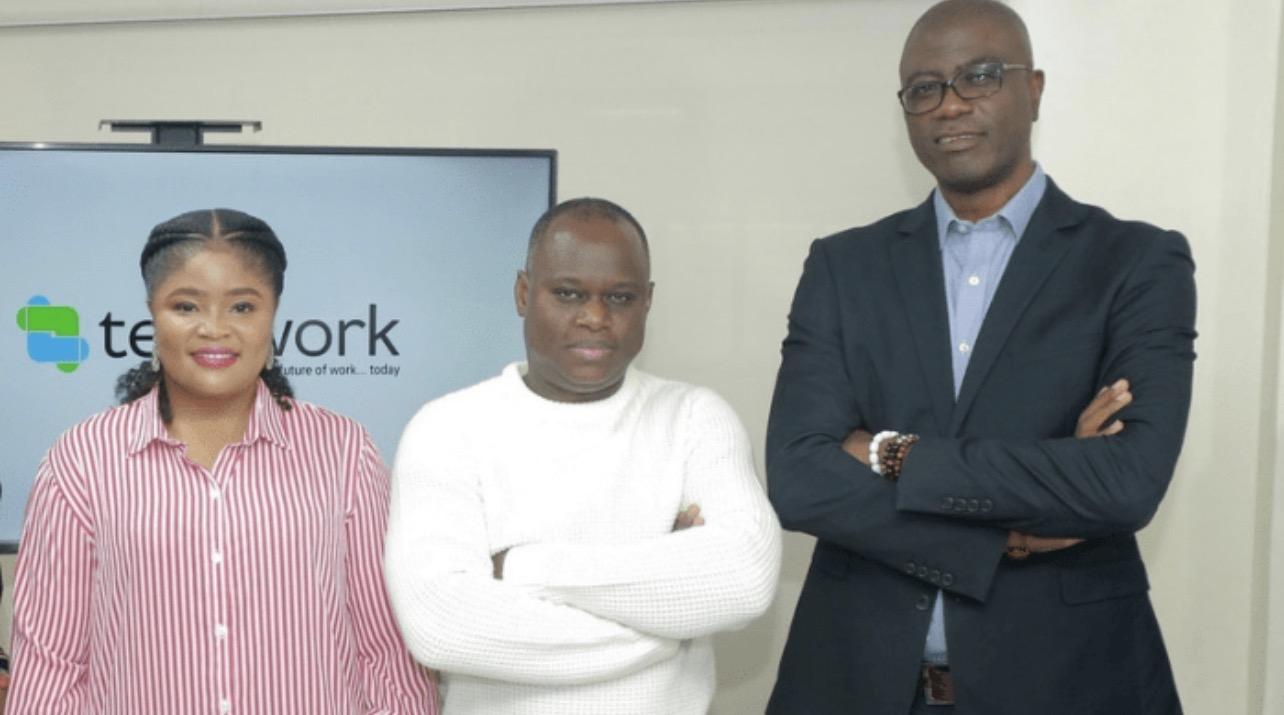
Femi Taiwo and TERAWORK
Femi Taiwo’s story is one of vision born from disappointment, then sharpened into a business that tried to solve a problem many Africans had quietly learned to live with. He did not begin with the dream of launching a famous startup. By one detailed account of TERAWORK’s early years, the turning point came after he outsourced a project, paid a large deposit, and was let down by the company that promised to deliver. The work was not completed, the money was not refunded, and the experience exposed a painful gap in the market. At the time, online marketplaces in Nigeria and much of Africa were more strongly associated with physical products than trusted professional services. That failure became the seed of a new idea. Rather than complain about the absence of a reliable system, Taiwo chose to build one.
That choice would eventually become TERAWORK, a Nigerian founded digital talent platform created in 2017 and launched on the web in 2018 to help businesses find, hire, brief, manage, and pay freelancers in an organized and trusted way. The company positioned itself as a marketplace for services rather than goods, opening access to fields such as software development, writing, design, accounting, marketing, legal support, project management, photography, and many other categories. The basic promise was simple, but powerful. A business owner should be able to get verified talent when needed, and a skilled professional should be able to sell services with greater confidence that the client would pay fairly once the work was done.
What Femi Taiwo built was not just a website where people could post jobs. The real invention behind TERAWORK was a structured trust system for digital work in an African context. That is the heart of what made the platform important. According to the Royal Academy of Engineering, the platform was developed after Taiwo’s bad experience with a freelancer who failed to deliver. TERAWORK then created a system where clients could review portfolios, compare experience, inspect ratings, see completion records, and manage the full process from commissioning to payment. For freelancers, the platform offered identity checks, secure workflows, and payment assurance once agreed work had been done satisfactorily. In practical terms, Taiwo’s innovation was an end to end freelance marketplace built for the realities of African business and talent mobility. It was not just a directory. It was a digital operating environment for remote service exchange.
That invention matters because the problem was deeper than simple inconvenience. Small and medium sized businesses often struggle to hire the right people quickly, especially when they cannot afford full time staff for every task. At the same time, millions of skilled Africans face unemployment or underemployment, not always because they lack ability, but because opportunity is unevenly distributed. Geography, weak trust, poor hiring systems, and limited exposure can keep capable people invisible. TERAWORK stepped into that gap with a model designed to make skills searchable, comparable, manageable, and payable across distance. Taiwo understood that if Africa was going to compete in the future of work, talent would need a bridge to demand, and businesses would need a safer way to buy services.
The available public record consistently describes Femi Taiwo as more than a startup founder. The Covenant University Alumni profile presents him as an award winning social entrepreneur and development strategist, while the Royal Academy of Engineering identifies him as an electrical engineer. The alumni profile also states that he earned a first class degree in Computer Science from Covenant University and later obtained a master’s degree in Innovation Management and Entrepreneurship from Manchester Business School. That combination is revealing. It suggests someone shaped by technology, systems thinking, and entrepreneurial problem solving. It also helps explain why TERAWORK was not built merely as an app idea, but as a carefully structured response to a market failure.
Before many people heard of him through TERAWORK, Taiwo had already built a reputation in leadership and development circles. The alumni profile says he was a 2018 Aspen Institute IdeasFest Scholar, a Praxis Accelerator alum, and part of the inaugural Obama Africa Leaders Programme. It also says he served as Executive Director of LEAP Africa and later as Managing Director of TRACE Academia, while sitting on important boards and youth focused initiatives. These details matter because they show that his work has not only been about profit. His career has repeatedly touched youth development, leadership, employability, and transformation. When you place TERAWORK inside that wider pattern, the platform begins to look less like a narrow startup and more like an extension of a long standing mission to widen access and unlock human potential.
TERAWORK grew from that mission into something very practical. Taiwo explained that many freelance platforms had failed because they lacked the features and processes needed to support trust between clients and freelancers. He said TERAWORK was built with core systems such as search, real time chat, content sharing, work management tools, user wallets, payments, escrow, multi currency support, and reviews. Those details are central to understanding what he invented. He did not invent freelancing. He did not invent remote work. He invented an African focused service marketplace infrastructure that could make remote collaboration feel credible and manageable to users who might otherwise be too skeptical to try it. In markets where trust is often the difference between growth and failure, that is not a small achievement.
One of the strongest parts of Taiwo’s vision was that talent should not be trapped by location. TERAWORK was designed to help businesses reach workers beyond immediate physical circles and help professionals earn beyond the limits of their neighborhoods or cities. The Royal Academy of Engineering noted that the model expands the available field of talent by allowing customers to work across large distances. MIT Solve materials on TERAWORK further describe the platform as a system that gives skilled and semi skilled jobseekers access to local and global job markets while also creating pathways for women, people in rural areas, and people with disabilities to work more flexibly. That idea is bigger than freelancing as a trend. It is about labor market inclusion through digital infrastructure.
This inclusive angle is one of the most meaningful parts of the TERAWORK story. MIT Solve records say the platform sought to create positive social change for young women by making it easier to work from home or remotely, especially for those balancing care responsibilities. The same materials describe how the company linked flexibility with dignity and income, giving people the chance to express their skills, conserve time, and earn on their own terms. In many African societies where women’s work is often shaped by social pressures and family obligations, this is a serious intervention. Taiwo’s platform did not solve gender inequality, but it created a structure in which some women could access income and opportunity without waiting for old employment systems to become fairer.
The business case was also clear. TERAWORK was not built only for freelancers. It was built for business survival. Public statements around the company’s mobile app launch argued that many African businesses fail partly because they cannot hire skilled talent quickly or flexibly. TERAWORK framed its offering as pay as you go hiring, a model that could help firms access expertise without carrying the burden of unnecessary full time headcount. In other words, Taiwo’s invention also answered a resource problem. Many businesses do not need a permanent employee for every task. They need the right skill at the right time with clear expectations and controlled cost. TERAWORK packaged that need into a searchable, mobile friendly talent marketplace.
The platform’s early traction showed that the idea resonated. TechCabal reported in 2021 that over a thousand individuals, agencies, and small businesses were already offering and engaging freelance services on TERAWORK, and that freelancers had earned thousands of dollars from clients within and outside Africa. MIT Solve materials from 2020 described TERAWORK as having more than 6,000 active users and over 4,000 jobs completed at that point, presenting the platform as a validated approach with the potential to scale. These figures belong to different moments, but together they show a company moving beyond theory into practical adoption. People were not just praising the idea. They were using it.
Recognition followed. The Royal Academy of Engineering named Femi Taiwo the 2022 One to Watch Winner in the Africa Prize for Engineering Innovation. The award page highlights TERAWORK as a platform that helps business owners safely outsource key skills as needed, and stresses the engineering thinking that went into the system. TERAWORK was also described as a Google for Startups alumni company, a Village Capital 2021 Future of Work Accelerator winner, and a Nasdaq Milestone Maker. These recognitions did not create the business, but they confirmed that Taiwo’s idea had credibility across important innovation ecosystems. He was no longer just a Nigerian founder with a local workaround. He had become part of a broader conversation about how technology could reorganize work on the continent.
The Google for Startups connection is especially revealing. In a TechCabal report on the accelerator, Taiwo described a straightforward but competitive selection process, and the article placed TERAWORK among startups chosen for feasibility, scalability, and market opportunity. That tells us that external evaluators saw more than a nice story. They saw a startup with a defensible idea and real room to grow. Accelerator programs often matter because they sharpen execution, expand networks, and expose founders to mentors who understand scaling challenges. For a founder building a marketplace, where user trust, product quality, and growth discipline all matter at once, that kind of exposure can be invaluable.
Yet Taiwo’s story is not only about awards, accelerators, and product design. It is also about persistence in a difficult environment. Building a talent marketplace in Africa means dealing with skepticism from clients, inconsistent infrastructure, fragmented payment habits, and the challenge of proving quality in a space where many people have been burned by bad experiences. TechCabal reported that first time users on TERAWORK were often skeptical because of previous disappointments, but that many became repeat buyers because the company handled things differently. That detail captures the emotional side of the market. Taiwo was not simply selling features. He was rebuilding confidence. And confidence is hard to build when trust has already been broken at scale.
This is why the origin story matters so much. Femi Taiwo knew the pain point personally. He had experienced lost money, broken timelines, and unreliable delivery. So TERAWORK’s answer was not abstract. It was grounded in the frustration of someone who had needed competent help and failed to find a safe system for getting it. Founders often build strongest when they start with a wound they truly understand. In Taiwo’s case, that wound became a platform trying to reduce uncertainty for thousands of others. It is one thing to say remote work is the future. It is another thing to build the rails that make that future usable for ordinary businesses.
As the company grew, it moved beyond the desktop and into mobile. In 2022 TERAWORK launched mobile apps for iOS and Android so employers and entrepreneurs could hire, manage, and communicate with vetted talent on the go. Taiwo described the app as a game changer. The mobile expansion mattered because the African internet is deeply mobile. A platform that wants to shape the future of work on the continent cannot stay chained to desktop assumptions. By bringing hiring, messaging, and workforce coordination into a mobile app, TERAWORK made its invention more accessible to the actual habits of its market. That is often how innovation becomes adoption. It goes where users already live.
There is also evidence that Taiwo wanted TERAWORK to play a wider economic role. BusinessDay reported that the company launched a business grant initiative for small and medium sized enterprises in Nigeria, with micro grants aimed at helping them scale through better access to talent. Taiwo explained that access to top talent is critical for sustaining growth. This initiative fit the logic of the company itself. If small businesses are the backbone of job creation, then helping them hire better could have effects beyond individual contracts. It could improve productivity, resilience, and survival rates. In that sense, TERAWORK was not just trying to capture demand. It was trying to stimulate it.
No honest story about modern freelance platforms would be complete without mentioning the pressure of artificial intelligence and changing market rates. In 2024 TechCabal reported Taiwo’s comment that TERAWORK had seen a slight decline in available gigs and in the rates offered, as AI tools changed how clients thought about value and labor. That remark shows a founder still engaged with the evolving reality of digital work. It also reveals the next chapter of his challenge. Building trust between clients and freelancers was one phase. Preserving value for human talent in the age of automation is another. The marketplace he built now sits inside a larger contest over what skills remain scarce, what work gets devalued, and how African professionals can compete without being pushed into a race to the bottom.
Even with those pressures, the central idea behind Taiwo’s work remains powerful. Africa has talent. What it often lacks is structured visibility, trusted exchange, and scalable matching systems. TERAWORK tried to turn those missing pieces into product features. Search became visibility. Reviews became reputation. Escrow became trust. Remote collaboration tools became delivery structure. Mobile access became convenience. Flexible hiring became business survival. What looks on the surface like a freelance website is, at a deeper level, an attempt to redesign how opportunity moves.
So what exactly did Femi Taiwo invent? He invented, with his team, a digital marketplace architecture tailored to African service work and business needs. He built a platform where employers can source vetted independent talent, where freelancers can present proof of skill and performance, where work can be commissioned and managed remotely, where payment can be secured through process, and where geography no longer has to decide who gets seen. He also helped push a broader idea into the mainstream that African talent can serve local and global markets through digital channels without waiting for traditional employers to open the door first.
Femi Taiwo’s full story, then, is not merely the biography of a founder. It is the story of a man who encountered failure, studied the weakness hidden inside that failure, and turned it into an organized response. It is the story of a Nigerian professional who combined engineering logic, entrepreneurial discipline, and social purpose to address a real market problem. It is the story of TERAWORK, a platform born from lost money and broken trust, then shaped into a system for talent access, business flexibility, and digital inclusion. It is also the story of the future of work in Africa, still unfinished, still contested, but increasingly impossible to imagine without builders like him.
In the end, Femi Taiwo stands out because he did not just speak about youth potential, remote work, entrepreneurship, or African innovation in general terms. He built a mechanism. He gave those ideas a place to function. And in a continent where many people have skill but not enough doors, that may be the most important kind of invention of all.

Κατηγορίες
Διαβάζω περισσότερα
The United States Mission in Nigeria has refuted claims that the recent reduction in visa validity for Nigerian citizens is politically motivated, stressing that the decision is part of a global, technical reassessment aimed at safeguarding the integrity of the U.S. immigration system. In a statement issued to address growing speculation, the Mission clarified that the policy shift affects not...
Abike Halima Raheem Papaya Ex, whose real name is is a Nigerian social media influencer, brand ambassador, and entrepreneur known for her glamorous lifestyle and bold online personality. Over the years, she has carved a niche for herself in Nigeria’s fast-growing influencer industry, becoming one of the most recognizable faces on Instagram and other digital platforms. With her...

The Federal Capital Territory Administration (FCTA) has directed all public senior secondary schools in Abuja, the nation’s capital, to shut down on or before Friday, November 28, citing urgent security concerns. In a memo issued on Tuesday by Aishatu Sani Alhassan, director of school services, FCT secondary education board, seen by TheCable, principals and heads of schools were...

Faithia Williams Balogun Faithia Williams, popularly known as Faithia Balogun, is one of Nollywood’s most respected Yoruba actresses, filmmakers, and producers. For decades, she has remained a powerful presence in the Nigerian movie industry, admired for her versatility, elegance, and ability to fully embody every character she plays. Early Life and Education Faithia Williams was...

Sheikh Abdul Qadir Jilani Early Life Abdul Qadir Jilani was born in the year 1077 in a small town called Jilan, in present-day Iran. From a young age, he was known for his honesty, discipline, and deep love for knowledge. His mother was a righteous woman who raised him with strong values. She taught him to always speak the truth, no matter the situation. This lesson would later...