


 Σχετικά
Flavien Kouatcha Simo and the Dream of Feeding More People With Less

Flavien Kouatcha Simo
Flavien Kouatcha Simo’s story is the kind that grows from memory, pressure, sacrifice, and vision. It is a story rooted in Cameroon, but it speaks to a much wider African reality. Across the continent, millions of farmers work hard and still struggle against poor logistics, shrinking access to fertile land, expensive inputs, climate pressure, and the painful mismatch between food supply and food demand. Flavien did not only see this as an observer. He saw it as someone shaped by farming culture, by local realities, and by the feeling that agriculture in Africa could be smarter, cleaner, and more productive than what many had come to accept. He was born in Bandjoun in western Cameroon, later studied electronics and electrical engineering in Douala, then spent about three years in port maintenance before leaving that field to build something in agriculture instead. In 2015, he founded Save Our Agriculture and began a journey that would make him one of the most recognized aquaponics innovators from Cameroon.
That decision to leave a more conventional technical path matters because it helps explain the shape of his invention. Flavien did not arrive in agriculture as someone carrying only inherited rural instinct. He also arrived with engineering training, system thinking, and the habit of looking at problems as things that can be designed around. In many ways, that is what Digital Aquaponics became: not just a farm idea, but a designed response to scarcity. It was built for places where land is limited, water is precious, fertilizer can be costly, and food distribution often fails ordinary families. The invention he became known for is a portable fish farm and crop production system that uses fish waste to nourish organic vegetables and herbs. Instead of treating aquaculture and vegetable farming as separate worlds, it joins them into one working cycle. Fish are raised in tanks. Their waste rich water is circulated upward into growing beds where vegetables absorb nutrients. The plants help clean the water, which can then return into the system. This circular idea allows more output from less space and less water, while reducing the need for chemical fertilizer.
To understand why this matters, it helps to picture the usual food chain challenge in many African cities and peri urban areas. Vegetables may be grown far away from the people who need them. Fish may be raised in a separate production cycle. Transport is costly. Roads may be difficult. Fresh produce can spoil before it reaches the market. Families in cities often pay high prices for food not because food is impossible to grow, but because food systems are inefficient. Flavien has spoken about the inconsistency between supply and demand as one of the motivating problems behind Save Our Agriculture. He also pointed to logistics as a major reason food becomes expensive in Cameroonian cities. Digital Aquaponics was his effort to pull production closer to consumers while using a method that wastes less and yields more.
The invention itself is practical and layered. Individual units were made using recycled wood and tarpaulin, while larger industrial versions were built from shipping containers. The systems range from very small footprints of around four square meters to much larger thirty square meter units. In the industrial version described by the Royal Academy of Engineering, one unit can produce about 800 kilograms of fish and 1,600 kilograms of vegetables every three months. That same source says the system can enable up to ten times more food production with only 10 percent of the water used in conventional crop production, while eliminating chemical fertilizers. Those are not small claims. They are the kind of claims that speak directly to the major pressures facing agriculture across Africa: how to produce more food in tighter spaces with fewer inputs and with less environmental damage.
But the word Digital in Digital Aquaponics is just as important as the word Aquaponics. Many people can imagine fish and vegetables sharing one ecosystem. What Flavien added was digital monitoring, guidance, and network value. The units include sensors that measure factors such as pH and nitrate ratios in the water. Data is sent to a web based application so users can monitor and adjust water health and optimize conditions for both fish and crops. The system also includes a mobile application that provides tutorials and serves as an information sharing platform for producers and consumers. This means the invention is not only about food production. It is also about reducing the knowledge barrier that often keeps small farmers from adopting unfamiliar systems. Instead of leaving farmers alone with a difficult technology, the model tries to teach, guide, and connect them.
That digital layer is one of the clearest signs of Flavien’s engineering mindset. Agriculture is often described in romantic terms, but farming is also data, timing, calibration, environment, and response. A fish tank can go wrong quickly if water quality shifts. Plants can suffer if nutrients are unbalanced. For traditional farmers moving into aquaponics, those technical uncertainties can be discouraging. Sensors and app based guidance make the system more understandable and more manageable. In other words, Digital Aquaponics is not only a production tool. It is a confidence tool. It tries to give users enough information to act early, correct mistakes, and maintain stable output.
Flavien’s background helps explain why he was drawn to this combination of mechanics, biology, and digital oversight. Reports about him describe him as someone from a farming family and someone who grew up wanting to help feed people. One account says his parents and grandparents were farmers, while another records his own words about wanting a solution for smallholder farmers like his grandmother, who struggled with few resources and difficult supply logistics. Those details matter because they move the story away from the idea of invention as pure laboratory creativity. His work appears to have grown from lived familiarity with the fragility of food systems at the household level.
His company, Save Our Agriculture, was founded in 2015 and specialized in designing aquaponics kits suited to the Cameroonian and broader African environment. The goal was not to copy foreign farming systems blindly, but to adapt them. Urban and peri urban residents, including households, could use the kits to produce food at home or in constrained spaces. By 2015, he was already commercializing aquaponic units to individuals and professionals in urban settings. Later accounts credit Save Our Agriculture with helping farmers improve yields and incomes by producing far more vegetables and fish within small areas. Empower Africa described the company as a startup helping farmers produce four times more vegetables and fish in small spaces, while the Africa Prize materials described even more dramatic efficiency gains for the Digital Aquaponics model.
Any serious entrepreneurial story also includes the uncomfortable beginning. The idea may be elegant, but building a company around it is never clean. One report noted that Flavien and his cofounder had to mortgage their assets to finance the project in the early stage. That detail carries weight. It tells us this was not a well funded experiment launched from safety. It was a venture pushed forward by risk. In another interview, Flavien said one of the first big challenges was human capital because aquaponics was not yet sufficiently popularized in his environment, so he and his team had to train themselves and strengthen employee capacity, much of it online. He also identified finance as a major challenge, especially because the individual customer segment required high upfront investment in a context of low purchasing power and weak financing mechanisms. These are exactly the conditions that break many promising African innovations before they scale. That his company continued to grow anyway speaks to persistence as much as design intelligence.
The growth that followed was not just symbolic. By 2018, French Wikipedia, citing local business coverage, reported that he had generated revenue of 58 million CFA francs, and that larger forty foot container units were planned around 2020. Later reporting from the Africa Prize page stated that he had installed more than 200 individual units and three industrial units across five African countries, and had trained over 270 users. The same source said the network around the system had reached 1,200 members. That kind of scaling is important because it suggests the invention moved beyond concept stage into real adoption. It also shows Flavien was not merely selling equipment. He was building a distributed ecosystem of producers, learners, and customers.
A powerful part of the Digital Aquaponics concept is that it treats waste as value. In conventional thinking, fish waste is a disposal problem. In this system, it becomes fertilizer. In conventional farming, chemical fertilizer is an extra cost and often an environmental burden. In this system, nutrient flow is built into the cycle. In conventional urban food dependence, distance from production is normal. In this model, food can be grown near the consumer. In conventional farming, water is often lost through exposure, runoff, or inefficiency. In this system, water is recirculated. This is why his invention fits so well into current conversations about circular agriculture, climate adaptation, and urban resilience. It does not pretend to solve every agricultural problem in Africa, but it reframes several of them at once.
The crops suited to the system also reveal the practical side of the design. The Africa Prize profile mentions fast growing produce such as tomato, okra, cucumber, and mint. That is not accidental. Fast turnover crops are especially helpful for cash flow, for household nutrition, and for proving value quickly to users. If a farmer adopts a new system and waits too long to see results, enthusiasm fades. If results come quickly, adoption is easier. The system is also soil free, using materials such as clay and silica as growing media. That matters in urban settings where land quality may be poor or where direct soil cultivation is not realistic.
There is also an environmental story inside Flavien’s work. Several sources describe aquaponics as using far less water than traditional farming and producing less carbon impact. One source says the system can save 80 to 90 percent of water compared with traditional methods. Another says it emits 20 percent less carbon into the environment. While the exact environmental performance can vary by context and management, the consistent theme across reporting is that Flavien positioned his work as both economically useful and ecologically responsible. In a continent where climate stress is increasingly affecting rainfall, crop cycles, and land productivity, that environmental efficiency is not a luxury. It is part of survival.
His success began to attract recognition. He won the Pierre Castel Prize in Cameroon in 2018, a distinction that later reporting described as a decisive lever for accelerating the growth of Save Our Agriculture. According to the Pierre Castel Foundation, the 15,000 euro award was invested into essential equipment such as a generator, site development, office rental, technical materials, packaging, and agricultural inputs. That support helped stabilize production and strengthen the company’s commercial visibility. He also received the Rebranding Africa Innovation Award in 2018. These awards mattered not only because they validated the invention but because they gave the business breathing room and visibility. In African entrepreneurship, recognition can sometimes function as a second currency. It opens doors, builds trust, and attracts partners who might otherwise stay away.
His profile continued to rise after that. He was listed among the 2022 Top 10 finalists for Africa’s Business Heroes, and he also took part in Alibaba Netpreneur training in 2022. In interviews, he described these experiences as transformative, especially because of the quality of feedback, due diligence, and access to networks. That matters because it shows how his journey evolved from local problem solving into continental entrepreneurship. He was no longer simply the man installing aquaponics kits in Cameroon. He was becoming part of a wider African conversation about how innovation, digital tools, and business discipline can reshape food systems.
And yet the heart of his story is not awards. It is impact. Reports say Save Our Agriculture has collaborated with organizations including FAO and the International Organization for Migration and helped feed more than 250,000 people every year. Even allowing for the fact that such impact figures are often presented in broad organizational language, the point is clear: Flavien’s work has moved beyond niche demonstration into social relevance. His company also framed its mission around youth empowerment, job creation, and widening access to productive work for women, out of school youth, and persons with disabilities. The Pierre Castel Foundation profile emphasized that social inclusion was central to the project. This is important because agriculture in Africa is often discussed only in terms of production. Flavien’s work suggests that agriculture can also be a platform for dignity, skills, and enterprise.
There is another subtle strength in his vision. He did not stop at growing food. He also tried to address what happens after harvest. The Africa Prize materials say the Digital Aquaponics platform can connect certified producers directly with consumers, allowing nearby buyers to order fresh produce. This network approach aims to reduce post harvest losses by up to 40 percent and reduce the carbon footprint of long haul transport. That is a major insight. In many African food systems, the problem is not only production. Food is lost because it is badly matched to markets. By putting production intelligence together with customer connection, Flavien was trying to solve both ends of the chain. It is a more complete business model than a simple farm equipment company.
At some point, every inventor faces the question of whether the work is only clever or genuinely important. Flavien’s answer seems to lie in usefulness. His system is technically inventive, but it is not innovation for display. It answers ordinary questions. Can a household or small farmer grow food with less land. Can fish and vegetables be raised together without chemical fertilizer. Can water be reused instead of wasted. Can a farmer learn through digital support instead of expensive physical training. Can food be grown nearer to the people who eat it. Can agriculture become attractive again to young Africans who often see it as backward or punishing. These are practical questions, and his career has been a long attempt to answer yes.
His own words reinforce that bigger vision. In one interview he said Africa’s population is growing quickly while arable land is becoming rarer, so the continent must find ways to produce more and better. In another, he said agriculture is the only sector that can effectively recruit in Africa if people commit to it with firmness and passion. Those comments show an entrepreneur who sees food innovation not as a private win but as a civilizational task. Feeding a growing population under climate pressure is one of the deepest challenges of this century. Flavien’s contribution is to insist that African solutions can be engineered on African terms.
His journey also carries symbolic meaning for Cameroon. It shows that invention does not have to come from the most obvious sectors or from imported templates. A man trained in electronics and electrical engineering, who worked in port maintenance, looked at agriculture and chose to redesign it through circular systems, recycled containers, sensors, apps, and local market logic. That blending of disciplines is exactly what many African economies need more of. The future of agriculture may not belong only to people who inherit land. It may also belong to people who understand mechanics, energy, software, logistics, and user behavior. Flavien stands at that intersection.
Even the physical form of his units tells a story. Recycled wood. Tarpaulin. Shipping containers. Small footprints. Urban installation. Portable structure. These are not details from a luxury farming dream. They are the signs of frugal innovation. They suggest a designer working with what is available, what can move, what can be adapted, what can survive in environments where capital is tight and infrastructure is uneven. In much of Africa, that kind of practicality is not secondary. It is the difference between an idea that remains on paper and an idea that enters real life.
There is also a moral thread in this story. When people speak about technological innovation, they often focus on speed, valuation, or disruption. Flavien’s work invites a different emphasis. It asks whether technology can make food cleaner, farming more inclusive, and livelihoods more stable. It asks whether the future can be built without discarding the wisdom that life is interdependent. Fish feed plants. Plants clean water. Data guides people. Markets reward proximity. Waste becomes input. This is not only engineering. It is a philosophy of relationship turned into a business.
Today, Flavien Kouatcha Simo is widely recognized as a Cameroonian agripreneur active in aquaponics and as the founder of Save Our Agriculture. He has been recognized by major entrepreneurship and innovation platforms, won awards, built patented systems, and helped bring aquaponics into wider public attention in Cameroon and beyond. But perhaps the most important thing about his story is that it remains unfinished. Food insecurity, urban growth, climate stress, and supply chain losses have not disappeared. The need for efficient and locally adaptable farming systems is still urgent. His work stands as both an answer already given and a challenge still waiting for broader adoption.
So when people speak of Flavien Kouatcha Simo and Digital Aquaponics, they are speaking about more than one invention. They are speaking about a way of thinking. They are speaking about the belief that Africa does not have to choose between technology and agriculture, between productivity and sustainability, or between local knowledge and modern systems. In his hands, those things are not enemies. They are parts of one living cycle.

Κατηγορίες
Διαβάζω περισσότερα
Early Life and Family Background Michael Joseph Jackson was born on August 29, 1958, in Gary, Indiana, United States. He was the eighth of ten children in the Jackson family. His father, Joseph Jackson, worked in a steel mill but also managed his children’s musical careers, while his mother, Katherine Jackson, supported and nurtured their talent. From a very young age, Michael displayed...

Dele Momodu Dele Momodu is a Nigerian journalist, publisher, businessman, and politician widely recognized as the founder of Ovation International magazine. Born Ayobamidele Abayomi Ojutelegan Ajani Momodu on May 16, 1960, in Ile Ife, Osun State, Nigeria, he has built a career spanning media, business, and politics. Early Life and Education Dele Momodu was born into a modest...
I was twenty-one when I knew him He came into the small restaurant where I worked, the kind of place where the smell of fried rice and pepper soup clung to your clothes long after your shift ended. He was calm, well-dressed, and carried himself with a quiet confidence that made people listen when he spoke. That first day, I attended to him with the politeness my mother drilled into me soft...
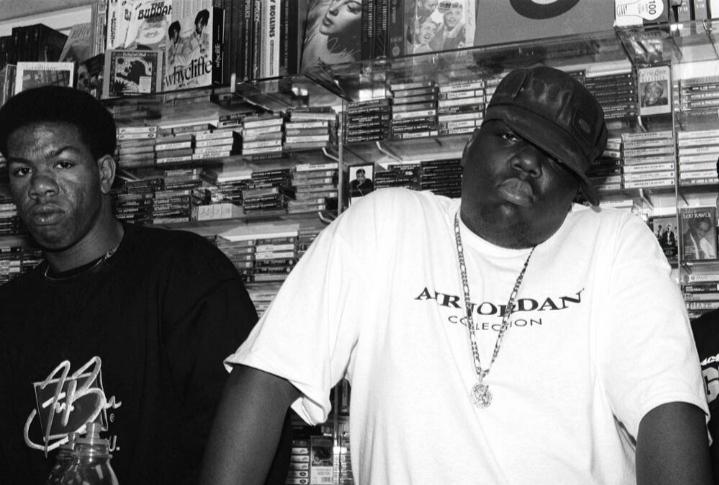
The Notorious B.I.G: Biography Early Life and Childhood The Notorious B.I.G was born Christopher George Latore Wallace on May 21, 1972, in Brooklyn, New York City. He grew up in the Bedford Stuyvesant neighborhood, an area known for its rich culture but also for poverty and crime during the 1970s and 1980s. His mother, Voletta Wallace, was a Jamaican immigrant and a preschool teacher. His...
Teju Cole: Some people travel the world to escape. Others travel to understand it. The life of Teju Cole is the story of a man who walks through cities not just with his feet, but with his mind wide open. He is a novelist, essayist, art historian, and photographer whose work blends observation with memory, politics with poetry. Teju Cole does not shout his ideas. He examines them. He...

