About
About
Côte d’Ivoire From Forest Kingdoms to Cocoa Power and a Nation Rebuilding Its Unity
Côte d’Ivoire
Along the southern coast of West Africa, where the Atlantic Ocean meets lush forests and rolling savannahs, lies Côte d’Ivoire. Known in English as Ivory Coast, the country carries a history shaped by migration, trade, colonial rule, prosperity, conflict, and renewal.
From early forest communities to powerful inland kingdoms, from French colonization to independence and modern transformation, the story of Côte d’Ivoire is one of resilience and reinvention.
The Earliest Communities
Long before European contact, the land that would become Côte d’Ivoire was home to diverse ethnic groups. Migrations from different parts of West Africa shaped the region over centuries.
In the west, Kru speaking peoples settled along the coast and forest zones. In the center and east, Akan groups moved in from present day Ghana. In the north, Mandé and Voltaic groups established farming communities and trading networks.
These communities practiced agriculture, growing yam, millet, and later rice. Trade routes connected northern savannah areas to the great empires of Mali and Songhai. Gold, kola nuts, and livestock moved across the region.
Societies were organized around chiefs and elders. Spiritual beliefs centered on ancestors, nature, and sacred forests.
The Akan Kingdoms and Cultural Influence
Among the most influential groups were the Akan peoples, including the Baoulé. Oral tradition tells that the Baoulé migrated westward after conflicts within the Ashanti kingdom in present day Ghana.
They established structured chiefdoms with rich artistic traditions. Wood carving, gold ornaments, and ceremonial regalia became central to their culture.
In the north, Islamic influence spread through trade with Sahelian merchants. Towns developed as centers of learning and commerce.
Although there was no single unified kingdom across the entire territory, local states flourished in different regions.
European Contact and the Ivory Trade
Portuguese explorers reached the coast in the fifteenth century. They were followed by the French, Dutch, and British.
The coastline became known for the trade of ivory, which gave the region its European name Ivory Coast. The transatlantic slave trade also affected coastal communities, though not as extensively as in some neighboring regions.
European presence remained mostly coastal for centuries. Inland societies continued their traditional systems with limited outside interference.
French Colonization
In the late nineteenth century, during the Scramble for Africa, France moved to establish formal control over the region.
By 1893, Côte d’Ivoire was declared a French colony and later became part of French West Africa.
Colonial authorities expanded cash crop agriculture, especially cocoa and coffee. Forced labor policies were imposed to build infrastructure and plantations. Many Ivorians suffered under these systems.
French administration introduced schools, railways, and new cities, but political power remained firmly in colonial hands.
Despite colonial rule, local cultures remained vibrant and influential.
The Road to Independence
After World War Two, African nationalist movements gained strength. In Côte d’Ivoire, one of the most important leaders was Felix Houphouet Boigny.
Houphouet Boigny was a physician and cocoa farmer who became a leading political figure. He advocated for reform within the French system before pushing for full independence.
On August 7, 1960, Côte d’Ivoire gained independence from France. Houphouet Boigny became its first president.
The Ivorian Miracle
Under Houphouet Boigny’s leadership, the country experienced strong economic growth. Cocoa and coffee production expanded rapidly, making Côte d’Ivoire one of the world’s leading cocoa producers.
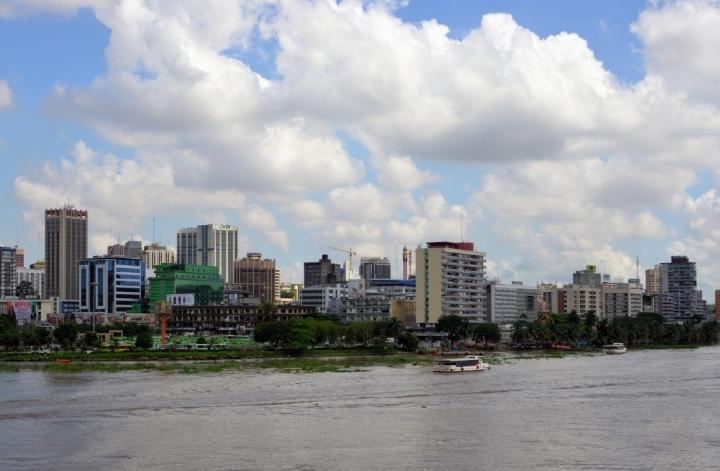
Abidjan grew into a modern and vibrant city, often called the Paris of West Africa. Infrastructure developed, and foreign investment increased.
This period of prosperity became known as the Ivorian Miracle. The country attracted migrants from neighboring states, boosting its labor force and diversity.
However, economic growth depended heavily on agricultural exports, leaving the economy vulnerable to global price changes.
Political Tensions and Conflict
After Houphouet Boigny’s death in 1993, political stability weakened. Debates over national identity and citizenship created divisions.
In 2002, a rebellion split the country into a rebel controlled north and a government controlled south. Years of tension followed.
In 2010, a disputed presidential election led to violence between supporters of outgoing President Laurent Gbagbo and challenger Alassane Ouattara.
The conflict caused significant loss of life and displacement. Eventually, Ouattara assumed the presidency, and efforts toward reconciliation began.
Culture and National Identity
Côte d’Ivoire is home to more than sixty ethnic groups. French is the official language, but many local languages are widely spoken.
Music and dance are central to Ivorian life. Popular genres such as Coupé Décalé have gained international attention.
Traditional festivals celebrate harvests, ancestors, and community unity. Masks and carvings remain important artistic expressions.
The country’s landscapes range from coastal lagoons to dense forests and northern savannahs.
Yamoussoukro, the political capital, is home to the Basilica of Our Lady of Peace, one of the largest churches in the world.
Côte d’Ivoire Today
Today, Côte d’Ivoire continues rebuilding and expanding its economy. It remains the world’s largest cocoa producer and a key economic power in West Africa.
Infrastructure projects, urban development, and regional trade have strengthened its position.
While challenges remain, including political reconciliation and economic diversification, the nation continues moving forward.
A Story of Strength and Renewal
From forest kingdoms and trade networks to French colonization, from economic miracle to political crisis and recovery, Côte d’Ivoire’s journey has been dynamic and complex.
It is a country shaped by agriculture, culture, and ambition. A land where tradition and modernity meet along the Atlantic coast.
Côte d’Ivoire stands today as a symbol of resilience in West Africa. Its story proves that even after division and hardship, unity and growth are possible.


Categorie
Leggi tutto
A major fire broke out early Tuesday at a one-storey building in Computer Village, Ikeja, Lagos, destroying computers and accessories worth millions of naira. Emergency teams from LASEMA, Lagos Fire Service, and LASAMBUS quickly responded, containing the blaze and preventing it from spreading. No deaths were reported, though one firefighter sustained minor injuries. Authorities have launched...

The days after the betrayal felt unreal, like I was watching my life from outside my body. Daniel kept calling. Amara sent long messages full of excuses and tears. I blocked them both. Silence became my shield. I stayed indoors, curtains drawn, replaying memories I now hated. Every laugh with Amara felt fake. Every promise from Daniel felt like a lie. I blamed myself was I not enough? Too...

Now is the time to pop that big question. You'll be terrified when you go matching rings shopping! The majority of people only buy matching relationship jewelry once, if they are lucky. However, there is some insider knowledge that can make it a daunting process. A journey as unique as your love story is the process of shopping for an engagement ring. It's an exciting adventure, a symbol...

Neo Akpofure Neo Akpofure is a Nigerian reality television personality, model, entrepreneur, and entertainer. He became widely known after participating in Big Brother Naija. Early Life and Background Neo whose full name is Emuobonuvie “Neo” Akpofure was born on August 1, 1994, in Delta State, Nigeria. He grew up in Warri, a city known for producing many entertainers and...

Texas Tech University System Chancellor Brandon Creighton has implemented new rules restricting how faculty may teach topics related to race, sex, gender identity, and sexual orientation. Under the policy, instructors are barred from promoting concepts such as inherent racial superiority or collective guilt, and must seek approval through a multilayer review process—from department chairs...