


 About
About
Sheikh Ahmad Gumi: The Scholar, the Soldier’s Son, and the Voice in Nigeria’s Storm
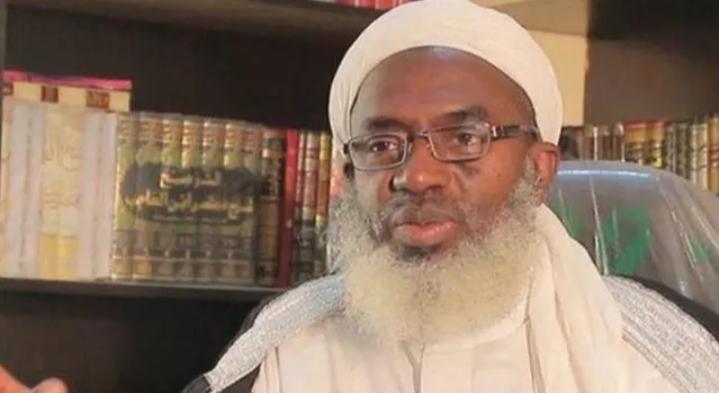
Sheikh Ahmad Gumi: The Scholar, the Soldier’s Son, and the Voice in Nigeria’s Storm
Ahmad Gumi
In Nigeria’s complex religious and political landscape, few voices provoke as much reaction as that of Sheikh Ahmad Abubakar Mahmud Gumi. To some, he is a courageous Islamic scholar who speaks uncomfortable truths. To others, he is controversial, blunt, and politically entangled. But long before national headlines and televised debates, before accusations and defenses, before interviews about insurgency and reconciliation, there was a young boy growing up in a home shaped by power, faith, and military discipline.
This is the story of Sheikh Ahmad Gumi, told from his early years to his emergence as one of Nigeria’s most discussed clerics.
Born Into Influence
Ahmad Gumi was born in 1960 in Kaduna, northern Nigeria, in a period when the country was still newly independent. His father was the late Sheikh Abubakar Mahmud Gumi, one of the most influential Islamic scholars in northern Nigeria and a prominent religious authority during the 1970s and 1980s.
Growing up in such a household meant religion was not optional. It was structure. It was identity. It was duty.
His father was known for his firm Islamic scholarship and involvement in public religious discourse. From an early age, Ahmad was exposed to theological debates, scholarly visitors, and conversations about faith and governance.
This environment shaped him deeply.
Education Between Religion and Modernity
Young Ahmad did not grow up isolated from formal Western education. Like many northern Nigerian children of his generation, he experienced a blend of Islamic and secular schooling.
He studied Arabic and Islamic jurisprudence. At the same time, he pursued Western style education, eventually attending Ahmadu Bello University in Zaria where he studied medicine.
The decision to study medicine was significant. It reflected intellectual ambition beyond religious scholarship.
He graduated as a medical doctor and joined the Nigerian military as a medical officer.
Thus, before he became widely known as a cleric, Ahmad Gumi was Dr. Ahmad Gumi, an army physician.
The Military Years
Serving in the Nigerian Army gave Gumi exposure to national security realities. He witnessed the challenges of a diverse nation struggling with ethnic tensions, religious divisions, and political instability.
His military service introduced him to discipline and structure different from religious authority.
But over time, his passion gravitated back toward religious teaching and public engagement.
Eventually, he left full time military service and transitioned more fully into Islamic scholarship and preaching.
Stepping Into Public Religious Life
With his father’s legacy behind him, Gumi entered the public religious arena. But he did not merely inherit influence. He developed his own voice.
He became associated with reformist Islamic thought in northern Nigeria. His sermons often addressed governance, corruption, security, and social justice.
He did not restrict himself to purely spiritual themes.
He spoke about politics.
He criticized leaders.
He called for accountability.
This made him visible.
And visibility in Nigeria often brings scrutiny.
The Rise of Controversy
Nigeria’s northern region has faced decades of insecurity, including insurgency and banditry. During periods of escalating violence, Gumi became particularly vocal.
He engaged in dialogue efforts with armed groups in certain regions. He publicly advocated for negotiation and rehabilitation rather than purely military solutions.
To supporters, this was pragmatic. They argued that dialogue could reduce violence.
To critics, his approach appeared too sympathetic toward criminal elements.
He denied supporting violence and framed his efforts as peace building.
Yet his comments often triggered intense public debate.
Media Presence and Public Debate
Unlike many clerics who operate quietly within mosques, Gumi frequently appears on television and social media. He grants interviews. He engages in political commentary.
His tone is often direct. Sometimes confrontational.
He has criticized both Muslim and Christian leaders when he believes they fail in leadership.
He has also been criticized for statements perceived as inflammatory or divisive.
This duality defines much of his public life.
Family and Legacy
Being the son of Sheikh Abubakar Gumi carries weight. Expectations were high. Comparisons inevitable.
Some believe Ahmad Gumi inherited not only theological grounding but also courage to speak on national issues.
Others argue he stepped beyond the traditional boundaries of clerical restraint.
Regardless of perspective, he carved his own path.
Theological Position
Gumi is associated with reformist Sunni Islam in Nigeria. He emphasizes Quranic scholarship and often critiques cultural practices he believes deviate from orthodox teachings.
His sermons combine scriptural interpretation with contemporary analysis.
He often warns against corruption, injustice, and hypocrisy.
He frames many national issues through religious moral lens.
Security and Mediation Efforts
One of the most defining chapters of his life emerged during Nigeria’s banditry crisis in the northwest.
He visited forest camps where armed groups operated. He advocated amnesty and negotiation.
This move was unprecedented for a cleric of his stature.
Critics questioned the optics. Supporters saw bravery.
He insisted that military force alone would not resolve the crisis.
This stance kept him at the center of national conversation.
Personal Character
Those who know him describe him as intelligent and analytical. His background in medicine contributes to a structured way of thinking.
He is not known for flamboyance. His public image is simple. White robes. Calm posture.
Yet his words carry weight.
Challenges and Backlash
Public figures who engage in sensitive issues rarely escape backlash.
Gumi has faced criticism from government officials, activists, and religious counterparts.
Some accuse him of legitimizing armed groups.
Others argue he is misunderstood.
The debates continue.
Influence on Youth
Despite controversy, he maintains influence among segments of northern Nigerian youth.
He encourages education.
He warns against extremism.
He promotes understanding of Islamic texts in context.
The Balance Between Faith and Politics
One of the most complex aspects of Gumi’s biography is his intersection of religion and politics.
Nigeria’s political environment is deeply influenced by religious identity.
Gumi does not shy away from engaging political issues.
Whether one agrees or disagrees with his methods, his willingness to enter difficult conversations defines his public image.
A Man Still Living His Story
Unlike historical figures whose lives are fully concluded, Ahmad Gumi remains alive and active.
His biography is still unfolding.
He continues to preach. To speak. To debate.
History will ultimately assess his long term impact.
Final Reflection
Sheikh Ahmad Gumi grew up in the shadow of a powerful religious figure.
He became a doctor.
He served in the army.
He stepped into Islamic scholarship.
He entered national controversy.
He positioned himself as mediator during crisis.
He provokes reaction.
He commands attention.
Whether remembered primarily as reformist scholar, controversial mediator, or bold critic, his story reflects the complexity of religion and politics in modern Nigeria.
And like many voices in turbulent times, he speaks not in whispers, but in storms.


Categories
Read More
In the little town of Willowbrook, life moved slowly, like a river winding lazily through the trees. The townspeople knew one another by name; they shared stories over fences, exchanged smiles at the market, and often gathered at the old clock tower to watch the sun dip below the horizon. Yet, among them all, there was one boy who stood out not for his looks or his intelligence, but for his...

Sonni Ali Sonni Ali Sonni Ali was one of the most powerful rulers in African history. He was the king of the Songhai Empire in the 15th century and is remembered as a fearless military leader who built a strong and vast empire in West Africa. His rule changed the future of the region and made Songhai one of the greatest empires Africa has ever seen. Early Life and Background...
Sheikh Kamaldeen Early Life and Background Sheikh Kamaldeen was born in Nigeria into a deeply religious Muslim family. From a young age, he was surrounded by Islamic teachings, discipline, and strong moral values. His parents were known in their community for their devotion to Islam, and this shaped the foundation of his life. As a child, Kamaldeen showed unusual interest in learning the...
Tunde Ednut Tunde Ednut is one of Nigeria’s most influential online personalities, widely known for his impact on social media culture, celebrity promotion, and entertainment gossip. Over the years, he has transformed himself from a musician and comedian into a powerful blogger and digital tastemaker whose platform has helped shape the careers of many Nigerian entertainers. Age...

The Economic and Financial Crimes Commission (EFCC) has formally arraigned two Chinese nationals, Zhang Hong Lin and Gao Pei Hai, before the Federal High Court in Lagos on charges related to illegal mining activities and unauthorized possession of mineral resources. According to @nigeriastories, the arraignment marks a significant move in the agency’s ongoing crackdown on foreign...

