Mississippi River
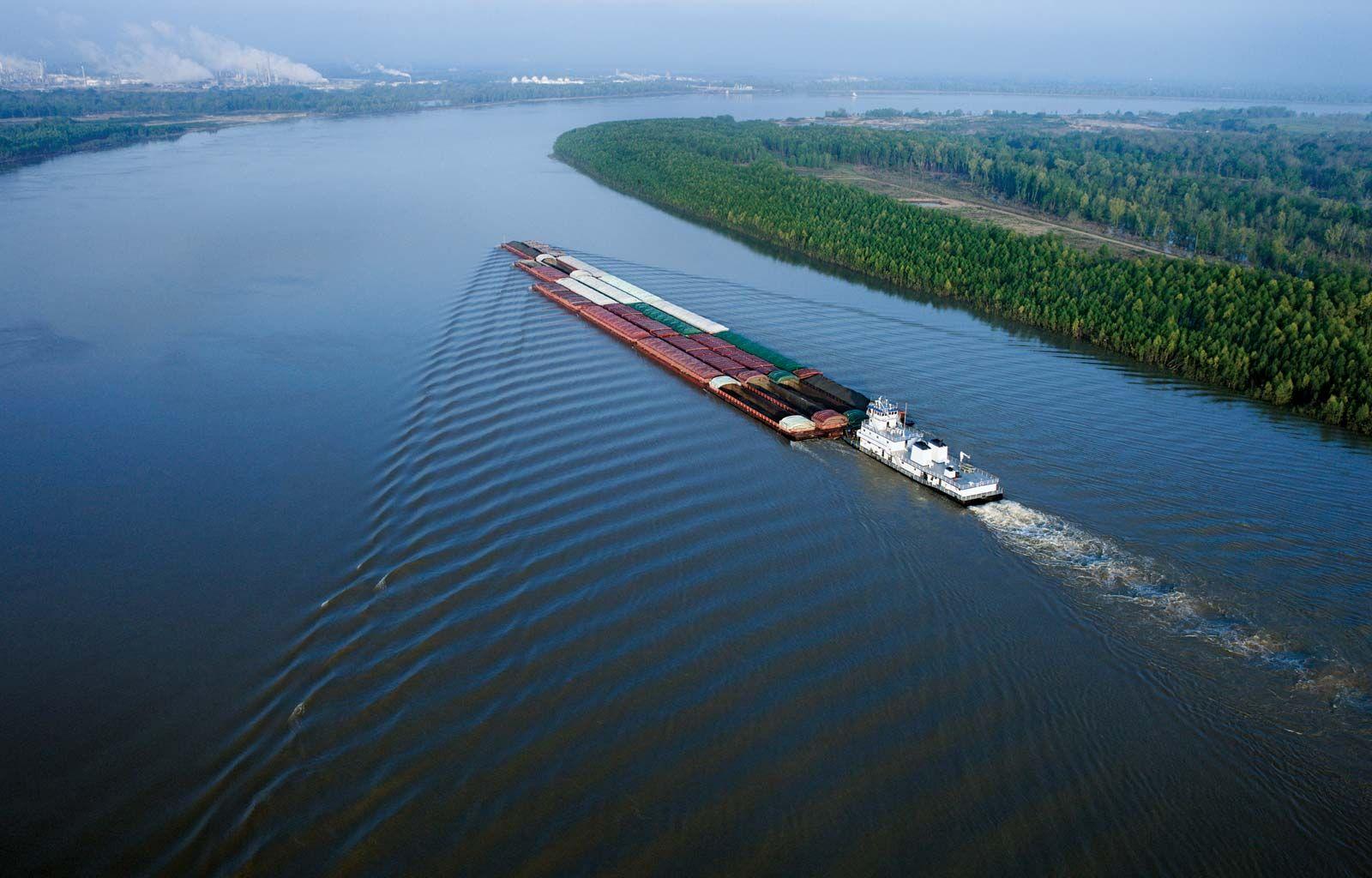
the Mississippi River
The Mississippi River is one of the most important rivers in the world and the second-longest river in North America. Stretching about 2,340 miles (3,770 km), it flows from Lake Itasca in Minnesota down to the Gulf of Mexico. For thousands of years, it has shaped civilizations, powered economies, inspired writers, and defined American history.
Ancient Beginnings
Long before Europeans arrived, Native American tribes lived along the Mississippi River. Tribes such as the Ojibwe, Dakota, Choctaw, Natchez, and Chickasaw depended on the river for food, trade, transportation, and spiritual life.
Around 800 AD, the Mississippian culture built large cities near the river. The most famous was Cahokia Mounds near present-day Illinois. Cahokia was once larger than London at the time and had massive earth mounds, showing that advanced civilizations thrived along the river centuries before colonization.
The river was more than water it was life itself.
European Exploration
In 1541, Spanish explorer Hernando de Soto became the first European to reach the Mississippi River. However, it was French explorers who truly explored and mapped it.
In 1673, Jacques Marquette and Louis Jolliet traveled down the river, claiming the region for France. Later, in 1682, Robert de La Salle claimed the entire Mississippi basin for France and named it Louisiana after King Louis XIV.
For France, the Mississippi was a gateway to wealth and empire.
Colonial Struggles and American Expansion
In 1803, the United States made one of the most important deals in history the Louisiana Purchase. President Thomas Jefferson bought the vast Louisiana territory from France for $15 million, doubling the size of the United States.
The Mississippi River now became the backbone of American expansion westward.
Soon, flatboats and steamboats began moving goods like cotton, timber, and grain up and down the river. Cities like:
New Orleans
St. Louis
Memphis
grew into major trade centers because of the river.
Steamboat Era and Slavery
In the 1800s, steamboats transformed the Mississippi into a commercial highway. The invention of the steam engine allowed boats to travel upstream against the current — something nearly impossible before.
But this era also connected the river to the painful history of slavery. Cotton plantations along the lower Mississippi depended heavily on enslaved Africans. The river became a shipping route for cotton, the backbone of the Southern economy.
It was both a symbol of opportunity and suffering.
The Civil War
During the American Civil War, the Mississippi River became a strategic military target. Whoever controlled the river controlled the South.
In 1863, Union forces under Ulysses S. Grant captured Vicksburg, Mississippi. This victory split the Confederacy in two and was a major turning point in the war.
The river once again shaped history.
Mark Twain and Cultural Legacy
The Mississippi River became immortal in literature thanks to Mark Twain, who worked as a riverboat pilot before becoming a famous author. His novels:
The Adventures of Tom Sawyer
Adventures of Huckleberry Finn
captured life along the Mississippi and turned the river into a symbol of freedom and adventure.
Floods and Engineering
The Mississippi River is powerful and sometimes dangerous. Over the years, it has caused massive floods, including:
The Great Mississippi Flood of 1927
The Flood of 1993
To control flooding, the U.S. government built levees, dams, and spillways. The U.S. Army Corps of Engineers manages much of the river today.
Despite engineering efforts, the Mississippi still shapes its own path.
Modern Importance
Today, the Mississippi River remains one of the busiest commercial waterways in the world. It carries:
Grain from the Midwest
Oil and petroleum
Coal
Industrial goods
It supports millions of jobs and connects 31 U.S. states through its vast drainage basin.
Why the Mississippi Matters
The Mississippi River is not just a river. It is:
A cradle of Native civilizations
A highway of empire
A battlefield of war
A symbol of literature
An economic lifeline
From ancient mounds to modern barges, the Mississippi continues to flow shaping the land and the people who live along its banks.
It is truly the river that built America.

الأقسام
إقرأ المزيد
Chris Hemsworth Chris Hemsworth is an Australian actor best known for playing Thor, the God of Thunder, in the Marvel Cinematic Universe. With his charisma, physical presence, and versatility, he has become one of the biggest stars in Hollywood. Christopher Hemsworth was born on August 11, 1983, in Melbourne, Australia. Early Life and Background Chris Hemsworth grew up in Australia,...

BNXN BNXN, formerly known as Buju, is a Nigerian singer and songwriter celebrated for his smooth vocals, emotive songwriting, and seamless blend of Afrobeats, dancehall, and R and B. His real name is Daniel Benson, and he was born on May 14, 1997, in Lagos State, Nigeria. He grew up in a culturally vibrant environment that shaped his love for music from an early age. ...

Kemi Korede Kemi Korede is a Nigerian actress, filmmaker, producer, and entrepreneur best known for her work in the Yoruba sector of Nollywood. She has become one of the recognizable faces in Yoruba movies, admired for her emotional acting style and her ability to play both dramatic and comedic roles. Over the years, Kemi Korede has built a successful career in the Nigerian film...

Victoria’s POV I arrived in Abuja late in the evening, the sky already dark and heavy with the quiet of a city preparing to sleep. The journey from Lagos had drained every bit of strength from my body. My head throbbed softly, my back ached, and my heart felt even more tired than my bones. But the moment I stepped into my mother’s house, everything changed....

Purity Gakuo In many parts of Africa, the distance between opportunity and survival can be measured in hours. For thousands of fish traders and fishermen across lakes and coastal communities, the race against time begins the moment a fish leaves the water. Without reliable refrigeration, fish spoil quickly under the African sun. What should have been income becomes waste. What...