Thomas Sankara: The Captain Who Dared to Rebuild a Nation
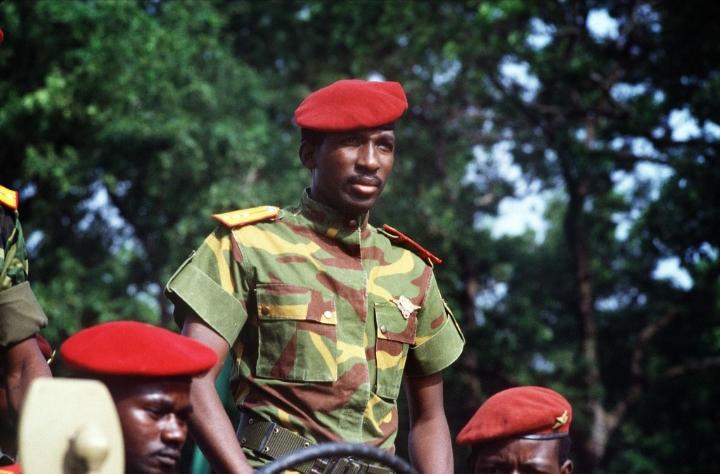
Thomas Sankara: The Captain Who Dared to Rebuild a Nation
Thomas Sankara
There are leaders who inherit systems. There are leaders who manage systems. And then there are leaders who try to tear systems down and rebuild them entirely. Thomas Sankara belonged to the last category. He did not seek comfort in power. He sought transformation. He did not want to polish the chains of colonial legacy. He wanted to break them.
His life was short. His presidency even shorter. But his ideas continue to echo across Africa and beyond.
This is the story of Thomas Isidore Noël Sankara, the captain who tried to change the destiny of Burkina Faso.
A Child Born Into Order and Faith
Thomas Sankara was born on December 21, 1949, in Yako, a small town in what was then called Upper Volta, a French colony in West Africa. His father was a gendarme in the colonial army. His mother was deeply religious.
Growing up in a Catholic household, young Thomas was disciplined and reflective. He served as an altar boy. Priests saw intelligence in him and once believed he might pursue the priesthood.
But the young boy had other ideas forming quietly inside him.
Upper Volta was poor. Resources were limited. Colonial structures remained strong even after nominal independence in 1960. The country’s economy was fragile, and political instability became common.
Thomas observed inequality early. He noticed the distance between political elites and ordinary citizens.
He asked questions.
The Military Path
In his teenage years, Sankara chose a different path from the priesthood. He entered military school. For many African youth of that era, the military offered structure, education, and opportunity.
He trained at the Kadiogo Military Academy in Ouagadougou and later in Madagascar. It was in Madagascar during a period of political upheaval that Sankara witnessed popular uprisings against corrupt leadership.
The experience shaped him deeply.
He began reading revolutionary literature. Marxist theory. Anti imperialist writings. African liberation movements.
He did not merely want to serve in uniform. He wanted to understand power.
A Soldier With a Guitar
Unlike many officers, Sankara was charismatic and artistic. He played guitar in a band. He was known for his modest lifestyle even as he rose in rank.
He rejected arrogance. He preferred conversation to intimidation.
His fellow officers noticed his intellect and discipline. But they also saw something else. He was restless. He believed the military should serve the people, not dominate them.
Entering Politics
Upper Volta in the late 1970s and early 1980s was unstable. Coups were frequent. Governments fell quickly.
In 1983, at just thirty three years old, Thomas Sankara became Prime Minister. His outspoken criticism of imperialism and corruption worried powerful interests, both domestic and foreign.
Shortly after his appointment, he was arrested by conservative elements within the government.
But the arrest backfired.
His supporters mobilized. Young military officers, including his close friend Blaise Compaoré, orchestrated a coup in August 1983 that brought Sankara to power as President.
A new era began.
Renaming the Nation
One of Sankara’s earliest symbolic acts was renaming the country. Upper Volta was a colonial name tied to geography.
He chose Burkina Faso.
It means Land of Upright People.
Names matter.
For Sankara, this was not cosmetic. It was psychological liberation.
He wanted citizens to feel ownership of their identity.
A Radical Agenda
Sankara’s presidency from 1983 to 1987 was bold and uncompromising.
He reduced his own salary. He sold the fleet of luxury government cars and replaced them with modest vehicles. He banned first class flights for officials.
He believed leadership should model sacrifice.
He launched massive vaccination campaigns that reportedly immunized millions of children against diseases like measles and meningitis.
He pushed for women’s rights aggressively. He outlawed female genital mutilation. He encouraged women to work and participate in politics. He appointed women to high positions in government.
He believed that the revolution would fail if women remained oppressed.
Economic Self Reliance
Sankara rejected dependence on foreign aid. He urged Burkina Faso to grow what it ate and eat what it grew.
He launched agricultural reforms. Within a few years, the country achieved food self sufficiency.
He promoted local clothing and encouraged citizens to wear garments made from locally produced cotton.
He criticized foreign debt, calling it a tool of neo colonial control.
At a famous speech at the Organization of African Unity in 1987, he urged African leaders to collectively refuse debt repayment, arguing that the debt was unjust.
His speech was fearless.
It also made enemies.
Environmental Vision
Sankara was ahead of his time in environmental awareness.
He initiated tree planting campaigns to combat desertification.
He promoted water conservation.
He believed the fight against poverty and the fight against environmental degradation were linked.
Criticism and Opposition
Not everyone supported him.
Traditional leaders resented the reduction of their privileges.
Some civil servants resisted rapid reforms.
Foreign governments were uneasy with his radical rhetoric.
Within his own military circle, tensions grew.
Revolution demands discipline. But it also generates fear.
Sankara ruled firmly. Critics accused him of suppressing dissent through revolutionary tribunals.
Supporters argued that extraordinary times required extraordinary measures.
The Betrayal
On October 15, 1987, Thomas Sankara was killed during a coup led by his former ally Blaise Compaoré.
He was thirty seven years old.
Witnesses reported that he refused to fight back. He told his colleagues to stay calm.
Gunfire ended his life.
He was buried quickly in an unmarked grave.
For years, official accounts minimized the circumstances of his death.
Aftermath and Resurrection of Memory
Blaise Compaoré ruled Burkina Faso for twenty seven years after the coup.
For a long time, Sankara’s legacy was suppressed.
But memory does not disappear.
Young Africans rediscovered his speeches.
They quoted his words on social media.
They wore shirts with his image.
In 2014, mass protests forced Compaoré from power.
Sankara’s image returned publicly.
In recent years, investigations into his assassination have advanced, and trials have sought accountability.
The Man Behind the Myth
Thomas Sankara was not perfect.
He was idealistic. Sometimes rigid. Sometimes uncompromising.
But he was authentic.
He did not accumulate wealth.
He did not seek luxury.
He lived modestly and died without fortune.
His life was short, but intense.
Legacy
Today, Sankara is often called Africa’s Che Guevara.
He remains a symbol of integrity and courage.
Students study his speeches.
Activists quote his words.
Leaders are compared to his standard.
He proved that leadership can be principled.
Even if it is dangerous.
Final Reflection
Thomas Sankara began as a boy in a colonial territory.
He became a soldier.
Then a revolutionary.
Then a president.
He renamed a nation.
He challenged global systems.
He elevated women.
He planted trees.
He confronted debt.
And he paid with his life.
But ideas do not die easily.
And the Captain who dared to rebuild a nation continues to inspire long after the gunshots faded.


الأقسام
إقرأ المزيد
Adeniyi Johnson Adeniyi Johnson is a Nigerian Nollywood actor, filmmaker, and television personality best known for his work in Yoruba language films. Over the years he has built a strong reputation as a versatile actor who can perform both comic and serious roles. His charisma, expressive acting style, and dedication to the craft have made him a familiar face in the Nigerian movie industry....

The Rivers State chapter of the All Progressives Congress (APC) has announced that Governor Sim Fubara will return to office on September 18 following his six-month suspension. State APC Chairman, Chief Tony Okocha, said the party is prepared to work with Fubara upon his resumption but emphasized that it will still hold him accountable. “The APC will work with him when he returns....

Eight security personnel—including police officers and members of the Zamfara State Community Protection Guard (CPG), locally known as ‘Askarawa’—were killed on Thursday in an ambush by bandits along the Funtua-Gusau road in Zamfara State. A security official confirmed the attack to SaharaReporters, describing the assailants as “daredevil bandits” who...

There was a time I never imagined drinking garri. Back then, my life was soft. Food was never a discussion. The fridge was always full, the pot was always warm, and hunger was something I only heard about in stories. If I wanted to eat, I ate. If I was tired of rice, there was stew. If stew bored me, there was takeout. Then life changed. It didn’t announce itself. It...

JULIET IBRAHIM Juliet Ibrahim is a Ghanaian-Liberian actress, film producer, singer, and entrepreneur widely recognized for her beauty, versatility, and cross-industry influence in both Ghanaian and Nigerian cinema. Over the years, she has become one of the most prominent female figures in West African entertainment. Early Life and Background Juliet Ibrahim was born on March 3,...