About
About
Niyi Osundare: The Poet Who Turned Thunder into Song
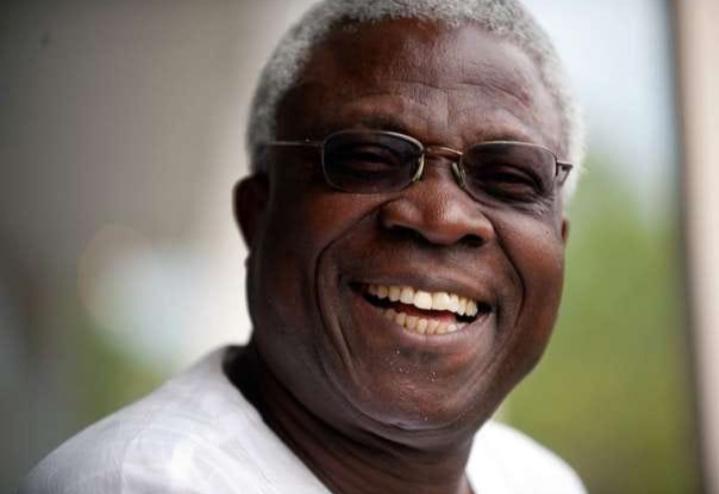
Niyi Osundare:
Some poets write from ivory towers. Others write from the soil. The life of Niyi Osundare belongs to the second kind. His poetry carries the rhythm of village drums, the anger of political protest, and the tenderness of rain on parched earth. He is not merely a writer of verses. He is a public voice, a cultural custodian, and a man who believes poetry must live among the people.
From the red earth of Ekiti to lecture halls across continents, Osundare’s journey is one of language, resistance, and unwavering belief in the power of words.
A Childhood in the Shadow of Hills
Niyi Osundare was born in 1947 in Ikere Ekiti, in southwestern Nigeria. His birth coincided with a period of global transition. Nigeria was still under British colonial rule, but independence was on the horizon.
He was born into a humble farming family. His father tilled the land. His mother nurtured the household. There was no luxury, but there was culture.
Ikere Ekiti was rich in oral tradition. Folktales, proverbs, praise poetry, and communal storytelling shaped everyday life. Words were not abstract things. They were living tools.
Young Niyi grew up listening.
He listened to elders recite stories under moonlight. He listened to farmers speak in metaphors shaped by soil and seasons. He absorbed the music of Yoruba language long before he formally studied literature.
That oral inheritance would later become the backbone of his poetry.
Education and the Awakening of Purpose
Osundare attended local schools before gaining admission to the University of Ibadan, one of Nigeria’s premier institutions. There, he studied English.
University life in the late 1960s was politically charged. Nigeria had just endured a brutal civil war. Military rule was tightening its grip. Students debated politics passionately.
At Ibadan, Osundare encountered the towering presence of Wole Soyinka and the legacy of Chinua Achebe. Nigerian literature was already reshaping global narratives about Africa.
But Osundare wanted something slightly different.
He admired the literary sophistication of earlier writers, but he felt that poetry had become too elitist, too distant from ordinary people. He believed poetry should not require a dictionary at every line.
He wanted poetry that farmers could hear and understand. Poetry that spoke plainly but powerfully.
After earning his degree at Ibadan, he pursued further studies at the University of Leeds in the United Kingdom, where he earned a doctorate. Exposure to global literary traditions expanded his technical skill, but he never abandoned his cultural roots.
The Birth of a Public Poet
Osundare’s early poetry collections began to attract attention in the 1970s and 1980s. But it was his 1986 collection, The Eye of the Earth, that established him as a major voice.
The Eye of the Earth was more than poetry. It was ecological lament, political critique, and cultural celebration rolled into one. At a time when environmental issues were rarely central in African literature, Osundare wrote passionately about land degradation and exploitation.
He saw how oil exploration and corruption were harming Nigeria’s environment. He understood that the destruction of land was the destruction of identity.
His poems carried urgency. They were lyrical yet accessible. He used repetition, rhythm, and proverbs to echo oral tradition.
He was not writing to impress critics. He was writing to awaken citizens.
Poetry as Protest
Nigeria in the 1980s and 1990s endured prolonged military rule under leaders like General Buhari and General Abacha. Freedom of speech was restricted. Activists were harassed.
Osundare refused silence.
His poetry became openly critical of dictatorship and corruption. He wrote about injustice, inequality, and broken promises.
Unlike some writers who coded their criticism in heavy symbolism, Osundare often spoke directly. His verses were sharp but musical.
He believed the poet had a responsibility to society. Poetry was not decoration. It was intervention.
The Teacher and the Mentor
In addition to writing, Osundare built a respected academic career. He taught at the University of Ibadan for many years, influencing generations of students.
In the early 2000s, he moved to the United States and became a professor at the University of New Orleans.
Teaching allowed him to spread his philosophy of accessible poetry. He encouraged students to write clearly, honestly, and courageously.
His classrooms were known for energy. He did not separate life from literature. For him, the two were intertwined.
Surviving Hurricane Katrina
In 2005, Hurricane Katrina devastated New Orleans. Osundare and his family were among those affected. Their home was destroyed.
The experience was traumatic. They lost manuscripts, books, and personal belongings. Yet Osundare survived.
Later, he wrote about the experience, reflecting on displacement and resilience. The hurricane became another layer in his understanding of vulnerability and survival.
Just as Nigeria had tested him politically, Katrina tested him physically.
He endured both.
A Poet of the People
What sets Niyi Osundare apart is his insistence that poetry belongs to the public.
He often performed his poems with dramatic flair, using call and response techniques drawn from Yoruba oral performance. He brought poetry out of lecture halls and into open spaces.
He believed that language must serve community.
His works address farmers, workers, leaders, children. He writes about rain and drought, love and betrayal, hope and disappointment.
Themes That Define His Work
Across his many collections, recurring themes include:
Environmental protection
Political accountability
Cultural identity
Social justice
The dignity of ordinary people
Osundare’s voice blends lyric beauty with social critique. He refuses to separate aesthetics from ethics.
Recognition and Awards
Over the years, Osundare has received numerous awards and honors. He has won the Noma Award for Publishing in Africa and has been recognized internationally for his contribution to literature.
Yet despite global recognition, he remains rooted in Nigerian soil, at least metaphorically. His imagery continues to draw from villages, forests, and marketplaces.
Standing Among Giants
Osundare belongs to the lineage of Nigerian literary heavyweights alongside Wole Soyinka and Chinua Achebe, yet his mission has been distinct.
He democratized poetry.
Where some poetry felt distant from ordinary readers, Osundare insisted on clarity without sacrificing artistry.
A Life of Conviction
Niyi Osundare’s biography is not marked by scandal or sudden fame. It is marked by steady conviction.
From a boy listening to moonlight tales in Ikere Ekiti to a professor shaping global conversations, his journey reflects faith in language.
He has written dozens of poetry collections, essays, and critical works. Through each, he reinforces a simple belief: words matter.
The Meaning of His Journey
Osundare once argued that poetry must return to the marketplace. It must breathe among people.
His life embodies that philosophy.
He did not allow academia to distance him from community. He did not allow power to silence him.
Through dictatorship, environmental crisis, personal loss, and migration, he kept writing.
Niyi Osundare continues to stand as one of Africa’s most powerful poetic voices.
He turned thunder into song. He turned soil into metaphor. He turned protest into art.
And in doing so, he proved that poetry is not fragile.
It is fire.

Kategoriler
Read More
📘 COMPANY PROFILE – FINTTER CYBER INTELLIGENCE & SURVEILLANCE SOLUTIONS 📌 1. Company Overview Fintter Cyber Intelligence & Surveillance Solutions is a Lagos-based digital security and intelligence company specializing in OSINT investigations, surveillance technology, GPS tracking, CCTV installations, and secured digital solutions...

Residents of Kafanchan and Zango-Kataf Local Government Area of Kaduna State have accused the council chairman, Mr. Bege Joseph Gaya, of allegedly using the police to arrest and detain a young man over a Facebook post critical of the handling of Christmas welfare packages. The man, Julius Shehu Tagwai, was reportedly arrested on January 9 after honouring an invitation to the Zonkwa Police...

Chinko Ekun Chinko Ekun, whose real name is Oladipo Olamide Emmanuel, is a Nigerian rapper, songwriter, and actor known for his energetic rap style and use of Yoruba language in his music. He gained major recognition in the Nigerian music industry with his hit song Able God, which became a street anthem. Early Life and Background Chinko Ekun was born on September 13, 1993, in...

This is my story, told in my own voice, because silence almost buried me alive. I met Richardson when I was still learning how to believe in good things. He was gentle in the beginning soft words, steady attention, promises that wrapped around my loneliness like warmth. He said he loved me, and I wanted to be loved so badly that I ignored the small discomforts. The moments when my instincts...

A Story That Feels Like Home It was a quiet evening in Lagos. The kind of evening where the air feels heavy, not because of the weather, but because life has been a little too hard for too long. Amara sat by the window, staring at her phone. She had just received a message from her younger brother. “Mum has been asking about you. She misses you.” Her chest tightened. It had...