Über
Über
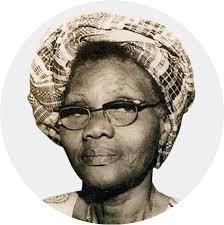
Funmilayo Ransome Kuti; Nigeria Educator and political Activist
Funmilayo Ransome-Kuti
Funmilayo Ransome-Kuti, widely recognized as the first Nigerian woman to drive a car, was far more than a record-breaking motorist.
She was a fearless activist, educator, nationalist, and women’s rights pioneer whose life transformed the political and social landscape of Nigeria. Born on October 25, 1900, in Abeokuta, Ogun State, she grew up in a time when girls’ education was not considered important. Yet, from a young age, she showed uncommon intelligence, confidence, and leadership qualities.
She attended Abeokuta Grammar School and later traveled to England for further studies at Wincham Hall School in Cheshire. At a time when many Nigerian women were confined to domestic roles, Funmilayo experienced Western education and exposure that broadened her vision. When she returned to Nigeria, she became a teacher and later married Reverend Israel Oludotun Ransome-Kuti. Their marriage was progressive for its time; both believed in equality, education, and social reform.
Driving a car in the early 20th century was rare even among men in Nigeria. Automobiles were luxury items owned mainly by colonial officials and wealthy elites. For a Nigerian woman to drive was almost unheard of. Funmilayo broke that barrier and became the first Nigerian woman known to drive a car. This act alone symbolized independence, courage, and defiance of gender restrictions. It sent a strong message that women could step into spaces traditionally reserved for men.
However, her greatest legacy was not about driving but about driving change.
In the 1940s, she founded the Abeokuta Women’s Union (AWU), a powerful organization that mobilized thousands of market women to fight against unfair taxation imposed by the colonial administration and the Alake (traditional ruler) of Abeokuta. The taxes disproportionately affected women, many of whom were poor traders struggling to survive. Funmilayo organized protests, petitions, and demonstrations that shook the colonial government.
Under her leadership, women marched in large numbers, sang protest songs, and demanded accountability. She was bold and fearless, confronting authority directly.
Her activism led to the temporary abdication of the Alake of Abeokuta in 1949 and significant reforms in local governance. This victory was historic it proved that organized women could challenge both traditional and colonial power structures.
Funmilayo was also a strong advocate for women’s suffrage and political representation. She fought for Nigerian women to have the right to vote and participate in governance. Her activism extended beyond Abeokuta;
she became a national figure and later served as one of the few women in Nigeria’s pre-independence political movements. She was involved with the National Council of Nigeria and the Cameroons (NCNC), working alongside prominent leaders fighting for independence.
Internationally, she gained recognition for her activism. She traveled widely, speaking about women’s rights and African liberation. Because of her strong opposition to colonialism and her outspoken political views, the British colonial government monitored her activities closely. She even faced harassment and travel restrictions at certain points in her life.
Funmilayo was also the mother of renowned Afrobeat musician Fela Kuti. Fela often credited his mother as a major influence on his political consciousness and activism. Through her courage and radical thinking, she shaped not only her children’s lives but also the cultural and political direction of Nigeria. Another of her sons, Olikoye Ransome-Kuti, later became Nigeria’s Minister of Health and a respected public health advocate.
Her life was not without tragedy. In 1977, during a military raid on her son Fela’s compound known as the Kalakuta Republic, Funmilayo was thrown from a window by soldiers. The injuries she sustained led to her death on April 13, 1978. She was 77 years old. Her death was widely mourned and seen as a painful symbol of state brutality.
Despite her passing, her legacy lives on. She is remembered as the “Lioness of Lisabi,” a title reflecting her bravery and fierce defense of justice. Streets, schools, and institutions in Nigeria have been named in her honor. More importantly, every Nigerian woman who occupies leadership positions today stands on foundations she helped build.
Funmilayo Ransome-Kuti shattered stereotypes in multiple ways. She proved that education empowers women. She demonstrated that women can organize, lead, and demand accountability. She showed that courage can confront oppression. And yes, she symbolically took the driver’s seat literally and politically at a time when society tried to keep women in the passenger seat.
Her story is one of resilience, boldness, and vision. She was not just the first woman to drive a car in Nigeria; she was a woman who drove a nation toward awareness, equality, and progress.

Kategorien
Mehr lesen
Chief Zebrudaya Okoroigwe Nwogbo In the golden age of Nigerian television, when families gathered around black and white screens and laughter echoed through living rooms, one character stood taller than the rest. He spoke in exaggerated grammar, dressed like a wealthy village chief, and carried himself with theatrical pride. He was loud, dramatic, unforgettable. His name was Chief...

Alain Delon Alain Delon is a legendary French actor, producer, and one of the most iconic figures in European cinema. Known for his striking looks, calm intensity, and powerful screen presence, he became a global star during the 1960s and remains a symbol of classic French film. Alain Fabien Maurice Marcel Delon was born on November 8, 1935, in Sceaux, France. Early Life and Background...

The Rivers State chapter of the All Progressives Congress (APC) has announced that Governor Sim Fubara will return to office on September 18 following his six-month suspension. State APC Chairman, Chief Tony Okocha, said the party is prepared to work with Fubara upon his resumption but emphasized that it will still hold him accountable. “The APC will work with him when he returns....

Victoria’s POV That night, sleep refused to come. I lay on my bed staring at the ceiling, my mother’s words replaying over and over in my head like a stubborn echo. Love does not feed a family. I turned from one side to the other, hugging my pillow tightly, wishing it were Daniel’s chest instead. I loved him. That part was certain. But loving him suddenly felt like...

Catherine Deneuve Catherine Deneuve is a legendary French actress and one of the most iconic figures in European cinema. Known for her elegance, beauty, and calm, mysterious screen presence, she has had a long and influential career spanning several decades. She was born Catherine Fabienne Dorléac on October 22, 1943, in Paris, France. Early Life and Background Catherine Deneuve...