About
About
DELE GIWA ( Nigeria journalist and Editor)
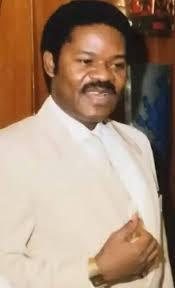
Dele Giwa
Dele Giwa was one of Nigeria’s most courageous and influential journalists, remembered for his fearless commitment to truth and press freedom.
He was born on March 16, 1947, in Ile-Ife, in present-day Osun State, Nigeria. From a young age, Giwa showed strong intelligence and curiosity, qualities that later defined his journalism career.
He began his early education in Nigeria before traveling to the United States for further studies. Giwa attended Brooklyn College in New York, where he studied English.
While in America, he developed a deep understanding of modern journalism practices and democratic values. His exposure to Western media systems greatly influenced his professional standards and vision for Nigerian journalism.
After returning to Nigeria in the 1970s, Dele Giwa quickly rose in the media industry. He worked with prominent media organizations, including the Daily Times of Nigeria and later became one of the pioneering editors of Newswatch magazine in 1984. Newswatch was co-founded by Giwa alongside Ray Ekpu, Dan Agbese, and Yakubu Mohammed. The magazine became widely respected for its investigative reporting, bold political analysis, and professional presentation.
It introduced a new style of journalism in Nigeria, focusing on in-depth stories and holding powerful leaders accountable.
During the 1980s, Nigeria was under military rule, a period marked by strict control of the press and limited freedom of speech. Despite the risks, Dele Giwa remained outspoken and critical of corruption, human rights abuses, and government policies. His fearless reporting earned him both admiration and enemies. He believed strongly that journalism should serve the public interest and challenge injustice, regardless of the consequences.
On October 19, 1986, Dele Giwa was assassinated in a shocking and tragic manner. He was killed by a parcel bomb delivered to his home in Ikeja, Lagos. The incident marked the first known letter-bomb assassination in Nigeria’s history and sent shockwaves across the country and beyond. His death raised serious concerns about press freedom and the safety of journalists in Nigeria. Although investigations were conducted, his murder has never been conclusively resolved, leaving a painful chapter in Nigeria’s history.
Dele Giwa’s assassination became a symbol of the dangers faced by journalists who speak truth to power. His courage inspired many media professionals to continue fighting for transparency, accountability, and democratic governance. Even decades after his death, he remains a powerful symbol of resistance against oppression in Nigeria.
Beyond his professional life, Giwa was known as a charismatic and intellectual figure. He was articulate, bold, and deeply passionate about national development.
His colleagues described him as hardworking and visionary, someone who believed that a free press was essential for a healthy democracy.
Today, Dele Giwa is remembered as a martyr for press freedom in Nigeria.
His legacy lives on through investigative journalism and the continued struggle for freedom of expression in the country. He demonstrated that journalism is not just a profession but a responsibility to society. Through his life and sacrifice, Dele Giwa helped shape the foundation of modern Nigerian media and remains an enduring inspiration to journalists across Africa.

Categorieën
Read More
Sophie chisom Sophie Chisom Ikemba also known as you Sophie Ososo is a beautiful Nigerian model, actress, social media influencer, chef, skit maker, brand ambassador and content creator born 12th May 1999. She's currently 25 years old and hails from Inewi, Anambra state Nigeria. She is of Igbo descent and Christian by religion.Chisom Ikemba Biography Chisom Ikemba is a Nigerian...

Kemity Kemity is a Nigerian actress, comedian, content creator, and social media personality. She is well known for her comic roles in Yoruba Nollywood movies and comedy skits. Early Life and Background Kemity whose real name is Ariyo Oluwakemisola Apesin was born in Nigeria and comes from a Yoruba background. She grew up in a lively environment where humor and storytelling were...
Teju Cole: Some people travel the world to escape. Others travel to understand it. The life of Teju Cole is the story of a man who walks through cities not just with his feet, but with his mind wide open. He is a novelist, essayist, art historian, and photographer whose work blends observation with memory, politics with poetry. Teju Cole does not shout his ideas. He examines them. He...

The Petroleum and Natural Gas Senior Staff Association of Nigeria (PENGASSAN) has accused the Dangote Petroleum Refinery of unlawfully sacking about 800 Nigerian workers for joining the union, while retaining over 2,000 Indian expatriates. PENGASSAN’s General Secretary, Lumumba Okugbawa, claimed the dismissals came immediately after the workers completed their unionisation process,...

A Story That Feels Like Home It was a quiet evening in Lagos. The kind of evening where the air feels heavy, not because of the weather, but because life has been a little too hard for too long. Amara sat by the window, staring at her phone. She had just received a message from her younger brother. “Mum has been asking about you. She misses you.” Her chest tightened. It had...