About
About
The Idol of Ika Village
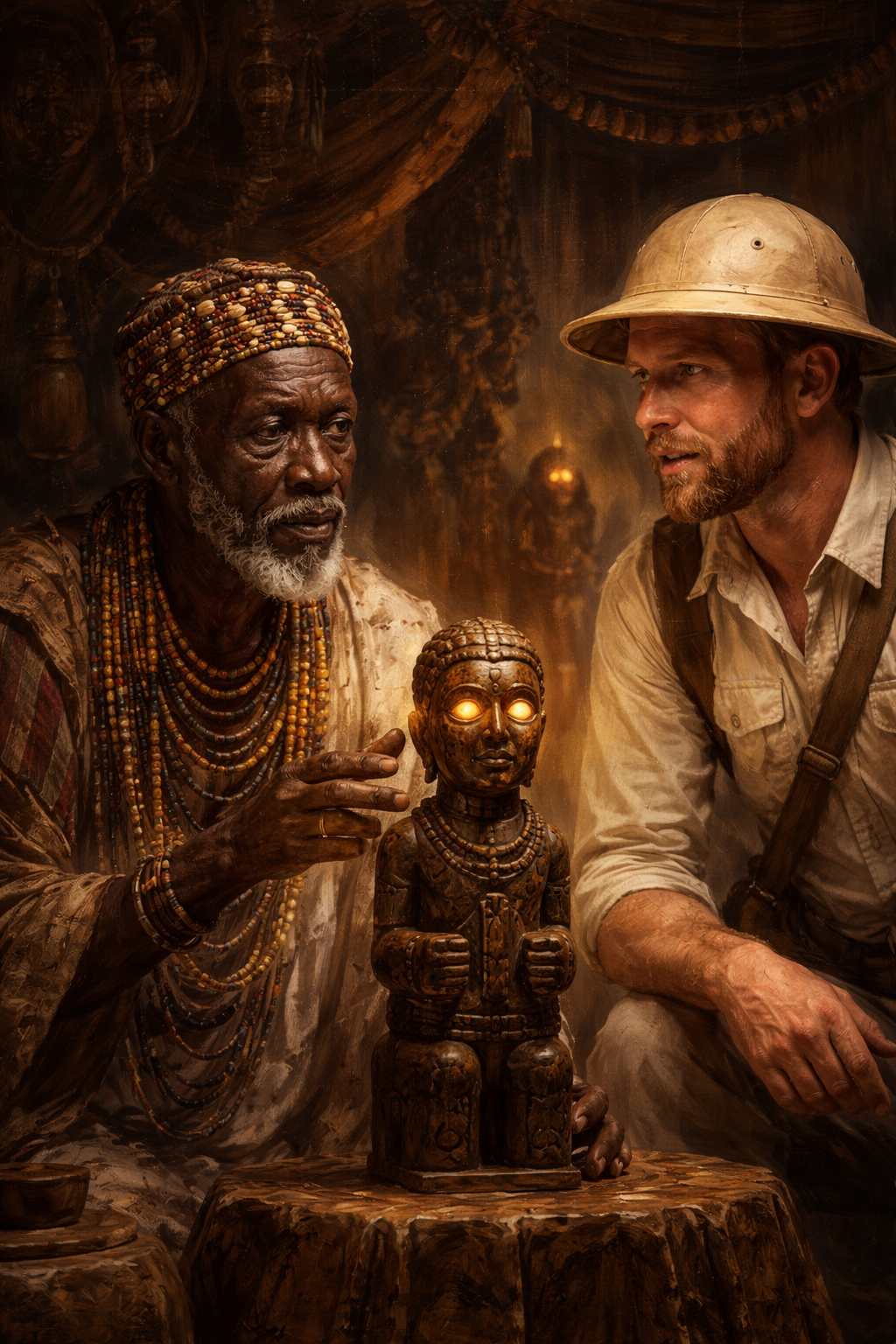
In the heart of Ika village, beyond the red earth roads and ancient iroko trees, lived a man known not by his birth name but by a title whispered with reverence—BABA. No one in the village dared call him anything else. The name carried weight, history, and fear.
BABA was the custodian of an ancient idol inherited from his father, and his father before him. This was no ordinary shrine figure. The idol possessed a rare and terrifying power: when questions were asked about the unknown—things hidden, things lost, things yet to come—it answered in a loud, clear human voice, echoing through the sacred hut. Many villagers avoided the place, not out of hatred, but out of respect for forces older than memory.
News of this mysterious idol traveled far beyond Ika village. One day, white men arrived, driven by curiosity and disbelief. They had heard stories of an object that spoke like a man and revealed secrets no living soul could know. They laughed at first—until they witnessed it themselves.
Inside the shrine, they asked their questions.
And the idol answered.
The visitors were shaken.
Eager to possess such power, the white men made an offer. They asked BABA to build another idol—one exactly like the original. After days of negotiation, a price was agreed upon. Using the same materials, rituals, and chants passed down through generations, BABA created a new idol for them.
When the white men tested it, the idol spoke.
It worked.
Satisfied, they prepared to leave—then one of them made a bold proposal.
“Let us take the old one instead,” he said. “We will pay you double. After all, you can always build another.”
The village gasped when BABA agreed.
The original idol—the one inherited from his own father, the one soaked in ancestral blood, prayers, and sacrifice—was taken away.
At first, nothing seemed wrong.
But weeks later, the new idol stopped working.
No voice.
No answers.
Only silence.
BABA performed rituals. He repeated incantations. He called upon the spirits—but the power was gone. The truth became clear too late: some things cannot be recreated. The strength of the original idol was not in the wood or the carving, but in inheritance, lineage, and ancestral bonds.
What was built could speak for a moment.
But what was inherited spoke forever.
And so, Ika village learned a painful lesson—
not all power can be sold, and not all spirits accept replacement.

Categories
Read More
Chidi Dike Chidi Dike is a fast-rising Nigerian actor and model known for his romantic roles and charming screen presence in Nollywood films. With his good looks, calm delivery, and emotional depth, he has quickly become one of the new-generation actors gaining popularity in Nigeria’s movie industry Early Life and Background Chidi Dike was born in Nigeria and hails from...

Yetunde Barnabas Yetunde Barnabas is a Nigerian beauty queen, model, actress, and entrepreneur who rose to prominence after winning a major pageant title. Known for her elegance, confidence, and strong media presence, she has built a successful career in entertainment and fashion while also gaining public attention for her high-profile marriage. Age and Early Life Yetunde Barnabas...

Baba Adigwe let the cowries scatter across the dusty shrine floor. They clicked softly, then went silent. When he lifted his head, his eyes were red deep, burning red, like embers that had waited too long for air. “If you want your son to live,” he said, voice flat, “you must lie with twenty-one strong men in seven days.” The words hit me like a slap....

Big news for Africa’s industrial landscape! According to a recent report by The African Exponent, Nigeria has been ranked 3rd among the top 10 manufacturing countries in Africa, solidifying its place as a growing force in the continent’s economic future. The report highlights Nigeria's evolving industrial sector and its potential for investment, innovation, and job creation —...

Aamir Khan Aamir Khan is known as an Indian actor, filmmaker, and philanthropist who has played a major role in shaping modern Bollywood cinema. He is widely regarded as one of the most influential actors in India and is famous for choosing meaningful and socially relevant films. Early Life Aamir Khan was born on March 14, 1965, in Mumbai. He was born into a family deeply...