• Nigeria’s health system is not just underperforming — in many cases, it is dangerously broken.

    As I mourned my mother, I read about the tragic death of Nkanu, one of Chimamanda Ngozi Adichie’s twins. That news reopened wounds that were still raw. My late mother was also a twin, and the loss struck painfully close to home.

    This is no longer just grief. It is anger — and a demand to speak out.

    Over the years, my family and I have narrowly escaped medical disasters:
    • A wrong diagnosis that almost led to my young child undergoing an unnecessary, life-altering surgery.
    • My father’s near-death experience caused by poor coordination, faulty equipment, and a collapsed public hospital system.
    • My own escape from a dangerous misdiagnosis that could have placed me on insulin for life.
    • And finally, my mother’s last battle with cancer — marked not only by illness, but by avoidable pain, procedural neglect, and indignity.

    These experiences are not shared to attack individual hospitals or doctors, but to expose a systemic failure that continues to cost Nigerians their lives quietly and without accountability.

    Broken equipment, obsolete diagnostics, strikes, underpaid health workers, and weak regulation have turned hospitals into places of fear rather than healing. Meanwhile, our best doctors flee abroad, and ordinary Nigerians are left to gamble with their lives.

    Healthcare must be treated as critical national infrastructure — not a budgetary afterthought. Until government acts decisively and accountability is enforced, more families will continue to suffer in silence.

    Silence is no longer an option.

    #NigeriaHealthCrisis #Opinion #HealthcareInNigeria #MedicalNegligence #PatientSafety #HealthReform #NigeriaNews
    Nigeria’s health system is not just underperforming — in many cases, it is dangerously broken. As I mourned my mother, I read about the tragic death of Nkanu, one of Chimamanda Ngozi Adichie’s twins. That news reopened wounds that were still raw. My late mother was also a twin, and the loss struck painfully close to home. This is no longer just grief. It is anger — and a demand to speak out. Over the years, my family and I have narrowly escaped medical disasters: • A wrong diagnosis that almost led to my young child undergoing an unnecessary, life-altering surgery. • My father’s near-death experience caused by poor coordination, faulty equipment, and a collapsed public hospital system. • My own escape from a dangerous misdiagnosis that could have placed me on insulin for life. • And finally, my mother’s last battle with cancer — marked not only by illness, but by avoidable pain, procedural neglect, and indignity. These experiences are not shared to attack individual hospitals or doctors, but to expose a systemic failure that continues to cost Nigerians their lives quietly and without accountability. Broken equipment, obsolete diagnostics, strikes, underpaid health workers, and weak regulation have turned hospitals into places of fear rather than healing. Meanwhile, our best doctors flee abroad, and ordinary Nigerians are left to gamble with their lives. Healthcare must be treated as critical national infrastructure — not a budgetary afterthought. Until government acts decisively and accountability is enforced, more families will continue to suffer in silence. Silence is no longer an option. #NigeriaHealthCrisis #Opinion #HealthcareInNigeria #MedicalNegligence #PatientSafety #HealthReform #NigeriaNews
    0 Commentaires ·0 Parts ·3KB Vue
  • FG Launches Recruitment of National Health Fellows to Strengthen Rural Healthcare in Nasarawa

    The Federal Government has commenced the recruitment of young medical professionals to serve as National Health Fellows, a presidential initiative aimed at fostering a new generation of leaders in the health sector.

    The program targets the selection of thirteen youths from the thirteen local government areas of Nasarawa State, with the goal of strengthening local capacity for health system reform and improving service delivery, particularly for rural communities.

    Implemented by the Federal Ministry of Health and Social Welfare, in collaboration with state health ministries and development partners, the National Health Fellows program seeks to equip young professionals with leadership and management skills in primary healthcare facilities across Nigeria’s 774 local government areas. Each local government area will host one health fellow.

    The current session focuses on selecting fellows for Nasarawa State, with the selection panel evaluating applicants on areas of competence that will enhance healthcare delivery in rural communities. The panel emphasizes that the recruitment process will be merit-based, ensuring fairness, transparency, and credibility.

    Selected fellows will serve for a one-year tenure, during which they will contribute to healthcare reforms and youth leadership development at both national and state levels.

    This initiative reflects the government’s commitment to developing youth leadership in the health sector while addressing critical gaps in rural healthcare delivery.

    FG Launches Recruitment of National Health Fellows to Strengthen Rural Healthcare in Nasarawa The Federal Government has commenced the recruitment of young medical professionals to serve as National Health Fellows, a presidential initiative aimed at fostering a new generation of leaders in the health sector. The program targets the selection of thirteen youths from the thirteen local government areas of Nasarawa State, with the goal of strengthening local capacity for health system reform and improving service delivery, particularly for rural communities. Implemented by the Federal Ministry of Health and Social Welfare, in collaboration with state health ministries and development partners, the National Health Fellows program seeks to equip young professionals with leadership and management skills in primary healthcare facilities across Nigeria’s 774 local government areas. Each local government area will host one health fellow. The current session focuses on selecting fellows for Nasarawa State, with the selection panel evaluating applicants on areas of competence that will enhance healthcare delivery in rural communities. The panel emphasizes that the recruitment process will be merit-based, ensuring fairness, transparency, and credibility. Selected fellows will serve for a one-year tenure, during which they will contribute to healthcare reforms and youth leadership development at both national and state levels. This initiative reflects the government’s commitment to developing youth leadership in the health sector while addressing critical gaps in rural healthcare delivery.
    0 Commentaires ·0 Parts ·2KB Vue
  • Are Iran’s Hospitals Collapsing Under Protest Violence? Doctors Say Wards Are Overwhelmed as Death Toll Rises and Global Leaders Warn Tehran

    Are Iran’s healthcare systems being pushed to the brink as nationwide protests intensify? Medical workers in Tehran and other cities say hospitals are overwhelmed by a surge of injured protesters, many suffering gunshot wounds to the head and eyes, raising urgent questions about the state’s handling of civil unrest.

    According to doctors who contacted international media through satellite internet amid a near-total blackout, Tehran’s Farabi Hospital—one of the country’s main eye specialist centres—has entered crisis mode. Non-urgent surgeries have been suspended, emergency staff recalled, and facilities stretched beyond capacity. A medic in Shiraz reported that hospitals lack enough surgeons to cope with the growing number of casualties.

    Human rights organisations estimate that at least 50 protesters have been killed since demonstrations began on December 28, with more than 2,300 arrests nationwide. The Norway-based Iran Human Rights group says the death toll includes children, while families of victims continue to speak out despite heavy restrictions on media and internet access. With most foreign journalists barred and communications cut, verifying events inside Iran has become increasingly difficult.

    International pressure is mounting. The United Nations has expressed deep concern over the loss of life, stressing that citizens have the right to peaceful protest and that governments must protect that right. Leaders from France, the UK and Germany issued a joint statement urging Iranian authorities to allow freedom of expression and assembly without fear of reprisals. Meanwhile, the United States warned Tehran against further violence, while Iran accused Washington of fuelling what it called “subversive acts.”

    Iran’s Supreme Leader, Ayatollah Ali Khamenei, has remained defiant, declaring that the Islamic Republic will not retreat in the face of unrest and vowing to confront what he described as “destructive elements.” In contrast, opposition voices abroad, including Reza Pahlavi, son of Iran’s last shah, praised the protests and called for continued demonstrations.

    As hospitals struggle, internet blackouts deepen, and casualty numbers climb, the crisis raises urgent questions: Is Iran’s health system reaching a breaking point? Can the government contain the unrest without further bloodshed? And how will international pressure shape what happens next?


    Are Iran’s Hospitals Collapsing Under Protest Violence? Doctors Say Wards Are Overwhelmed as Death Toll Rises and Global Leaders Warn Tehran Are Iran’s healthcare systems being pushed to the brink as nationwide protests intensify? Medical workers in Tehran and other cities say hospitals are overwhelmed by a surge of injured protesters, many suffering gunshot wounds to the head and eyes, raising urgent questions about the state’s handling of civil unrest. According to doctors who contacted international media through satellite internet amid a near-total blackout, Tehran’s Farabi Hospital—one of the country’s main eye specialist centres—has entered crisis mode. Non-urgent surgeries have been suspended, emergency staff recalled, and facilities stretched beyond capacity. A medic in Shiraz reported that hospitals lack enough surgeons to cope with the growing number of casualties. Human rights organisations estimate that at least 50 protesters have been killed since demonstrations began on December 28, with more than 2,300 arrests nationwide. The Norway-based Iran Human Rights group says the death toll includes children, while families of victims continue to speak out despite heavy restrictions on media and internet access. With most foreign journalists barred and communications cut, verifying events inside Iran has become increasingly difficult. International pressure is mounting. The United Nations has expressed deep concern over the loss of life, stressing that citizens have the right to peaceful protest and that governments must protect that right. Leaders from France, the UK and Germany issued a joint statement urging Iranian authorities to allow freedom of expression and assembly without fear of reprisals. Meanwhile, the United States warned Tehran against further violence, while Iran accused Washington of fuelling what it called “subversive acts.” Iran’s Supreme Leader, Ayatollah Ali Khamenei, has remained defiant, declaring that the Islamic Republic will not retreat in the face of unrest and vowing to confront what he described as “destructive elements.” In contrast, opposition voices abroad, including Reza Pahlavi, son of Iran’s last shah, praised the protests and called for continued demonstrations. As hospitals struggle, internet blackouts deepen, and casualty numbers climb, the crisis raises urgent questions: Is Iran’s health system reaching a breaking point? Can the government contain the unrest without further bloodshed? And how will international pressure shape what happens next?
    0 Commentaires ·0 Parts ·3KB Vue
  • Is Nigeria’s Health System Heading for Shutdown? JOHESU Orders Total Work Stoppage Over Tinubu Government’s ‘No Work, No Pay’ Policy

    Is Nigeria on the brink of another nationwide healthcare crisis? The Joint Health Sector Unions (JOHESU) has directed its members across federal health institutions to withdraw their services indefinitely, escalating its standoff with the Tinubu administration over a newly enforced “No Work, No Pay” directive from the Federal Ministry of Health.

    According to a statement issued by JOHESU leader Comrade Abubakar Sani Aminu, the policy was introduced without consultation or dialogue, a move the union describes as a direct violation of workers’ rights and collective bargaining principles. Why, the union asks, would the government impose such a far-reaching directive at a time when negotiations are still ongoing?

    JOHESU says hospital chief executives have been instructed to enforce the policy, which the union believes is a deliberate attempt to weaken organised labour and fracture solidarity among health workers. Aminu warned members that the directive represents “the final weapon” being deployed by the government to break the union’s resolve. Could this mark a turning point in labour relations within Nigeria’s health sector?

    In response, the union has ordered a total work stoppage, explicitly rejecting skeleton services, partial compliance, or compromise of any kind. “There should be no skeleton services, no attempt to help out, or compromise in any way,” the statement declared. JOHESU insists that only collective action can protect workers’ rights and prevent what it calls a dangerous precedent that could affect future industrial disputes.

    What does this mean for patients and public hospitals already struggling with limited resources? While the full impact on healthcare delivery remains uncertain, past JOHESU strikes have caused widespread disruptions across federal medical institutions, raising fears of another wave of service paralysis.

    The union has reaffirmed its commitment to what it describes as a fight for fair treatment, respect for dialogue, and protection of labour rights, urging members nationwide to remain united until its demands are addressed. As of the time of reporting, the Federal Ministry of Health has not issued an official response.

    Will the government reconsider its stance, or is Nigeria heading toward another prolonged healthcare shutdown? And in a sector where lives depend on continuity of care, who ultimately bears the cost of this policy standoff—workers, patients, or the state itself?

    Is Nigeria’s Health System Heading for Shutdown? JOHESU Orders Total Work Stoppage Over Tinubu Government’s ‘No Work, No Pay’ Policy Is Nigeria on the brink of another nationwide healthcare crisis? The Joint Health Sector Unions (JOHESU) has directed its members across federal health institutions to withdraw their services indefinitely, escalating its standoff with the Tinubu administration over a newly enforced “No Work, No Pay” directive from the Federal Ministry of Health. According to a statement issued by JOHESU leader Comrade Abubakar Sani Aminu, the policy was introduced without consultation or dialogue, a move the union describes as a direct violation of workers’ rights and collective bargaining principles. Why, the union asks, would the government impose such a far-reaching directive at a time when negotiations are still ongoing? JOHESU says hospital chief executives have been instructed to enforce the policy, which the union believes is a deliberate attempt to weaken organised labour and fracture solidarity among health workers. Aminu warned members that the directive represents “the final weapon” being deployed by the government to break the union’s resolve. Could this mark a turning point in labour relations within Nigeria’s health sector? In response, the union has ordered a total work stoppage, explicitly rejecting skeleton services, partial compliance, or compromise of any kind. “There should be no skeleton services, no attempt to help out, or compromise in any way,” the statement declared. JOHESU insists that only collective action can protect workers’ rights and prevent what it calls a dangerous precedent that could affect future industrial disputes. What does this mean for patients and public hospitals already struggling with limited resources? While the full impact on healthcare delivery remains uncertain, past JOHESU strikes have caused widespread disruptions across federal medical institutions, raising fears of another wave of service paralysis. The union has reaffirmed its commitment to what it describes as a fight for fair treatment, respect for dialogue, and protection of labour rights, urging members nationwide to remain united until its demands are addressed. As of the time of reporting, the Federal Ministry of Health has not issued an official response. Will the government reconsider its stance, or is Nigeria heading toward another prolonged healthcare shutdown? And in a sector where lives depend on continuity of care, who ultimately bears the cost of this policy standoff—workers, patients, or the state itself?
    0 Commentaires ·0 Parts ·2KB Vue
  • "Over 70% of Patients Are Satisfied With Nigerian Healthcare" — Health Minister, Muhammad Pate.

    The Coordinating Minister of Health and Social Welfare, Prof. Muhammad Pate, says patient satisfaction with Nigerian healthcare services currently stands at 74%. 

    Speaking at the 2025 Joint Annual Review themed “All hands, one mission: Bringing the Nigerian health sector to light,” he added that confidence in the direction of the health system has risen to 55%.

    He said citizen perception surveys conducted in 2023, 2024, and 2025 show improvements. “Thousands of Nigerians shared their experiences. Nearly half now believe the government considers their views in decision-making. Confidence in the government’s capacity to manage health emergencies is now at 67%,” he said.

    Pate noted that affordability remains a major challenge. “Access to services is improving, but affordability must improve further. Plans such as the Medical Relief Programme and expanded social health protection are underway.” 
    [11He added that health insurance coverage has grown from 6–7% to 12%, driven by mandatory insurance and the Vulnerable Groups Fund.

    He said the ministry will consolidate gains, strengthen primary healthcare, sustain financing, and expand insurance for the poor and vulnerable. More than 20,000 frontline health workers have been recruited into federal tertiary hospitals within the last year, and over ₦50bn has been approved to address arrears and allowances.

    Minister of State for Health, Dr. Iziaq Salako, said the ministry is implementing reforms to tackle workforce shortages, infrastructure gaps, financing challenges, and declining public confidence. 

    He stated that the National Health System Reform and Investment Initiative has the potential to save ₦4.8tn annually from preventable diseases and retain about ₦850bn spent yearly on medical tourism.

    Salako noted that over 500 high-impact projects, 13 federal tertiary institutions, and six cancer centres are underway, alongside efforts to expand insurance coverage and improve health financing mechanisms.
    "Over 70% of Patients Are Satisfied With Nigerian Healthcare" — Health Minister, Muhammad Pate. The Coordinating Minister of Health and Social Welfare, Prof. Muhammad Pate, says patient satisfaction with Nigerian healthcare services currently stands at 74%.  Speaking at the 2025 Joint Annual Review themed “All hands, one mission: Bringing the Nigerian health sector to light,” he added that confidence in the direction of the health system has risen to 55%. He said citizen perception surveys conducted in 2023, 2024, and 2025 show improvements. “Thousands of Nigerians shared their experiences. Nearly half now believe the government considers their views in decision-making. Confidence in the government’s capacity to manage health emergencies is now at 67%,” he said. Pate noted that affordability remains a major challenge. “Access to services is improving, but affordability must improve further. Plans such as the Medical Relief Programme and expanded social health protection are underway.”  [11He added that health insurance coverage has grown from 6–7% to 12%, driven by mandatory insurance and the Vulnerable Groups Fund. He said the ministry will consolidate gains, strengthen primary healthcare, sustain financing, and expand insurance for the poor and vulnerable. More than 20,000 frontline health workers have been recruited into federal tertiary hospitals within the last year, and over ₦50bn has been approved to address arrears and allowances. Minister of State for Health, Dr. Iziaq Salako, said the ministry is implementing reforms to tackle workforce shortages, infrastructure gaps, financing challenges, and declining public confidence.  He stated that the National Health System Reform and Investment Initiative has the potential to save ₦4.8tn annually from preventable diseases and retain about ₦850bn spent yearly on medical tourism. Salako noted that over 500 high-impact projects, 13 federal tertiary institutions, and six cancer centres are underway, alongside efforts to expand insurance coverage and improve health financing mechanisms.
    0 Commentaires ·0 Parts ·830 Vue
  • BREAKING NEWS:
    The European Union, France, and Nigeria have signed a €10.2 million partnership deal to enhance local medicine production in Nigeria.

    In a statement released by the EU today, the agreement is designed to boost Nigeria’s pharmaceutical manufacturing capabilities and strengthen local health systems to improve access to quality healthcare across the country.
    BREAKING NEWS: The European Union, France, and Nigeria have signed a €10.2 million partnership deal to enhance local medicine production in Nigeria. In a statement released by the EU today, the agreement is designed to boost Nigeria’s pharmaceutical manufacturing capabilities and strengthen local health systems to improve access to quality healthcare across the country.
    0 Commentaires ·0 Parts ·794 Vue
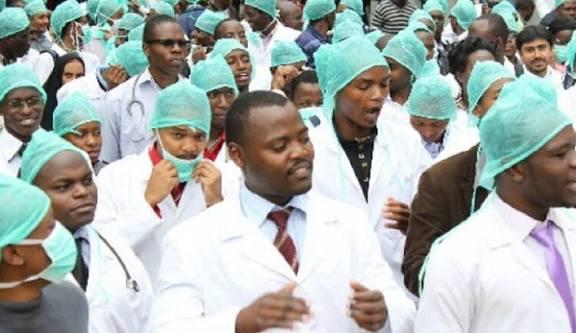
  • Doctors begin nationwide indefinite strike after failed talks with Government.

    The Nigerian Association of Resident Doctors (NARD) has commenced an indefinite strike following the Federal Government’s failure to meet their demands after a 30-day ultimatum expired.

    In a statement issued on Saturday, the association’s president, Dr. Mohammad Suleiman, said the strike became unavoidable after several unfulfilled promises and unsuccessful meetings with government representatives. According to him, the decision was made reluctantly but was necessary to draw attention to the deteriorating state of Nigeria’s healthcare system.

    “This action is not driven by desire but by necessity. The government’s continued neglect of our welfare and the poor condition of hospitals nationwide has left us with no choice,” Suleiman stated.

    He emphasized that the strike was not for personal benefit but aimed at protecting both doctors and patients by demanding a better working environment.

    NARD listed major grievances including unpaid salaries and allowances, poor working conditions, shortage of staff, overwhelming workload, and lack of medical equipment, all of which have crippled effective healthcare delivery across the country.

    Suleiman warned that the ongoing mass exodus of medical professionals would persist unless the government acted swiftly to address these concerns.

    “The strength of any nation’s health system depends on the well-being of its doctors. When they are neglected and demoralized, patients ultimately bear the brunt,” he added.

    He appealed to Nigerians, civil society organizations, and labour unions to support their struggle for a functional and humane health system rather than view it as a confrontation with the government.

    NARD confirmed that the strike officially began on Saturday, November 1, 2025, and hospitals nationwide are already experiencing widespread disruption in services.
    Doctors begin nationwide indefinite strike after failed talks with Government. The Nigerian Association of Resident Doctors (NARD) has commenced an indefinite strike following the Federal Government’s failure to meet their demands after a 30-day ultimatum expired. In a statement issued on Saturday, the association’s president, Dr. Mohammad Suleiman, said the strike became unavoidable after several unfulfilled promises and unsuccessful meetings with government representatives. According to him, the decision was made reluctantly but was necessary to draw attention to the deteriorating state of Nigeria’s healthcare system. “This action is not driven by desire but by necessity. The government’s continued neglect of our welfare and the poor condition of hospitals nationwide has left us with no choice,” Suleiman stated. He emphasized that the strike was not for personal benefit but aimed at protecting both doctors and patients by demanding a better working environment. NARD listed major grievances including unpaid salaries and allowances, poor working conditions, shortage of staff, overwhelming workload, and lack of medical equipment, all of which have crippled effective healthcare delivery across the country. Suleiman warned that the ongoing mass exodus of medical professionals would persist unless the government acted swiftly to address these concerns. “The strength of any nation’s health system depends on the well-being of its doctors. When they are neglected and demoralized, patients ultimately bear the brunt,” he added. He appealed to Nigerians, civil society organizations, and labour unions to support their struggle for a functional and humane health system rather than view it as a confrontation with the government. NARD confirmed that the strike officially began on Saturday, November 1, 2025, and hospitals nationwide are already experiencing widespread disruption in services.
    like
    1
    · 0 Commentaires ·0 Parts ·1KB Vue
  • Sterling Bank gets recognition.

    Sterling Bank Plc has emerged as the Outstanding Healthcare Financial Institution of the Year at the 2025 Nigerian Healthcare Excellence Awards, held recently in Lagos.

    According to a statement, the award ceremony spotlighted institutions and individuals making significant contributions to healthcare development in Nigeria.

    Organisers honoured Sterling Bank for its commitment to financing healthcare innovation and supporting access to quality medical services across the country.

    Speaking during the event, Minister of State for Health and Social Welfare, Dr Iziaq Salako, praised the winners for setting new standards in the sector, stating, “Tonight, we witnessed proof that our health sector is rich with talent, innovation, and resilience. These winners are the foundation of a stronger health system.

    Other top winners at the 11th edition of the awards included the University of Maiduguri Teaching Hospital, which won Public Tertiary Healthcare Facility of the Year, and Duchess International Hospital, named Private Tertiary Healthcare Facility of the Year.

    Katsina State Contributory Healthcare Management Agency and Lagos State Health Management Agency jointly received the State Government Health Insurance of the Year.

    The Ikorodu General Hospital and R-Jolad Hospital were awarded Public and Private Secondary Healthcare Facility of the Year, respectively. Leadway Health Limited was named Health Maintenance Organisation of the Year, while EHA Clinics received the Innovative Healthcare Service Provider of the Year award.
    Sterling Bank gets recognition. Sterling Bank Plc has emerged as the Outstanding Healthcare Financial Institution of the Year at the 2025 Nigerian Healthcare Excellence Awards, held recently in Lagos. According to a statement, the award ceremony spotlighted institutions and individuals making significant contributions to healthcare development in Nigeria. Organisers honoured Sterling Bank for its commitment to financing healthcare innovation and supporting access to quality medical services across the country. Speaking during the event, Minister of State for Health and Social Welfare, Dr Iziaq Salako, praised the winners for setting new standards in the sector, stating, “Tonight, we witnessed proof that our health sector is rich with talent, innovation, and resilience. These winners are the foundation of a stronger health system. Other top winners at the 11th edition of the awards included the University of Maiduguri Teaching Hospital, which won Public Tertiary Healthcare Facility of the Year, and Duchess International Hospital, named Private Tertiary Healthcare Facility of the Year. Katsina State Contributory Healthcare Management Agency and Lagos State Health Management Agency jointly received the State Government Health Insurance of the Year. The Ikorodu General Hospital and R-Jolad Hospital were awarded Public and Private Secondary Healthcare Facility of the Year, respectively. Leadway Health Limited was named Health Maintenance Organisation of the Year, while EHA Clinics received the Innovative Healthcare Service Provider of the Year award.
    0 Commentaires ·0 Parts ·675 Vue
  • Trump Administration Shuts Down USAID After Six Decades of Global Aid Work

    The Trump administration has officially shut down the U.S. Agency for International Development (USAID), bringing an end to the 63-year-old agency’s operations.

    The closure is part of a broader federal downsizing campaign and aligns with the goals of Elon Musk’s Department of Government Efficiency—a new unit tasked with reducing what it calls “bureaucratic excess.” Established in 1961 by President John F. Kennedy after Congress passed the Foreign Assistance Act, USAID functioned as an independent agency dedicated to combating global pov+rty and promoting democratic resilience.

    For over six decades, it partnered with nations worldwide to deliver humanitarian aid, economic support, and health interventions.

    USAID’s contributions were widely regarded as pivotal in several historic global milestones. It played a leading role in the Green Revolution, credited with helping save over a billion lives through improved agricultural practices.

    The agency also partnered with international bodies to strengthen global health systems—efforts that contributed to a 69% drop in child mortality rates since 1990. However, the Trump administration had gradually slashed funding to many of USAID’s signature programs, leading to the weakening and eventual shutdown of several key initiatives.

    While critics have condemned the move as a setback for U.S. global leadership and humanitarian outreach, administration officials insist the decision reflects a strategic shift toward domestic priorities and leaner governance.
    Trump Administration Shuts Down USAID After Six Decades of Global Aid Work The Trump administration has officially shut down the U.S. Agency for International Development (USAID), bringing an end to the 63-year-old agency’s operations. The closure is part of a broader federal downsizing campaign and aligns with the goals of Elon Musk’s Department of Government Efficiency—a new unit tasked with reducing what it calls “bureaucratic excess.” Established in 1961 by President John F. Kennedy after Congress passed the Foreign Assistance Act, USAID functioned as an independent agency dedicated to combating global pov+rty and promoting democratic resilience. For over six decades, it partnered with nations worldwide to deliver humanitarian aid, economic support, and health interventions. USAID’s contributions were widely regarded as pivotal in several historic global milestones. It played a leading role in the Green Revolution, credited with helping save over a billion lives through improved agricultural practices. The agency also partnered with international bodies to strengthen global health systems—efforts that contributed to a 69% drop in child mortality rates since 1990. However, the Trump administration had gradually slashed funding to many of USAID’s signature programs, leading to the weakening and eventual shutdown of several key initiatives. While critics have condemned the move as a setback for U.S. global leadership and humanitarian outreach, administration officials insist the decision reflects a strategic shift toward domestic priorities and leaner governance.
    0 Commentaires ·0 Parts ·709 Vue
Fintter https://fintter.com